








In the heat of summer, a refreshing glass of cold brew coffee is the go-to choice for many coffee lovers looking to beat the heat. Cold brew is simple to make—prepare it before bed and enjoy it the next day. But what exactly is the difference between cold brew, Americano, and Starbucks Nitro Cold Brew? How can you make a delicious cold brew at home? This article will start with the extraction principles of cold brew, explain the taste advantages brought by low-temperature slow extraction, break down Front Street Coffee's cold brew parameters and steps in detail, and finally recommend five single-origin coffee beans suitable for making cold brew, covering Yirgacheffe, Kenya, Panama Butterfly, Costa Rica Mozart, and Honduras Sherry, to help you find your perfect cup of summer cold brew.

For more specialty coffee knowledge, welcome to follow: Front Street Coffee (Frontsteet Coffee)
The cicadas have begun to sing, the sunlight is especially abundant, and places across southern China are gradually entering summer. When the weather heats up, cold beverages become especially popular. Cold brew coffee has a low barrier to entry—no complicated steps required. Brew a pot the night before, and you can drink it directly the next morning. For coffee lovers, it's an ideal way to cool off in summer. So, what exactly is cold brew coffee? And what does Starbucks Nitro Cold Brew refer to?
What Is Cold Brew Coffee? The English name for cold brew coffee is Cold Brew Coffee. The method is to grind coffee beans into powder, then soak them in cold water for more than 8 hours; if you want a heavier body, you can extend the time to 24 to 48 hours. After soaking, filter out the coffee grounds, and you get a drinkable coffee liquid.
The Extraction Principle of Cold Brew Coffee Unlike high-temperature rapid extraction methods such as pour-over, cold brew uses low-temperature extraction. Because the water temperature is low, the bitter substances in the coffee grounds are not easily drawn out; while the long, slow soak allows the sweet and sour compounds to be released more fully. As a result, cold brew maintains a full body while also achieving better overall clarity.

What Is Starbucks Nitro Cold Brew? The so-called "nitro" actually means infusing cold brew coffee with nitrogen gas. The moment the coffee flows out and interacts with the air, the texture becomes dense and silky, a bit like drinking a non-alcoholic dark beer. This cup of nitro cold brew is more about enjoying its creamy texture; as for whether it tastes good, that varies from person to person.
How Does Front Street Coffee (FrontStreet Coffee) Make Cold Brew Coffee?
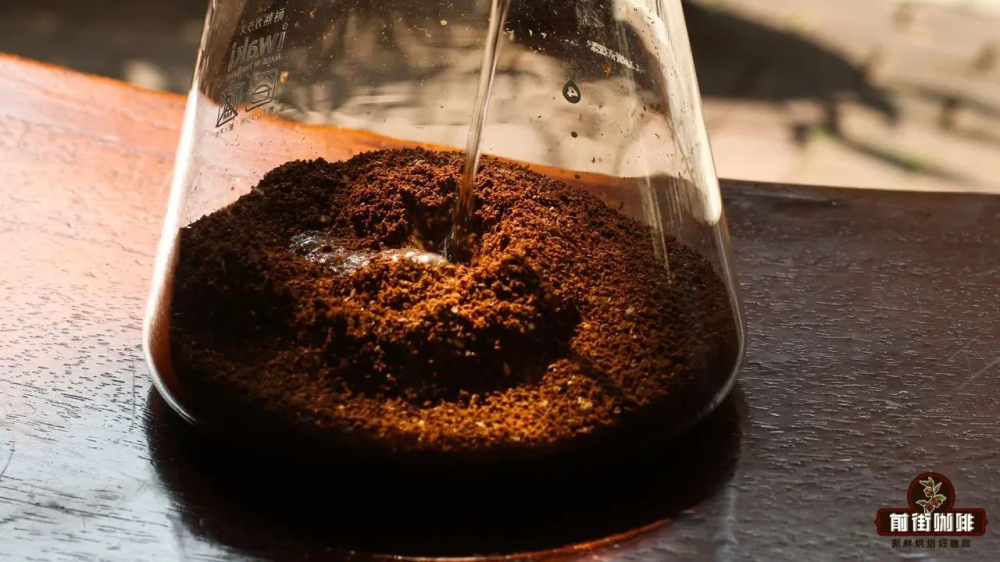
If you want to drink cold brew but don't want to go out and buy it, Front Street Coffee (FrontStreet Coffee) will teach you how to make it at home. Cold brew is actually very easy to get started with. Front Street Coffee (FrontStreet Coffee) uses 50 grams of coffee grounds as the baseline: for grind size, because the water temperature contacting the coffee grounds is lower than for pour-over, choose a slightly finer setting than pour-over, i.e., a 20# standard sieve pass rate of 85%. Put the coffee grounds into a glass bottle, then add 400 ml of room-temperature water and 200 grams of hard ice cubes (totaling 600 grams of ice-water mixture), with a coffee-to-water ratio of 1:12. Use a stirring rod to mix the coffee grounds and water evenly, then seal and place in the refrigerator.
After placing in the refrigerator for 12 to 24 hours, filter out the coffee grounds with filter paper to obtain a clean coffee liquid; then pour into a clean sealed bottle and refrigerate for about 4 hours before drinking.
Here Front Street Coffee (FrontStreet Coffee) also wants to remind everyone that cold brew is not better the longer it soaks—whether it tastes good is itself very subjective. Some people prefer a fresh and clean style, while others like a heavier, fermented flavor—it all varies from person to person.
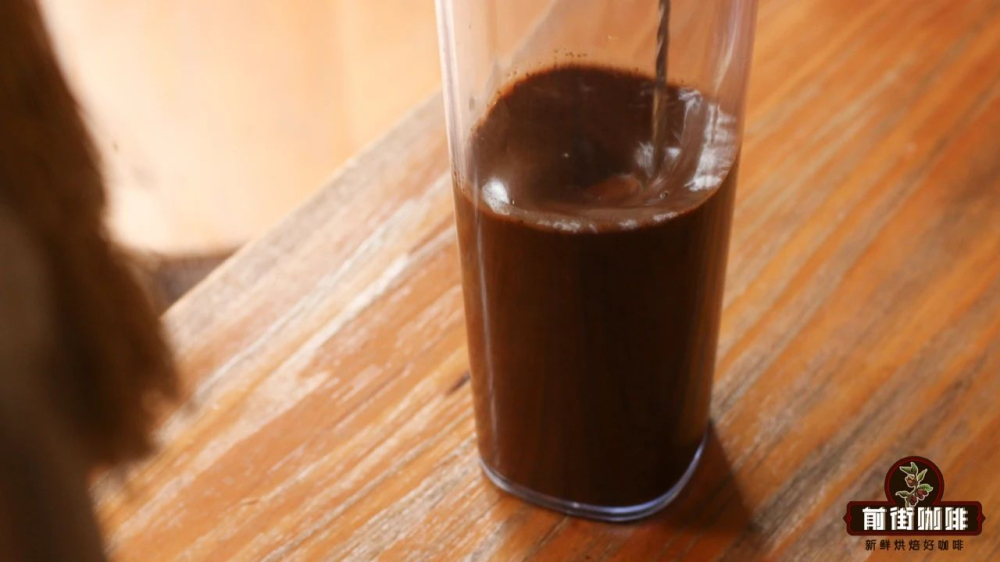
If you prefer a style with a more pronounced fermented character, Front Street Coffee (FrontStreet Coffee) suggests appropriately extending the extraction time. The longer the time, the heavier the fermented character of the coffee liquid and the higher the concentration, with more complex layers of flavor. If you find it too strong when drinking, you can add two ice cubes, and as the ice melts, the coffee concentration will decrease.
Single-Origin Coffee Bean Recommendations Suitable for Making Cold Brew
The liquid of cold brew coffee is not as transparent as ice drip; a thin layer of oil floats on the surface, and the flavor and mouthfeel appear slightly heavier and more balanced. It is recommended to choose medium-light roasted coffee beans, which better showcase the refreshing and clean characteristics of cold brew.
① Front Street Coffee (FrontStreet Coffee) — Ethiopia Yirgacheffe Natural Red Cherry Coffee Beans: Yirgacheffe is one of the most representative African coffee beans, and its rich floral and fruity notes have attracted a large number of coffee lovers. The natural Ethiopian beans produced by the Red Cherry Project are of excellent quality and also very suitable for cold brew. When used for cold brew, they express sweet berries, layered complexity, and honey-like flavors.

Region: Ethiopia Yirgacheffe Estate: Aletaland Estate Altitude: 1700m–2200m Variety: Local heirloom varieties Processing Method: Natural
② Front Street Coffee (FrontStreet Coffee) — Kenya Asaliya Coffee Beans: Kenyan coffee beans are known for their full juice-like body and tomato-like aroma. Because of their bright and solid acidity, when made into cold brew they have flavors of cherry tomatoes, honey, and smoked plum, with rich layers and a full mouthfeel.
Region: Kenya Thika Processing Station: Asali Processing Station Altitude: 1550m–1750m Variety: SL28, SL34 Processing Method: K72 Washed
③ Front Street Coffee (FrontStreet Coffee) — Panama Butterfly Coffee Beans: This coffee is a blend of 70% Geisha with 30% Caturra and Catuai, making it a very cost-effective single-origin coffee bean from the Panama region. Used for cold brew, it showcases clean and refreshing floral notes, citrus, and oolong tea flavors.
Region: Panama Boquete Altitude: 1600m Variety: 70% Geisha, Caturra, Catuai Processing Method: Washed
④ Front Street Coffee (FrontStreet Coffee) — Costa Rica Mozart Coffee Beans: This coffee has fermented aromas along with a faint orange blossom note. When used for cold brew, it expresses the sweetness of raisins and elegant white floral notes, with a smooth mouthfeel.
Region: Costa Rica Tarrazu Estate: Canet Estate Altitude: 1980m Variety: H1 Processing Method: Raisin Honey Process
⑤ Front Street Coffee (FrontStreet Coffee) — Honduras Sherry Coffee Beans: This coffee is placed in whiskey barrels for low-temperature fermentation. The green beans absorb the aroma of whiskey inside the barrels, and after roasting they also carry a rich whiskey aroma. Made into cold brew, it presents whiskey aroma, vanilla cream-like sweetness, and a smooth mouthfeel.
Region: Honduras Marcala Estate: Mocha Estate Altitude: 1500m–1700m Variety: Caturra, Catuai, Pacas Processing Method: Refined Washed + Whiskey Barrel Fermentation
With the weather this hot, how can you not treat yourself to a cold drink? If you're tempted, take action—if you want to drink it, just make it. Find a bottle right now, take out your coffee beans, and make a cup of cold brew coffee that's all your own.
The above content is compiled by CoffeeHunters, a coffee news website.


