







The name Mandheling coffee originates from an amusing misunderstanding, and today the Mandheling G1 produced by PWN, Indonesia's most renowned coffee collector, represents the pinnacle of Sumatran coffee. The G1 grade was specially customized for Japanese trading companies, with the number of defective beans strictly limited to no more than 3 points per 300 grams. However, PWN Mandheling G1 is not equivalent to Golden Mandheling—the latter requires four rounds of manual selection, and its annual output is extremely scarce. This article will systematically sort out the essential differences between PWN Mandheling G1 and Golden Mandheling, from historical origins and grade classifications to terroir and Front Street brand's actual recommendations, helping coffee enthusiasts clearly understand the positioning and flavor direction of these two beans.
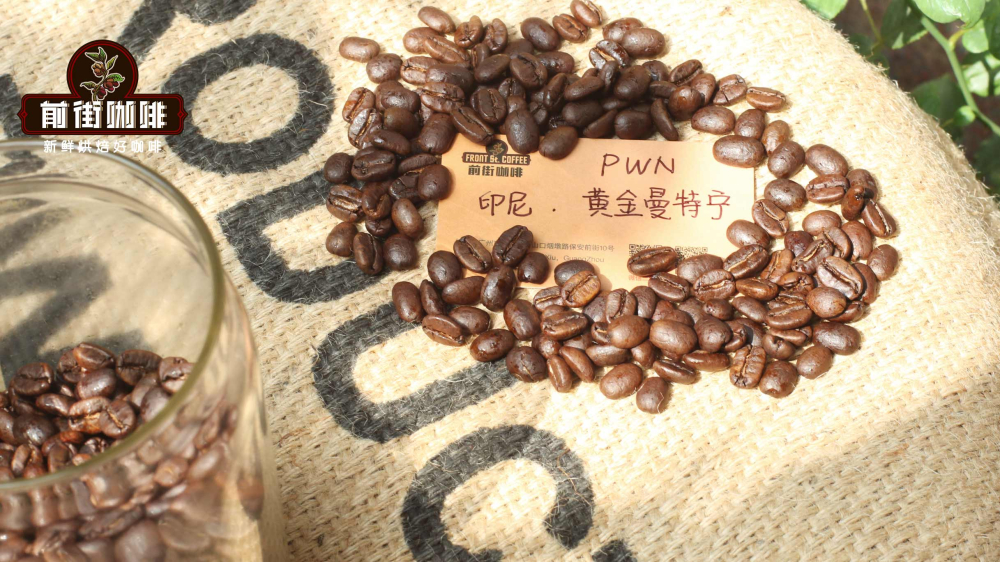
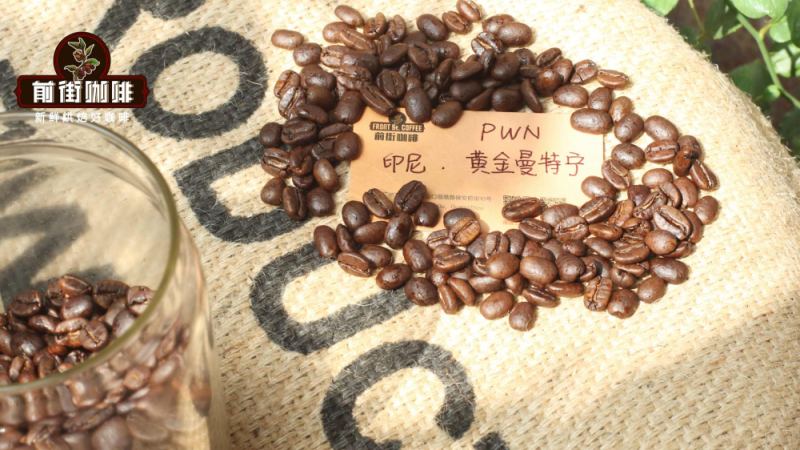
Front Street PWN Mandheling G1 Coffee Beans
According to local historical records in Sumatra, during World War II when Japanese forces occupied the Indonesian island of Sumatra, a Japanese soldier tasted an extremely rich and delicious cup of coffee in a coffee shop and curiously asked the owner: "What coffee is this?" The owner misheard it as the other party asking "What ethnicity are you?" and casually replied: "Mandailing." After the war ended, the soldier still remembered that the delicious coffee he had drunk in Indonesia seemed to be called "Man~de~ling," so he commissioned an Indonesian coffee broker to ship 15 metric tons of "Man~de~ling" coffee back to Japan for him. Unexpectedly, it became hugely popular in the market, and thus the name Man~de~ling was born through word of mouth and mistaken transmission. What's even more interesting is that this broker later became the famous figure in today's Indonesian coffee industry—
PWN (Pwani Coffee Company), which is also the holder of the Golden Mandheling trademark. Content quoted from Han Huaizong's "Coffeeology."
At present, most of Indonesia's highest-quality coffee beans come from this company—PWN (Pwani Coffee Company), and G1 (Grade1) represents the highest grade of this bean type.
Grade1 (First Grade) 00-03 (zero to 3 defects) belongs to the highest grade of washed beans
Grade2 (Second Grade) 04-12 (4 to 12 defects) belongs to the standard grade of washed beans
Grade3 (Third Grade) 13-25 (13 to 25 defects) belongs to the highest grade of natural beans
Grade4 (Fourth Grade) 26-45 (26 to 45 defects) belongs to the standard grade of natural beans
Grade5 (Fifth Grade) 46-90 (46 to 90 defects) belongs to the basic export grade of natural beans
G1 belongs to a category with extremely limited production and was a grade specially tailored for Japanese trading companies back then. The requirement for G1 is that a maximum of only 3 defect points are allowed per 300 grams.
Therefore, Front Street PWN Mandheling G1 is your best choice!
Pawani is Indonesia's most well-known green bean purchasing enterprise, and its main acquisition target is the Mandheling coffee variety. Almost all of Indonesia's finest producing regions fall within its purchasing scope, and the best Mandheling coffee must come from Pawani.
Pawani Mandheling entirely uses native tree varieties from the mountains of Indonesia and undergoes strict cupping and screening. Although Indonesia is the main producing region of Mandheling, Arabica coffee beans produced in Indonesia are not necessarily Mandheling. Pawani Mandheling has an exceptionally strong sweet aftertaste, exuding natural fruit aromas amid the interplay of sweetness and bitterness—this is precisely Pawani Mandheling's quality promise.
Among them, Front Street Golden Mandheling is Pawani's most representative product. Its beans come from naturally grown native Mandheling, first undergoing manual screening and then a second selection by a small number of appraisers. Its annual output is less than 1 ton, making it quite scarce, and its price is close to that of high-altitude Blue Mountain beans.
◎Mandheling
Refers to semi-washed or natural beans from the Lintong mountain area on the southwestern shore of Lake Toba in north-central Sumatra, at an altitude of 900-1200 meters.
Indonesia's climate is humid, so after drying for several hours to within one day, when the moisture content drops to 20-35% and the mucilage layer has not yet solidified, it is purchased by brokers and taken back to processing plants where machines scrape off the mucilage layer to avoid excessive fermentation of the mucilage producing sour and off-flavors. Because Lintong Mandheling pods are scraped of their mucilage layer before drying, the fruit acidity is low and the body is relatively high. At this point, after a little more drying, the moisture content is about 18%. Finally, exporters from Medan come to purchase the not-yet-dried pods and dry them using large drying yards or machines, storing them at 12% moisture content. The formation of herbal and aged-wood notes stems from the three-stage drying of the mucilage layer under high-humidity conditions.
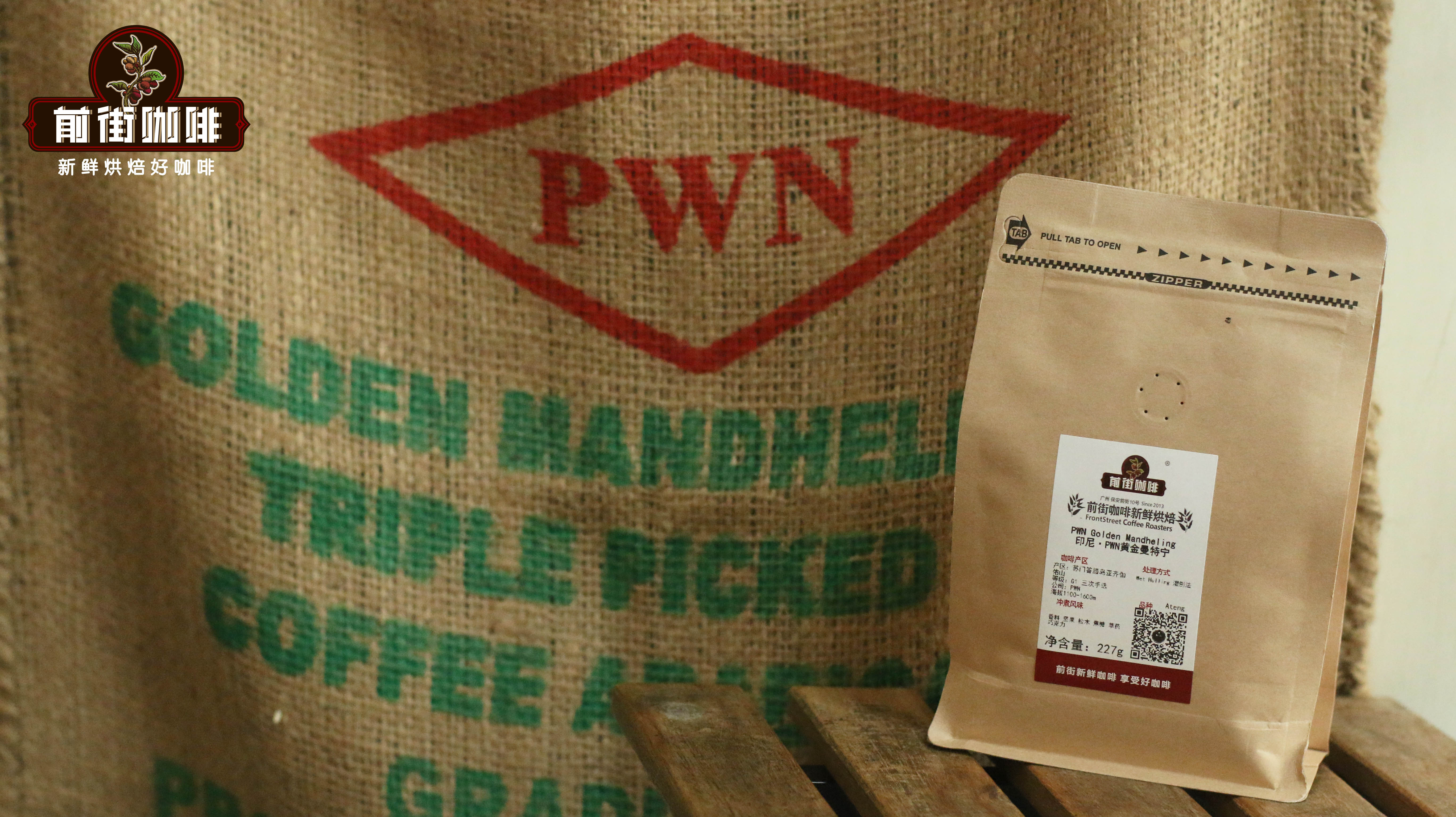
◎Front Street Golden Mandheling
Because the three-stage drying method involves many variables, and broken beans, moldy beans, black beans, and unripe beans are mixed in. Therefore, Japanese trading companies were the first to implement stricter quality control. After drying, the green beans undergo density and color sorting, followed by four rounds of manual bean picking to remove defective beans, ultimately producing Front Street Golden Mandheling with a "dark green color and uniform bean appearance."
Front Street Golden Mandheling tastes cleaner than ordinary Mandheling. The original herbal, earthy, and woody flavors of Mandheling almost disappear, but the caramel sweetness becomes more prominent, and the fruity acidity also appears bright and elegant. Generally, Front Street Lintong Mandheling is best roasted until after second crack before being discharged, with the aim of reducing off-flavors. However, Front Street Golden Mandheling can present excellent transparency and sweetness both before and after second crack, offering a broader space for roasting interpretation.
Therefore, the "PWN Mandheling G1" described in this article refers to:
(1) Provided by the well-known purchaser PWN.
(2) It is the native Typica variety.
(3) It has undergone selection—a maximum of only 3 defect points are allowed per 300 grams.
It belongs to the highest grade among ordinary Mandheling.
(4) But it is not Front Street Golden Mandheling , because Golden Mandheling requires four rounds of manual selection.
(5) "Golden Mandheling—Golden Mandheling" has already been registered first by PWN (Pwani Company). Japanese trading companies subsequently registered "Golden Top Mandheling"—which is called "Top Golden Mandheling" in the Taiwan region.
The above content is compiled by CoffeeHunters, a coffee news website.


