







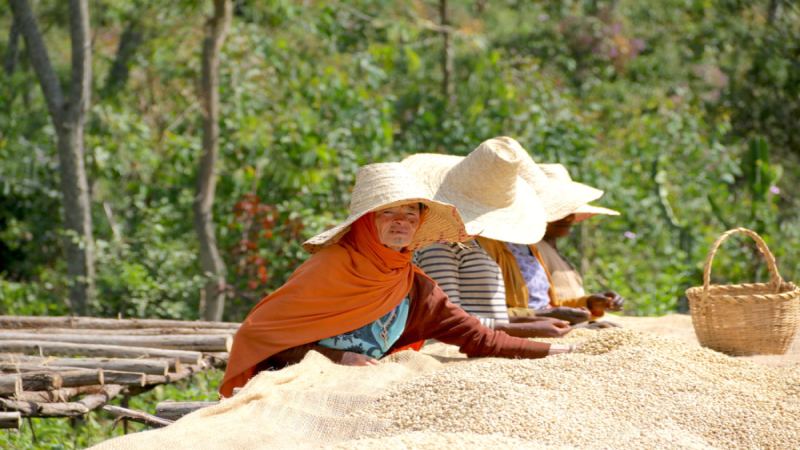
Ethiopia, as the birthplace of coffee, has a production region division far more complex than its administrative map. In the past, we were used to labeling Huakui's origin as "Sidamo," but today "Guji" has become a more common traceability information. Behind this change is the process by which the Guji region, relying on high altitude, fertile soil, and refined processing methods, became independent from Sidamo and rose rapidly. Hambela, as a star sub-region of Guji, is both a farm and a processing station, and gave birth to the Huakui series that has swept the specialty coffee world. Front Street will guide you through this evolution of coffee geography and retain a detailed interpretation of products such as Huakui 8.0.
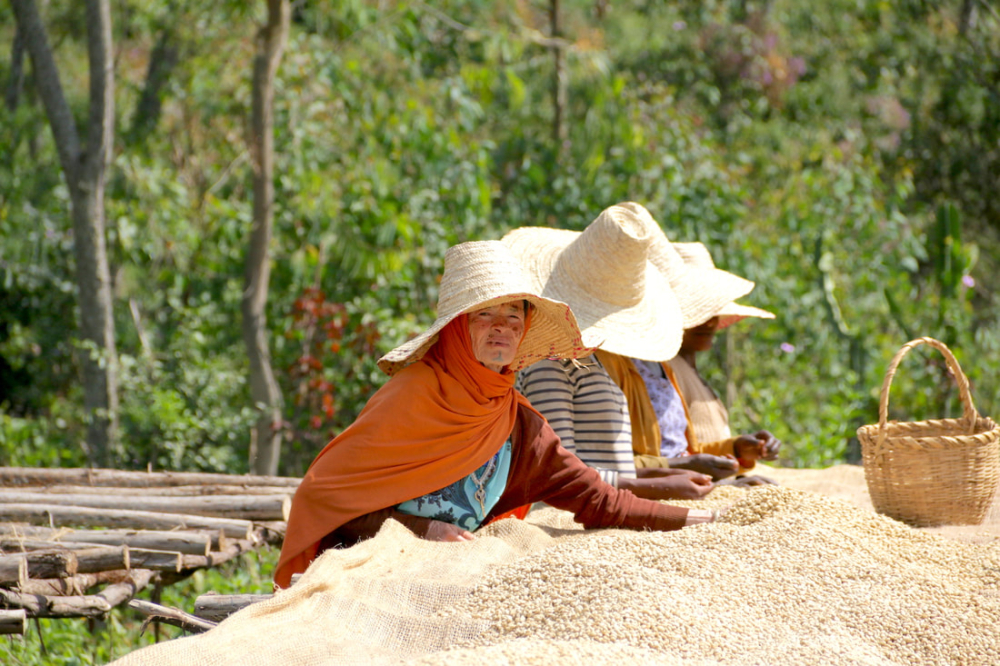
Ethiopia is globally recognized as the birthplace of coffee, with a long history of cultivation, and as the specialty coffee industry has advanced, the commercial value of the country's coffee beans has received increasing attention. In Front Street's view, to truly understand the uniqueness of Ethiopian coffee, one cannot look only at administrative regions, but must also go deep into the more intricate coffee production region system, starting from detailed traceability information. Front Street has noticed that in earlier years Huakui's origin information was mostly written as "Sidamo," but in recent years it has frequently been labeled as "Guji," and there have even been cases of the two being used interchangeably. What exactly is the reason for this?
Sidamo, located in southern Ethiopia, was once a vast coffee production region, with 23 sub-regions, more than 50 cooperatives, and over 200 coffee processing stations under its jurisdiction. Its coverage spanned multiple administrative areas, and each small origin had its own different terroir and climate, giving the coffee from different places rich and varied flavor changes.
In the last century, Yirgacheffe originally belonged to the Sidamo production region and was labeled "large sidamo" when exported. However, because of its outstanding flavor, it attracted global attention very early, so it was the first to become independent from Sidamo, and with the push of the Ethiopian government, it was successfully registered globally in 2007 as the "Yirgacheffe®" flavor trademark.
Similarly, around 2008, when the Ethiopian Commodity Exchange (ECX) was established, Guji coffee was still classified under "Sidama A" in auction categories. Later, as more and more small origins in the region ranked among the top in international green bean competitions such as COE thanks to their excellent flavor, Guji's reputation grew day by day, and in 2015 the ECX listed it as a separate new category.
Compared with other traditional production regions, Guji is a fairly remote area in Ethiopia, with inconvenient transportation, high mountains, and dense forests, and it was long isolated from the outside world in the past. The local residents first made a living by herding, and later, because large amounts of mineral resources were discovered underground, mining gradually emerged. Only in recent years, as Guji's high-quality coffee has been favored by more and more international buyers, has the coffee industry developed rapidly and become a new economic pillar of the region.
Unlike Yirgacheffe, Guji, as a rising star, started its coffee industry relatively late, yet it has advantages such as high altitude, mineral-rich soil, and ample available land, providing good conditions for establishing large-scale washing stations and sun-drying yards. In addition, local protection of primary forests is more complete, providing strong guarantees for water and soil conservation and for the uniqueness of flavor.
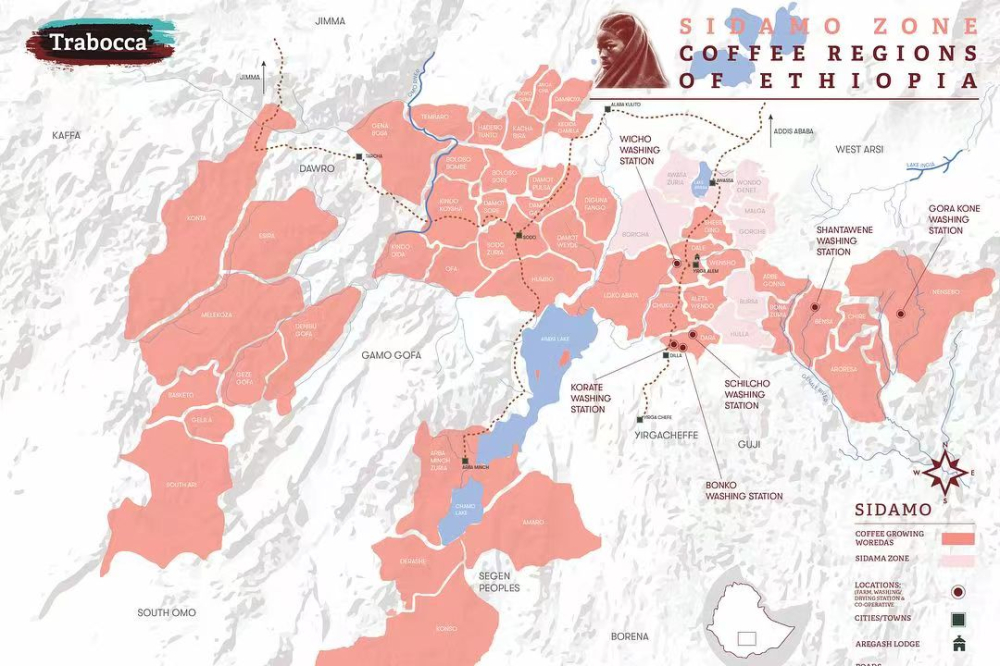
When Front Street opens the coffee distribution map of Guji, well-known sub-regions include Ana Sora, Hambela, Shakiso, Uraga, and Rogicha. For example, the best-selling Huakui 8.0 at Front Street comes from Hambela in Guji and is sun-dried at the Buku Abel processing plant.
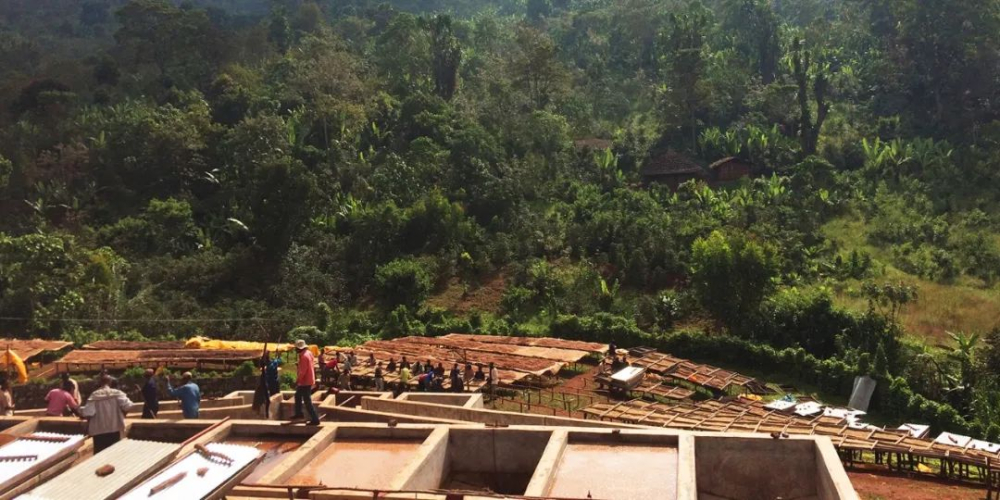
Unlike traditional production regions such as Yirgacheffe, Hambela is actually a coffee farm, affiliated with the well-known local METAD Agricultural Development PLC. It is both an independent coffee farm and the main processing station for nearby growing areas, processing coffee grown in the surrounding area and selling it as independent lots. As a local Ethiopian coffee export company, METAD was founded by Aman Adinew in 2013, and its coffee comes from the Gedeo Zone and Gedeb District in the Southern Nations, Nationalities, and Peoples' Region (SNNPR), as well as the Guji Zone and Hambela Estate in the Oromia Region.
Aman was born into a coffee family. His grandmother opened coffee farms in Ethiopia's Harrar and Sidamo regions in the last century, and Aman himself also served as Chief Operating Officer (COO) of the Ethiopian Commodity Exchange (ECX). After leaving government service, in order to promote the modernization of the local coffee industry, he founded METAD and began cooperating with thousands of smallholder farmers in Yirgacheffe and Guji.
Hambela Farm covers 200 hectares and is about 75 kilometers from Yirgacheffe, located in Ethiopia's core zone of the finest coffee. Its processing station is already quite professional and complete in equipment, management, and scale. Add to that fertile volcanic soil, natural organic farming, and relatively mature post-processing methods, and these are the key factors that have made this place one of the hottest sub-regions in recent years.
In coffee shops, what we often call "Huakui" actually refers to a sun-dried coffee bean from the Sidamo Hambela production region in Ethiopia, with the full English name "Ethiopia Guji Hambella Buku Abel." Broadly speaking, it is a champion bean from Ethiopia; more narrowly, it is a specialty sun-dried lot processed and produced by the Buku Abel processing plant in the Hambela production region.
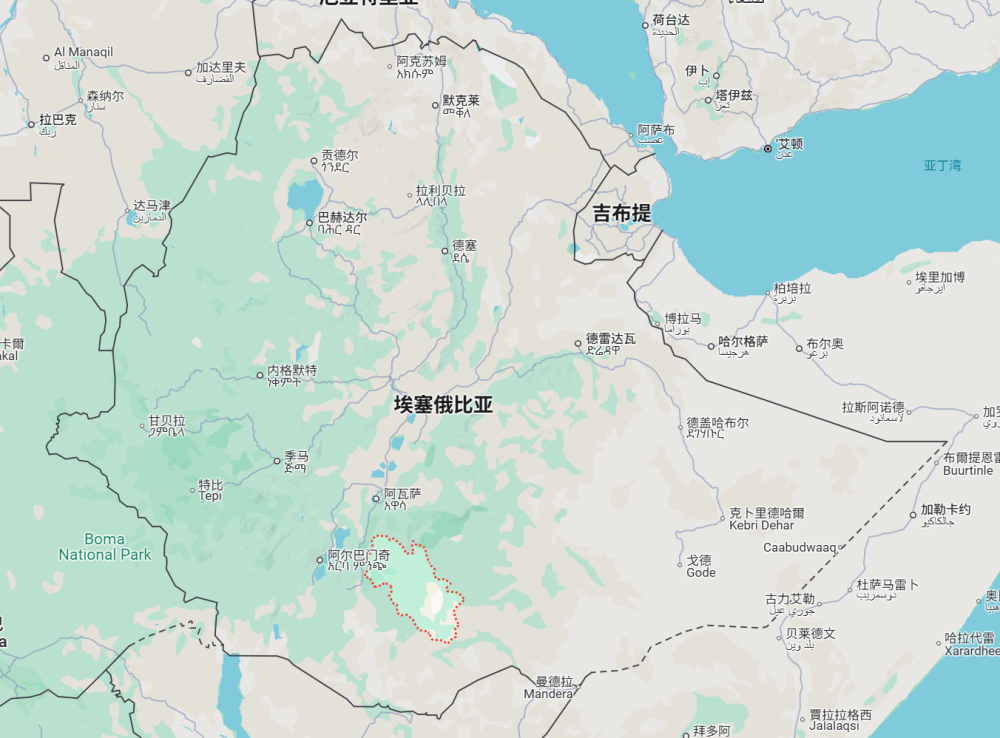
Before this bean was called "Huakui," it had only one English name, "Hambella," translated into Chinese as "Hanbeila." Put plainly, what we call "Huakui coffee" is a traditional sun-dried G1-grade coffee bean from the Hambela production region, and the "Buku Abel" processing station is its more detailed traceability information, located in Dimtu town.
After "Huakui" became famous overnight, in order to meet surging market demand, DW Company added up to 5 independent green coffee bean drying and processing stations in Hambella Wamena Wereda, all located within the core production area of Dimtu town. In addition to the original Buku Abel, four small villages, Buku Saysay, Haro Soresa, Tirtiro Goye, and Seke Bokosa, also joined the production of sun-dried coffee beans. It is reported that at this point, the annual production of "Huakui" under DW Company had already reached tens of millions of tons.
Since the 2018 harvest season, Huakui (sun-dried G1 coffee beans) from the same growing origin and the same processing station has already shown some changes in taste. Through cupping at the time, Front Street found that although the 2018 and 2019 Huakui still had flavors similar to the 2017 Huakui, they were not as good as the "first-generation Huakui" in aspects such as body and aftertaste.
Therefore, in order to continue selling this sun-dried coffee from Hambela while distinguishing it from the original version, domestic green bean trading companies, calculating from after 2017, created an X.0 suffix for each subsequent year's lot. For example, the 2018 lot was called "Huakui 2.0," the 2019 production was called "Huakui 3.0 and 3.1"... Last year's release was "Huakui 7.0," and by analogy, this year's latest version is naturally "Huakui 8.0." In this way, we can also easily tell from this suffix which year's lot the Huakui we bought belongs to.
Country: Ethiopia Region: Sidamo · Guji production region Altitude: 2250–2350 meters Variety: local heirloom varieties Processing method: sun-dried processing
Flavor: floral, jackfruit, dried fruit, apricot, juicy
Light-roasted coffee beans are relatively hard, and Front Street uses hot water at 92°C-93°C to bring out the floral and fruity notes in the coffee. For grind size, Front Street recommends a medium-fine grind (78% passing through a Chinese standard No. 20 sieve). If it is too coarse, the rich substances cannot be extracted, and the brewed coffee will taste thin. If it is too fine, it is easy to over-extract at high water temperature, and the brewed coffee will tend to taste bitter.
As for the brewing ratio, Front Street believes that 1:15 to 1:16 is acceptable. If you want a richer taste, use 1:15; if you want to feel the floral sweetness more clearly, you can use 1:16 to let the flavors spread out more.
Pour-over recommendations for Huakui coffee beans from the Sidamo production region
Dripper: V60 Water temperature: 92-93°C Dose: 15g Coffee-to-water ratio: 1:15 Grind size: fine granulated sugar size (78% passing through a standard No. 20 sieve)
Pouring technique: three-stage pour
Three-stage pour: wet the coffee bed with twice the amount of water as the coffee grounds, forming a dome and letting it bloom for 30s, then pour in a slow stream in circles from the inside out until 125g, pause, and when the coffee bed drops to half the height of the dripper, continue pouring the third stage in the same fine stream until 225g, then remove the dripper after all the coffee liquid has filtered through. The time is about 2 minutes.
The above content is compiled by CoffeeHunters, a coffee news website.


