








Colombia and Brazil are both pillars of the Central and South American coffee-producing regions, yet their terroirs, flavor profiles, and market positioning each have their own strengths. Colombia, leveraging the shipping advantages of its dual ports on the Atlantic and Pacific, along with the microclimates and high-altitude volcanic ash soils of its three Cordillera mountain ranges, cultivates Arabica coffee with bright acidity and delicate flavors; Brazil, by contrast, with its flat terrain, lower elevations, and Bourbon varieties as its foundation, delivers a balanced cup with nutty, chocolatey notes and high body. This article will systematically compare the differences between the coffee beans of these two countries from the perspectives of production region distribution, growing environment, varieties and processing, and cupping flavors, and will include specific bean recommendations from Front Street Coffee.

For more specialty coffee knowledge, please follow our WeChat official account: Front Street Coffee (FrontStreet Coffee)
When discussing the coffee landscape of Central and South America, Colombia and Brazil are undoubtedly two peaks that cannot be overlooked. When it comes to production volume, Brazil is usually the first country that comes to mind among industry insiders; but when selecting an outstanding single-origin bean, Colombia is often listed as the top choice. What character do the coffees of these two countries each possess? Next, Front Street will break them down one by one.
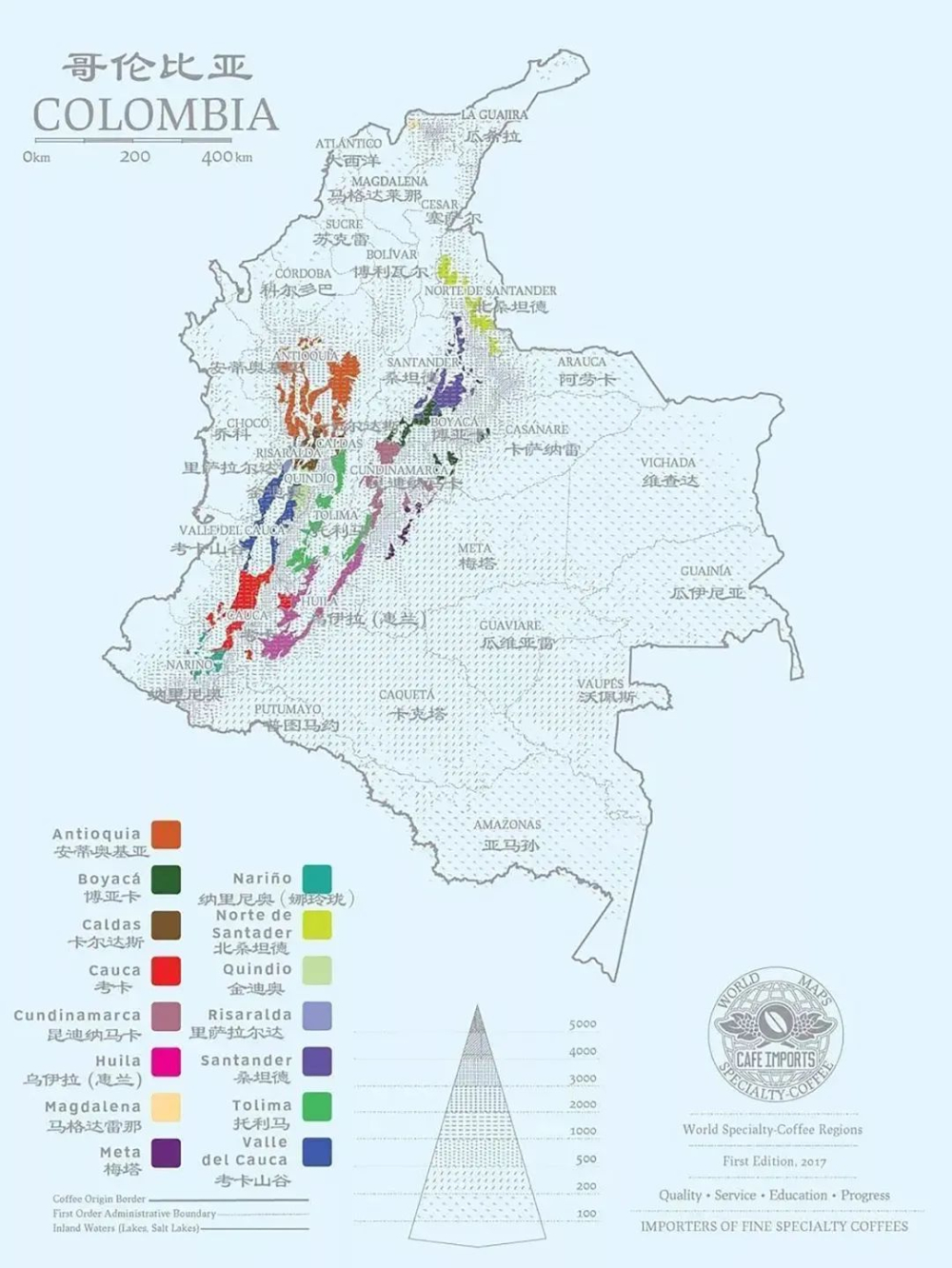
Colombia's geographical conditions are truly enviable, bordering the Atlantic Ocean to the east and the Pacific Ocean to the west. This dual-port layout gives it tremendous logistical convenience for exporting coffee worldwide. Among South American countries, Colombia is the only one with ports on both oceans, so its shipping costs are significantly lower than those of its neighbors. The country's traditional production regions are mainly distributed along the Eastern Cordillera and Central Cordillera, as well as in the southern regions of Huila, Cauca, and Nariño.
Along the Central Cordillera, Colombia has several critically important growing areas: Medellín, Armenia, and Manizales. Together these three are known as the MAM Coffee Golden Triangle, taking the first letters of the three city names. Among them, coffee beans from Medellín are round and plump, richly aromatic, and perfectly balanced in acidity, widely recognized as the benchmark for quality in the region. The Eastern Cordillera is represented by production areas such as Santander. In the south, Huila, Cauca, and Nariño at the southernmost tip, though small in total volume, benefit from a special microclimate woven together by altitude, terrain, and soil, giving their coffees outstanding acidity and a distinctive flavor profile, with excellent cup quality and texture. In recent years they have been highly sought after in the global coffee community.
Medellín
Located in northern Colombia, it offers rich flavor layers, balanced acidity, prominent sweetness, and a long, lingering finish that is deeply intriguing. Beans from this region are suited to dark roasting, which releases a rich aroma. Medellín coffee exported through the FNC association is superior to ordinary lots in terms of cup consistency and cleanliness, so when prices are higher, choosing FNC-exported beans is the safer bet. The Medellín region's coffee quality is excellent overall, with plump beans and abundant aroma, much favored by coffee lovers.
Santander Department
Located in northern Colombia, adjacent to Magdalena on its western side, with growing elevations of roughly 1,400 to 1,600 meters and a jurisdiction area of 30,537 square kilometers. Santander is an extremely important yet rarely mentioned province—it is in fact the earliest coffee-growing region in Colombia and currently contributes about 5% of the nation's coffee production. Front Street Coffee (FrontStreet Coffee) found through cupping that beans from this region have intense flavor, a long finish, and a unique fresh herbal note.
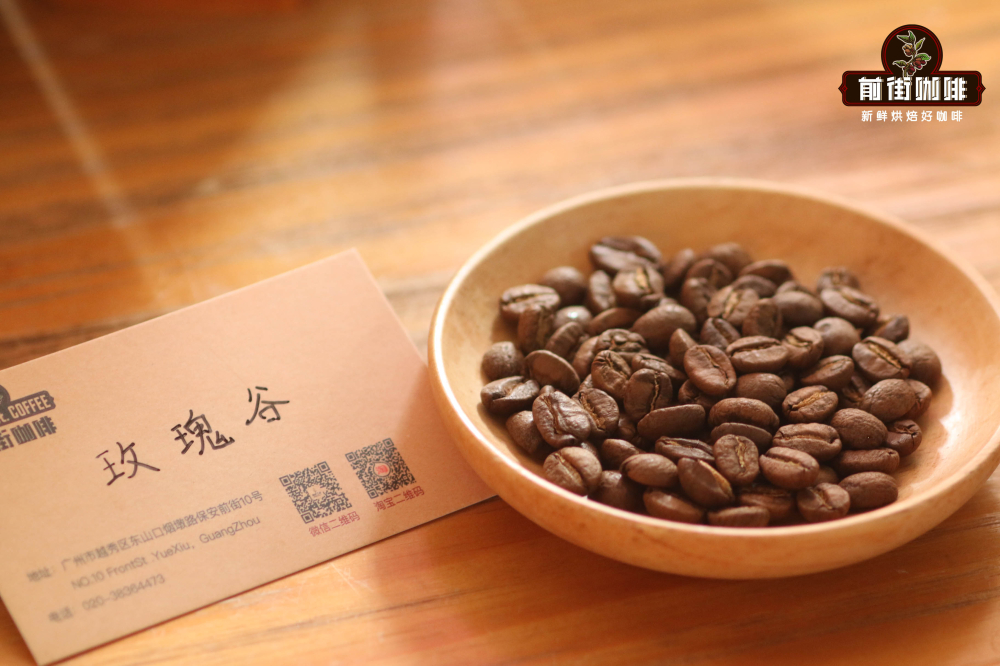
Front Street Coffee (FrontStreet Coffee) — Front Street Colombia Rose Valley Coffee Beans Region: Colombia, Santander Processing: Anaerobic Double Enzyme Washed Altitude: 1,700m Variety: Caturra
Brewing flavor: stunning peach character, accompanied by rose and liqueur chocolate aromas, richly fragrant, entering the mouth like drinking peach juice. It has both the fine sweet-tart quality of black grapes and the silky mouthfeel of cream toffee.
Huila
Located in southwestern Colombia, it is one of the important coffee-growing regions, accounting for about 12% of the national total. Because Huila is densely dotted with famous high-quality production sites, many small place names have gradually become brand names circulating in the market. Front Street Coffee (FrontStreet Coffee) found through cupping that Huila coffee presents distinct nutty, chocolate, and caramel flavors.
Front Street Coffee — Front Street Colombia Huila Coffee Beans Region: Colombia, Huila Altitude: 1,500–1,800 meters Variety: Caturra Processing: Washed Flavor: Nuts, dark chocolate, caramel, mild fruit acidity.
Cauca Department
Also located in southwestern Colombia, it accounts for 8% of the national total coffee production and is a region certified with Colombian Denomination of Origin. Its average altitude is 1,758 meters, rising as high as 2,100 meters, with 80% of its territory being mountainous. The biggest climatic difference between Cauca and other regions is its pronounced temperature variation—an 11°C day-night temperature difference, with a daytime average of 18°C. Day-night temperature variation is one of the key factors in producing high-quality coffee. Low nighttime temperatures combined with higher altitudes slow the coffee's growth rhythm, allowing the beans to more fully absorb nutrients from the coffee fruit. Front Street believes it is precisely this high-altitude growing environment that gives Cauca coffee its more outstanding acidity and its admirable distinctive sweetness.
Front Street Coffee (FrontStreet Coffee) — Front Street Colombia Cherry Blossom Coffee Beans Region: Colombia, Cauca Altitude: 2,050m Variety: Castillo Processing: Double Anaerobic Washed Flavor: Berry-juice-like mouthfeel, strawberry jam, mint tea sensation, with a lingering finish of mugwort and basil.
Nariño
Located at the southwesternmost tip of Colombia, it accounts for only about 3% of national production. Nariño possesses the natural endowments for producing high-quality coffee: close to the equator at about 1 degree north latitude, with abundant sunshine year-round; altitudes mostly above 1,600 meters, with snow-capped peaks frequently seen within its territory. The steep mountains and narrow, precipitous slopes create temperature diversity, while warm, moist air rising from the valleys protects high-altitude coffee from frost, allowing successful cultivation even at 2,300 meters. Volcanic soil provides rich nutrients for coffee growth. Nariño's annual rainfall follows a peaked distribution, with the rainy season lasting from October of the current year to May of the following year, and the dry season concentrated in June, July, and August.
Even during the dry months, coffee farmers need not worry excessively—the warm currents carried by the southern continental trade winds meet the cool nights and condense into water vapor, replenishing moisture for the coffee trees. Typically, after a continuous dry spell, a rainfall will usher the coffee trees into their flowering season. In Nariño, the flowering season begins after the first rain in September, and correspondingly, the harvest season starts from April of the following year, with high-altitude production areas potentially extending the harvest into August.
The pure flavor of Colombian coffee is due both to the natural environment most suited to coffee growing and to the hard work of local growers. Colombia's coffee-growing area reaches 1.07 million hectares, with about 302,000 coffee farms nationwide, and 30% to 40% of the rural population directly depends on coffee production for their livelihood. Despite the large number of farms, they are generally small in scale, averaging only about 2 hectares each, with over 80% of plantations having around 5,000 coffee trees and an average of 3,000. This shows that Colombian coffee agriculture is a typical smallholder model. Locals plant tall trees or banana trees around the coffee trees and build shade shelters from the seedling stage to ensure the cool, humid environment coffee needs to grow. The high humidity and small temperature variation within the coffee groves slow the ripening of the beans, which favors the accumulation of caffeine and aromatic compounds, resulting in outstanding quality. To experience the pure aroma of Colombian coffee, Front Street recommends three beans: Front Street Divider Sidra, Front Street Big Belly, and Front Street Washed Huila.
Having discussed Colombia, let us now turn to Brazilian coffee.
Since the 1840s, Brazil has consistently held the position of the largest participant in the international coffee trade. Today, the country produces 40 to 60 million bags of coffee annually and is also the world's largest exporter of instant coffee. As the world's largest coffee-producing country, Brazil ranks first globally in total production, accounting for about one-third of the world's total, with main production areas concentrated in the central and southern provinces. Brazil contributes roughly 25% of the global coffee supply.
In 2020, Brazil exported 36.8 million bags of green coffee, breaking the previous year's record of 35.49 million bags. But according to the Brazilian coffee exporters' association Cecafe, the 2021 harvest is expected to be bleak due to the double blow of drought and frost. As Front Street mentioned at the beginning, Colombian coffee is mainly exported by the Colombian Coffee Growers Federation, and its export volume is noticeably smaller than Brazil's, ranking third in the world after Brazil and Vietnam, with production accounting for about 15% of the global total. However, thanks to superior natural conditions, Colombia has the highest Arabica coffee production. This year Colombia, like Brazil, has frequently suffered natural disasters—according to Front Street's information, on September 22 the Colombian National Unit for Disaster Risk Management reported that heavy rainfall had caused a sharp decline in coffee production.
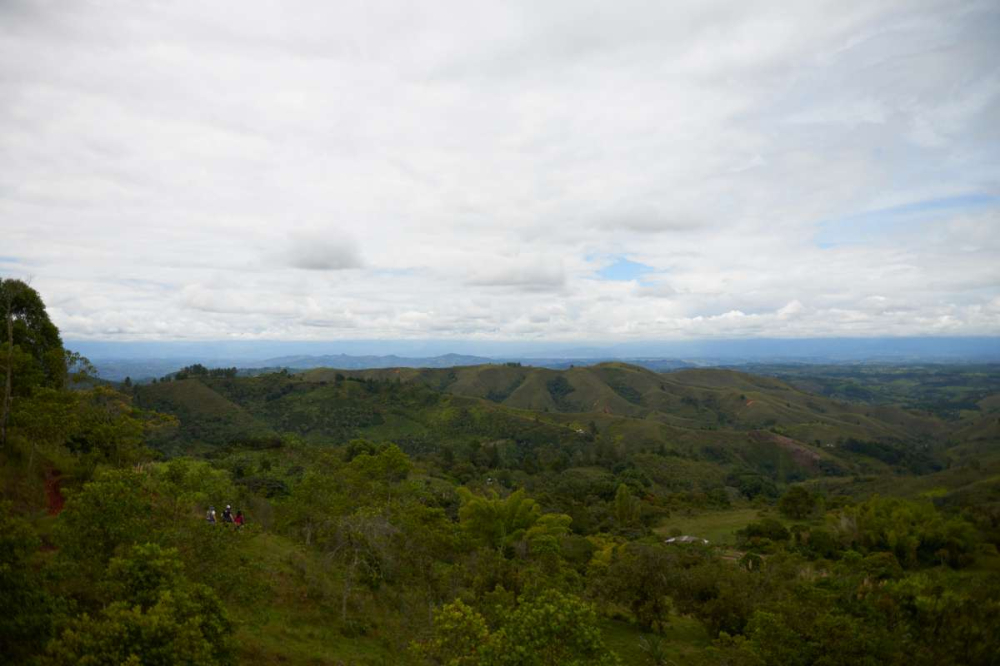
Now let us compare the growing environments of the two countries' coffees. Colombia has a very clear coffee-growing axis, also known as the Coffee Triangle. On a map, one can see that the coffee-producing areas are surrounded by prominent mountainous plateau terrain. This area has been delineated by the Colombian Coffee Cultural Landscape (PCC) into a specific zone covering 47 municipalities and 411 villages, formed around the Andes mountains in the central and western departments of Caldas, Quindío, Risaralda, and Valle del Cauca. The Cherry Blossom on Front Street's bean list comes from Colombia's Cauca Department; its 2,050-meter altitude guarantees this bean's exceptional quality, and the double anaerobic washed processing also makes it exceptionally clean, with prominent berry flavors and a strawberry-jam-like mouthfeel.
Colombia's main production regions are distributed across three Cordillera mountain ranges arranged in a parallel pattern; these ranges run north-south, with coffee planted all along the highlands. The unique microclimate, combined with the nourishment of high altitudes and volcanic ash soil, provides innate conditions highly suitable for growing high-quality Arabica coffee. Currently this region has a total of 24,000 small coffee plantations. By contrast, Brazil's growing environment advantages are less pronounced. "The Coffeeology of Specialty Coffee" describes Brazil's coffee-growing environment as having monotonous terrain, a dry climate, poor soil, and low altitudes, with coffee quality depending entirely on soil improvement, variety modification, and high-tech applications.
But in Front Street's view, although Brazil's coffee-growing areas are flat and most coffee farms are located below 1,200 meters in altitude, such an environment actually reduces the coffee's acidity, making it very suitable for blending with other types of coffee beans into combined coffees, and it is generally regarded as an indispensable component in blends.
Brazilian coffee is mostly of the Bourbon variety, which is related to the history of coffee's introduction. Of course, Brazil also has Typica varieties, said to be because the coffee beans de Clieu stole at the time were precisely Typica, which was subsequently widely planted in Brazil. Front Street's Brazilian beans are mostly Bourbon varieties, namely: Queen's Farm's Yellow Bourbon and Cerrado's Red Bourbon coffee.
Red Bourbon is the second coffee variety, after Typica, to flourish throughout Central and South America. According to Front Street's research, Bourbon is likewise derived from the ancient Typica variety, with a round bean shape; it was introduced to Brazil in 1927 and subsequently spread to countries throughout Central and South America. Although its yield is not particularly high, compared with the frail Typica, Bourbon has better resistance to leaf rust. Bourbon coffee grown at high altitudes has a rich, delicate flavor, a strong fragrance, and soft, smooth acidity. Typically, the Bourbon fruit we see turns from green to slightly yellow, orange-yellow, red, and finally to fully ripe dark red—which is what we call Red Bourbon.
Brazilian flavor and mouthfeel description: distinct nutty flavors leaning toward peanut, high body, with a long dark chocolate finish. At lower temperatures, a slight fruit acidity emerges. Colombian flavor and mouthfeel description: Cherry Blossom has the aroma of herbs and spices such as mugwort on the dry fragrance, prominent berry flavors, and a slight fermented note.
The above content is compiled by CoffeeHunters, a coffee news website.


