







What defines Huila coffee from Colombia's growing regions?
Huila coffee comes from a high-altitude region of Colombia with volcanic soil and abundant water, giving the beans nutty aromas, caramel sweetness, and bright fruit acidity. The washed processing method used there keeps the cup clean and consistent, which is why Colombian beans often serve as a blend base for both flavor and stability.
Colombia is the world's third-largest coffee producer and the largest producer of washed Arabica, and by law it may grow only Arabica varieties. Average temperatures in coffee-growing areas range from 18°C to 22.5°C, with annual rainfall of about 1,000 to 2,500 millimeters. The country's 86 microclimates create strong regional differences across Huila, Cauca, and Nariño.
Colombia's Huila growing region, with its high altitude, volcanic soil, and abundant water resources, produces specialty coffee that combines nutty aromas, caramel sweetness, and bright fruit acidity. This article systematically reviews the climate, terroir, and variety characteristics of major growing regions such as Huila, Cauca, and Nariño, explains the complete washed processing method in detail, and includes Front Street Coffee's pour-over parameters and SOE extraction recommendations. Whether you prefer the purity of traditional washed flavors or want to explore the individual expression of special processing methods, you can find a brewing approach that suits you.
For more specialty coffee knowledge, please follow our WeChat public account: Front Street Coffee (FrontStreet Coffee)
Colombian coffee beans On Front Street's bean list, in addition to Flower Moon Night, Rose Valley, Hanami, and Swiss Water Process decaf, there is also a daily drinking coffee—Huila coffee, which is also used in specialty blends. Choosing Colombian beans as a blend base is partly because of their outstanding flavor, but the more fundamental consideration is their stability, which ensures consistent reliability in both quantity and quality. Colombia is the world's third-largest coffee producer, with production and quality both fully guaranteed, which has also given the country's coffee an undeniable position in the international market.
Colombia has diverse climate types: the southern eastern plains and the Pacific coast have a tropical rainforest climate, while the northwest has a tropical savanna climate. The average annual temperature ranges from 15.8 to 20.5 degrees Celsius, with temperatures in coffee-growing areas fluctuating between 18°C and 22.5°C, and annual rainfall of about 1,000 to 2,500 millimeters. Influenced by latitudinal differences and 86 different microclimates between the northern and southern growing regions, Colombian coffee shows strong regional characteristics.
Colombian Coffee Growing Regions
Colombia is the world's largest producer of washed Arabica and the only country in the world that by law can only grow Arabica varieties. Combined with strong government policy support, the country has gradually transformed from once being a major coca-growing country into today's important coffee-producing powerhouse. The growing regions for Colombian specialty coffee beans are concentrated in the south, generally at altitudes above 1,500 meters, mainly in Huila Province, Cauca Province, Nariño, and Tolima. Coffee from these regions generally has refined acidity and berry-like sweetness, with outstanding sweetness performance.
Colombia Huila
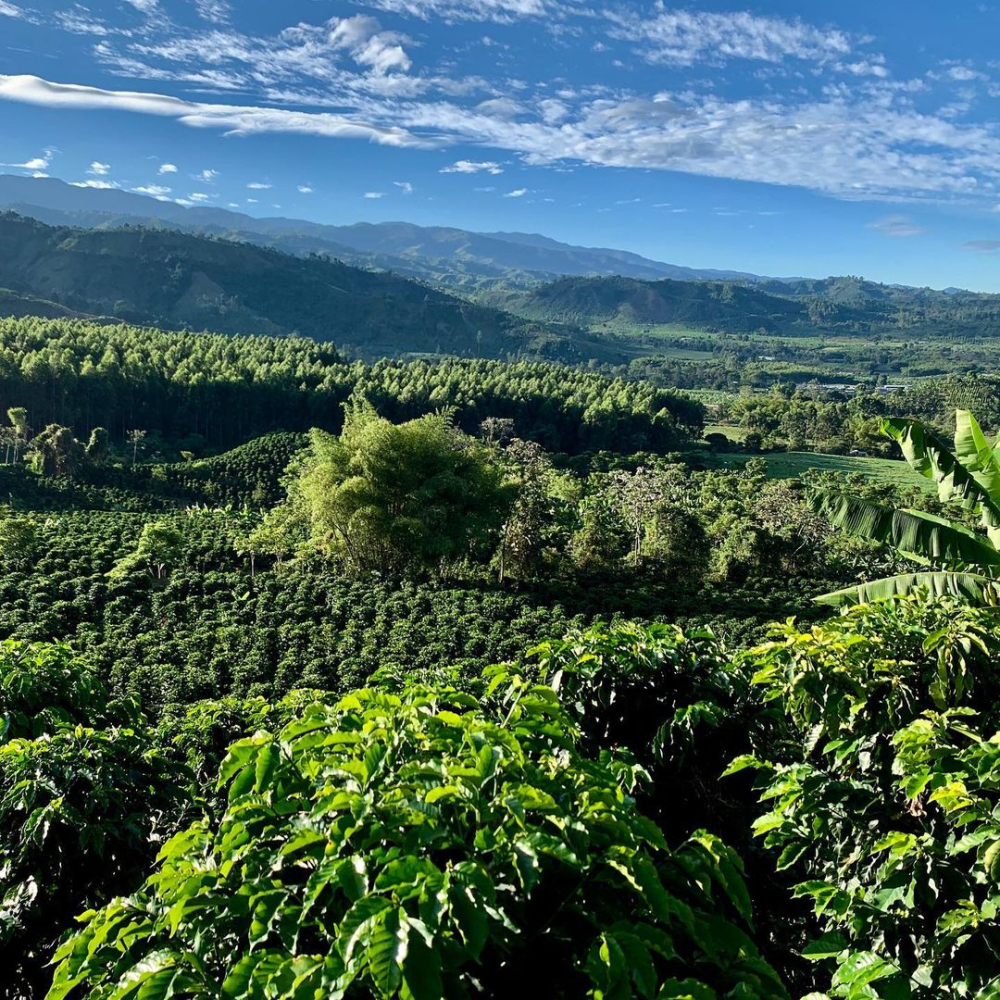
The Colombian Huila growing region is located in the southwest of the country and is one of Colombia's core specialty coffee growing areas. The coffee beans produced there belong to the high-mountain coffee specially selected by the Colombian state company and are known as a "national treasure." The region is surrounded by mountains, with an altitude of over 1,500 meters, and several important rivers in Colombia converge here, bringing abundant water resources and moisture. Unlike many coffee lovers' fixed impression of Colombian coffee as "balanced, mellow, and smooth," many micro-lots produced by smallholders are actually highly expressive of regional character. Coffee beans from Huila therefore show a strong mouthfeel, heavier body, and usually aromas of nuts, chocolate, and caramel, along with moderate acidity.
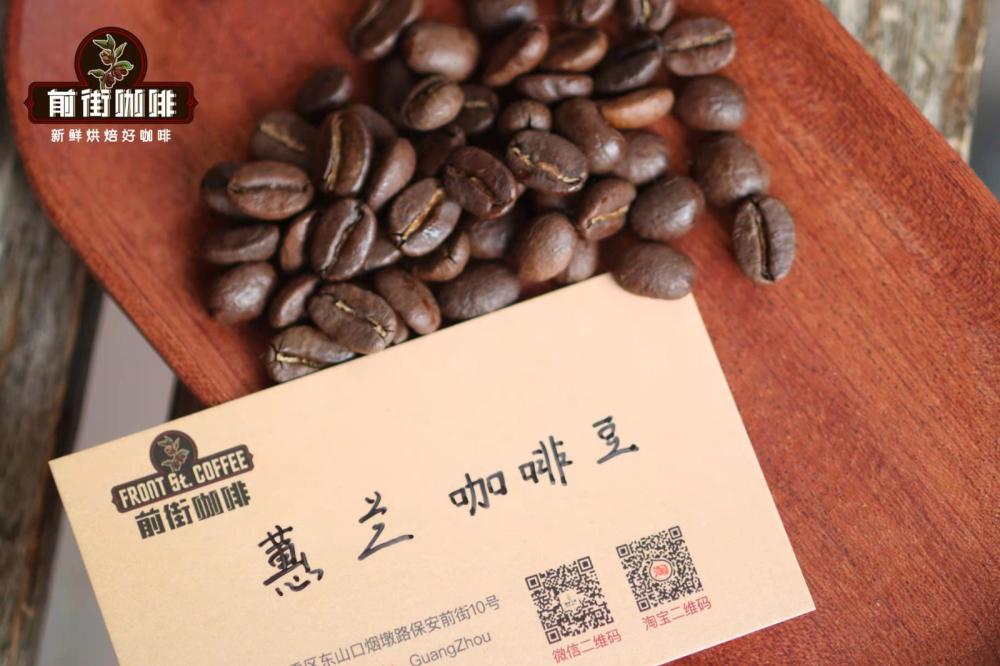
According to statistics from FNC (the Colombian Coffee Growers Federation), Huila accounts for about 18% of Colombia's total coffee production and obtained official designation of origin certification in 2013. Front Street believes that Huila coffee is widely popular not only because of its production scale, but also because of its quality and reputation. Coffee lots from local farms have repeatedly won Cup of Excellence awards, and many roasters, baristas, and cafes prioritize recommending Huila beans. This is due to Huila coffee combining full nutty aromas with bright, pleasant fruit acidity, and being recognized for its excellent balance as a representative of Colombia's top specialty coffee.
Cauca Province
Cauca Province is one of Colombia's certified regions of origin, with an average altitude of 1,758 meters, reaching as high as 2,100 meters. The region's topography, rainfall, temperature, and volcanic soil provide ideal conditions for coffee cultivation. Mountains make up 80% of the province, with parallel mountain ranges in the east and center that are part of the Andes; the central range includes two major volcanoes, Sotara and Petacas. Like other southwestern growing regions in Colombia, Cauca has a clearly monomodal rainfall distribution, with the dry season usually occurring from August to September each year. The subsequent rainy season triggers a concentrated coffee flowering season, followed by a concentrated harvest season the next year.
The biggest climatic difference between Cauca and other Colombian growing regions is probably its relatively larger temperature variation: the average daily temperature is 11°C, while the average daytime temperature is 18°C. The difference between day and night temperatures is an important factor in high-quality coffee. Low nighttime temperatures combined with relatively higher altitude slow the pace of coffee growth, allowing coffee seeds and beans to more fully absorb nutrients from the coffee fruit, which also creates Cauca coffee's better acidity and celebrated distinctive sweetness.
Nariño Province
Nariño Province is located in southwestern Colombia, bordered by the Pacific Ocean to the west and Ecuador to the south, with the Andes running through the entire province. Coffee is grown at altitudes of 1,600 to 2,300 meters in the high-altitude cloud belt, where there is fertile volcanic soil. Most of Nariño's annual production is purchased by large American bean traders, but the province's total annual output is about 150,000 bags, of which only about 6,000 bags are specially selected beans.
Coffee Bean Varieties
Colombian Coffee Varieties In addition to Caturra, Bourbon, Colombian Typica, and Pacamara, which are common in the Americas, Colombia also has three proprietary disease-resistant varieties: Castillo, Tabi, and Colombia, which shares the country's name. There are also some rare and precious varieties, such as Gesha, the small-beaned Mocca, Rume Sudan, Eugenioides, Laurina, Maraguesa, and Pink Bourbon.
Huila mainly grows Caturra and Catuai, which are common in Central and South America. The clean cup and soft acidity of these two varieties, combined with Huila's high altitude and volcanic soil, give the region's coffee beans refined and soft berry acidity, roasted nut aromas, and a distinct caramel finish, with abundant sweetness.
The Flower Moon Night and Rose Valley currently listed by Front Street Coffee (FrontStreet Coffee) are made from the Caturra variety.
Typica
As in other regions, Typica is a long-cultivated variety in Colombia. Around the late 16th to early 17th century, a priest first introduced Typica to Colombia from the French Antilles via Venezuela. Typica has excellent flavor, with light floral aromas, excellent acidity, and a full body. Popular coffees on Front Street's bean shelf, such as Jamaica Blue Mountain No. 1, Front Street 2013 Yunnan Small Grain, and Papua New Guinea Paradise Bird, are all harvested from this ancient superior variety. However, precisely because Typica has low yields and high agronomic costs and technical requirements, most coffee farmers prefer higher-yielding varieties, which is also the main reason its current planting share is relatively small.
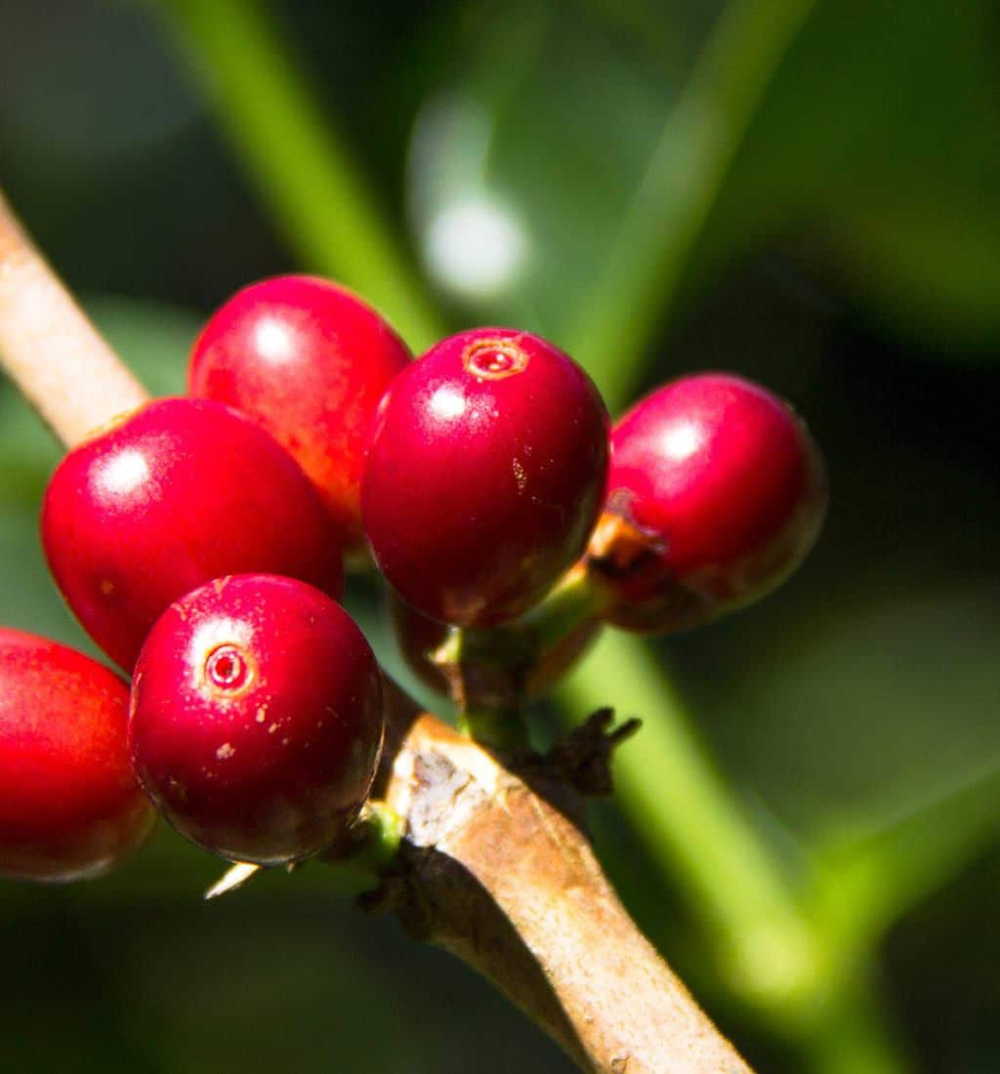
At present, only a few areas in Colombia still grow Typica. This year Front Street Coffee (FrontStreet Coffee) cupped an anaerobically natural-processed Typica from Colombia's Pearl Estate, with flavors of high-quality citrus acidity, passion fruit, and fermentation aromas.
Bourbon
Bourbon is a mutation of Typica. Its most notable features are rounder beans and even better acidity, with a red-wine-like character. Bourbon was officially introduced to the South American continent only in 1860, first brought to Brazil to replace low-yielding Typica, and later spread to Colombia. However, Bourbon is not widely grown in Colombia, with cultivation only in a few areas. Front Street Coffee (FrontStreet Coffee) has listed a Pink Bourbon from Paraiso Estate in Cauca Province, which presents clear, clean acidity reminiscent of lemon and cherry tomato, calling to mind Kenyan coffee.
Caturra
Caturra is a natural mutation of Bourbon. Compared with Bourbon, its advantages are its sun-exposure trait (no need for shade trees), short stature (easy to pick), and many branches (high yield), while its flavor is comparable to Bourbon, making it Colombia's main coffee variety. Interestingly, Caturra was discovered on a plantation in Minas Gerais, Brazil, and was subsequently selected by the Instituto Agronomico de Campinas (IAC) in São Paulo State, Brazil. But experimental planting results in Brazil were not ideal; once it reached Colombia, Caturra quickly transformed and spread nationwide.
Processing Methods in the Huila Region
Colombia's growing regions are rich in water resources and very suitable for washed processing, so Colombian coffee beans are mainly washed. Family-based farms are equipped with specially made green bean processing machines (Ecomill or Eco-Pulper). With the popularity of special processing methods and the inclusiveness of Colombian coffee beans, more and more special processing methods are being applied to Colombian coffee beans, the most representative of which is anaerobic fermentation.
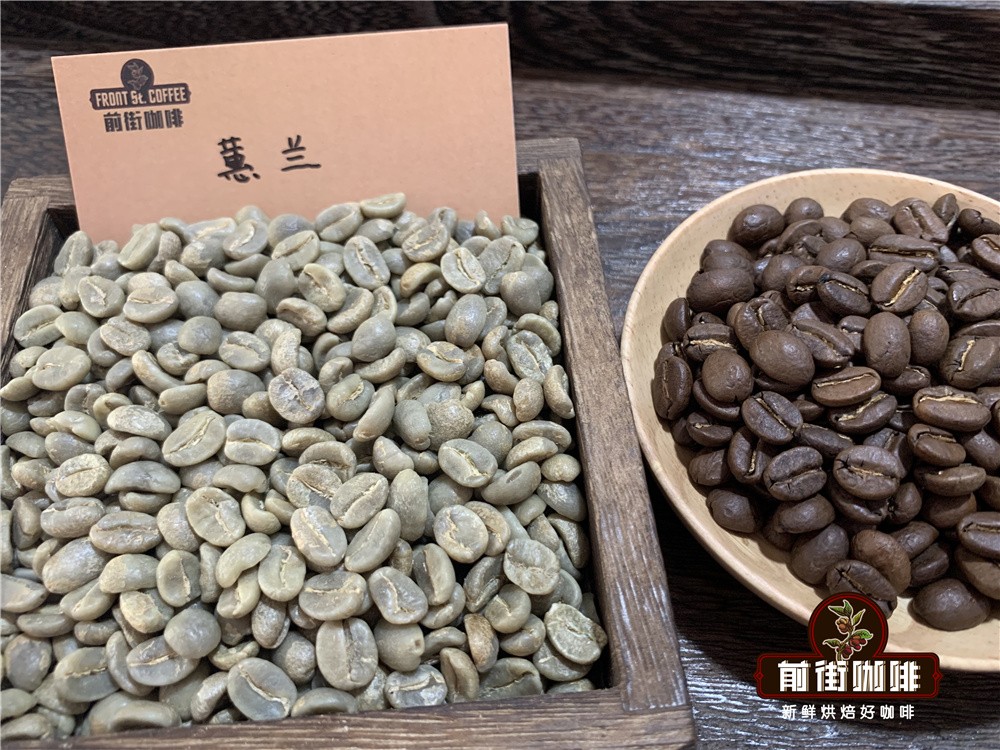
Examples include Front Street's Colombian Flower Moon Night coffee, Rose Valley coffee, and Passion Fruit coffee, but most coffee farmers in Huila still insist on using traditional washed processing. Front Street also believes that washed processing best reflects the local flavor of the coffee beans, so Front Street selected Colombian washed Huila coffee as the representative coffee of Colombia as a coffee-producing country.
Washed Processing Method Steps 1. First, the coffee farmers pour all the harvested coffee cherries into water, so that bad and defective coffee beans float to the surface, while the qualified coffee cherries sink to the bottom. This operation also greatly reduces the time wasted by selecting them one by one.
2. Put the screened coffee cherries into a depulper to remove the skin and pulp. After removing these, a layer of mucilage still sticks to the surface of the coffee cherries, so a large amount of clean water is used to wash away the sticky substance on the surface of the coffee cherries.
3. Next, fermentation is used to completely remove the mucilage. This process takes about 18 hours, but after fermentation is completed, fermentation bacteria remain attached to the surface of the coffee cherries, so they still need to be washed again with a large amount of clean water. In this step, obtaining 1 kilogram of coffee beans requires 40 to 50 kilograms of clean water. Front Street considers this a very large number, and this is precisely why arid countries cannot adopt washed processing.
4. The cleaned coffee beans can then be dried. Some regions dry them directly outdoors, while some more developed growing regions send them to processing plants for machine drying, reducing the coffee's moisture content to about 11%. Finally, the dried coffee beans are stored and packaged for sale and export.
Front Street Brewing Recommendations:
To brew a delicious cup of coffee, Front Street believes that any brewing method requires fresh coffee beans. Front Street has always held that the freshness of coffee beans has a great relationship with coffee flavor, so all coffee beans shipped by Front Street Coffee (FrontStreet Coffee) are within 5 days of roasting. Front Street's roasting philosophy is "freshly roasted good coffee," so that every customer who places an order receives the freshest coffee. Coffee beans need about 4-7 days of resting, so when customers receive them, the flavor is at its best.
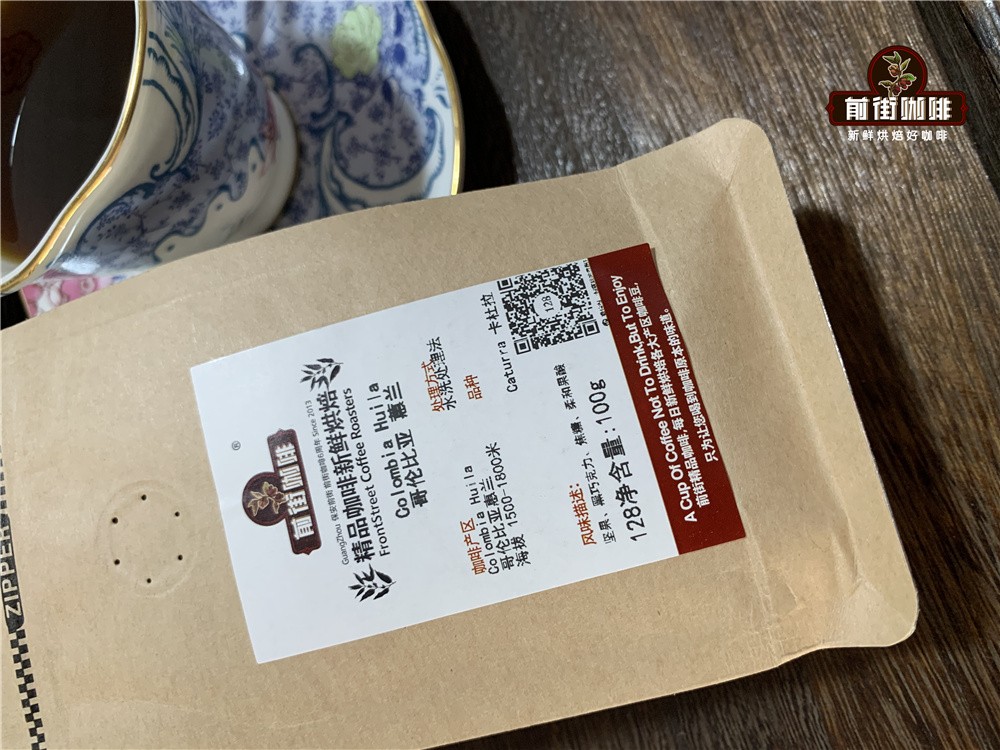
For friends who need ground coffee, Front Street kindly reminds you: once coffee beans are ground in advance, they no longer need resting, because during transportation the pressure from carbon dioxide inside the package can also make the coffee flavor rounder, so once you receive ground coffee you can immediately brew a cup and drink it. However, ground coffee needs to be brewed promptly, because after ground coffee contacts air it oxidizes relatively quickly; in other words, the coffee's flavor dissipates relatively quickly and the coffee will not taste as good. Therefore, Front Street recommends buying whole beans and grinding fresh before brewing, so you can better taste the coffee's flavor.
Front Street Parameters for brewing Colombian Huila coffee:
When brewing Huila coffee, Front Street uses the KONO dripper. KONO's ribs stop before reaching half the height of the dripper. This design is actually intended to ensure that after the dripper is wet, it fits closely against the dripper wall and restricts airflow, thereby increasing the water absorption time of the coffee grounds, making the extracted coffee more uniform overall and enhancing the mellow mouthfeel.
KONO dripper, 88°C water temperature, 1:15 coffee-to-water ratio, 15g coffee grounds, grind size (75% passing a No. 20 standard sieve), three-stage extraction.
Use staged extraction, blooming with twice the amount of water as the coffee grounds, that is, 30 grams of water for 30 seconds. The reason blooming is needed is to allow the coffee grounds to release internal carbon dioxide, thereby making the later extraction more stable. Pour in a small stream in circles until 125 grams, then pause, continue pouring until 225 grams and stop. After the water in the dripper has dripped through, remove the dripper. Start timing from the beginning of pouring; the extraction time is 2'00". Next, pick up the whole cup of coffee and swirl it evenly, then pour it into a cup to taste.
Flavor characteristics of Colombian Huila coffee : The first sip brings nutty flavors, with a relatively high body. It leans toward caramel sweetness, and at lower temperatures it shows slight fruit acidity.
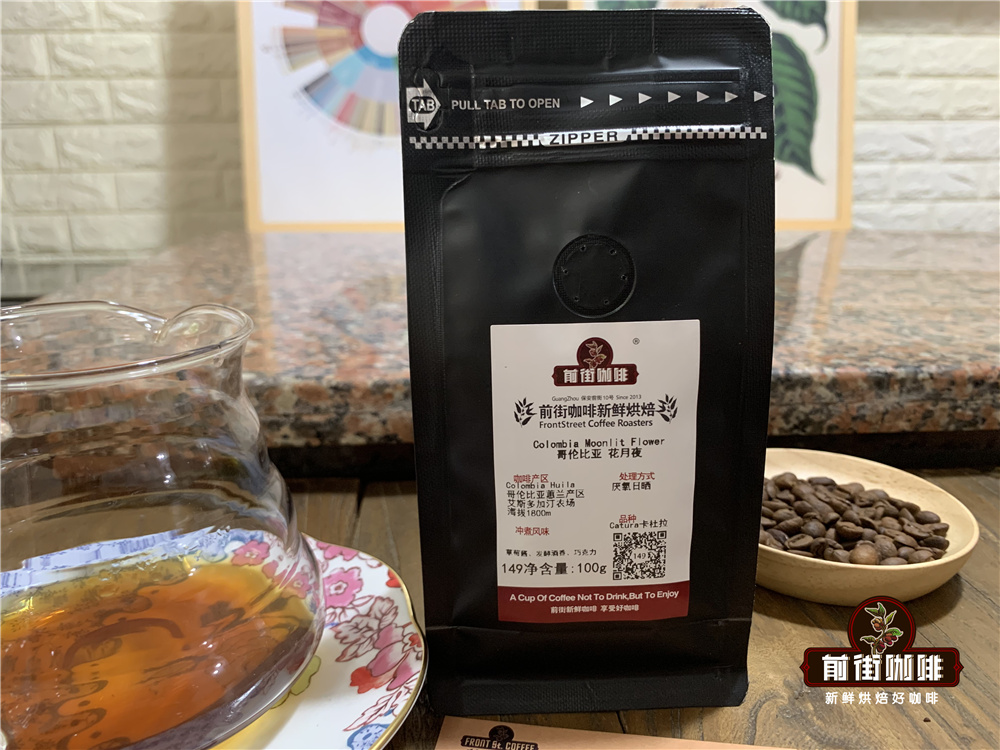
Although Front Street believes that washed coffee beans better reflect local flavor, coffee beans processed by special methods also have distinctive flavors. For example, Front Street's Colombian Flower Moon Night coffee has strawberry jam, chocolate, and fermented wine aromas, while Rose Valley coffee has rose, white peach, and chocolate liqueur notes. These two single-origin coffees are very popular. For friends who love coffee but are afraid of not being able to sleep because of it, you can also choose Colombian Swiss Water Process decaf. Colombian decaf beans also have very good flavor, with a rich mouthfeel, full body, and a slightly sweet vanilla and dark chocolate finish.
Are Colombian coffee beans suitable for making SOE?
When many coffee enthusiasts encounter a bean they love, they have a habit: they are not satisfied with tasting coffee through only one extraction method, but wish they could extract it with every tool on hand. For example, the highly personalized SOE is one of the most popular approaches. The first condition for a delicious cup of coffee is high-quality coffee beans, and the beans used for SOE should also be relatively high-quality single-origin coffee beans. Front Street's roasting philosophy is "freshly roasted good coffee," hoping every customer drinks freshly roasted coffee beans with full aroma; all shipped coffee beans are freshly roasted within 5 days. Here, Front Street takes Colombian Rose Valley as the extraction subject and uses the store's espresso offerings as a reference to briefly explain how to make an Espresso.
The coffee machine at Front Street's store is the commercial single-group "Lelit Bianca," which can adjust extraction by changing pressure, with a maximum pressure of 11 bar. A home coffee machine only needs to reach 9 bar of pressure to satisfy extraction and milk frothing functions, paired with an espresso grinder.
Coffee beans: Colombia · Flower Moon Night coffee beans
Dose: 20g
Yield: 40g
Dose-to-yield ratio: 1:2
Extraction time: 26-32 seconds
Grind setting: Galileo 2.0
Front Street uses the capacity of a double basket, with a dose of about 18-20 grams; Front Street uses 20 grams of coffee grounds when serving. Usually the ratio of coffee grounds to coffee liquid is 1:1.5 to 1:2.5. Front Street's extraction ratio is 1:2, that is, 20 grams of coffee grounds extract 40 grams of coffee liquid. Time is related to the flow rate of the coffee grounds. Generally, a single extraction time is controlled at 20-35 seconds, because within 20 seconds the coffee usually tastes thin, while over 35 seconds it is easy to over-extract and develop burnt bitterness. Front Street's espresso mostly falls within the range of 28-30 seconds.
Front Street first wipes the basket dry, turns on the grinder, grinds a double dose of coffee grounds, places it on an electronic scale, and adjusts to reach 20 grams. Then use a tool to distribute the grounds evenly and tamp the coffee puck firmly to ensure more stable extraction. Then turn on the extraction switch to release water, wetting the group head while rinsing away stuck coffee grounds, gently lock the portafilter onto the group head, and begin extraction. When the electronic scale shows 40 grams of coffee liquid extracted, at about 30 seconds, you can turn off the extraction switch. Pour the coffee liquid into an Espresso cup and enjoy.
There is no fixed ratio for making SOE Americano; every coffee shop has its own serving standard, with the aim of presenting the coffee's flavor and mouthfeel. According to Front Street's repeated tests, if Colombian coffee beans are used to make SOE, a ratio of 1:6 gives the best taste, that is, pour 40 grams of coffee liquid into 240 grams of 80°C hot water, and the SOE hot Americano is complete. The Flower Moon Night SOE Americano made this way presents not only the fresh aroma of cantaloupe and cranberry, and rich strawberry jam and fermented fruit aromas, but also a layer of crema with cookie aromas, and finally a chocolate finish, with a rich mouthfeel.
If making a latte, it is actually very simple too; you only need to combine the SOE espresso with milk. There is likewise no fixed ratio, with most falling between 1:5 and 1:8. Front Street uses a 1:6 ratio: 40g espresso, add 240g milk. When serving a hot latte, Front Street adds the espresso to a preheated coffee cup, then uses the espresso machine steam to froth the milk. The milk temperature is best controlled at 55-65°C, forming dense milk foam of moderate thickness, then evenly integrating it with the coffee liquid. The final latte art is the icing on the cake.
The above content is compiled by CoffeeHunters, a coffee news website.


