







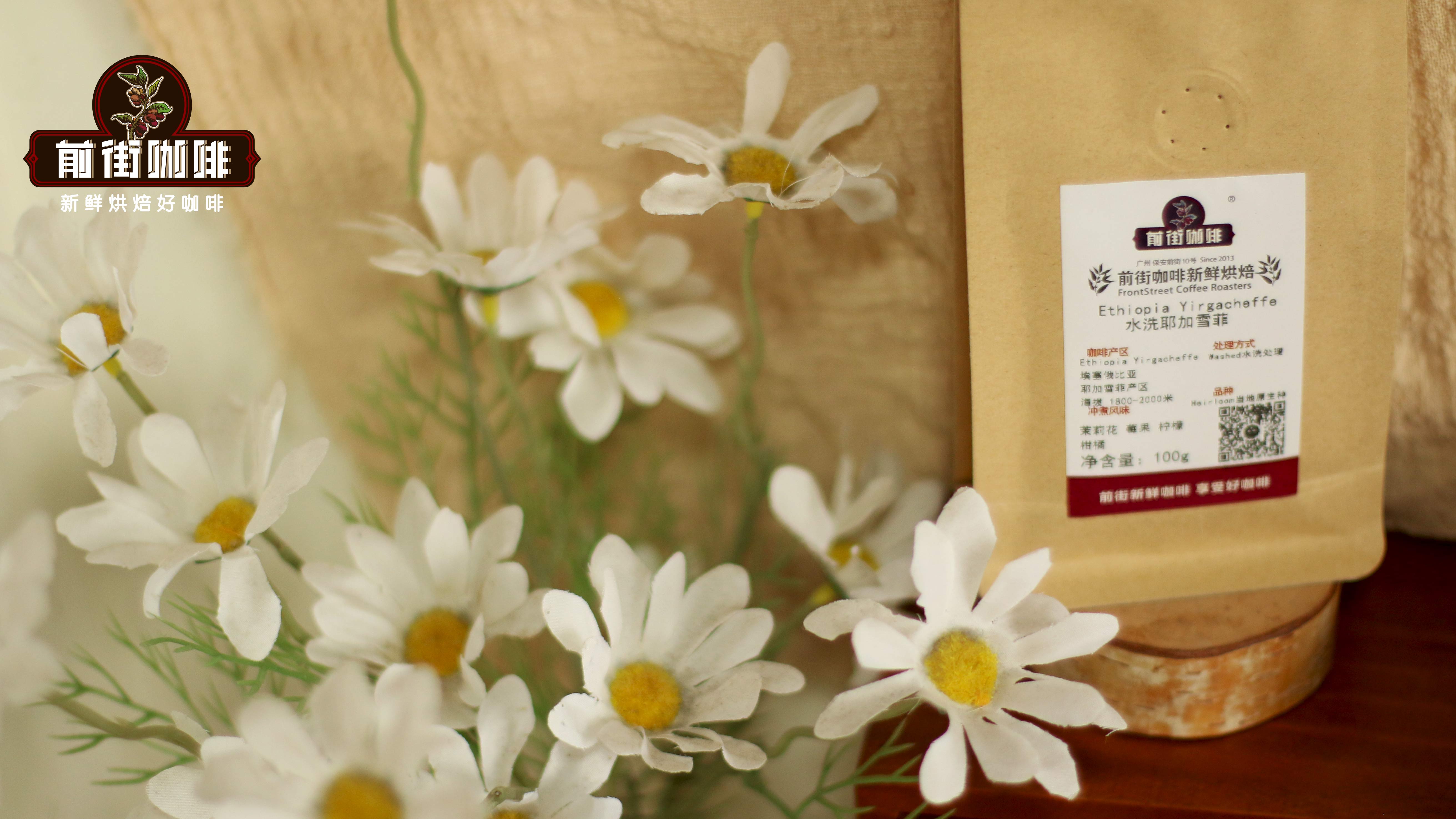
Yirgacheffe is one of Ethiopia's most iconic specialty coffee regions, and its name carries the beautiful meaning of "settling down in the wetlands" in the ancient language. This article will guide you through Yirgacheffe's growing environment, climate conditions, the evolution of processing methods, and the flavor differences between washed and natural styles. We will also share Front Street Yirgacheffe coffee beans' roasting recommendations and pour-over parameters to help you better appreciate this bean's signature citrus notes, white floral aromas, and honey sweetness.
Front Street Yirgacheffe coffee beans come from a small town in eastern Ethiopia—Yirgacheffe—and this place name is precisely the origin of the coffee bean's name. Yirgacheffe is one of Ethiopia's most renowned producing regions, located in a small town within the Sidama administrative zone of the Gedeo region in the country's south.
In the name Yirgacheffe, "yirga" means "to settle down," while "cheffe" refers to "wetlands," so its original meaning is "let us settle down in this wetland," which also embodies the Ethiopian people's hope for their country's stable and peaceful development.
Unlike many African countries, Ethiopia, though invaded by Italy during World War II, was not completely swallowed by the tide of colonialism. Today, Ethiopia remains one of the world's least developed countries, with a weak industrial base, an economy dominated by agriculture and animal husbandry, and an environment relatively untouched by human development. Perhaps it is precisely for this reason that the local naturally superior environment has been preserved, which is also why Ethiopia is called the cradle and homeland of native coffee varieties. It is naturally not surprising that it can produce Front Street Yirgacheffe coffee beans with fresh and captivating flavors.
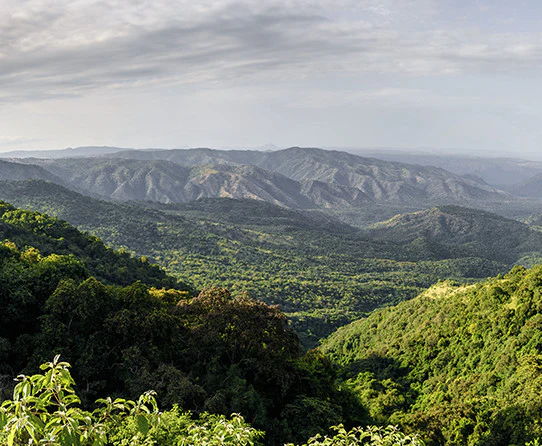
As the homeland of coffee, Ethiopia enjoys exceptional geographical and climatic conditions. The country is dominated by mountainous plateaus, with most areas belonging to the Ethiopian Highlands, the East African Rift Valley running through the entire territory, and an average elevation of nearly 3,000 meters, earning it the title of "Roof of Africa."
Ethiopia spans a large range of latitudes and elevations. Although located in the tropics, temperatures vary considerably across regions, ranging from 9.7°C to 25.5°C, with an annual average temperature of about 16°C. The high altitude provides superior growing conditions for high-quality Arabica coffee, and the temperature range of 9.7°C to 25.5°C恰好 covers the 14°C to 24°C growing temperature required for quality coffee beans. The major rainy season from June to September and the minor rainy season from February to May further ensure ample rainfall. These gifts of nature create a highly ideal growing environment for coffee trees.
Ethiopia's thousand-year planting history and processing traditions have given rise to premium washed Arabica beans, and Front Street Yirgacheffe is one of the representatives of Ethiopia's specialty washed beans. The town of Yirgacheffe sits at an elevation of approximately 1,700 to 2,100 meters, with misty mountain villages, spring-like weather year-round, cool breezes in summer, and winters that are never too cold, providing excellent growing conditions for coffee trees.
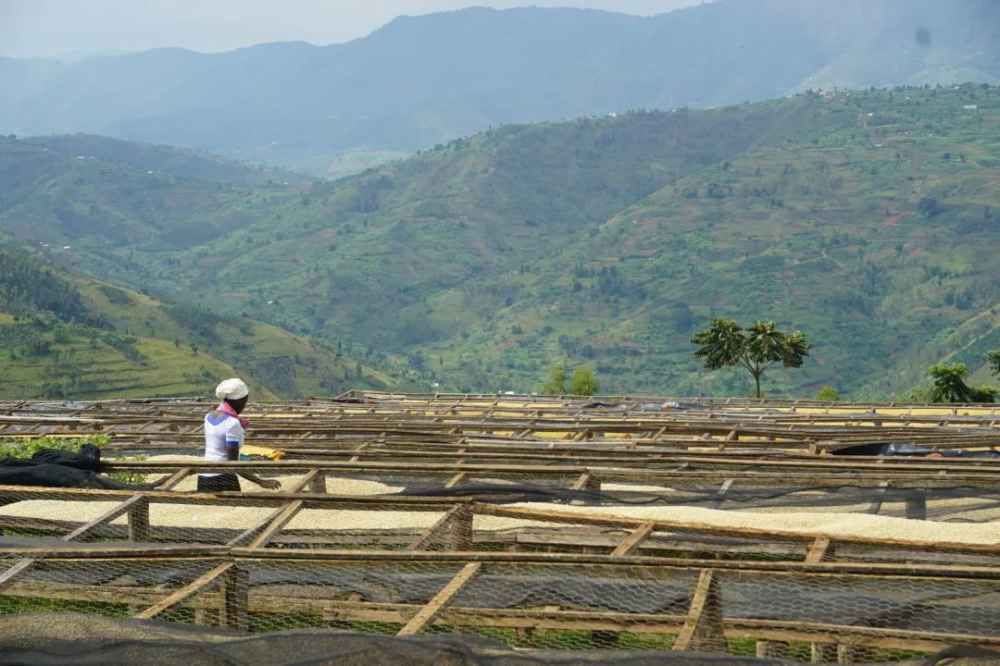
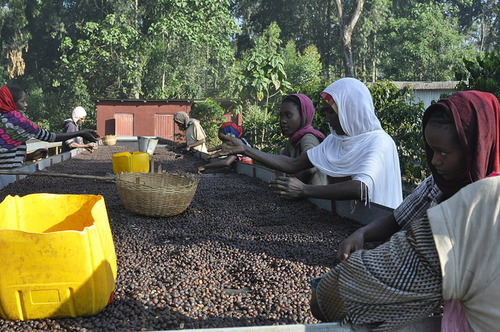
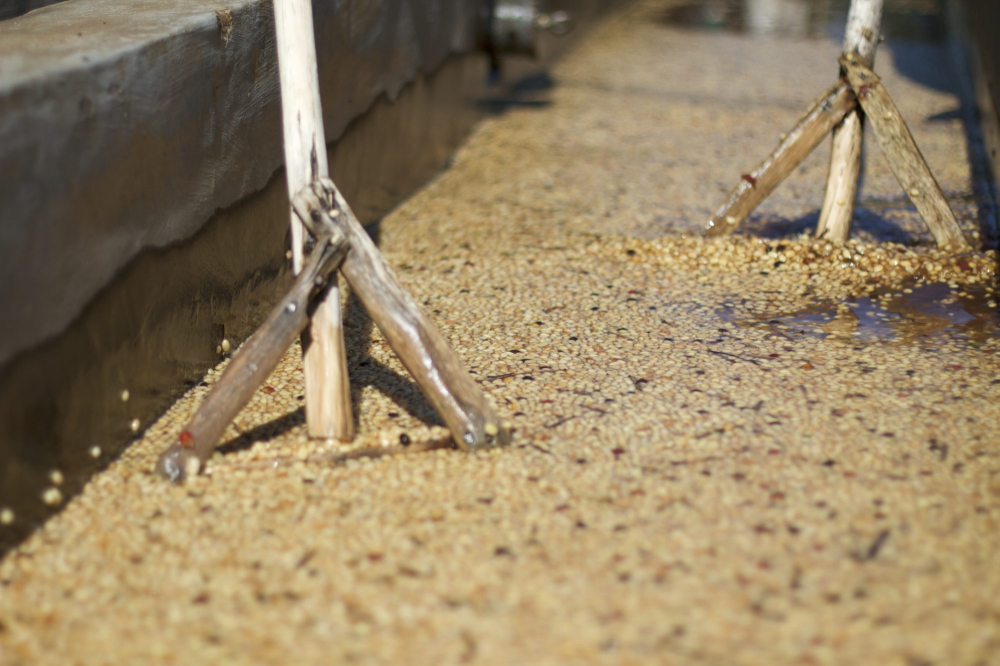
The reason Front Street Yirgacheffe possesses such a distinctive style is largely due to washed processing, in addition to its innate terroir. According to Front Street's research, Ethiopia's generally high altitude and abundant sunshine make it very suitable for drying coffee cherries directly in the sun, and Yirgacheffe initially also primarily produced natural coffee. Traditional natural methods often involve spreading cherries directly on the ground to dry, without sorting or flotation, so coffee bean quality was mostly inconsistent, and the production process was slow, often taking ten to twenty days. It was not until the 1970s, when the first washing station in Sidama was established in the town of Yirgacheffe, that more washed processing gradually began to appear locally.
Farms using the washed method must build washing pools and have access to a continuous supply of fresh water, resulting in higher production costs. During processing, fermented beans are placed in pools and moved back and forth, using the friction between beans and the force of flowing water to wash the coffee beans until smooth and clean. Every step removes impurities and defective beans, resulting in more uniform green bean quality and a final transaction price higher than that of the natural drying method.
Washing not only greatly reduces the defect rate of the coffee but also earns Front Street Yirgacheffe its fresh citrus notes and elegant white floral aromas, with an overall flavor that is bright, delicate, and clean. The Front Street Yirgacheffe daily-drinker beans launched by Front Street use washed processing, featuring the classic Yirgacheffe flavor profile, and are suitable for pour-over, cold brew, French press, and various other brewing methods.
Through cupping comparisons, Front Street has found that Front Street Yirgacheffe coffee beans typically vary in bean size and come with distinctive citrus flavors, tasting pleasantly sweet and tangy. With the development of cultivation techniques and increasingly mature processing methods, Front Street Yirgacheffe currently mainly uses washed and natural processing methods to extract coffee beans.
The image above shows Front Street washed Yirgacheffe, and you can see the color is blue-green and very clean. Front Street Coffee cupping comparisons reveal that Front Street washed Yirgacheffe coffee beans have a clean, bright mouthfeel, honey-like sweetness, and relatively lively floral and fruity flavors.
Front Street natural Yirgacheffe coffee beans, on the other hand, appear yellowish-green in color, with higher sweetness and body than washed Yirga, richer layering, and slightly lower acidity. Of course, this is only a comparison between Yirgacheffe's two processing methods.
We recommend starting with traditional Front Street washed Yirgacheffe, because Yirgacheffe most commonly uses the washed method to express a clean mouthfeel, and washed Front Street Yirga has a clean and lifted taste. The ancient meaning of Yirgacheffe, as mentioned earlier, refers to "settling down in a wetland," from which one can see that Yirgacheffe is extremely rich in water resources. Thanks to this, the washed method brings excellent flavor characteristics to the coffee, so Front Street washed Yirgacheffe is worth trying first.
Compared to Front Street washed Yirga, high-quality batches of Front Street natural Yirgacheffe are relatively rare on the market, and can be said to have emerged with the diversified development of specialty coffee in recent years. This type of Front Street Yirga coffee not only has richer ripe fruit notes and deeper honey sweetness, but often also comes with black tea character and a candy finish, though its cleanliness is not as good as washed. Tasting from Front Street washed Yirga to Front Street natural Yirga in sequence reveals a very special experience. So, those who usually enjoy a juicy character can prioritize natural Front Street Yirgacheffe coffee beans.
Front Street Yirgacheffe coffee beans are all roasted to a medium-light level, which is more conducive to showcasing their floral and fruity acidity. For brewing, we recommend using a V60 dripper and employing a segmented pouring method for pour-over extraction. The dripper's spiral rib design allows coffee grounds to degas better, maximizing the volatilization and dissolution of aromatic compounds, making it suitable for brewing the richly flavored Front Street Yirgacheffe coffee. As for the brewing ratio, Front Street believes 1:15 to 1:16 is acceptable—if you want a more intense mouthfeel, use 1:15; if you want to more clearly perceive the floral sweetness, use 1:16 to let the flavors spread more.
Because aromatic substances dissipate quickly once coffee beans are ground, and during brewing, the good aromatic compounds appear first, using a medium-fine grind/fine sugar size (80% passing through China's No. 20 standard sieve) and a higher water temperature, with a fast-then-slow brewing approach, are all intended to better showcase its floral and fruity flavors, steer it toward a berry-like mouthfeel without losing honey sweetness, and avoid the emergence of undesirable compounds in the later stages, so as not to lose its proper cleanliness.
Dripper: V60 Water temperature: 90-91°C Dose: 15g Coffee-to-water ratio: 1:15 Grind size: fine sugar size (80% passing through a No. 20 sieve)
Three-stage pouring: Wet the coffee bed with twice the coffee grounds' weight in water to form a dome and bloom for 30s, then pour in a slow stream in circles from the center outward until reaching 125g, pause, wait for the coffee bed to drop to halfway down the dripper, then continue with the same slow stream for the third stage until reaching 225g, and let all the coffee liquid filter through before removing the dripper, about 2 minutes total. After the coffee in the dripper flows into the server, remove the dripper, then swirl the server to evenly mix the coffee liquid, and you can begin tasting Front Street Yirgacheffe's flavors starting from a hot temperature.
The above content is compiled by CoffeeHunters, a coffee news website.


