







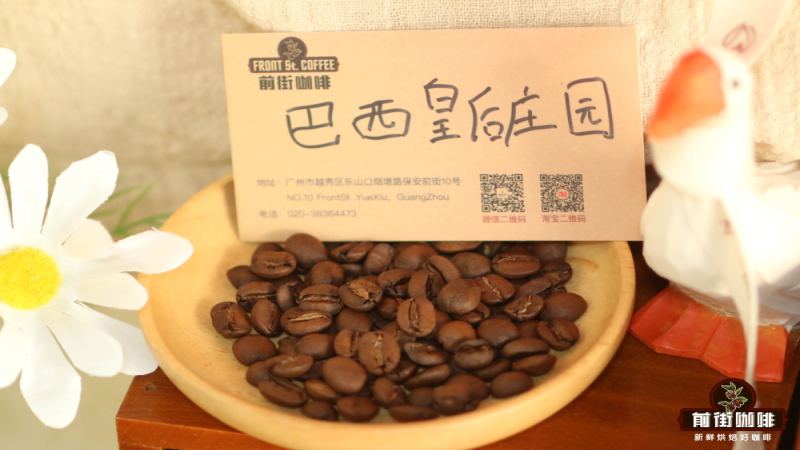
Brazil is the world's largest coffee producer, and Front Street Coffee believes that the Bourbon variety coffee beans from Fazenda Rainha best represent the flavors of the Brazilian growing region. These beans come from the high-altitude areas of São Paulo state, are of the Yellow Bourbon variety, and are processed using either semi-washed or natural methods, presenting layers of nut, cream, peanut, fermented fruit, and cane sugar flavors. Fazenda Rainha belongs to the renowned Carvalho Dias family, whose estates have repeatedly achieved excellent results in Brazil's Cup of Excellence competitions. The estate insists on manual harvesting and cultivating low-yield, high-quality Bourbon varieties, and is regarded as a quintessential representative of Brazilian specialty coffee. This article will analyze the flavor origins of these beans based on growing conditions, variety characteristics, processing methods, and grading standards, and will include Front Street's roasting and brewing parameters.
Brazil is the world's number one coffee-producing country, and the quality of its coffee is generally quite outstanding. Front Street Coffee believes that if one were to choose a coffee bean that best represents the style of the Brazilian growing region, the Bourbon variety from Fazenda Rainha would be the best answer. In the following article, Front Street Coffee will discuss the flavor sources and characteristics of Brazilian Fazenda Rainha coffee beans.
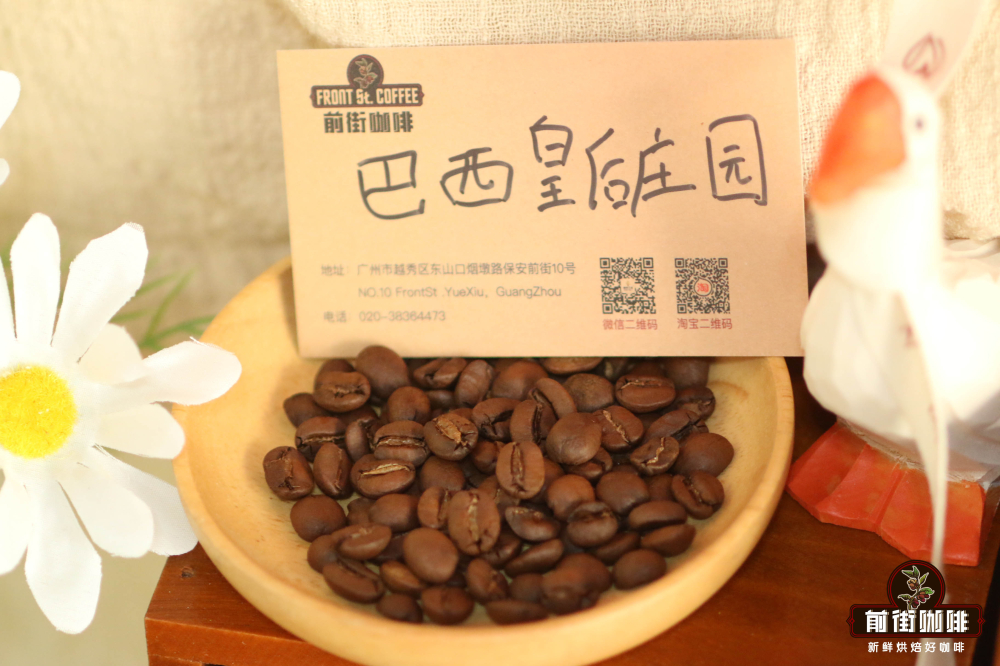
Front Street Coffee Brazilian Queen Coffee Beans
Country: Brazil
Region: São Paulo State (Fazenda Rainha)
Altitude: 1400-1950m
Variety: Yellow Bourbon
Processing Method: Semi-washed / Natural
Flavor: Nuts, Cream, Peanut, Fermented Fruit, Cane Sugar
Brazilian Fazenda Rainha
Front Street Coffee believes that friends familiar with specialty coffee will not be unfamiliar with Fazenda Rainha in Brazil. This estate is owned by the renowned Carvalho Dias family, whose four large estates have been listed every year since the first Brazil Cup of Excellence competition in 1999, winning more than 12 awards over seven years, and in 2004 taking the championship, 9th place, 11th place, and other positions. Many Brazilian estates have worked hard for years to be shortlisted but struggled to achieve it, yet the estates under this family have successively brought back multiple awards. Taking Fazenda Rainha as an example, it also has an impressive record: runner-up in 2000, third place in 2001, and 29th place in 2005. To date, Fazenda Rainha has won awards three times.
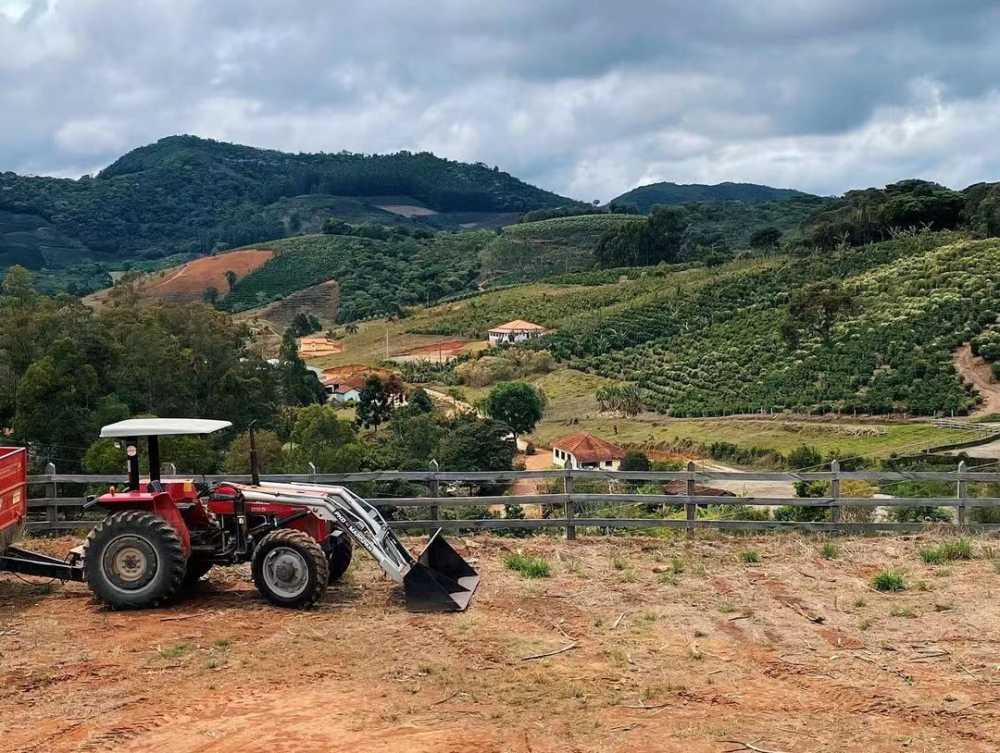
Additionally, according to Front Street's understanding, the Carvalho Dias family is a founding member of the Brazil Specialty Coffee Association, and their commitment to coffee quality and environmental stewardship is evident to all. On the family farm, natural waterfalls are used to develop pollution-free hydroelectric power to meet their own electricity needs. They have also built a church, classrooms, a nursery, and a medical station, and insist on maintaining native forest and continuous reforestation. As for Fazenda Rainha, environmental protection is carried out quite thoroughly. Due to its high altitude and non-plain terrain, machine harvesting is impossible, so all fruit is picked by hand, and low-yield, high-quality Bourbon varieties are cultivated, making it truly a quintessential representative estate of fine Brazilian coffee.
Therefore, Front Street Coffee believes that the coffee beans produced by Fazenda Rainha are undoubtedly the most representative of the flavor characteristics of Brazil's coffee-growing regions. As mentioned in previous Front Street Coffee articles, the flavor of a high-quality coffee bean depends on its origin, variety, and processing method. Below, Front Street Coffee will analyze these three major factors that determine the flavor of Fazenda Rainha coffee beans.
Brazilian Coffee Growing Conditions
Brazil is located in the Latin American region of the Western Hemisphere, in the eastern part of South America on the western shore of the Atlantic Ocean. Except for Ecuador and Chile, it borders all countries on the South American continent; the vast majority of its territory lies between the equator and the Tropic of Capricorn, making it the country with the largest tropical range in the world. One-third of the country has a tropical rainforest climate, and two-thirds has a tropical savanna climate. The superior tropical natural conditions are very suitable for the growth and production of coffee and other tropical cash crops.
Brazilian Coffee Growing Regions
According to Front Street Coffee's understanding, Brazil has 21 states in total, and currently 17 states produce coffee; however, production mainly comes from four states: Paraná, São Paulo, Minas Gerais, and Espírito Santo. Together, these four account for 98% of the national total production, with the southern state of Paraná being the most impressive, accounting for half of the total production on its own.
Brazilian Fazenda Rainha is located in São Paulo state, where coffee is grown among shrubs, grasses, and other vegetation. This region has many farming families, some using traditional large-farm operating methods and others adopting small-scale modern operations. It is precisely this combination of modern technology and mountain coffee-growing culture that produces the highest-quality Brazilian coffee beans.
Brazilian Fazenda Rainha Coffee Bean Variety
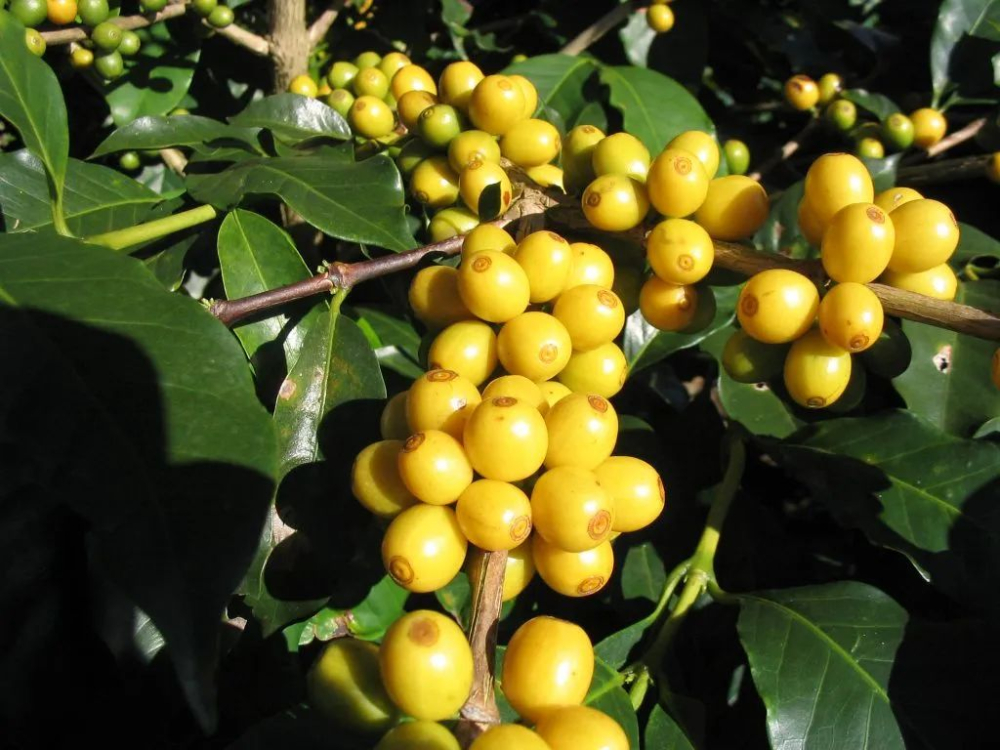
From the above, it can be seen that the coffee beans from Fazenda Rainha in Brazil are mainly of the Yellow Bourbon variety. Yellow Bourbon is a genetic mutation of Bourbon, and Bourbon has always been regarded as outstanding among coffees due to its low yield and good quality. Yellow Bourbon is a Bourbon variant unique to São Paulo state, Brazil. When the fruit matures, it does not turn red like Red Bourbon but instead turns orange-yellow, hence the name Yellow Bourbon. Because Yellow Bourbon is grown at very high altitudes, its flavor performance is outstanding. This is precisely why the Brazilian Fazenda Rainha coffee beans launched by Front Street are deeply welcomed by Front Street's regular customers.
Bourbon
The Bourbon variety was discovered in Brazil, which is why it is also the main variety of Brazilian coffee. Since Brazil is the world's number one exporter and producer, many Latin American growing regions now also cultivate the Bourbon variety. Furthermore, according to Front Street Coffee's understanding, Bourbon coffee was first planted on Réunion Island, which was also called Bourbon Island before 1789. Bourbon coffee originates from a natural mutation of the Typica coffee variety derived from Arabica, and is the oldest existing coffee variety.
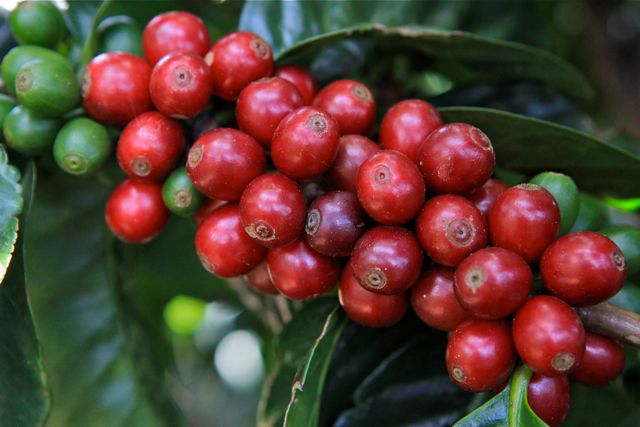
Generally, Bourbon coffee fruit changes from green to a ripe bright red, which is what we commonly hear called "Red Bourbon." The fruit is relatively short and round, also called round-bodied Bourbon, with high density in the pulp and seed, high sweetness, and bright acidity. However, besides Red Bourbon, there is actually also Yellow Bourbon, as well as the rare Orange Bourbon and the extremely rare Pink Bourbon.
What Are Red Bourbon and Yellow Bourbon?
As Front Street Coffee mentioned above, Yellow Bourbon is a Bourbon variant unique to São Paulo state, Brazil, mainly because the fruit does not turn red after maturing but instead presents an orange-yellow color, hence the name Yellow Bourbon. According to Front Street's cupping experience, if grown at high altitudes, Yellow Bourbon coffee beans will have excellent flavor performance. For two consecutive years, almost all the top three winners of the Brazil Cup of Excellence competition were Yellow Bourbon coffee beans, which made it popular in the specialty coffee world.
Moreover, Front Street believes that Yellow Bourbon's flavor typically features nuts and chocolate, with balanced and smooth acidity, a weak and clean bitterness, and an overall bright and refreshing character.
Red Bourbon, on the other hand, refers to the color changes of coffee fruit after a normal coffee tree flowers and bears fruit: green > slightly yellow > slightly orange > ripe red > then darker red as it ripens further, hence the name Red Bourbon. Its flavor has a better aroma, with brighter acidity, and can even taste somewhat like red wine.
Therefore, Front Street Coffee has also introduced Brazilian Red Bourbon coffee beans as an everyday coffee for coffee enthusiasts to taste. It also performs well in terms of flavor and possesses the inherent characteristics of Brazilian coffee, but its flavor is slightly inferior to that of the Brazilian Fazenda Rainha coffee beans.
Front Street Coffee Brazilian Red Bourbon Coffee Beans
Country: Brazil
Region: South Minas
Altitude: 1000m
Variety: Red Bourbon
Processing Method: Semi-washed
Flavor: Nuts, Chocolate, Cream, Peanut, Caramel
Processing Method of Brazilian Fazenda Rainha Coffee Beans
According to Front Street Coffee's understanding, there are four most common processing methods for Brazilian coffee beans: natural processing, semi-washed processing, semi-wet processing, and washed processing. Among these, washed processing started relatively late in Brazil, and market acceptance is not yet high.
This is because before 1990, Brazil almost entirely used rough natural processing, which caused beans to easily pick up flavors of rotting wood or earth. The coffee fruit had to undergo two to three weeks of sun exposure, and once rain or moisture occurred, it would easily cause the coffee beans to develop a musty smell, affecting quality. Therefore, Brazilian coffee farmers developed the semi-washed method to shorten processing time.
Semi-washed processing can actually also be called semi-wet processing, and its essence is a combination of natural and washed processing. Brazil is short on water resources, and the rainy season is unpredictable. Using full washed processing cannot guarantee sufficient water sources, while full natural processing cannot guarantee long periods of dry climate. Therefore, taking advantage of natural conditions, the semi-washed processing method was created. This method greatly reduces water consumption and sun-drying time, and reversed Brazil's two-hundred-year reputation for roughly made coffee.
Semi-washed Processing Method
Semi-washed processing first removes the skin and pulp of the coffee cherry, and can control the fermentation degree of the coffee beans with mucilage after depulping. Traditional natural processing, on the other hand, dries the coffee with the skin and pulp still on, making it impossible to see the fermentation degree of the mucilage. The semi-washed processing method lies between natural and washed processing, but does not have the washed processing steps of "tank fermentation and clean water rinsing," instead directly putting the beans out in the sun to dry. Although the methods may seem similar, without the fermentation step, the flavor of the coffee beans is completely different. In the process of removing the coffee skin and pulp in semi-washed processing, fully ripe pulp is easy to remove, while the skin of unripe green fruit is not easy to remove, so a second screening can be carried out to filter out unripe fruit and unify the ripeness of the coffee fruit. Compared with the natural method, Front Street believes that coffee beans selected and processed in this way will have improved cleanliness and ripeness, bringing a coffee with a more uniform mouthfeel.
Brazilian Coffee Bean Grading Standards
Furthermore, according to Front Street's understanding, Brazil's altitude is relatively low among the many coffee-growing countries in Central and South America. Therefore, Brazil does not emphasize hard beans that can only grow at high altitudes like Colombia and other countries do. Instead, it classifies Brazilian coffee beans by four factors: bean size, defect rate, cupping score, and flavor.
Flavor grade classification: From high to low: Strictly Soft (very smooth), Soft (smooth), Softish (slightly smooth), Hardish (not smooth), Rioy (iodine-like pungent taste).
Defect rate classification: Based on the number of defective beans, if there are 6 defective beans per 300g of green beans, it is NY.2. Only beans with no defects at all can be NY.1, but beans with no defects at all are rare and cannot maintain a steady supply. Therefore, among Brazilian green beans, the best is NY.2.
Cupping quality classification: From high to low: Fine Cup, Fine, Good Cup, Fair Cup, Poor Cup, Bad Cup. FC (Fine Cup) and GC (Good Cup) are more commonly seen.
Bean size classification: The largest screen size for Brazilian coffee beans is 19 mesh, but production is limited, so 17 mesh and 18 mesh are considered the highest grades.
The above is Front Street's compilation of relevant introductions and characteristics of Brazilian coffee bean varieties, and we hope it can help coffee enthusiasts who want to learn about Brazilian Fazenda Rainha coffee. Front Street Coffee conducts extensive roasting and brewing before launching each new coffee bean in order to derive the most suitable pour-over parameters and ensure the coffee is presented to coffee enthusiasts in its best flavor. Next, Front Street Coffee will share the roasting and brewing parameters for this Brazilian Fazenda Rainha coffee bean with everyone.
Front Street Coffee Roasting Analysis
Brazilian Yellow Bourbon roasting suggestion: Yangjia 800N, bean charge 550g: preheat the roaster to 200°C and load the beans, adjust the heat to 150, open the damper to 3, the turning point is at 1'30", maintain the heat, at 5'10" turn yellow, the grassy smell disappears, entering the dehydration stage, lower the heat to 125, open the damper to 3.5. At 8'20" dehydration is complete, the bean surface shows wrinkles and dark streaks, the toast aroma turns into coffee aroma, which is the prelude to first crack. At 178°C lower the heat to 80, and at this time pay attention to listen for the sound of first crack. At 9'14" first crack begins, open the damper fully to 5. Post-first-crack development time is 3'00", drop the beans at 201°C.
Front Street Coffee Brewing Suggestion
Dripper: KONO
Coffee dose: 15g
Water temperature: 90°C
Grind size: medium grind, 70% passing through a No. 20 standard sieve
Water-to-coffee ratio: 1:15
Front Street uses staged extraction. The amount of water for blooming is twice the weight of the coffee grounds, that is, 30g of water for a 30-second bloom. Then pour in a small stream in circles until 125g, then pause. When the water level is about to expose the coffee bed, continue pouring until 225g and stop. The total extraction time is 2 minutes.
Flavor of Brazilian Fazenda Rainha coffee beans: Balanced mouthfeel, with the sweetness of cane sugar standing out amid the main notes of almond and cocoa. It is a coffee with good body and abundant sweetness.
For more specialty coffee beans, please add the private WeChat of Front Street Coffee, WeChat ID: kaixinguoguo0925
The above content is compiled by CoffeeHunters, a coffee news website.


