








How Do Espresso Coffee Beans Shape a Sweet Latte?
A latte can taste sweet without added sugar because the espresso blend and the milk foam carry that impression. Espresso blends combine origins to build a specific or more balanced flavor, and roasters taste each origin first, then set the ratio. Blending can happen before or after roasting, and each choice shifts aroma, body and crema in the final shot.
Milk frothing follows the same logic. Steam injects air into cold milk, and milk proteins form tiny bubbles while lactose dissolves and fat stabilizes the foam. When the foam merges fully with the espresso, the bubbles burst in the mouth and release aroma. Milk temperature, frothing technique and the coffee-to-milk ratio all decide whether the drink tastes sweet and clean or flat.
Why can a latte without added sugar still taste sweet? What secrets are hidden in Front Street Coffee's espresso blend beans? Starting from the formulation logic of espresso blends, this article will break down the flavor characteristics of Front Street Classic Blend and Strawberry Candy Espresso one by one, and explain in detail the trade-offs between pre-roast blending and post-roast blending, how to determine the blending ratio, as well as the milk frothing temperature, frothing technique, and coffee-to-milk ratio for latte. Whether you are a complete beginner or someone who wants to recreate a latte with a lingering wine-like aroma at home, you can find actionable answers in this process.
"Why is Front Street Coffee's latte so delicious? There's a faint candy-like aroma. What espresso blend beans are you using?"
"Is there extra sugar added to the latte? It tastes so sweet and fragrant!"
Every time a customer comes to Front Street Coffee and orders a latte, similar questions always come up. This article will answer why a faint wine aroma emerges in the latte, and why it still carries sweetness on the palate even though no sugar has been added.
First, let's reveal the formulation approach behind the espresso blend beans used at Front Street Coffee.
The birth of espresso blend beans is essentially roasters using the respective strengths of coffees from different origins to combine a certain unique flavor or a more balanced taste. Therefore, before starting to blend, the baristas and roasters at Front Street Coffee will first taste coffees from each origin one by one, fully grasp their flavor tendencies, and then begin designing the blending plan.
Best-selling espresso coffee bean recommendation — Front Street Classic Blend. This bean is suitable for beginners just starting out, for people practicing latte art, and also for specialty coffee shops positioned in the high-end segment. If you want to learn latte art at home, Front Street Classic Blend is the right choice. It is composed of three origins and is an espresso recipe with a medium-dark roast. Its design inspiration comes from the early popular "Mamba" combination, that is, Mandheling plus Brazil. To enhance the aroma and crema performance, a small amount of Robusta is also added to Front Street Classic Blend. During extraction, you can clearly perceive the aromas of butter, toasted bread, and caramel cookies. The flavor is solid and powerful, the crema is fine, and extraction stability is high. It is an essential home coffee for beginners.
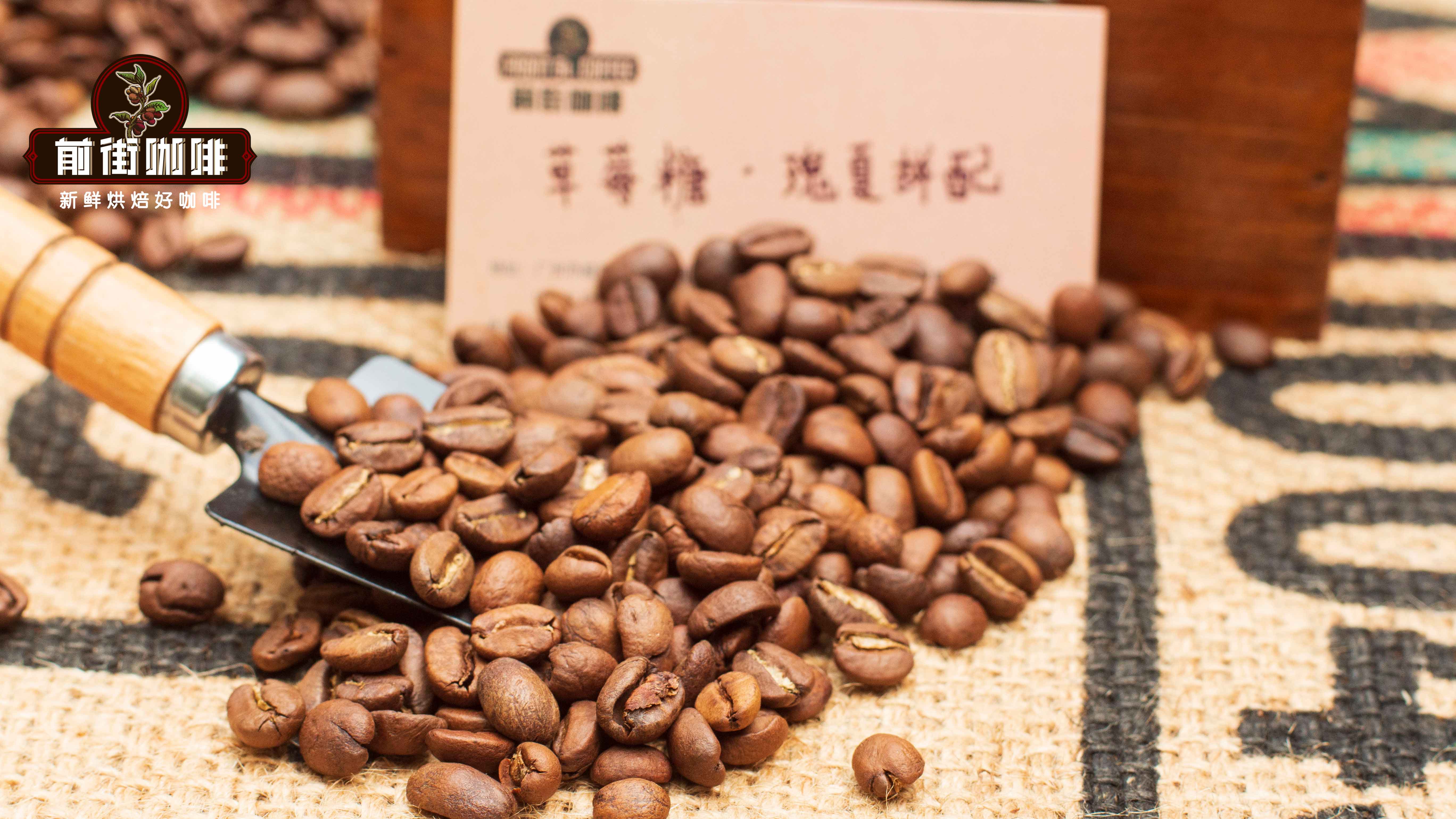
If you do not want to drink a dark-roasted bean with a heavier bitterness, and also do not like a light-roasted bean with prominent acidity, and it is your first time making it, then you can choose the medium-roasted Front Street Strawberry Candy Espresso. This espresso recipe is specially designed for people who prefer floral and fruity aromas. It combines three origins: Costa Rica, Colombia, and Ethiopia. It has aromas of rose, citrus, grape, and dried blueberry. After combining with milk, it presents a sweet aroma like strawberry gummy candy.
How are Front Street Coffee's espresso coffee beans blended?
When blending each recipe bean, Front Street Coffee follows four steps: clarify the blending purpose, determine the blending flavor, determine the blending type, and determine the blending ratio.
① The blending purpose of recipe beans: to create a product that can be supplied over the long term and has stable flavor. When a certain coffee bean fails to meet quality standards or changes in a new crop season, beans of a similar style can be used to replace it, thereby maintaining stability. On the other hand, it is also to make up for shortcomings by using one bean's strengths to compensate for another's weaknesses.
② Determine the flavor of the recipe beans: only with a clear goal can you know where to start. This step also greatly tests the blender's familiarity with the existing coffee beans and the flavors of each origin.
③ Pre-roast blending or post-roast blending: pre-roast blending is also called raw blending. Its advantage lies in using the same roast degree to make the coffee more stable and uniform, while also reducing the number of roasting sessions and getting it done in one go, resulting in higher efficiency. The same roast degree also greatly reduces the difficulty of quality control. The limitations of raw blending are relatively obvious: it is usually only suitable for several beans with relatively similar densities.
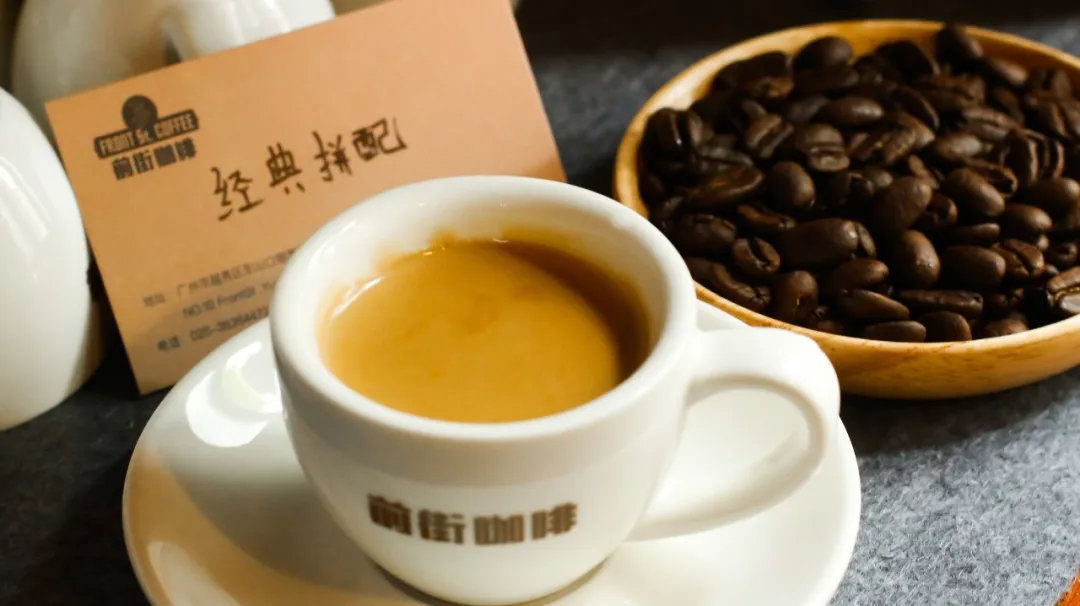
Post-roast blending is also called roasted blending. The advantage is that each bean can be handled separately according to its most suitable roast level, maximizing the expression of its individual characteristics. When roasting its espresso blend series, Front Street Coffee uses the roasted blending method. The disadvantage is that daily quality control and management are more complicated, and inconsistent roast dates also mean that more careful attention needs to be paid to resting time.
④ Determine the blending ratio: after the first three steps are completed, it is necessary to test by repeatedly adjusting different ratios. For example, when Front Street Coffee (FrontStreet Coffee) was blending Front Street Warm Sun Comprehensive Blend beans, the goal was to supply it for espresso use, so it was tasted by the espresso extraction method, separately making espresso, Americano, and milk coffee, and finally confirming the overall performance of the blend beans.
Why does latte taste sweet?
First, let's look at how Front Street Coffee makes a latte. Front Street Coffee uses a double espresso to make a latte, extracting 35-40g of coffee liquid from 19-20g of grounds, with extraction time controlled at 26-30 seconds. Because the condition of the blend beans differs every day, the espresso needs to be dialed in every day to ensure stable flavor. As for milk, Front Street Coffee chooses pasteurized fresh milk, valuing its higher milk fat content and the better retention of milk protein and lactose. This step of choosing milk is equally critical in latte making.
During the milk frothing process, as the temperature rises, lactose breaks down into more sugars and blends with the milk. When frothing milk, milk fat makes the foam formed by milk protein more stable, and these bubbles wrap the aromatic substances and sweet substances of the milk within them. When we drink these milk bubbles, the tiny bubbles burst in the mouth, bringing a sweet sensation. This is also the reason why Front Street Coffee's latte still has sweetness even without sugar.
How to froth milk foam for a latte?
Before preparing to froth, first turn on the steam wand switch and release the condensed water steam (close it after releasing). Then pull out the steam wand at a 45-degree angle, and use the spout of the pitcher to stabilize the position of the steam wand. This time the steam vortex is counterclockwise, and the steam wand is located on the right side of the center cross on the liquid surface, in a semi-submerged state. Turn on the steam switch, and you will hear a "chirp" "chirp" sound. At this point, you enter the frothing stage. Depending on the desired foam thickness, the frothing time also differs (the longer the frothing, the thicker the foam).
Usually, milk filled to 50% is frothed to 60% volume (the foam thickness required for a latte), and the frothing time is about 3 seconds. The milk rotates in a unified direction to form a vortex. Then fully submerge the steam hole and only heat, no longer frothing. Do not bury the steam hole all the way to the bottom. It is recommended to place it in the foam layer, which helps to texturize the foam and make rough foam finer.
To what temperature should the milk foam for a latte be frothed?
The ideal temperature range for milk frothing is 55-65°C. Below this temperature, the sweetness of the milk cannot be fully activated; above this temperature, too much protein will denature. Overheating not only changes the taste of the milk and produces a sulfurous smell, but also causes milk protein and water to separate, producing milk residue, which affects the mouthfeel and loses nutrition.
How to make a latte?
Front Street Coffee recommends a coffee-to-milk ratio of 1:6.5 for a latte, that is, 40ml espresso paired with 260ml hot milk. By moving in a circular motion to fully integrate the milk and espresso, you can get a hot latte. After fresh milk is heated, the sweet molecules of lactose are better released. After being evenly mixed with espresso, the entire latte naturally carries the sweetness of milk, while not overpowering the espresso. Instead, against the backdrop of milk, the flavor of the espresso is even more highlighted. The flavor performance of Front Street Coffee's hot latte is: whisky aroma, lactose and coffee acidity colliding into a milkshake-like sweetness, with a finish of hazelnut and other nuts.
The above content is compiled by CoffeeHunters, a coffee news website.


