







How Does Pour-Over Coffee Ground-to-Water Ratio Change Flavor?
Front Street tested Kenyan Asalia AA TOP beans from Thika at three pour-over ratios, 1:15, 1:13 and 1:17, holding the three-stage pour and 90 to 92 degrees Celsius water steady. The 1:15 ratio is the standard starting point, where one gram of grounds meets fifteen grams of water and extraction tends to land in balanced territory.
The comparison tracked shifts in citrus, cherry tomato, smoked plum and caramel notes, plus the difference between extraction yield and concentration, the golden cup range, and immersion versus filtration methods. The Kenyan beans used a 72-hour washed process, so the ratio mainly moved acidity, sweetness and body.
The coffee-to-water ratio in pour-over coffee is often seen by beginners as the biggest obstacle, and Front Street Coffee has found in conversations with enthusiasts at its stores that most questions revolve around this parameter. This article uses Front Street Asalia AA TOP coffee beans from Kenya's Thika region as a sample, fixes the three-stage brewing method and a water temperature of 90-92°C, changes only the coffee-to-water ratio, and conducts comparative brews at 1:15, 1:13, and 1:17, recording changes in flavor directions such as citrus, cherry tomato, smoked plum, and caramel. At the same time, it sorts out the difference between extraction yield and concentration, the golden cup theory range, the two major extraction methods of immersion and filtration, and includes a complete explanation of the Kenyan 72-hour washed process, helping readers understand how the coffee-to-water ratio affects the acidity, sweetness, and body thickness of a cup of pour-over.

For more specialty coffee knowledge, please follow the WeChat official account: Front Street Coffee (FrontStreet Coffee)
The bar at Front Street's store is often occupied by customers, and the reason is simple—it is closest to the barista. Many friends who come to Front Street to drink coffee love coffee themselves but lack systematic training, and have accumulated many questions about the brewing process: What processing method was used for this bean? Does every coffee need to be bloomed first? Why do you pour in circles? During these conversations, Front Street noticed that the most frequently raised question and the one that confuses beginners most is actually the coffee-to-water ratio.
Readers who follow Front Street's official account and have read Front Street Coffee (FrontStreet Coffee)'s practical content should know that in Front Street's standard production, the vast majority of coffees use a 1:15 coffee-to-water ratio, and when explaining to netizens, it is also recommended to start with 1:15 and then fine-tune according to personal taste. At this ratio, every 1 gram of coffee grounds corresponds to 15 grams of water, which provides a good foundation for ideal extraction. Combined with Front Street Coffee (FrontStreet Coffee)'s standard three-stage extraction, it allows soluble flavor substances to fall within the golden cup range.
Front Street believes that 1:15 is a fairly balanced pairing between coffee and water. Of course, this is only Front Street Coffee (FrontStreet Coffee)'s subjective judgment—the brewing ratio is essentially a reference guide used to determine how much water and how many grounds to use. Below, Front Street shares some practical tips around pour-over extraction:
For coffee to release flavor, the prerequisite is that the beans themselves have flavor. Therefore, Front Street recommends brewing with freshly roasted coffee beans so that their rich layers can be fully appreciated. The beans sent out by Front Street Coffee (FrontStreet Coffee) all have roast dates within 5 days, because Front Street clearly understands that freshness has a huge impact on flavor. Front Street's roasting philosophy is "freshly roasted good coffee," so that every customer who places an order receives it in the freshest condition. The coffee resting period is about 4-7 days, so when customers receive it, it is exactly at its best flavor stage.
1. The essence of extraction is contact between water and coffee grounds, dissolving most of the aromatic substances and various compounds in coffee into the water. At present, the mainstream extraction paths in specialty coffee are divided into immersion and filtration, both of which are physical processes and do not involve chemical changes (the brewing of espresso, however, includes chemical reactions). Filtration is the "pour-over coffee" that Front Street produces daily, requiring water to pass through the coffee grounds bed; immersion is when all the water and coffee grounds are fully mixed, and French press and AeroPress both belong to the immersion type.
2. According to the Specialty Coffee Association of America's golden cup theory: coffee concentration falling between 1.15-1.45% and extraction yield between 18-22% are important data conditions for a good cup of coffee. Of course, this is not absolute; some coffees outside the golden cup range are still delicious, and it is recommended to follow the rules first and then adjust on your own. The balance between coffee concentration and extracted substances is crucial to a cup of coffee: if the concentration is too low, it tastes thin; if the concentration is too high, the flavor is too intense; if the extraction yield is too low, it easily presents sharp acidity, while if the extraction yield is too high, it brings a negative bitter feeling. 3. Extraction yield and concentration are two different things. If you find the coffee too sour, Front Street believes you should not rush to change the coffee-to-water ratio, but should first consider adjusting the extraction yield. The most common approach is to grind finer and extend the extraction time. Once these factors are sorted out, then deal with the water-to-coffee ratio issue.
After understanding the above, Front Street uses the same brewing method (three-stage) to brew the same coffee (Front Street Asalia from Kenya's Thika region), letting everyone feel together how the flavor changes under different water-to-coffee ratios. First, here is the basic information for this bean:
Front Street Coffee (FrontStreet Coffee): Kenya·Asalia Coffee Beans Country: Kenya Region: Thika Processing Station: Asali Honey Processing Station Altitude: 1550-1750 meters Soil: Volcanic soil Grade: AA TOP Variety: SL28 SL34 Processing Method: 72-hour washed
Processing method introduction: The Kenyan washed process uses a repeated cycle of fermentation followed by washing. On the day of harvest, the finest coffee cherries are selected, pulped, and fermented for 24 hours, then washed with clean river water; then they are fermented again with clean river water for 24 hours and washed again, repeating this cycle 3 times for a total of 72 hours, which is why it is called the Kenyan 72-hour fermentation washed process. This processing method allows Front Street Kenya coffee beans to undergo long fermentation at low temperatures, giving them a brighter, cleaner, and fuller flavor.
Recommended brewing method: Pour-over Dripper: V60 dripper Water temperature: 90-92°C Dose: 15 grams Coffee-to-water ratio: 1:15 Grind size: Medium-fine grind (80% passing through China standard No. 20 sieve) Brewing method: Staged extraction
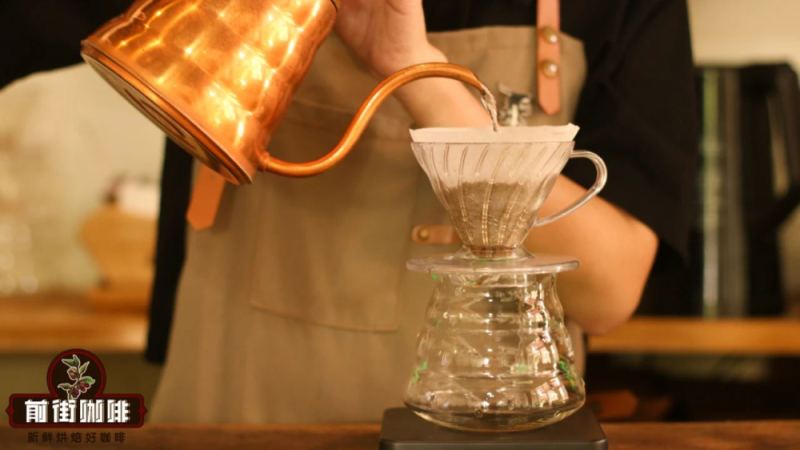
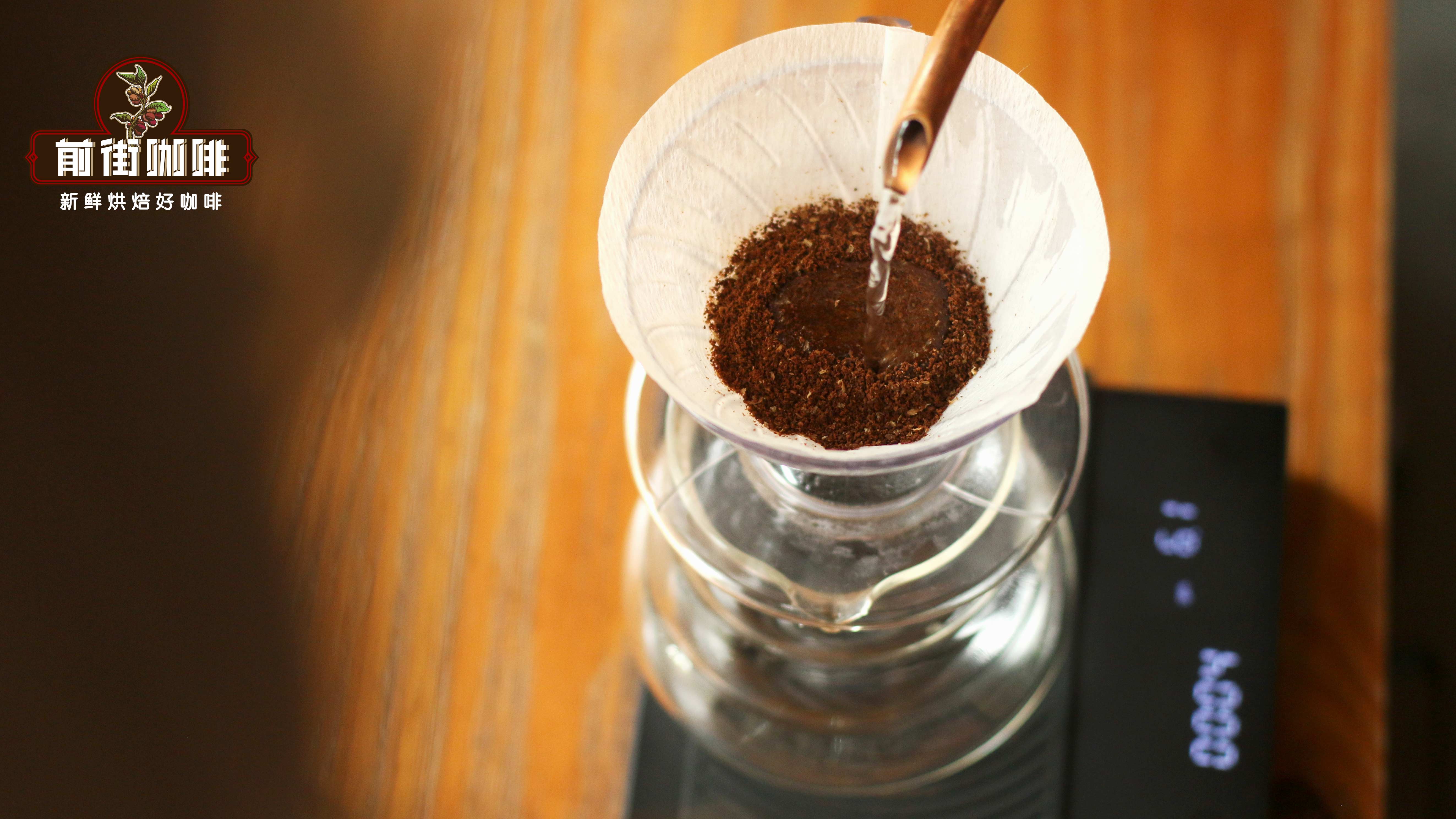
The first brew uses Front Street's standard 1:15 coffee-to-water ratio. Staged extraction: first bloom with 30 grams of water for about 30 seconds; then pour in a small stream in circles around the center until 125 grams, then pause; when the water level drops and is about to expose the coffee bed, continue pouring until 225 grams and finish; when the water level drops and is about to expose the coffee bed, remove the dripper. Timing starts from the bloom, and the extraction time is 2 minutes.
Flavor description: The entry is a bright citrus (yellow fruit) acidity; after it cools, cherry tomato flavor slowly emerges, but it is not very obvious; the acidity rises into lemon flavor, with a long finish and a faint tea-like sensation, very pleasant.
The second brew lowers the coffee-to-water ratio to 1:13 (a relatively large change, making the difference more intuitive), and the brewing method is the same as the first. Flavor description: The entry has an obvious caramel powder flavor, and the smoky sensation of smoked plum is concentrated in the front section; the sourness is concentrated in the latter half and slowly appears. When hot, the acidity is not obvious and even a bit dull, and the overall sweetness is on the high side.
The third brew increases the coffee-to-water ratio to 1:17, and the brewing method is still consistent with the first. Flavor description: The entry is too flat, and the body is very thin; the acidity is more obvious as the temperature drops, but the overall astringency is on the high side.
Front Street believes that hearing others talk about it is not as good as trying it yourself. If you also want to verify the effect of the coffee-to-water ratio on pour-over coffee, why not brew a cup right now? Maybe you will find a flavor you like in it.
The above content is compiled by CoffeeHunters, a coffee news website.


