







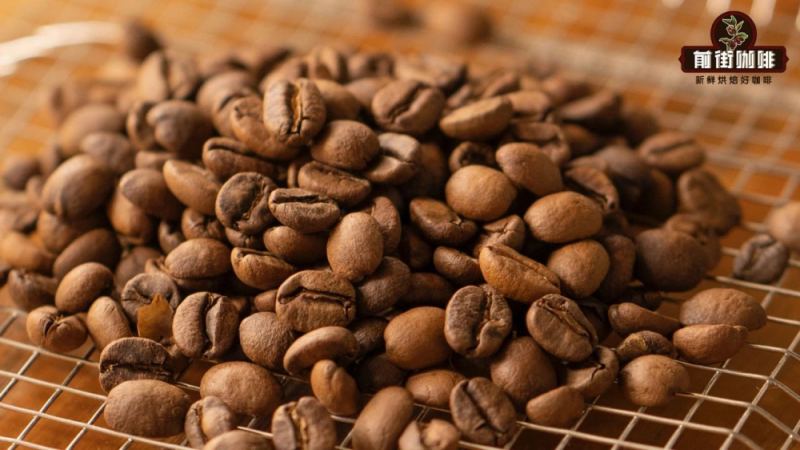
You bought Starbucks coffee beans, but are you staring at the grinder settings in despair? The grind size directly determines the success or failure of a cup of coffee. This article uses common items like fine granulated sugar, coarse granulated sugar, sea salt, fine salt, and flour as analogies to help you quickly find the right grind size for pour-over, French press, moka pot, and espresso machine. Beans of different roast levels have different densities, so the same brewing method may require different grinds. Front Street Coffee will guide you through understanding the particle size range for each grind state, and why light roasts need finer grinds while dark roasts need coarser ones, so you no longer struggle with grind size.
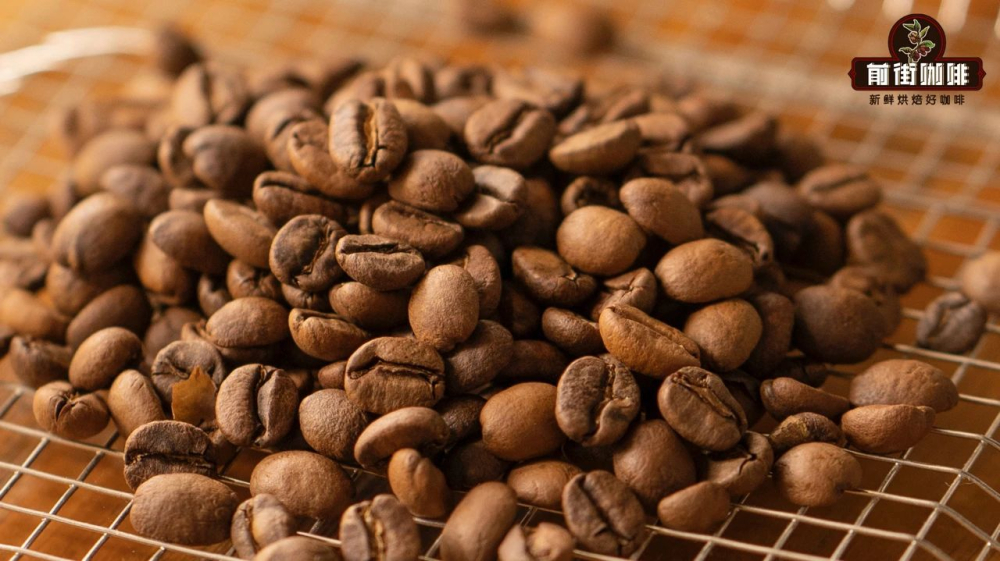
Many coffee enthusiasts, after getting their hands on Starbucks coffee beans, often feel at a loss when faced with the dial on their grinder at home, worrying: if I grind too coarse or too fine, will this cup of coffee be ruined? So quite a few people come to ask Front Street how to judge and quickly lock in the right grind setting. No matter which brewing method you use, if you want to make a delicious cup quickly and well, coffee grounds of the right coarseness are absolutely the prerequisite. However, coffee beans vary in density and roast level, so even with the same extraction method, the grind size requirements can differ because of the beans themselves.
The problem is, there is no unified standardized description for grind size, so most of the time we can only rely on analogies to convey the size of coffee particles. Although this kind of description covers a fairly wide range, it is indeed the most direct and easiest way to communicate. Besides the common fine and coarse granulated sugar, analogies also use materials like fine salt, sea salt, and flour. To avoid confusing beginners, today we’ll briefly talk about what particle sizes the different analogies for coffee grounds actually correspond to. But please remember, each analogy describes a range of grind sizes, not an exact fixed size. Fine granulated sugar grind The description we hear most often is fine granulated sugar. Fine granulated sugar feels soft and sandy, with a noticeable graininess, and coffee particles compared to it are the same. This grind is usually suitable for pour-over with light or medium-light roasted coffee beans. Because these beans are dense and hard to extract, you need to increase surface area and shorten the distance hot water must travel to better release aromatic compounds.
Coarse granulated sugar grind / white sugar grind Coarse granulated sugar grind is also called white sugar grind; as the name suggests, it is coarser than fine granulated sugar. Whether in appearance or feel, the graininess is more pronounced than with fine granulated sugar grind, though you have to look carefully to tell the two apart. This grind is more suitable for medium-dark or dark roasted coffee beans, because they are less dense and hot water penetrates easily. If ground too fine, it can easily cause over-extraction, so reducing surface area improves fault tolerance and prevents over-extraction.
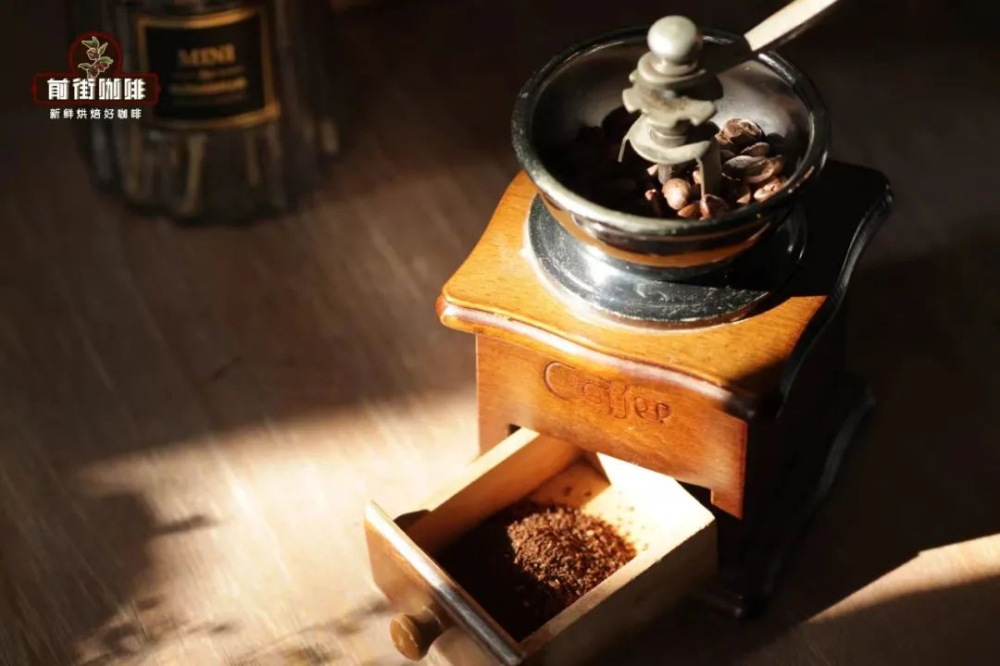
Sea salt grind Sea salt is unprocessed large-grain salt, with particles larger than coarse granulated sugar. You can see obvious large chunks in its appearance. Because the particle size of this coffee powder is on the larger side, extraction efficiency is reduced, so it is mainly used for brewing methods that require long soaking, such as French press and clever dripper.
Fine salt grind Fine salt is refined salt obtained by dissolving coarse salt and recrystallizing it, and it is even finer than fine granulated sugar. Although the particles are distinct, rubbing it with your fingers only gives a sparse grainy feel. Generally speaking, this grind is mainly used for faster extraction methods like the moka pot. Because extraction time is short, you need to grind finer to extract the most substances in the shortest time.
Flour-like grind There are differences among flours too, such as high-gluten flour and low-gluten flour; different types create different particle sizes. Although both are flour, high-gluten flour is finer, while low-gluten flour is coarser. Generally speaking, espresso machines use a coarser flour-like grind, which looks very fine but feels slightly less smooth than you might imagine.
The flour-like grind that feels dense and has no graininess is exclusive to Turkish coffee and Ethiopian coffee. Since the grounds are not filtered out during preparation, you need to pound repeatedly to break the coffee powder down to fine particles that won’t affect the drinking experience.
The above content is compiled by CoffeeHunters, a coffee news website.


