







From an extraction perspective, whether a cup of espresso tastes good first depends on the choice of coffee beans, then on the flavor and strength of the espresso, and finally on the pairing ingredients'ratio, temperatureand other details. Among these, making espresso troubles many home baristas because of the various unexpected situations that can arise.
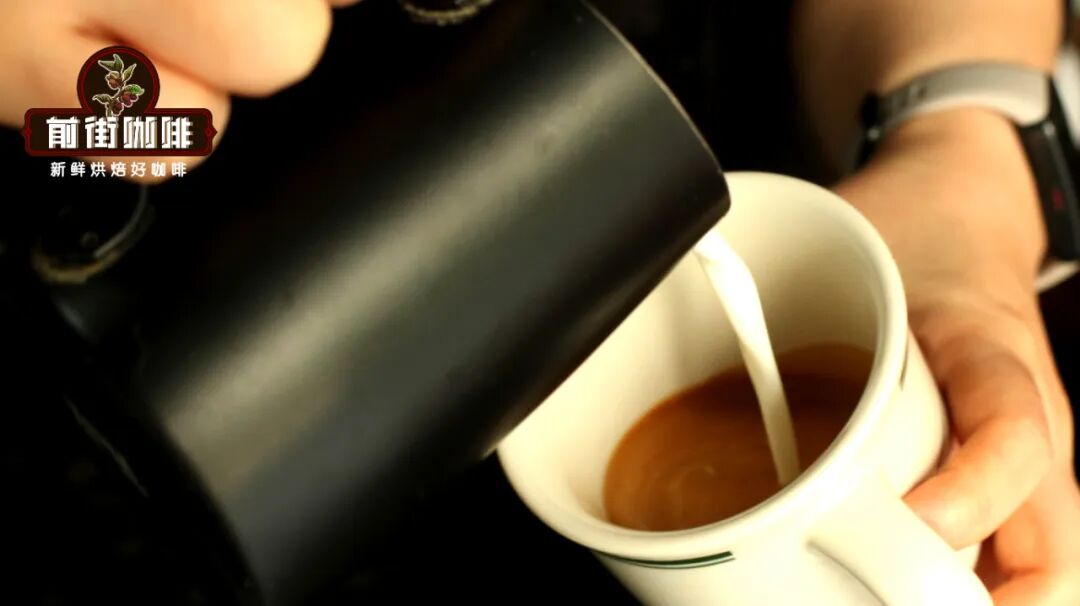
For example, when the espresso is not concentrated enough, the coffee tastes bland or "watery" and has almost no aroma. Faced with this situation, someone asked Front Street: without changing the grind size, if you want to increase the coffee's strength, can you extract more coffee liquid? Or should you extend the espresso's extraction time?
What factors are related to the strength of espresso?
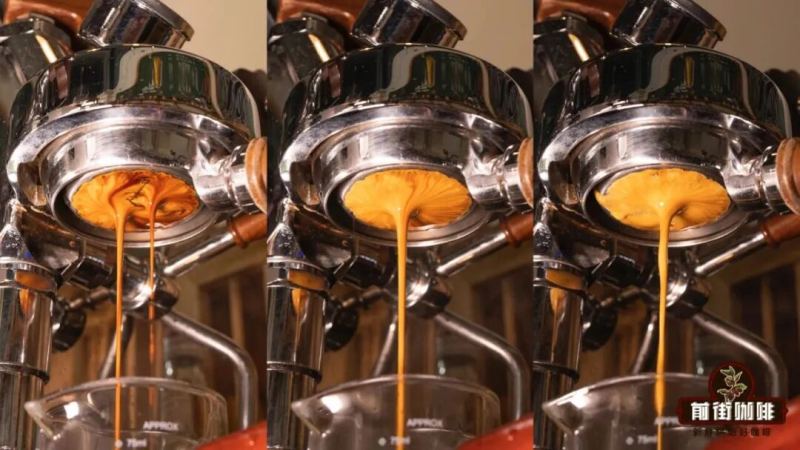
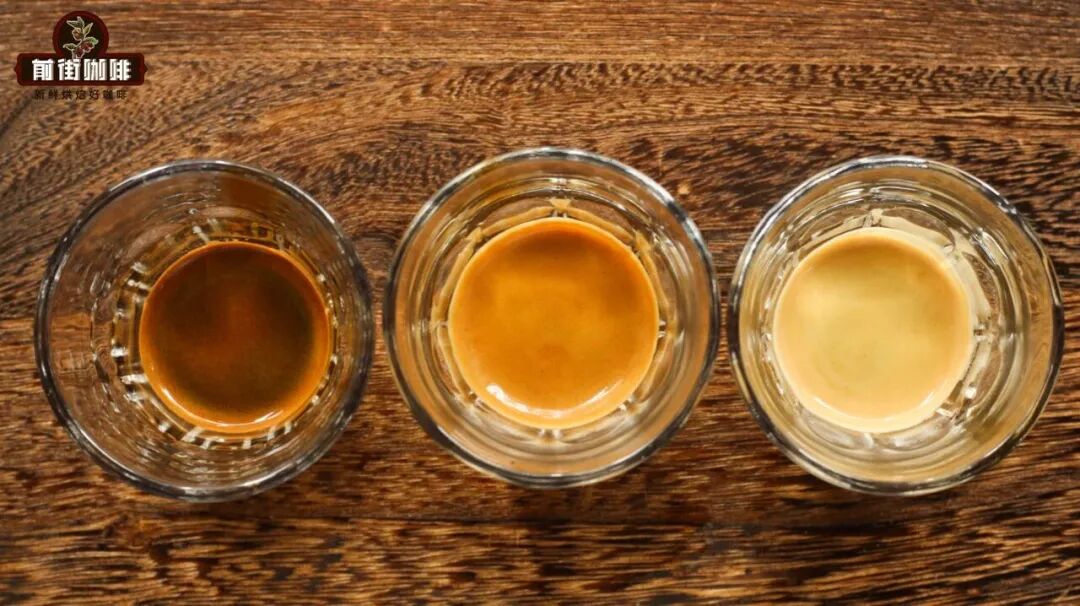
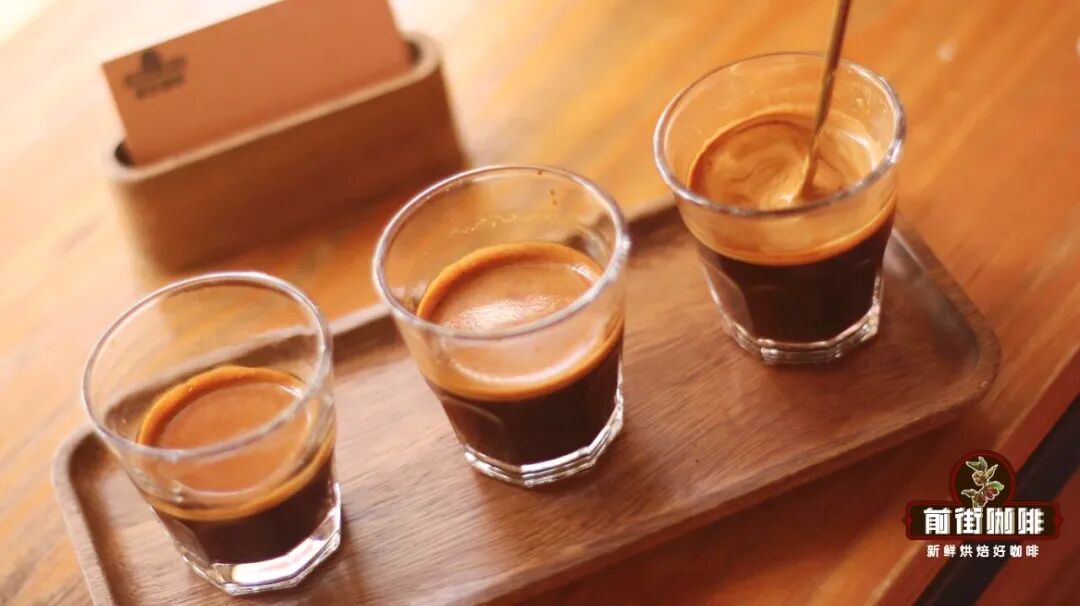
Let's first observe the complete extraction process of espresso. Here, using the parameters Front Street debugged today for its classic espresso blend beans, an espresso was extracted (20g dose, 30 seconds, 40g coffee liquid), and then three cups were used to capture the beginning, middle, and end segments of the espresso in 10-second intervals, and the taste of the three parts was tasted in sequence.
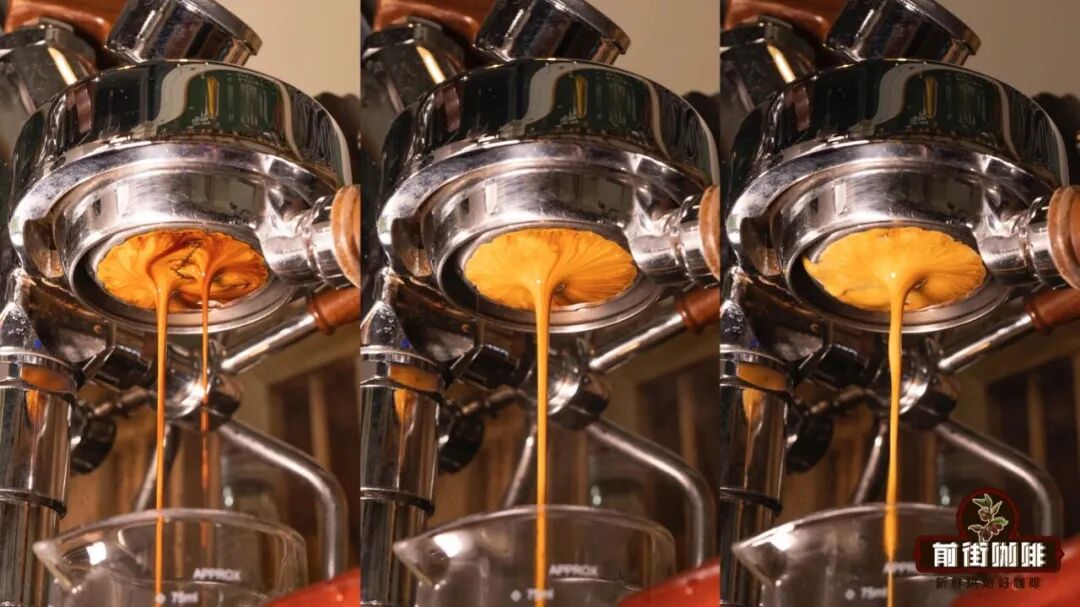
It can be seen that the color of the coffee liquid goes from dark to light, and the texture goes from viscous to thin. The first cup has the highest aroma and strength, with a heavy caramel aroma and a slightly salty taste; the second cup has a moderate mouthfeel, with nutty flavors, relatively balanced; the third cup has the lowest strength, and the crema begins to turn white. This means that as the extraction amount increases, the strength of the coffee liquid gradually decreases, the aroma changes from strong to weak, and the mouthfeel goes from thick to thin.
Can coffee be extracted a little more?
In theory, the substances in coffee that can be brought out by water account for about 30% of the bean's weight, and within this 30%, some are pleasant and delicious, while others are less appealing negative flavors.The Golden Cup standardholds that when the coffee extraction yield is in the range of 18-22%, the soluble aromatic substances obtained are relatively delicious.
From the above observation of espresso, when the crema begins to turn completely white from yellow, it actually indicates that most of the good flavor substances in the coffee have already been released, and we need to stop extraction. If hot water continues to wash through the coffee bed, then the remaining negative flavor substances, such as woody notes and bitterness, will fall into the coffee cup along with the liquid. Therefore, just like with pour-over,if you want espresso to taste good, you must properly control the extraction yield of the espresso, that is, while obtaining good flavor substances, you must also avoid as much as possible the negative mouthfeel brought by excessive substances.
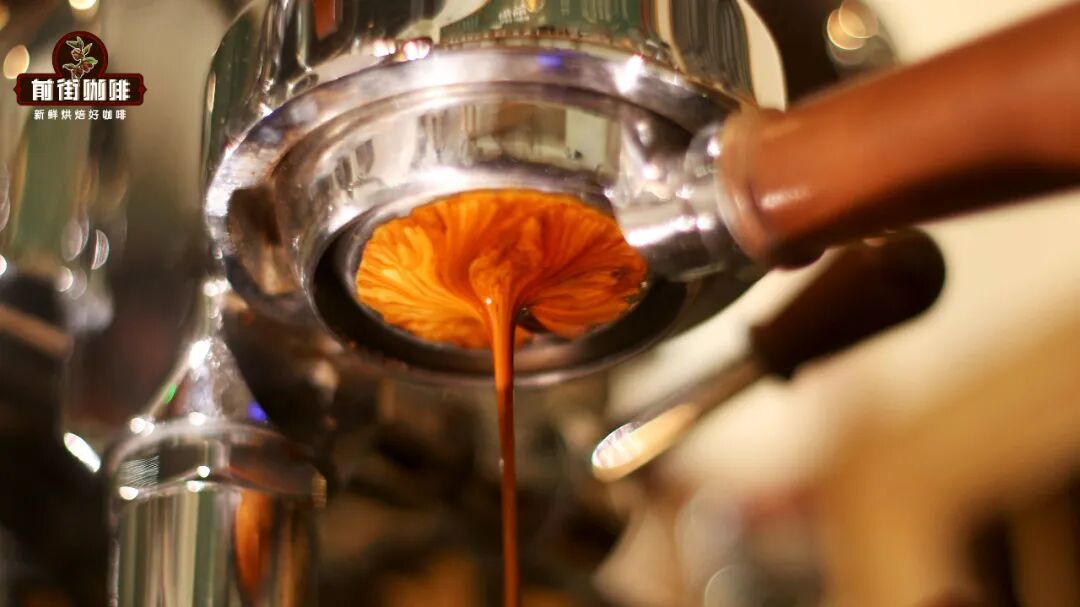
Unlike pour-over coffee, because the water output of an espresso machine is difficult to measure directly, we are more accustomed to using the "brew ratio" as the main parameter for controlling espresso extraction.
The brew ratio depends on two factors: one is the amount of coffee grounds, and the other is the weight of the coffee liquid. Generally speaking, the industry-recommended brew ratio is between 1:1.5 and 1:2.5, among which 1:2 is the most common. For example, Front Street suggests that beginners making espresso for the first time should first extract at 1:2, and then adjust up or down according to need, because espresso made at this ratio often has a sufficiently high strength without losing the coffee flavor it should have.
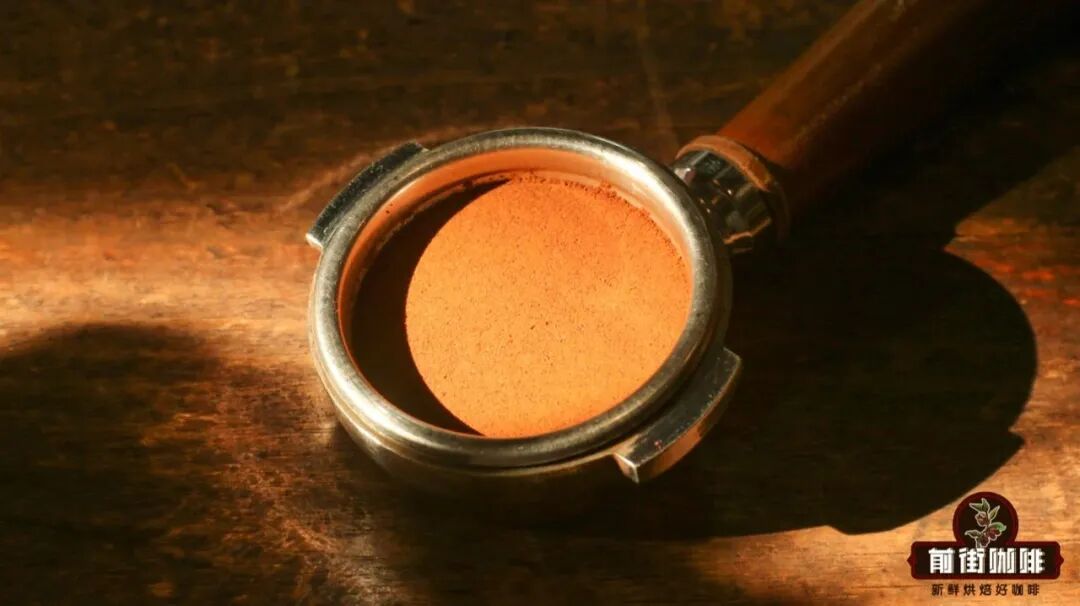
Front Street once did a simple little experiment: while keeping the water temperature (94°C), pressure (10 bar), grind size (Galileo Q18setting 2), dose (20g), and other parameters unchanged, Front Street extracted three espressos with different liquid weights in sequence, namely 40g, 46g, and 55g, corresponding to ratios of 1:2, 1:2.3, and 1:2.75, and then tested the strength of each cup and tasted its flavor.
The compiled data shows that the more coffee is extracted, the lower the strength becomes, and the coffee's taste also begins to deteriorate as the liquid volume increases, showing over-extraction. Combining this with the extraction patterns of espresso, Front Street found that when the grind size and dose remain unchanged, an increase in the espresso yield (longer time) means more hot water passes through the coffee grounds, thus extracting more soluble substances, so the extraction yield is higher. At the same time, more water means the coffee is more diluted, so the strength is instead lower.
If you want to make coffee stronger, what should you do?
1. When we use medium-dark roasted coffee beans, the aromatic substances are usually concentrated in the beginning and middle segments, while the final segment often "dilutes" the espresso. To increase coffee strength, Front Street recommends using a high-strength, low-extraction approach and discarding the final segment, turning it into a ristretto (Ristretto).

Taking 20g of coffee grounds as an example, the original 1:2 brew ratio required extracting 40g, but the adjusted plan of 1:1.5 requires extracting 30g. This way, the coffee flavor will be richer and the mouthfeel more solid.
2. If the coffee beans you use are a fruity SOE or a medium-light roast blend, with an overall sour taste and light aroma, and you want the coffee to show high strength, you can appropriately extend the extraction time to increase the extraction yield.

For example, when Front Street applied the "basic formula" to make a Huakui SOE flat white, the coffee flavor was overall weak, and even the aroma was covered by the milk, so 0.5g more grounds were added to extend the extraction time to 33-35 seconds, thereby releasing more flavor substances and giving the milk coffee a richer fruity aroma.
The above content is compiled by CoffeeHunters, a coffee news website.


