







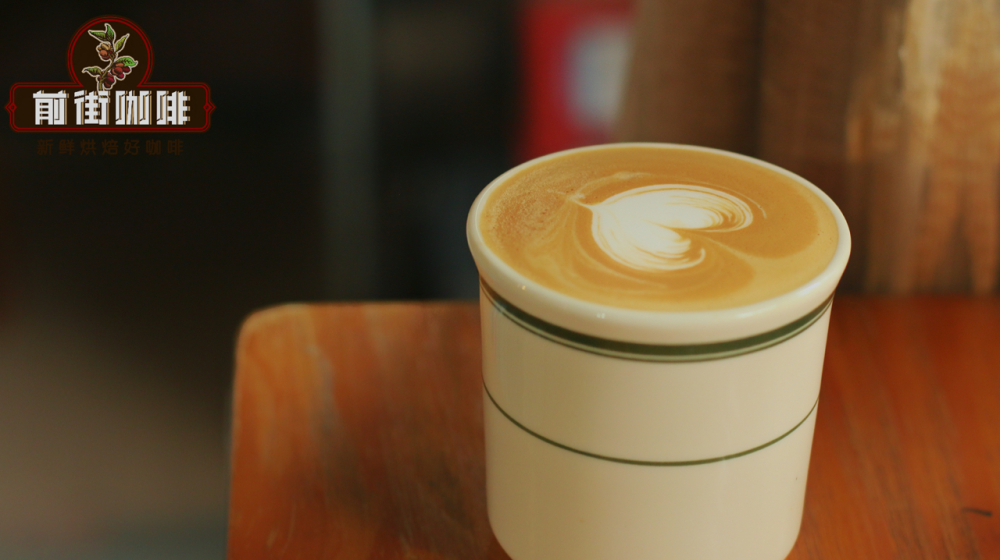
You might be unfamiliar with the term Flat white, but anyone who has been to Starbucks will definitely know it as 馥芮白. In fact, 小白咖啡, 馥芮白, 醇艺白, 澳芮白,Aussie whiteand other names all refer to Flat white. It originated in Oceania (Australia), so it is also calledAussie whitecoffee. Front Street Coffee will help you clarify the relationship between Aussie white, latte, and cappuccino.
What isAussie white coffee?
Flat white is a coffee beverage that originated in Australia. However, some later claimed that Flat white actually originated in New Zealand. New Zealanders like to use Double Ristretto, while their Australian counterparts use Single Espresso. Flat white is made by blending fine, delicate microfoam into a single espresso or double ristretto.

When it comes to Aussie white coffee, we always compare it with latte and cappuccino. Since they are all milk coffees, what are the differences between them?
From the birth of Flat white, can we see what distinguishes them?
Cappuccino in New Zealand has too much milk foam and almost no liquid milk, and is considered a children's drink because it is usually sprinkled with chocolate flakes. The milk in Australia and New Zealand comes from free-range organic cows. Australia and New Zealand are covered with dairy farms, which is unique to both countries. New Zealand milk has a very high milk fat content, which can form large, stiff milk foam. Therefore, New Zealand cappuccino has a texture as smooth and soft as marshmallow. Imagine that if you want a milk coffee, New Zealand cappuccino is clearly not the best choice for adults.
What about latte then? That should be fine, right? But in New Zealand, whether hot latte or iced latte, there is almost no milk foam, and it is regarded as a weak drink for intellectuals, political liberals, and mothers. Moreover, New Zealand latte is latte in a broad sense, meaning it simply refers to coffee plus milk, with the ratio entirely up to the shop. It evolved from a large glass of cold milk poured into an espresso, to a small macchiato, and then to a large bowl of coffee. Its variations are unexpected to customers.

The evolution of flat white: ordinary New Zealanders did not initially get a satisfactory cup of white coffee from cafes. Therefore, the evolution of flat white was likely like this: Customer: "I'd like a white coffee." Cafe: Gives the customer a cappuccino. Customer: "That has too much milk foam. Can I have a pure milk coffee?" Cafe: Gives the customer a latte. Customer: "That has a weak coffee flavor and too much milk. Can I have a coffee with a bit more milk foam than a latte but less than a cappuccino?" Cafe: Gives the customer a coffee with milk foam and milk evenly mixed. Customer: "Great! I want to call this a flat white." The origin of "flat white" is still not particularly clear. This term may have come from dozens or even hundreds of such small interactions in cafes, and cafe owners gradually came to understand what kind of coffee customers really wanted. Now flat white is very popular in London, New York, and Berlin. It began as an attempt to remake a cup of plunger coffee with just a little milk.
Thus appeared Australia's national-level coffee drink,Aussie white coffeeFlat white, that is, Aussie-style white (milk) coffee. In fact, it can be seen as an Australian-style latte.

Therefore, Aussie white coffee is a coffee that highlights the taste of coffee. Latte is a coffee beverage with a large amount of milk added, while cappuccino is a milk coffee with a thicker layer of milk foam. In terms of foam thickness, cappuccino is the thickest, latte is next, and Aussie white coffee has the thinnest milk foam. So Aussie white coffee feels more like a cup of coffee with milk; latte feels like a cup of coffee-flavored milk; cappuccino feels like a cup of dense, foamy milk coffee.
Why is Aussie white coffee so popular?
We cannot help but wonder why Aussie white coffee is so popular domestically and even worldwide. Aussie white coffee is a constant on the menus of almost every cafe.
From the above, we know that compared with latte and cappuccino, Aussie white coffee has thinner milk foam and less milk, and highlights the taste of coffee more, so Aussie white coffee is more particular about the choice of coffee beans. If you choose a higher-quality coffee bean as the base for Aussie white coffee, you will make a cup of Aussie white coffee that better highlights the coffee's own flavor.

Conversely, if you choose a lower-quality bean as the base to make Aussie white coffee, it is also easy to taste the bad aspects.
Aussie white coffee can therefore better showcase the quality of coffee beans than latte and is more suitable for expressing the flavor of the coffee's region of origin, just like the currently very popular SOE (single origin espresso), which caters to the characteristics of the third wave coffee trend emphasizing coffee origins and tracing them to their source. But in the end, as long as you choose higher-quality coffee beans and milk, the Aussie white coffee, latte, or cappuccino you make will all be very delicious coffee.
So how do you make flat white Aussie white coffee?
Below is today's Flat white recipe from Front Street Coffee. The coffee beans used are Front Street Coffee's Sunflower Warm Sun blend, composed of 70% Honduras Sherry and 30% Yirgacheffe sun-dried Red Cherry. It has a very fragrant sherry wine note, high sweetness, and a vanilla cream flavor.

For the base, Front Street chose espresso, using 20 grams of coffee powder to extract 27 grams of espresso liquid in 20 seconds.
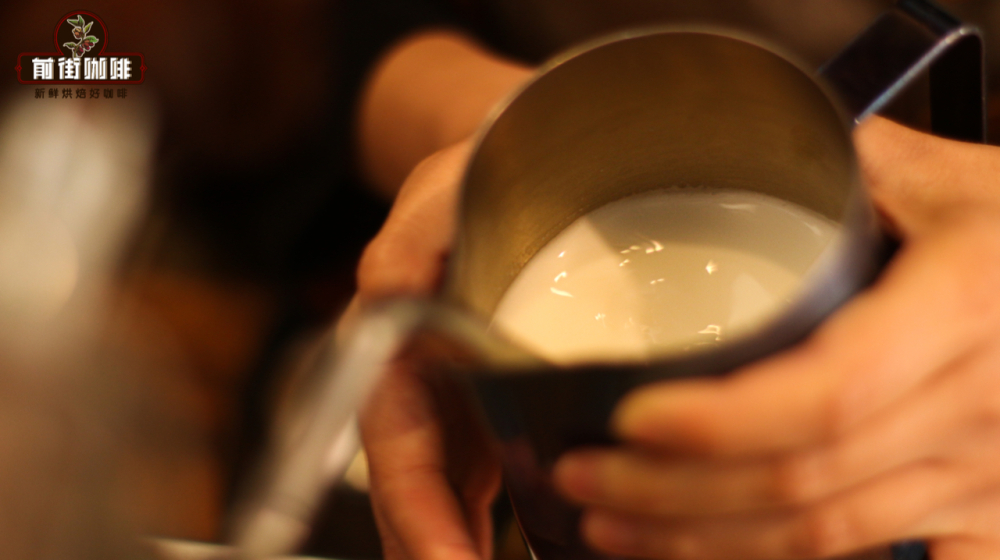
Next, froth the milk. For the cup, Front Street Coffee uses a 180 ml ceramic cup. The milk should be frothed with as little and as thin foam as possible. Pour the frothed milk into the espresso, integrate until eight-tenths full, then gently push out a pattern. Because Flat white milk foam is relatively thin, the pattern easily becomes distorted, so it is recommended to make a relatively simple heart shape or a dot pattern, or not do latte art at all.

The Aussie white coffee made with the Warm Sun blend presents rich aromas of vanilla, chocolate milk, and whiskey-filled chocolate, with a hint of berry tartness and sweetness. It is smooth, fragrant, and mellow on the palate, with a very long finish.
The above content is compiled by CoffeeHunters, a coffee news website.


