







Among the many coffee-producing countries in South America, Peru is often overshadowed by the aura of Colombia and Brazil, yet thanks to the high altitudes of the Andes, volcanic soil, and varied climate, it cultivates clean, gentle specialty coffee with balanced acidity and sweetness. This article starts from Peru's geography and climate, sorts out the flavor differences among its three major producing regions—north, center, and south—analyzes the grading system centered on altitude/hardness and the washed processing method, and then steps into Cajamarca, the key specialty coffee town in the north, to experience a washed Geisha sourced by Front Street Coffee, with its captivating layers of white floral notes, prunes, and black tea.
South America has quite a few coffee-producing countries, among them Colombia, Ecuador, Brazil, and Peru. The continent's soil and growing environment are very suitable for coffee cultivation. Peru appears especially low-key among them, but thanks to its superior mountains, rivers, soil, and water conditions, it is equally capable of producing high-quality coffee beans.
Peru Peru
Peru's full name is the Republic of Peru, located in western South America. To its north lie Ecuador and Colombia, to its east are Brazil and Bolivia, to its south is Chile, and to its west lies the Pacific Ocean. The country has a total area of 1.285 million square kilometers and is administratively divided into 24 departments plus 1 special province.
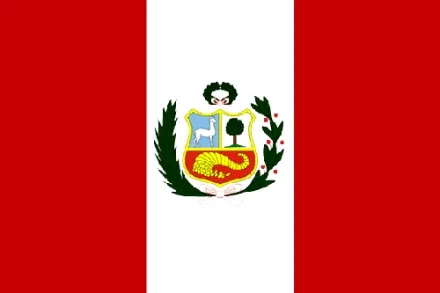
The Peruvian flag is rectangular and composed of three vertical bands of equal width. The middle band is white, symbolizing freedom, democracy, peace, and happiness; the bands on either side are red, symbolizing the victory the people won in the war of independence and also honoring the memory of the fallen.
In the center of the flag's white band is the national coat of arms. At the center of the coat of arms is a shield: the upper-left corner depicts the country's national animal, the vicuña, representing animal resources; the upper-right corner shows a cinchona tree, representing plant resources; and the lower half features a cornucopia, symbolizing natural resources and mineral wealth.
The Andes run through the entire length of Peru from north to south, with mountainous terrain accounting for about one-third of the country's area. From west to east, the country can be divided into three regions: the western coast is an arid plain belonging to a tropical desert zone, though irrigated agriculture is relatively developed there; the central highlands and plateaus are mainly located in the middle section of the Andes, where the southern part has many volcanoes and an average elevation of about 4,300 meters, and it is also the source of the Amazon River; the east is the Amazon tropical rainforest region.
Peru lies in the tropics, but its complex geographical conditions create a diverse climate. The country has 28 different climate types. By region, the western coast has a desert steppe climate, mild with very little rainfall.
The central Andean region sits atop high plateaus and has a tropical mountain climate, with rainy summers, and temperature and humidity decreasing as altitude rises. The eastern Amazon region has a tropical rainforest climate, hot and rainy. Coffee is mainly grown in areas around the Andes; high altitude, volcanic soil, and a variable climate make Peru an ideal place for coffee cultivation.
Coffee-producing regions
Peru's coffee-producing regions are mainly divided into three parts: north, center, and south. In terms of varieties, 70% is Typica, 20% is Caturra, and the rest consists of other varieties such as Catimor, with cultivation altitudes ranging from 1,000 to 1,800 meters.
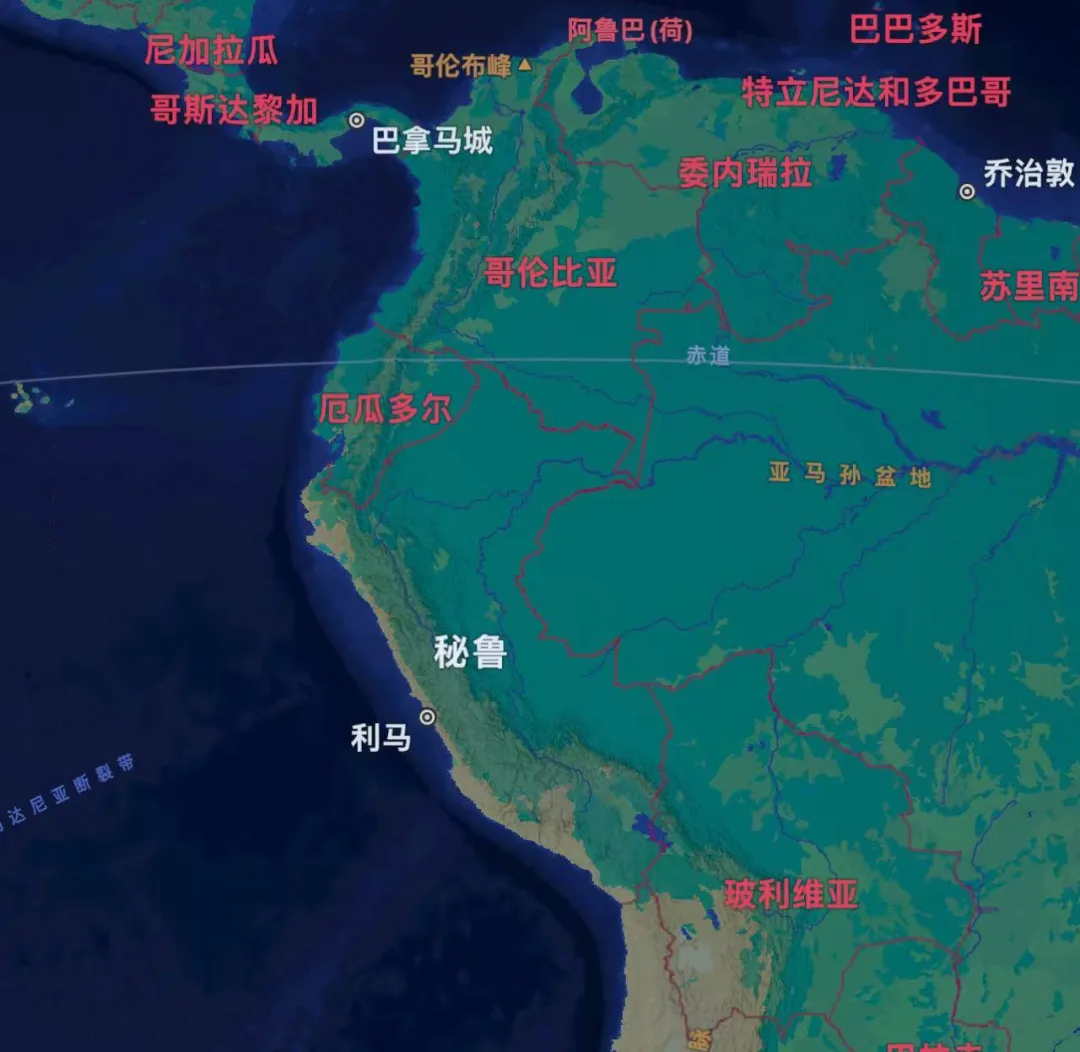
Northern region: This area accounts for 43% of Peru's total coffee-growing area and includes Amazonas, Cajamarca, Piura, and San Martin, at altitudes between 1,250 and 1,950 meters. Coffee beans from this region have relatively high acidity, intense flavor, and medium body.
Central region: The central coffee-growing area accounts for 34% of the country's total and includes Huánuco, Junin, Pasco, and Ucayali, at cultivation altitudes of 800 to 1,200 meters. Coffee beans from the central region have moderate acidity, a relatively mild style, and a smooth mouthfeel.
Southern region: The southern coffee-growing area accounts for 23% of the country's total and includes Apurimac, Ayacucho, Cusco, Madre de Dios, and Puno, at cultivation altitudes of 900 to 2,050 meters. Coffee produced in the southern region has excellent body, a unique taste, and a sweet aftertaste.
Like most South American countries, Peru's main coffee variety is Arabica. But what sets Peru apart from most South American countries is that its coffee grading system is primarily based on altitude/hardness, with other grading methods as secondary. The so-called altitude grading method means grading coffee beans according to the altitude at which they are grown. The higher the cultivation altitude, the harder the beans. This is because the high-altitude climate slows the growth of coffee beans, giving them more time to accumulate more nutrients. The mild balance mentioned earlier by Front Street is precisely a characteristic of high-altitude Peruvian coffee beans. The richer the internal substances in the coffee beans, the better the mouthfeel and flavor performance.
Because local water resources are very abundant, Peru's coffee processing method is mainly washed. Traditional washed processing first pours the harvested coffee cherries into water for flotation, removing defective fruits floating on the surface, then uses a depulper to remove the skin and pulp; next, the parchment beans with mucilage are poured into a tank to ferment so the mucilage can be removed; then the processed parchment beans are moved to a drying yard to dry, and finally the dried parchment beans are sent to a huller to remove the parchment, completing the entire processing flow.
Washed processing can effectively screen out defective beans and bad fruit, and the degree of fermentation is shallower and easier to control, so washed coffee has extremely high cleanliness. Washed Peruvian coffee is more than that, however: in addition to high cleanliness, it also has soft, delicate fruit acidity and a rich, silky mouthfeel, which is why it has gained a large following in recent years.
Speaking of this, Front Street cannot help but salivate. To taste the deliciousness of Peruvian coffee, Front Street specially acquired a washed Geisha, and these beans come from Cajamarca, the most important specialty coffee-producing region in northern Peru.
The Cajamarca producing region is close to the Ecuadorian border and located in the high-altitude area of the Andes. This region not only has fertile volcanic soil and rich, diverse microclimates, but its towering altitude also widens the temperature difference between day and night, making it a truly ideal coffee-growing region. It is therefore not hard to understand why early European immigrants, when opening plantations in Peru, chose this place as their main cultivation base.
After a long period of development, coffee gradually became an important part of Cajamarca's local economy and culture. Because local smallholders possess experience and technology ahead of other producing regions, the coffee quality in this region is even more outstanding, making it the current "hot favorite" in the specialty coffee scene.
In addition to old varieties like Typica, Cajamarca also grows popular varieties such as Geisha. Therefore, for this Peruvian coffee, Front Street chose a washed Geisha from the Cajamarca producing region. To highlight this Geisha's floral notes and regional flavor, Front Street used a medium-light roast profile to "prepare" it.
Front Street Coffee (FrontStreet Coffee): Peru · Cajamarca Geisha Country: Peru Region: Cajamarca Altitude: 1,800~1,950 meters Variety: Geisha Processing method: Washed Grade: SHB
Flavor: white floral, prune, citrus, juicy, black tea
During cupping, Front Street found that this Peruvian Geisha had a very intense dry aroma, with clearly perceptible notes of white floral, berries, preserved plum, and citrus. After hot water was poured in, aromas of peach and caramel-like sweetness could be smelled.
When the coffee entered the mouth, what Front Street first felt was an elegant white floral note, followed by a full acidity like grapes, citrus, and prune juice. After swallowing, a finish reminiscent of black tea and caramel remained in the mouth, with a thick yet very clean mouthfeel, a unique sensation like holding a preserved plum candy in the mouth. As the temperature dropped slightly, the bright acidity began to release, the juicy quality became more obvious, and the rounded sweetness of apricot could be tasted—very pleasant!
The above content is compiled by CoffeeHunters, a coffee news website.


