







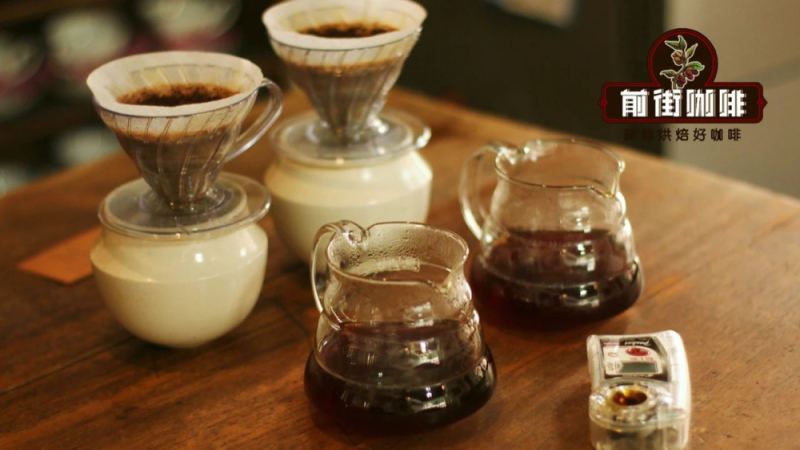
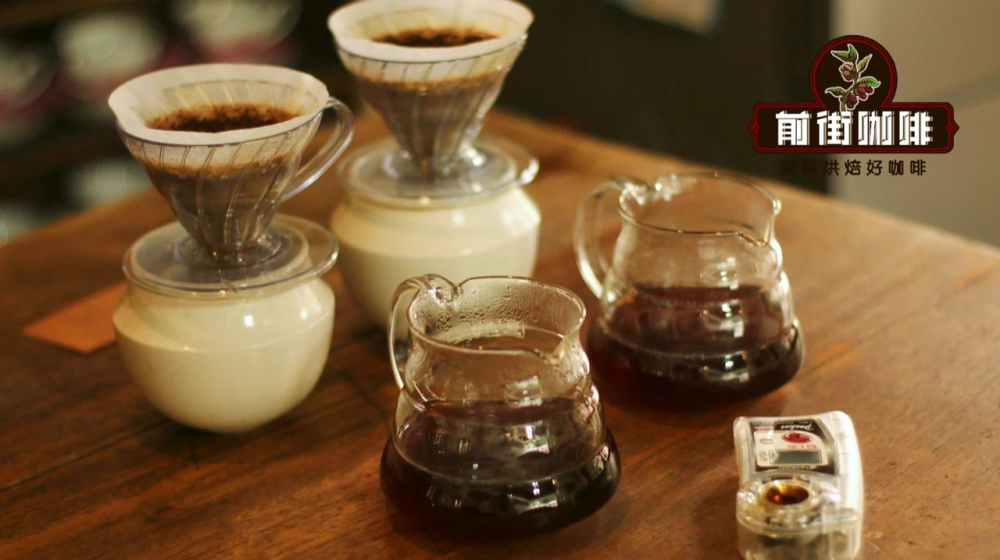
Beginners in pour-over coffee often come to FrontStreet Coffee and ask how to determine the grind size for each type of coffee bean, what impact grind size has on coffee extraction, and how to tell at homethe coarseness of coffee groundsand other questions. In this article, Front Street will discuss the grind size for pour-over coffee.
The impact of grind size on coffee
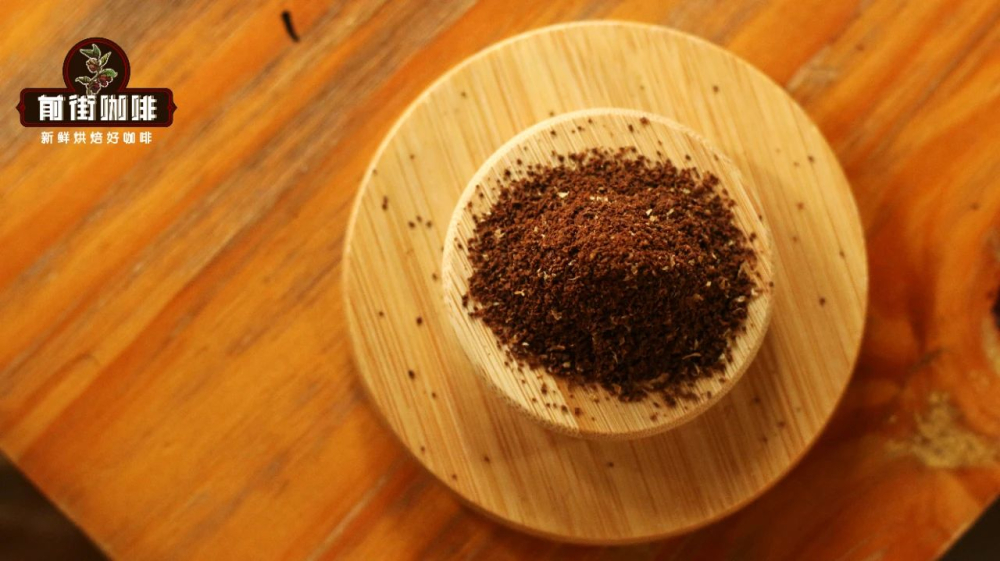
Grinding is very important for coffee. The size of the coffee particles directly affects the efficiency of hot water soaking and extracting the coffee. Theoretically, the more uniform the coffee particle size, the more consistent the overall extraction efficiency will be, and the better the coffee flavor. Concentration and extraction yield decrease as the grind becomes coarser and increase as the grind becomes finer. Grind size refers to the size and shape of the coffee after grinding, and also to the size of the surface area. The finer the coffee is ground, the larger the surface area, and the more area the water can contact the coffee, allowing more substances to be extracted. A larger surface area (coarser grind) also allows more places for carbon dioxide inside the coffee beans to be released.

The effect of roasting on coffee bean aroma and carbon dioxide production
Roasting brings out coffee’s aroma to the fullest. The Maillard reaction refers to the process of a series of degradation and polymerization reactions between monosaccharide carbohydrates and amino acids, and this reaction runs throughout the entire roasting process. Monosaccharides and amino acids react at different temperatures to produce many complex aromas. Aromas such as nuts, almonds, cream, and chocolate come from the Maillard reaction. Caramelization is the oxidation and browning reaction of sugars during heating, producing aromas such as honey, maple syrup, and caramel. Simply put, the longer the roasting time, the more the acidic substances in the coffee beans are developed. For medium roasts, lighter roasts have more obvious acidity, such as citrus and berry flavors. Darker roasts have more obvious caramelized flavors, such as cocoa, caramel, and nut flavors.

In addition to creating aroma in coffee beans, roasting also causes carbon dioxide to be produced inside the coffee beans. The darker the roast, the more carbon dioxide is produced. Therefore, to ensure that carbon dioxide can be released better during brewing, Front Street recommends resting freshly roasted coffee beans after purchase. Resting allows the coffee beans, while still unopened in their original packaging, to release carbon dioxide on their own through the one-way valve on the package. This helps the aromatic substances and oils integrate and allows all the aromatic substances inside the coffee beans to reach a state where they are easy to extract. For FrontStreet Coffee’s medium-light roasted coffee beans, the recommended resting time is 3-4 days from the roast date, and for medium-dark roasted coffee beans, the recommended resting time is 5-6 days from the roast date.
How todetermine the grind size of coffee beans?
Using FrontStreet Coffee’s freshly roasted coffee beans as an example,single-origin coffee beans for pour-overare divided into medium-light roast and medium-dark roast.
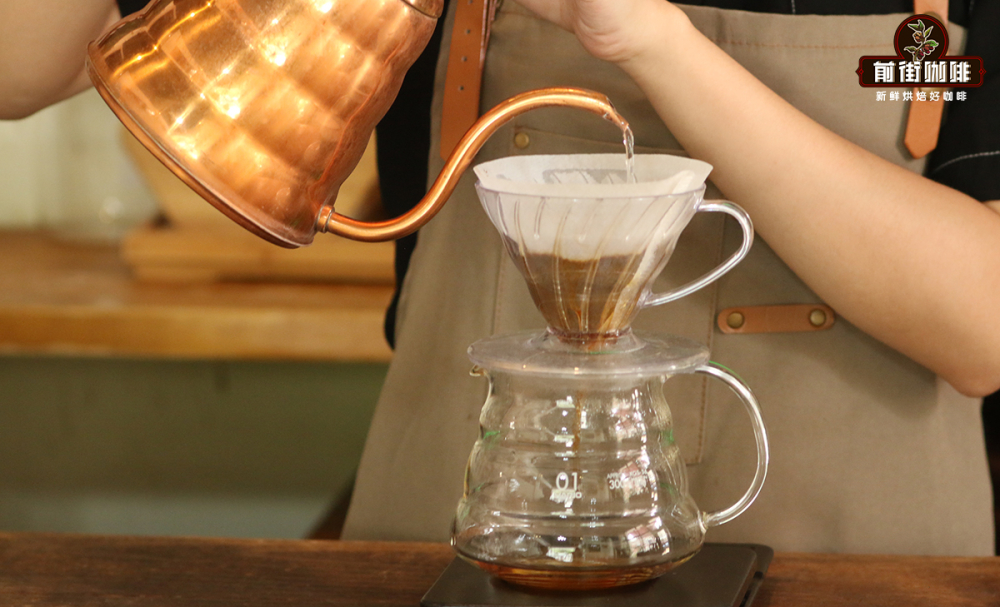
FrontStreet Coffee’s medium-light roasted coffee beans: Medium-light roasted coffee beans will show acidity, while caramelized flavor substances are not easily extracted. Front Street recommends using a medium-fine grind size (80% passing rate through a 0.85mm No. 20 sieve, that is, the size of fine granulated sugar). A medium-fine grind can slow the time for water to pass through the coffee bed, better extracting the acidic substances, sweet substances, and caramelized substances in the coffee so that the coffee flavor is balanced. For medium-fine ground coffee, the recommended brewing water temperature is 90-91°C. Too high a water temperature will over-extract caramelized substances and produce bitterness, while too low a water temperature will under-extract, extracting only some acidic and sweet substances, making the coffee flavor flat and bland.

FrontStreet Coffee’s medium-dark roasted coffee beans: Medium-dark roasted coffee beans generally have low acidity and obvious body, meaning the caramelized flavor substances are more abundant. Front Street recommends using a medium-coarse grind size (70% passing rate through a 0.85mm No. 20 sieve, that is, the size of coarse granulated sugar). A medium-coarse grind can speed up the time for water to pass through the coffee bed, so that caramelized substances are not over-extracted, allowing the coffee’s flavor and mouthfeel to show sweetness and body without producing unpleasant bitterness. For medium-coarse ground coffee, the recommended brewing water temperature is 86-88°C. Too high a water temperature will make the coffee bitter and hard to drink, while too low a water temperature will make the coffee flavor bland and flat.
How to use a 0.85mm No. 20 sieve?
Regarding grind size, Front Street determines it through sieving. Based on the grind recommendations provided by the Specialty Coffee Association of America, SCA, for pour-over coffee, Front Street then verifies them through actual practice. If you do not have a sieve at home, FrontStreet Coffee recommends judging by observing the flow rate: if the flow is too fast, the grind is coarse; if the flow is too slow, the grind is fine.
First prepare 10g of coffee beans and grind them. Based on the size of fine granulated sugar and coarse granulated sugar, initially set a grind size, then pour it into the sieve, cover it, and shake left and right so that the coffee grounds pass through the sieve into the receiving tray below. The sieving is complete only when no more coffee grounds pass through the sieve. Then prepare an electronic scale and a container, tare it to zero, pour the sieved coffee grounds into the container and weigh them. If the sieved coffee grounds reach 80%, it is a medium-fine grind; if the sieved coffee grounds reach 70%, it is a medium-coarse grind. If the passing rate is too high, adjust the grind coarser; if the passing rate is too low, adjust the grind finer.

The importance of uniform grind size
The ground particles should be uniform. After coffee beans are ground, they become powder, and the distribution of particle sizes has a great relationship with the quality of the coffee beverage. The more the particle sizes are concentrated within the target range, the more uniform the grind is, and the better the flavor can be. If there are too many coarse particles, the good flavors hidden inside the coffee cannot be brewed out; if there are too many fine particles, the coffee brewed will taste too muddled and too bitter. If the grind is seriously uneven, Front Street recommends changing to a different grinding device.
For professional coffee knowledge exchange and more coffee bean information, please follow Coffee Workshop (WeChat public account: cafe_style)
For more specialty coffee beans, please add the private WeChat of FrontStreet Coffee, WeChat ID: kaixinguoguo0925
The above content is compiled by CoffeeHunters, a coffee news website.


