







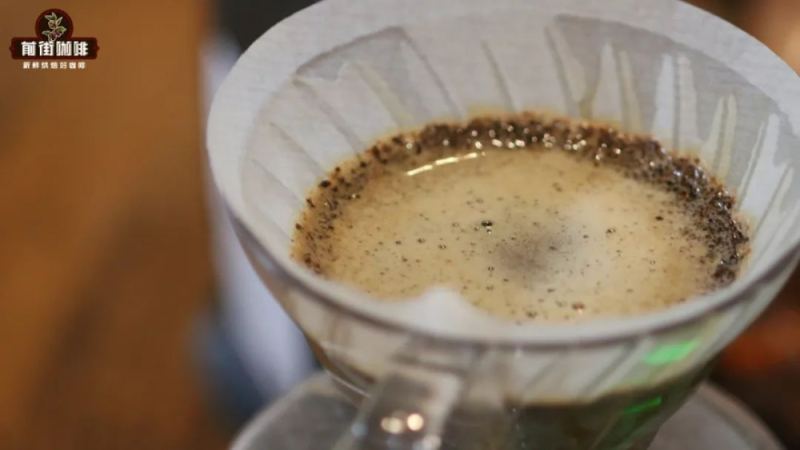

Which grind size from 1 to 10 is the finest for coffee beans? In most cases, the smaller the number, the finer the grounds.The grind size of coffee beans plays an important role in extracting a cup of coffee. For example, if the coffee grounds are too fine and used for pour-over coffee, it will lead to over-extraction, while if they are too coarse, it will lead to under-extraction. Secondly, since beans from each origin have different characteristics, the grind size standards also differ. So how can you correctly adjust the grind size? For example, the grinders currently on the market have grind settings from 1-10, and exactly how to adjust them is a problem. Next, in this article, Front Street Coffee will share information aboutthe standard for coffee ground coarseness!
What is coffee bean grind size?
As Front Street Coffee said above, grinding is very important for coffee, because the size of the coffee particles directly affects the efficiency with which hot water soaks and extracts the coffee. Theoretically, the more uniform the coffee particle size, the more consistent the overall extraction efficiency will be, and the better the coffee flavor. Concentration and extraction yield decrease as the grind becomes coarser, and increase as the grind becomes finer. Grind size means the size and shape of the coffee after grinding, and also means the size of the surface area. The finer the coffee is ground, the larger the coffee surface area, and the greater the area where water flow contacts the coffee, so more substances can be extracted. A larger surface area (coarser grind) also allows more places for the carbon dioxide inside the coffee beans to be released.

Grind size is also often described as the coarseness of the coffee grounds. When the coffee grind is coarser, the coffee particles are larger, and it takes more time for water flow to enter the interior of the coffee particles to extract coffee substances. Likewise, when the coffee grind is finer, the coffee particles are smaller, and it takes less time for water flow to enter the interior of the coffee particles to extract coffee substances.
Therefore, for the same coffee beans, under the same amount of time, a finer coffee grind can extract more coffee substances, so the coffee taste will be stronger; while a coarser coffee grind can only extract a limited amount of coffee substances, and the taste is likely to be thin. This shows that the grind size of coffee grounds plays an important role in whether the flavor of a cup of coffee can be extracted.

Sowhat are the common grind coarseness levels?
Generally, coffee grinders on the market can be roughly divided into three types by grinding range. One is a grinder for theespresso grindrange, one is a grinder that cannot be used for espresso but can be used for most grind levels, and the last is a grinder whose grind coarseness range can be used for all types.
If we follow the recommended grind coarseness of coffee grinders, we can identify several common grind levels. The finest grind is suitable for brewing Turkish coffee, then espresso, then medium coarseness for pour-over coffee/drip coffee, then slightly coarser for siphon, and finally the coarsest grind is used for French press brewing.
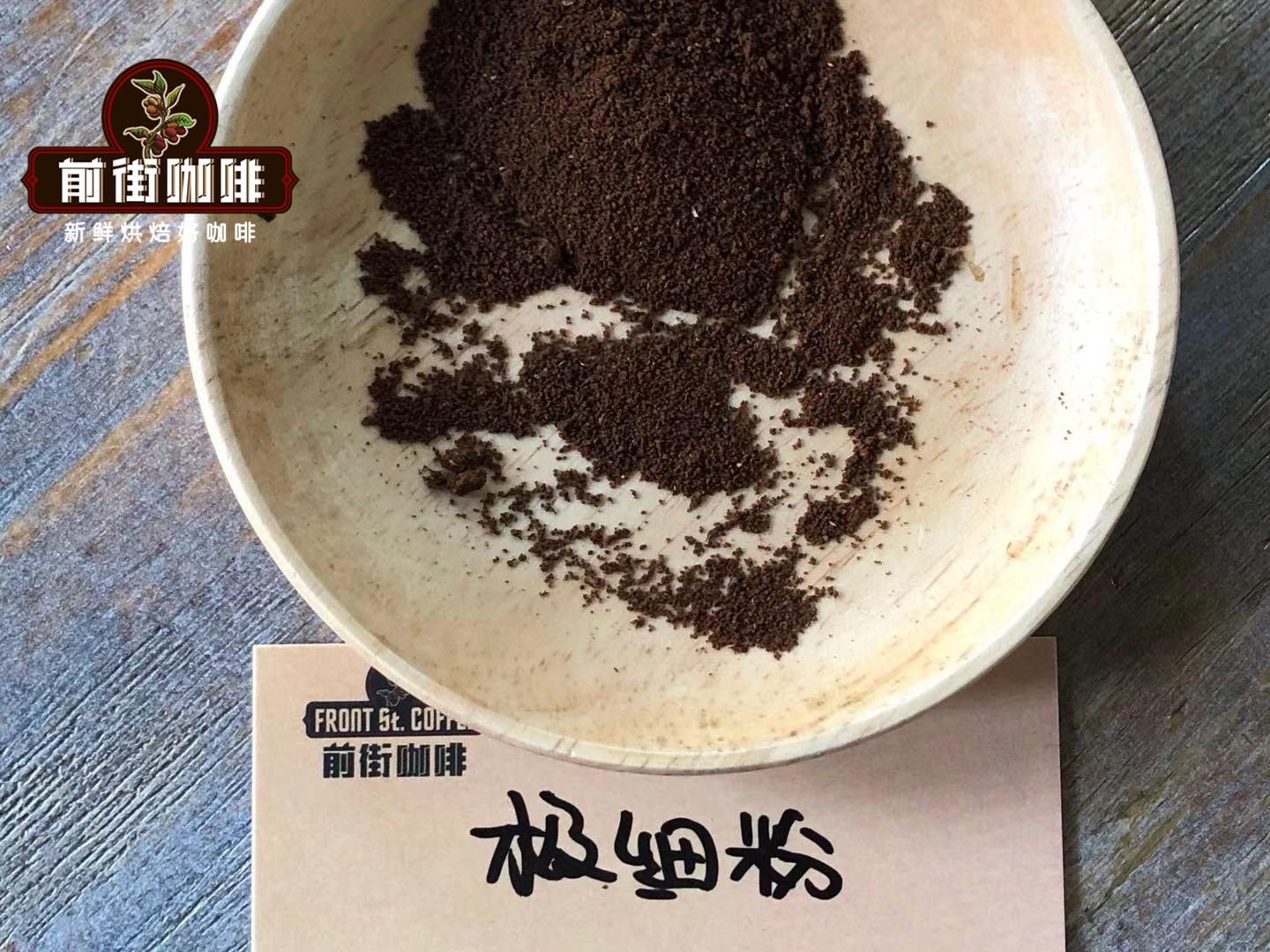
Espresso has a finer grind. This comes from the production process of espresso and the use of espresso. Espresso requires a very short extraction time, generally between 20 and 30 seconds. At the same time, espresso is mainly used as the base for most Italian-style coffees, and enough coffee substances need to be extracted to support adding water or milk, so the grind is very fine compared with other brewing methods.
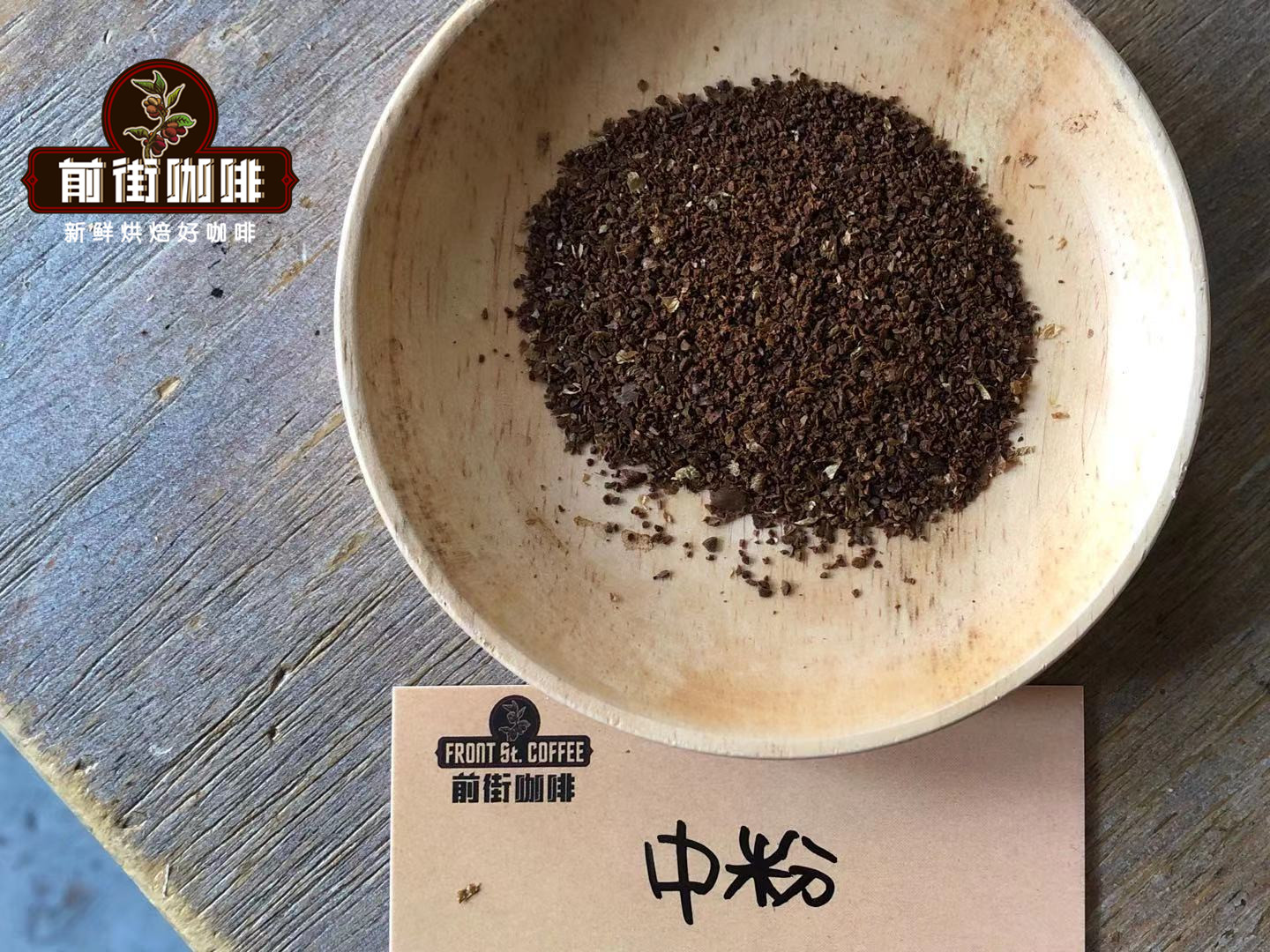
The pour-over brewing method has a relatively moderate extraction time among many brewing methods, averaging about 2 minutes. Of course, 1 to 3 minutes is also acceptable, but most single-serving pour-over brewing recipes average about 2 minutes of extraction time. Compared with espresso, it does not need such a fine grind, in order to avoid over-extraction, so the grind is medium-fine.
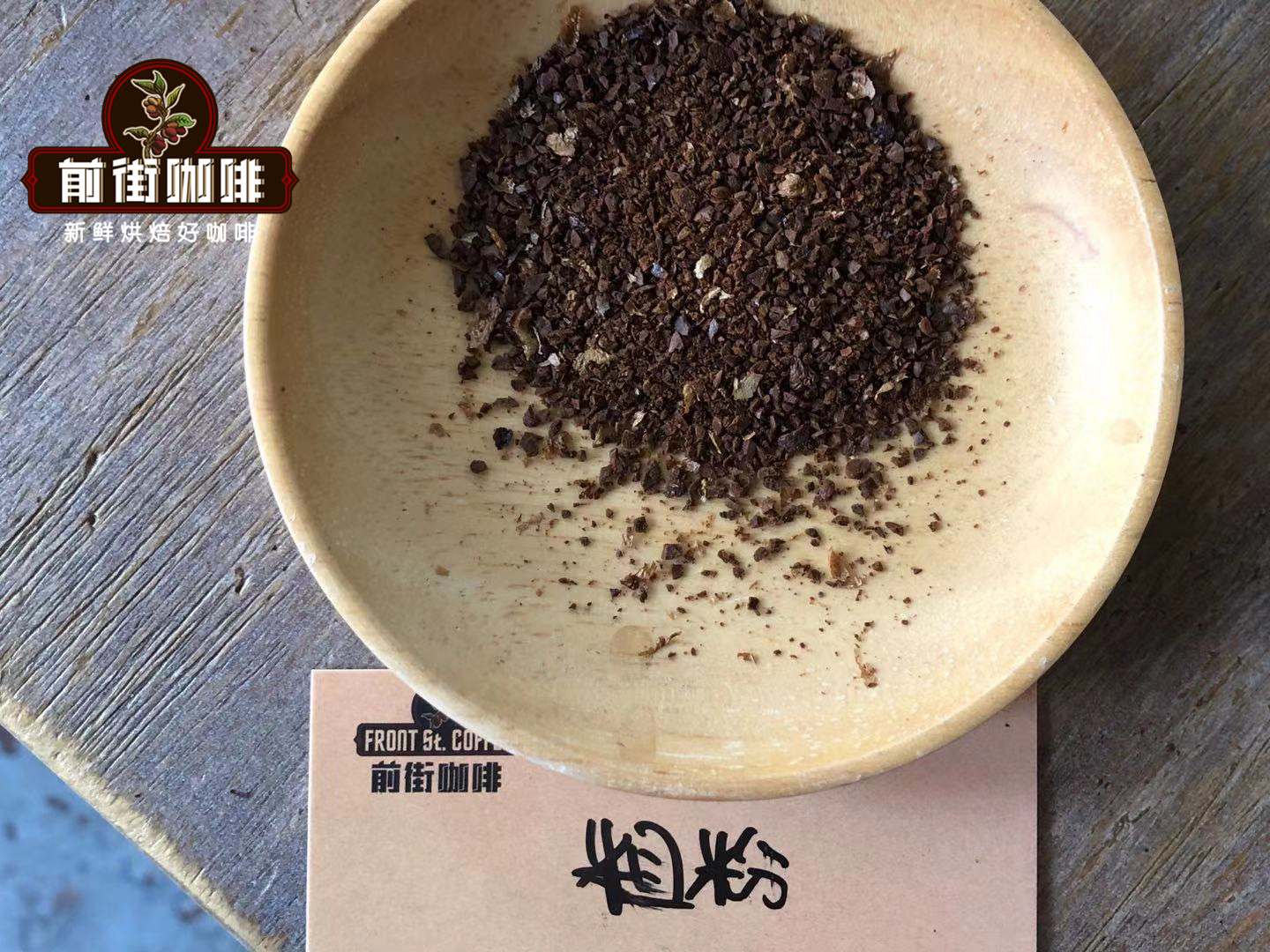
The extraction time of French press coffee is 4 minutes or more, longer than pour-over coffee, so the grind for French press coffee is generally the coarsest, in order to avoid over-extraction caused by long extraction.
So how do you adjust the coffee bean grind size from 1 to 10?
From what Front Street Coffee said above, it can be seen that the coffee grind size used for different coffee extraction methods is also different, and everyone has a different model of coffee grinder, so the parameters that need to be adjusted for grind size are also different. Some grinders may be set to 3 for extremely fine grinding, while others may need to be set to 1 for extremely fine grinding. In this situation, the only way is to sift the grounds to confirm the grind size. Here, Front Street Coffee will explain using the grind size for pour-over coffee.

What grind size should be used for pour-over coffee?
Taking Front Street Coffee's freshly roasted coffee beans as an example, single-origin coffee beans for pour-over are divided into medium-light roast and medium-dark roast.

Front Street Coffee's medium-light roasted coffee beans: medium-light roasted coffee beans will show acidity, while caramelized flavor substances are not easy to extract into the cup. Front Street recommends using a medium-fine grind (80% passing rate through a No. 20 sieve of 0.85mm, that is, the size of fine granulated sugar). A medium-fine grind can slow down the time for water flow to pass through the coffee bed, better extracting the acidic substances, sweet substances, and caramelized substances in the coffee so that the coffee flavor can be balanced. For medium-fine ground coffee, the recommended brewing water temperature is 90-91°C. Too high a water temperature will over-extract caramelized substances and produce bitterness, while too low a water temperature will under-extract and extract only part of the acidic and sweet substances, making the coffee flavor flat and insipid.

Front Street Coffee's medium-dark roasted coffee beans: medium-dark roasted coffee beans generally have low acidity and obvious body, which means caramelized flavor substances will be more abundant. Front Street recommends using a medium-coarse grind (70% passing rate through a No. 20 sieve of 0.85mm, that is, the size of coarse granulated sugar). A medium-coarse grind can speed up the time for water flow to pass through the coffee bed, so that caramelized substances will not be over-extracted, allowing the coffee's flavor and mouthfeel to show sweetness and body without producing unpleasant bitterness. For medium-coarse ground coffee, the recommended brewing water temperature is 88-89°C. Too high a water temperature will make the coffee flavor bitter and hard to swallow, while too low a water temperature will make the coffee flavor dull and flat.
How do you use a No. 20 sieve of 0.85mm?
Regarding grind size, Front Street determines it through the method of sieving. Based on the grind recommendations provided by the Specialty Coffee Association of America, SCA, for pour-over coffee, Front Street then verifies them in combination with practical operation. If there is no sieve at home, Front Street Coffee suggests judging by observing the flow rate of the water. If the water flow is too fast, the grounds are coarse; if the water flow is too slow, the grounds are fine.
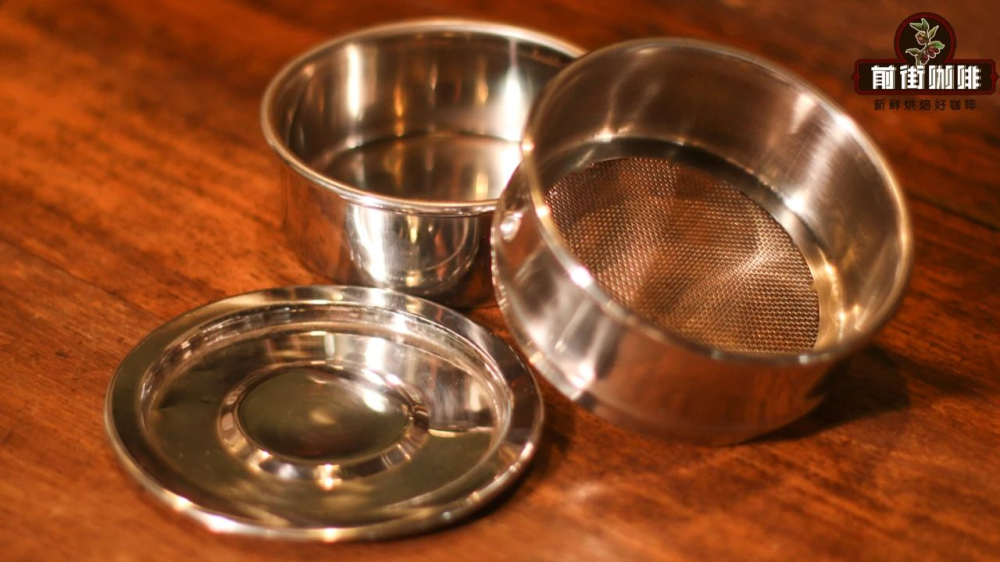
First, prepare 10g of coffee beans for grinding. Based on the size of fine granulated sugar and coarse granulated sugar, initially set a grind size, then pour it into the sieve, cover the lid, and shake left and right so that the coffee grounds pass through the sieve and fall into the powder collection tray below. The sieving is considered complete only when no more coffee grounds pass through the sieve. Then prepare an electronic scale and a container, tare it to zero, pour the sieved coffee grounds into the container and weigh them. If the sieved coffee grounds reach 8g, it is a medium-fine grind; if the sieved coffee grounds reach 7g, it is a medium-coarse grind. If the passing rate is too high, adjust the grind coarser; if the passing rate is too low, adjust the grind finer.
The following are the sieving data for different extraction methods that Front Street Coffee obtained through many practical brewing tests, for everyone's reference.
Fine > Coarse
Pour-over Siphon 80% passing rate > American drip 75-80% passing rate> Cupping 70-75% passing rate> French press 65-70% passing rate
The importance of uniform grind size

The ground particles after grinding should be uniform. After coffee beans are ground, they become powder, and the distribution of particle size has a great relationship with the quality of the coffee beverage. The more the particle size is concentrated within the target range, the more uniform the grind is, and the better the flavor can be. If there are too many coarse particles, it will not brew out the good flavors hidden inside the coffee; if there are too many fine particles, it will brew coffee with a too complex and too bitter taste. If the grinding is seriously uneven, Front Street suggests changing to another grinding device.
The above is the related explanation compiled by Front Street Coffee aboutcoffee bean ground grind size. We hope it can help coffee lovers who want to understand related knowledge, so that in the future, when extracting coffee themselves, they can correctly adjust the coarseness of the coffee grounds.
For more specialty coffee beans, please add the private WeChat of Front Street Coffee, WeChat ID: kaixinguoguo0925
The above content is compiled by CoffeeHunters, a coffee news website.


