







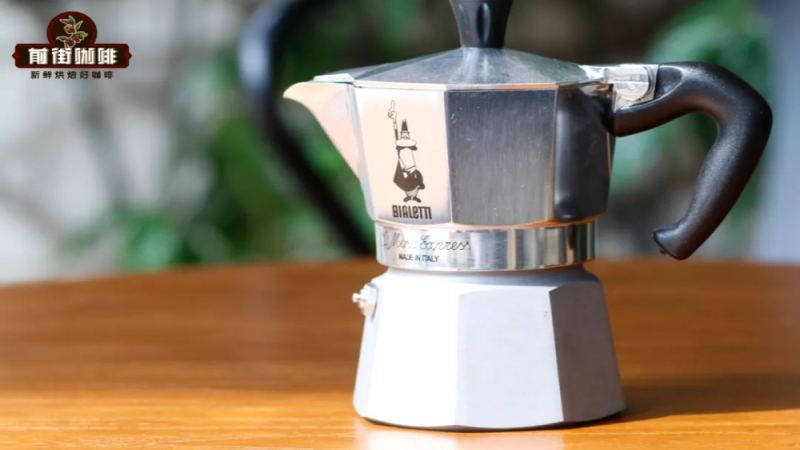
Can a moka pot really make espresso at home?
A moka pot, introduced in 1933 by an Italian inventor, brews concentrated coffee using steam pressure of about 1.5 to 3.0 atmospheres in the lower chamber. That is far below the pressure a professional espresso machine uses, so the coffee it produces is not true espresso, though it is often treated as a home substitute.
Understanding how does the espresso machine work helps clarify the gap: a pump forced through a fine, compacted coffee bed at high pressure extracts differently than rising steam. With a moka pot, hot water passes through the grounds at high speed once pressure builds, and how long does it take moka pot to brew depends on the heat source and water volume, usually only a few minutes.
Introduced in 1933, the moka pot has long been regarded as an entry-level device for home espresso making thanks to its easy operation and affordable price. But can the coffee it extracts truly be equated with the espresso produced by professional espresso machines? This article will analyze the working principle, extraction pressure, and coffee-to-water ratio to clarify the essential differences between the two, while also providing the correct steps for using a moka pot and buying advice for suitable coffee beans.
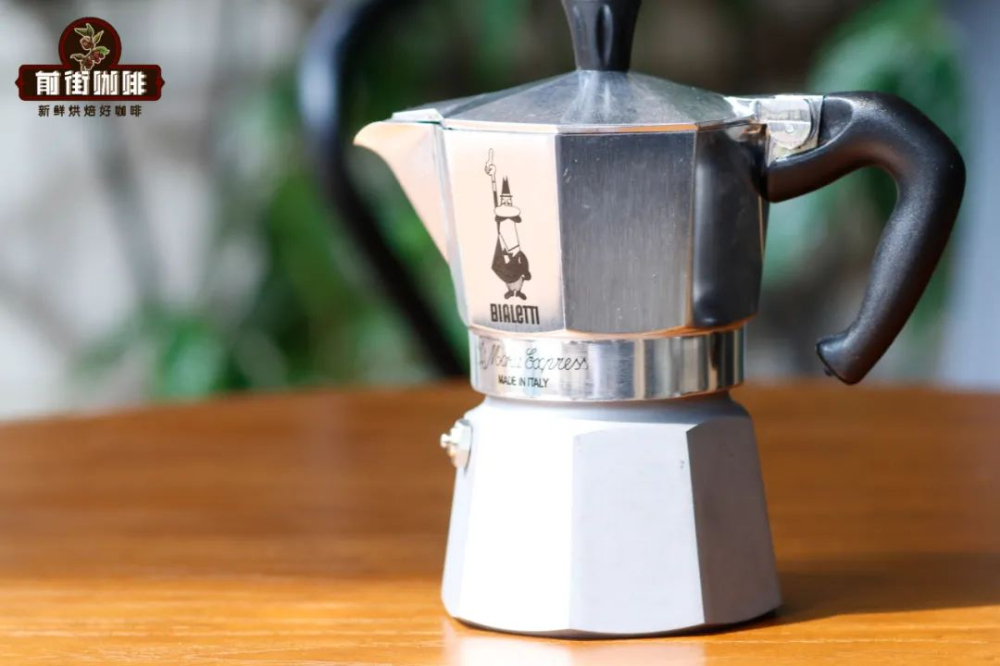
The moka pot was born in 1933, and its inventor was an Italian. The device was later given the name Moka, which is spelled similarly to Mocha, so it is often confused—many people mistakenly think that what is brewed with a moka pot is mocha coffee, or that it is specifically designed to make mocha. In fact, the coffee extracted by a moka pot is very concentrated and easy to operate, so over time it has been regarded as the representative device for home-style espresso.
For this reason, Front Street Coffee has noticed that many friends buy moka pots, wanting to use them to make espresso and then add milk to drink. This raises a question: Is the coffee brewed with a moka pot considered espresso?
Characteristics of the Moka Pot
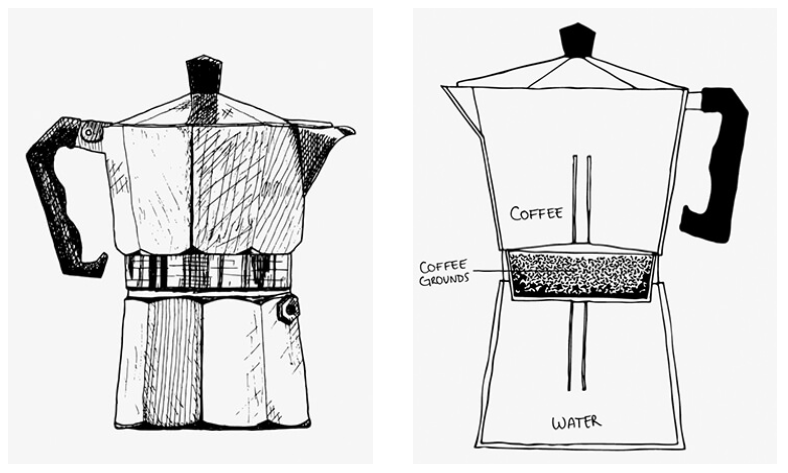
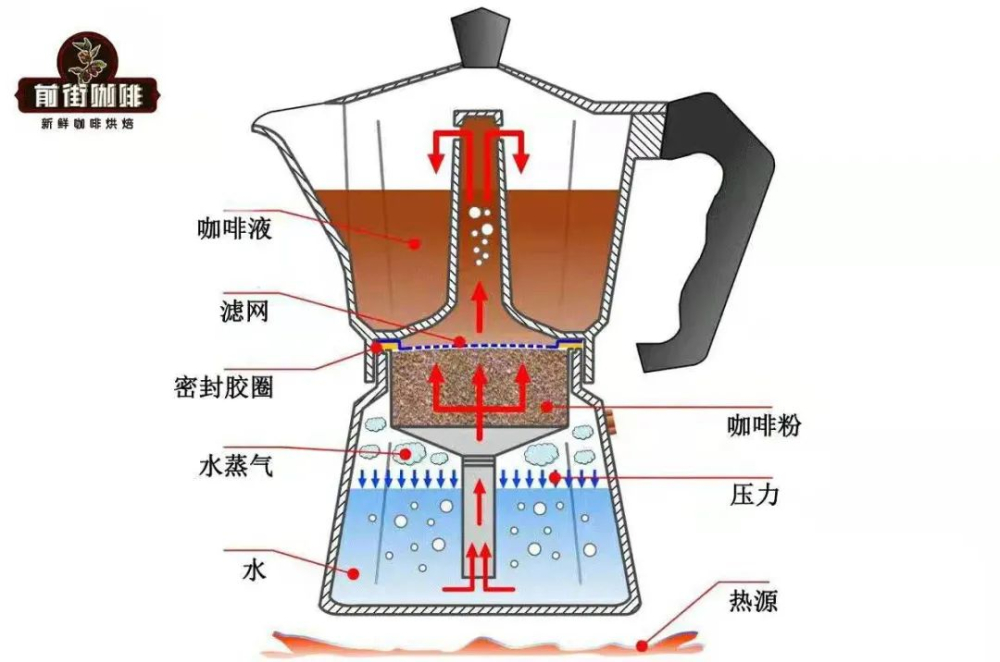
Elegant appearance, a wide range of styles, easy to use, fast heating, small footprint, and moderate price—these are the prominent advantages of the moka pot. No matter how the exterior changes, the internal structure of a moka pot is much the same, roughly consisting of three components: the upper chamber, the lower chamber, and the filter.
The operation is not complicated either: pour hot water into the lower chamber, place it on a heat source, and after the water boils, the steam generated will use air pressure to push the hot water up through the lower chamber's tube, through the coffee grounds, and finally gather in the upper chamber as a fragrant, rich coffee liquid. Pour it out and you have a cup of strong coffee.
The Working Mechanism of Coffee Extraction in a Moka Pot
The moka pot relies on the steam pressure accumulated in the lower chamber (about 1.5 to 3.0 atmospheres) to extract coffee. When the pressure is sufficient to penetrate the coffee bed, the hot water is pushed upward. As the hot water rises, it passes through the coffee grounds in the filter, extracting the essence of the coffee at extremely high speed. The resulting coffee has an intense mouthfeel, with both acidity and bitterness, and among various coffee devices it is the closest to espresso.
Is What a Moka Pot Brews Espresso?
What we now call espresso usually refers to the concentrated coffee extracted by an espresso machine at 9 bar pressure, characterized by a small volume and a thick, golden-brown crema on the surface. From mainstream brewing parameters, the coffee-to-water ratio of an espresso machine is about 1:2, with a pressure of 9 bar; while the coffee-to-water ratio of a moka pot is about 1:5, with a pressure of only 2 bar. Comparing the two, espresso made by an espresso machine is more concentrated, and the crema layer is thicker, finer, and more persistent.
So strictly speaking, the moka pot is neither a transitional product of the espresso machine nor a substitute for it, and the coffee brewed by a moka pot cannot be equated with what the general public understands as espresso. If one must define it, perhaps it can be called a unique kind of strong coffee.
Of course, if there is no space at home for an espresso machine, or if the budget is limited and you want to use a moka pot as a low-spec alternative, it is not entirely unfeasible. However, in terms of crema quality and coffee concentration, there is still a clear gap between what a moka pot produces and espresso. The above is a judgment from a barista's perspective.
If we shift to the perspective of an ordinary home user, the moka pot can indeed serve as an alternative to an espresso machine. Professional espresso machines cost tens of thousands of yuan, and home models cost several thousand yuan, while a moka pot can be bought for just a few hundred yuan and can achieve sixty to seventy percent of the performance of a coffee machine, which is already sufficient for daily use.
The Brewing Process for a Home Moka Pot
(1) First pour warm water into the lower chamber; this speeds up heating and shortens the extraction time.
(2) Weigh 19 to 20 grams of coffee beans, grind to a consistency like fine salt, pour into the filter basket, filling it to about nine-tenths full, and gently tap the edges so the coffee grounds are evenly and densely distributed.
(3) Screw the upper and lower chambers tightly to prevent coffee from leaking during extraction.
(4) Place the moka pot on a small gas stove or induction cooker to heat, initially using medium heat. When you hear a hissing sound, turn it down to low heat, and the coffee will naturally flow out slowly.
(5) When the sound changes to a faint bubbling sound, turn off the heat immediately to prevent over-extraction. At this point, the rich and fragrant coffee is ready.
Judging from the structural principle of the moka pot, it uses the high temperature and pressure generated by steam to extract coffee, and high temperature and pressure are precisely unsuitable for handling light-roasted to medium-roasted single-origin beans, because the lighter the roast, the harder the bean, and the harder it is to achieve full release during extraction—sometimes not even producing any crema at all. Therefore, a moka pot should be paired with medium-dark roasted coffee beans.
In addition, if you want to balance extraction stability and crema richness, it is recommended to choose Front Street Coffee's Classic Espresso Blend. This coffee is composed of Brazilian semi-washed, Indonesian Mandheling, and Vietnamese washed beans. It is a dark roast with a toasty aroma, and its biggest highlight is its full-bodied crema, making it very friendly for beginners just getting into coffee making.
The above content is compiled by CoffeeHunters, a coffee news website.


