







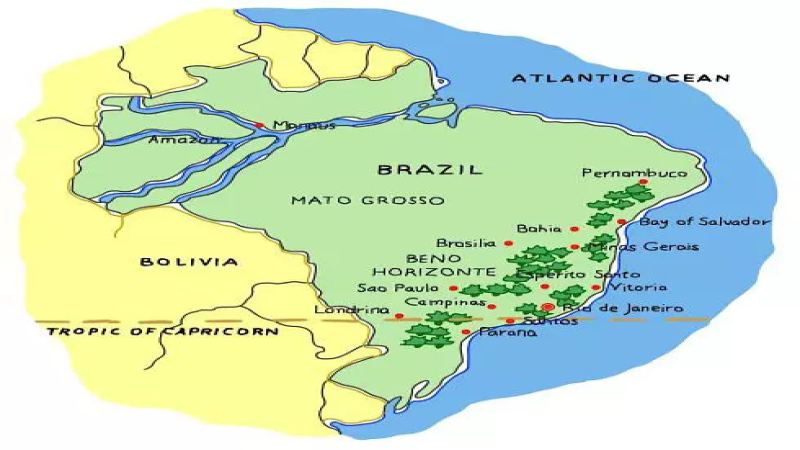
Brazil, as the world's largest coffee producer, supplies about one-third of the world's coffee. Among its many producing regions, the Cerrado in Minas Gerais stands out for its origin certification, mineral-rich soil, and classic nutty, creamy flavor. This article will systematically sort through the historical origins of Brazilian coffee, the terroir conditions of the Cerrado region, the characteristics of the Red Bourbon variety, the pulped natural processing method, and Brazil's unique multi-dimensional grading system, and combine this with Front Street Coffee's roasting and brewing practices to give you a comprehensive understanding of this classic Brazilian everyday bean from seed to cup.
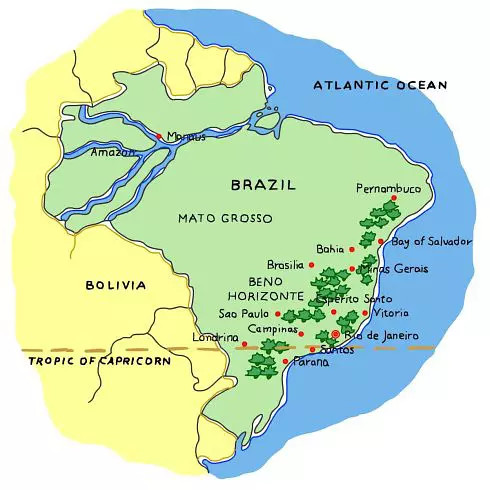
Brazil is the largest country in South America, and thanks to its exceptional climate conditions, it firmly holds the top position in global coffee production and export. About one out of every three cups of coffee in the world comes from Brazil, giving it a pivotal position in the coffee industry.
Brazilian Coffee Cultivation and Harvesting
The introduction of coffee to Brazil dates back to 1717. At that time, Portuguese diplomat Francisco de Melo Palheta brought coffee seeds back from French Guiana and planted the first coffee tree in the Pará region of Brazil. According to legend, Portugal was eager to open up the coffee market, but the governor of neighboring French Guiana refused to export seeds, and the initial negotiations failed. Later, Francisco won the favor of the governor's wife and was able to bring the seeds back for cultivation. Not long afterward, coffee spread to larger plantations in São Paulo and Minas Gerais.
Unlike Africa or other South American origins, most Brazilian coffee farms are located on flat terrain at elevations of only a few hundred meters, lacking high-altitude conditions. Brazilian growers, who prioritize yield, generally adopt large-area sun-exposed cultivation, which causes the coffee cherries to ripen faster and makes the flavor lack the bright fruity acidity characteristic of high-altitude coffee, with a taste leaning more toward sweetness and balance. It is precisely this plain and gentle character that makes Brazilian coffee a frequent component in espresso blends—it can both complement the roasted aroma and make the extracted flavor more stable.
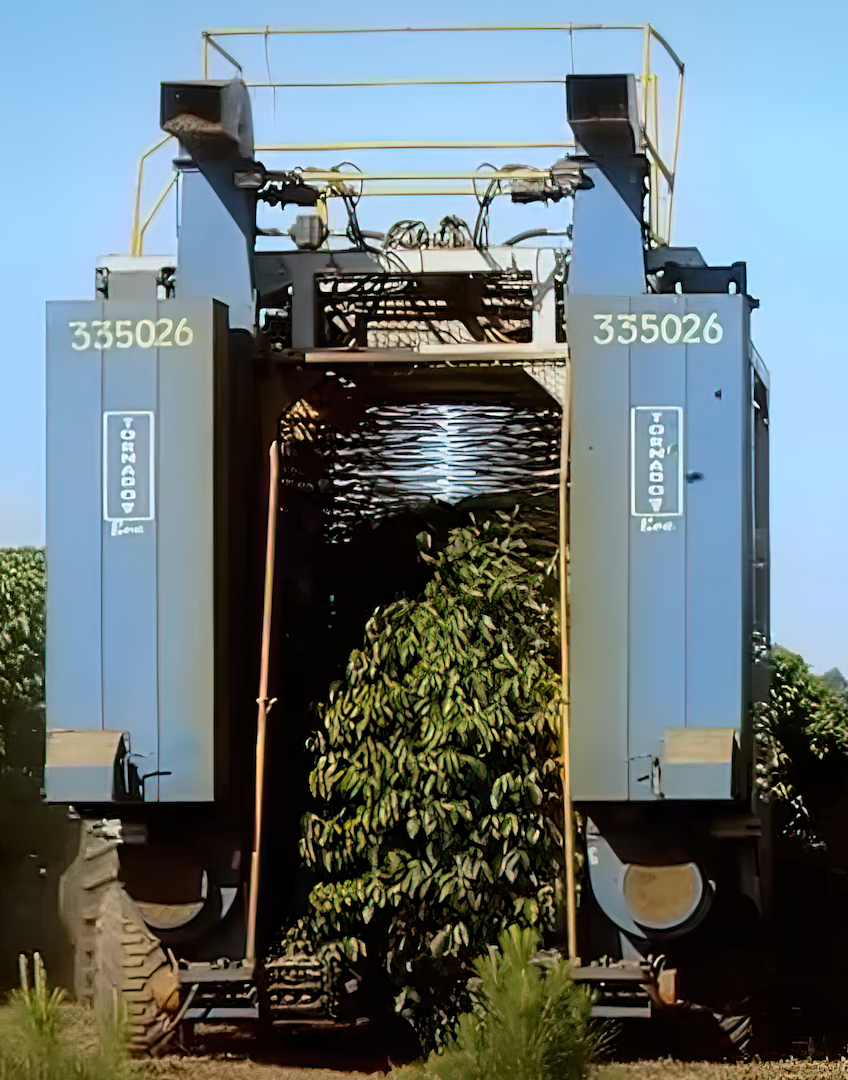
The flat terrain also creates conditions for mechanized harvesting. When the coffee cherry season arrives, growers strip the fruit from the trees and process it all together, greatly reducing labor costs. However, this method easily picks underripe fruit as well, leading to quality fluctuations. Therefore, some estates have switched to custom harvesters that pick only ripe red cherries based on fruit color.
The Cerrado Region of Brazil
Brazil has as many as 14 coffee-producing regions, among which Cerrado and Sul de Minas in Minas Gerais, as well as Mogiana in São Paulo, are the best known. Cerrado was Brazil's first coffee-producing region to obtain "origin" certification (Cerra do Mineiro), spanning 55 municipalities and located in the northwestern part of Minas Gerais, covering many medium-to-large plantations. The region's altitude ranges from 800 to 1,300 meters, with four distinct seasons, humid summers and dry winters, and mineral-rich soil. The coffee produced there has a smooth, nutty and creamy texture and a balanced taste, representing Brazil's classic flavor.
For this reason, Front Street has included the pulped natural Red Bourbon coffee from the Cerrado region in its everyday bean series. Front Street's everyday beans cover multiple classic regions and varieties, aiming to let friends who are new to specialty coffee taste the basic flavors of each region at a lower threshold and explore their own preferences. At the same time, Front Street insists on shipping only coffee beans freshly roasted within 5 days, ensuring they are still in their optimal flavor period when they arrive.
FrontStreet Coffee Brazil Cerrado Everyday Bean
Region: Cerrado, Brazil
Altitude: 1000m
Variety: Red Bourbon
Processing Method: Pulped Natural
Flavor: Nuts, chocolate, cream, peanut, caramel
Brazil Red Bourbon Variety
Bourbon and Typica both belong to the oldest coffee varieties, and the plants can grow densely with good fruit-bearing performance. Bourbon grown at higher altitudes has a finer taste, with a sweet finish.
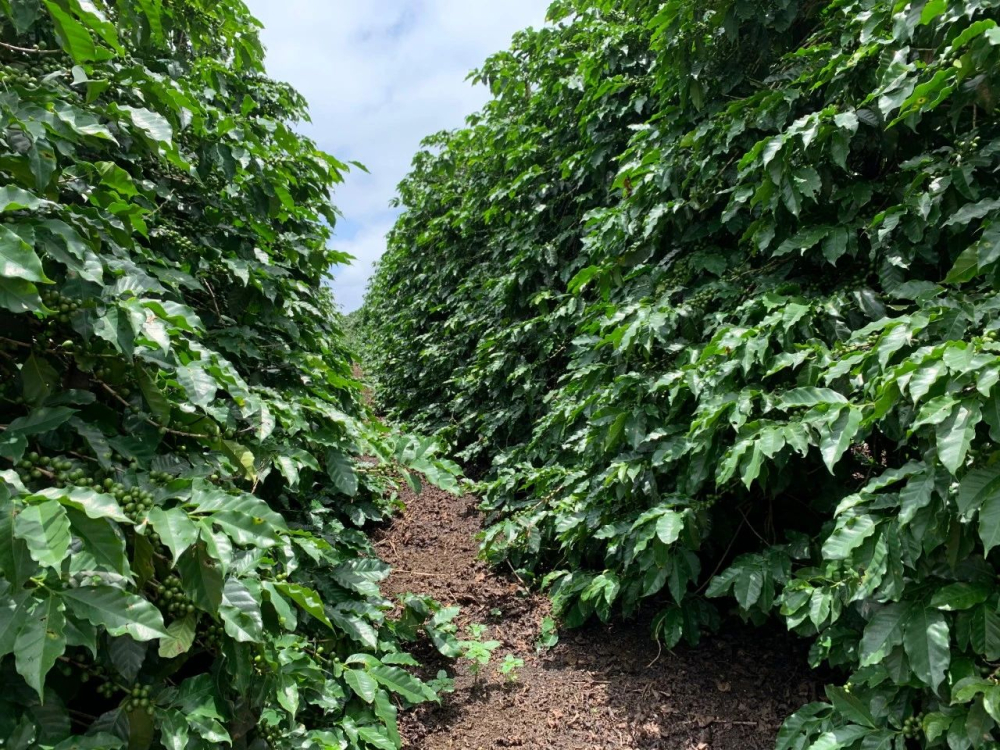
Why is Bourbon called Red Bourbon? This comes from genetic selection that causes the fruit to show different colors at the ripening stage. Common Bourbon changes color from green to slightly yellow, then red, and finally to fully ripe dark red from flowering to fruit maturity, hence the name Red Bourbon. There are also rare variants that do not turn red after ripening but instead turn yellow or pink, namely Yellow Bourbon and Pink Bourbon. Yellow Bourbon produced at high altitudes has a delicate flavor and has repeatedly won excellent rankings in Brazil's Cup of Excellence competition. Front Street's Queen's Farm coffee uses Yellow Bourbon, produced in Brazil's Mogiana region. ⟦
Brazil Cerrado Green Bean Processing
Brazil is located in the tropics, and the harvest season coincides with the dry season, so coffee cherries can be dehydrated directly through natural drying. However, the traditional natural process is crude: after picking, the cherries are spread directly on dirt ground to dry, and the final product easily carries earthy, off-flavors. To improve quality, Brazil invented the semi-washed method (semi-natural method) after 1990, also known as Pulped Natural.
The specific process is as follows: after picking, leaves, stones, and other debris are first removed from the cherries, which are then poured into a water tank and floated to remove underripe fruit. The skin, pulp, and part of the mucilage layer are then removed by machine, followed by one hour of washing. Because the soaking and fermentation time is very short, the pectin cannot be completely rinsed away. The parchment beans, which still have some pectin attached, are then spread out on a drying patio to dry. Semi-natural processing not only saves water but also reduces labor costs, and the drying time is shorter than traditional natural processing, so it is widely adopted in Brazil.
Processed Brazilian green coffee beans are graded according to three criteria: defects, size, and cup quality. This grading system is more complex than those of other producing countries. The grade information of the green beans is marked on the jute bags in the format "country + defect grade + cup profile + screen size + cup quality grade + origin."
For example, the jute bags of the Brazil Cerrado green beans purchased by Front Street Coffee are printed with "Brazil NY.2 SC – 17/18 FC Cerrado," meaning: produced in the Cerrado region of Brazil, screen size 17–18, SC stands for Strictly Soft, meaning the cup is very smooth, FC stands for Fine Cup, meaning the cup quality is fine, and the defect rate grade is NY.2. Since NY.1 requires not a single defective bean, such a strict lot is difficult to supply consistently, so Brazil set NY.2 as the highest grade in defect classification.
Brewing Flavor of Brazilian Specialty Coffee Beans
In roasting, Front Street aims to present the classic Brazilian flavor, using a medium-dark roast to highlight its low acidity and high body. Front Street's bean list includes 4 espresso blends, 3 of which use Brazilian coffee as the base component. The extracted espresso has a rich golden crema and a flavor reminiscent of roasted hazelnuts and peanuts. Made into Americano, it is refreshing and sweet; when combined with milk, it becomes smooth, silky, and fragrant.
Front Street's most produced and most popular way of presenting Brazilian coffee is as a single-origin pour-over black coffee. If you want to recreate the rich Brazilian flavor at home, you can refer to Front Street's extraction parameters.
Dripper: KONO dripper
Water temperature: 87–88°C
Dose: 15 grams
Coffee-to-water ratio: 1:15
Grind size: medium grind (70% passing through a Chinese standard No. 20 sieve)
First, wet the coffee bed with twice the amount of water as the coffee grounds and let it bloom for 30 seconds after it forms a dome. Then pour in a slow stream in circles from the inside outward, and split the pour when it reaches 125 grams. Wait until the coffee bed drops to half the height of the dripper, then continue pouring the third stage with the same fine stream until 225 grams. Once all the coffee liquid has drained, remove the dripper. Total time is about 2 minutes.
Brazil Cerrado Red Bourbon everyday drinking beans: obvious sweetness on entry, accompanied by a faint lemon aroma, rich nut and caramel flavors, and a pronounced dark chocolate note in the finish, with an overall round and full mouthfeel.
For professional coffee knowledge exchange and more coffee bean information, please follow Coffee Workshop (WeChat public account: cafe_style)
For more specialty coffee beans, please add the private WeChat of Front Street Coffee (FrontStreet Coffee), WeChat ID: qjcoffeex
The above content is compiled by CoffeeHunters, a coffee news website.


