







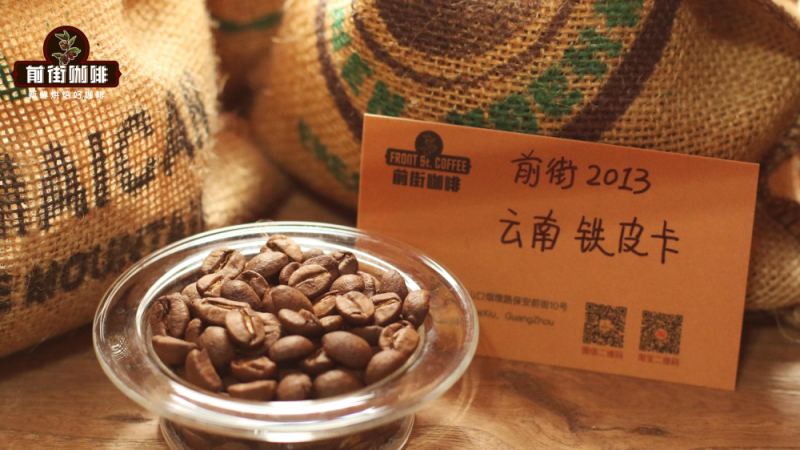
The rise of China's coffee industry is inseparable from the deep cultivation and transformation of the Yunnan growing region. From the first coffee tree in Zhukula Village a century ago to the current emergence of six major growing regions including Baoshan, Pu'er, and Lincang, Yunnan coffee has gradually moved from its positioning as raw material for instant coffee toward specialty development. As a domestic specialty coffee brand, Front Street Coffee has not only established its own estate in Lincang, launching the exclusive sun-dried Typica "Front Street 2013", but also continuously offers multiple Yunnan small-bean coffees on its daily menu. This article will systematically sort out the historical context, growing region distribution, and flavor characteristics of Yunnan coffee, and share Front Street's pour-over extraction parameters and three-stage pouring technique, taking you through a comprehensive understanding of Yunnan coffee's past, present, and future.
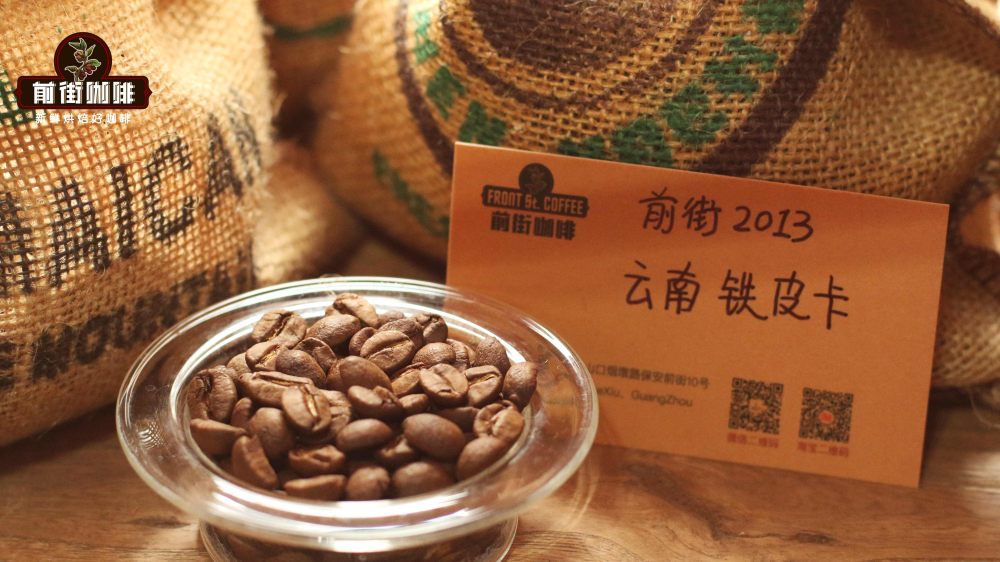
In the past, when people talked about coffee origins, the first places that came to mind were often well-known overseas growing regions such as Brazil, Colombia, and Ethiopia. However, as China's coffee industry continues to grow, Yunnan coffee is gradually entering the green bean procurement lists of various coffee brands, becoming one of the indispensable options for many domestic and international chain brands. Front Street's regular menu also features multiple Yunnan coffee beans for customers to choose from, which shows that the Yunnan growing region is steadily stepping into the ranks of specialty coffee.
When was coffee introduced to Yunnan, China?
In 1904, French missionary Tian De'neng planted the first coffee tree in Zhukula Village, Binchuan County, Yunnan, thus opening the prelude to coffee cultivation in Yunnan, and the connection between Yunnan and coffee has lasted for more than a hundred years. Yunnan's真正 large-scale cultivation for commercial purposes, however, dates back to the 1950s. At that time, the renowned botanist Professor Qin Renchang of the Institute of Botany, Chinese Academy of Sciences, identified the red fruit discovered by scientific researchers in the courtyard of a Dai farming household in Luxi County, Dehong Prefecture, as small-bean coffee. At his initiative, coffee seedlings were trial-planted at the Mangshi Forestry Farm and Lujiangba in Baoshan City, thus opening a new era of coffee research and production in New China.
Yunnan coffee's真正 entry into the international market began in 1988 when Nestlé established a domestic branch in China. Nestlé not only brought the high-yield, disease-resistant variety Catimor, but also promised to purchase Yunnan coffee beans as production raw material at the then-current U.S. futures price. After that, brands such as Starbucks and Maxwell House also successively built factories in Yunnan to purchase green beans, and these actions further promoted the expansion of Yunnan's coffee planting area. After consulting relevant materials, Front Street learned that because coffee farmers had limited knowledge of coffee cultivation and production and processing methods were relatively extensive, for a long period Yunnan coffee green beans were mainly used as raw material for instant coffee and were deeply constrained by international futures prices. To break away from this situation, industrial transformation and upgrading were imperative, and specialty coffee production became the new direction for Yunnan coffee at present.
In recent years, with the continuous advancement of China's coffee wave and growing social attention to rural economy and sustainable development, coffee practitioners from around the world have visited Yunnan one after another. Everyone has continued to make efforts in areas such as coffee pest and disease control, shade tree management, soil and water conservation, cultivation altitude, and fresh fruit picking and processing methods to improve local coffee quality, and Yunnan coffee has therefore gradually gained attention and recognition. Compared with the past, people today are more willing to actively learn about Yunnan as a "new growing region," and many customers who come to Front Street stores to drink pour-over coffee also ask whether there are Yunnan beans, which shows that Yunnan coffee is constantly progressing.
Where is Yunnan's specialty coffee produced?
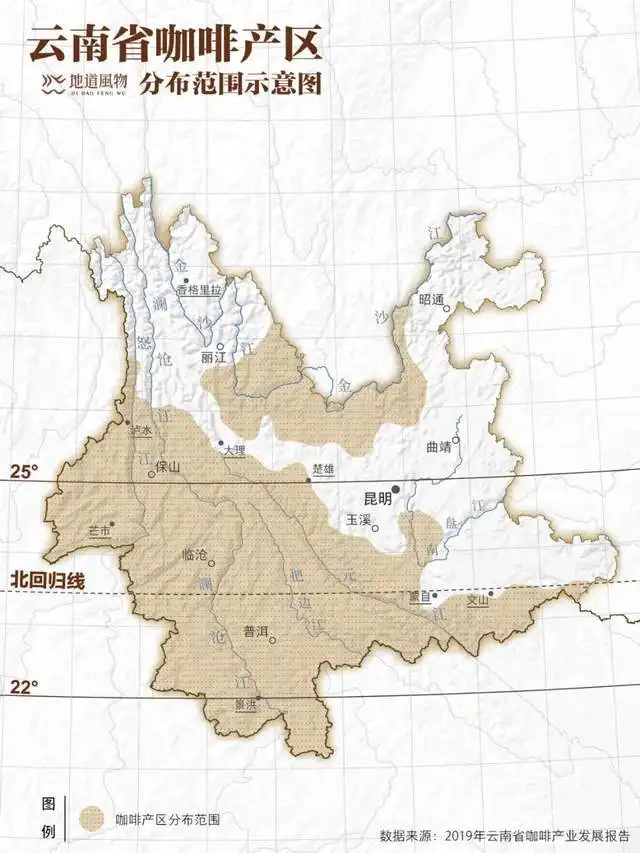
Currently, coffee cultivation in Yunnan is distributed across eight areas, among which there are six main growing regions: Pu'er, Baoshan, Dehong, Lincang, Nujiang, and Xishuangbanna. These places have natural conditions of low latitude, high altitude, and large diurnal temperature differences, making Yunnan a golden growing belt for producing high-quality Arabica coffee.
Coffee is usually planted among higher-altitude slopes, and the rolling hills, fertile soil, abundant sunshine, plus the concentrated rainfall brought by the rainy season, allow coffee trees to quickly integrate into the local terroir. Yunnan coffee has successively obtained five geographical indication protection product titles, including "Baoshan Small-Bean Coffee," "Zhukula Coffee," "Dehong Small-Bean Coffee," "Pu'er Small-Bean Coffee," and "Simao Coffee." Front Street's representative Yunnan daily-drinking coffee is precisely Baoshan small-bean coffee.
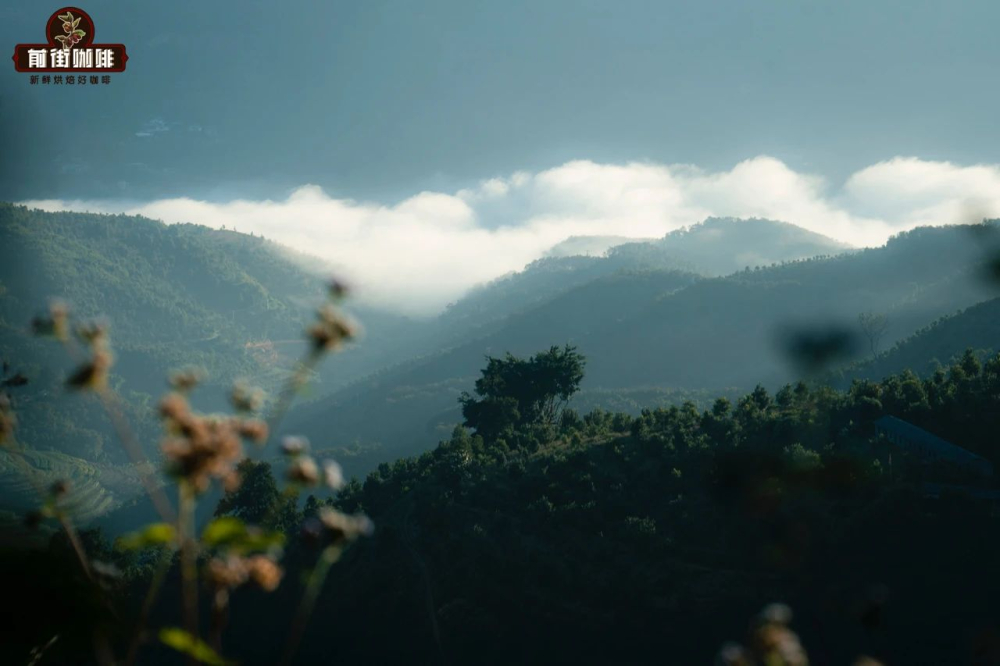
As international trade has continued to expand, Baoshan's coffee cultivation, and especially the small-bean coffee of Lujiangba, has become widely renowned. Baoshan has a low-latitude mountainous subtropical monsoon climate. Because it is located on a low-latitude plateau with complex topography and landforms, it forms a three-dimensional climate of "one mountain divided into four seasons, ten miles with different weather." The annual temperature difference is small while the diurnal temperature difference is large, with an average annual temperature of 14–17°C; rainfall is abundant, with distinct dry and wet seasons and uneven distribution, and annual rainfall is 700–2,100 mm. In addition, the reasonably low rainfall provides extremely favorable conditions for the growth of coffee cherries and also creates the unique sweet aftertaste of Baoshan small-bean coffee.
In addition, Front Street's bean list also includes a Yunnan sun-dried Typica coffee exclusively produced by Front Street. Why is it called exclusive? Because this coffee comes from Front Street's own estate. In 2013, Front Street established its own estate in Lincang. From site selection, variety selection, seedling cultivation, planting, harvesting, processing, to roasting, everything is controlled by Front Street throughout the entire process, and a great deal of experience and knowledge has been accumulated from it. Front Street specifically chose the most original Arabica variety—Typica—and adopted the natural sun-dried processing method for production, naming it "Front Street 2013." With its elegant and gentle taste, it has won praise from many customers.
What are the flavor characteristics of Yunnan small-bean coffee?
The dozens of coffee beans on Front Street's bean list present different flavor profiles and mouthfeels under different brewing methods, and Front Street's favorite extraction method is pour-over. Pour-over black coffee allows you to feel the aroma of the coffee beans themselves, and by adjusting various brewing parameters, it can also bring out different flavor characteristics of the coffee, offering great operability.
After many comparative tests, Front Street concluded that Yunnan small-bean coffee is not as bright in acidity as African coffee, nor as heavy and intense as Indonesian coffee. Its flavor leans more toward a neutral, balanced profile, that is, possessing acidity, sweetness, and bitterness together. Therefore, Front Street's Yunnan coffees all use medium roasting, highlighting chocolate and nutty roasting aromas while retaining some acidity. From cupping, Front Street tasted that the washed Yunnan small-bean daily coffee presents herbal, nutty, caramel, chocolate, and brown sugar aromas, melon-and-fruit-like sweetness, and plum-like acidity, with a balanced mouthfeel.
Before brewing, Front Street first confirms whether the coffee beans being used are fresh. If the coffee beans' roasting date is already more than a month past, Front Street will not use them for service. This is because coffee beans have an optimal flavor window after roasting, and the coffee's aroma will accelerate its loss with storage time, and the dissipated flavors are difficult to restore during brewing. This is also why Front Street insists on shipping only coffee freshly roasted within 5 days. Front Street hopes every customer can enjoy the most complete flavor window of the coffee beans.
Grind size and water temperature: precisely because Yunnan coffee's flavor attribute is neutral and balanced, excessively high water temperature and too fine a grind size easily lead to over-extraction, releasing too many bitter macromolecular flavor substances; while excessively low water temperature and too coarse a grind size lead to under-extraction, and the coffee easily tastes bland. Therefore, Front Street chooses medium water temperature and grind size, extracting with hot water at 90°C, with a coffee grounds coarseness of 70% passing through the Chinese standard No. 20 sieve, and in-store EK43s setting 10.5.
Based on past brewing experience, Front Street recommends that beginners just starting out use the three-stage pouring method. Three-stage extraction helps more fully dissolve flavor substances during extraction, increases mouthfeel layers, and at the same time avoids over-extraction caused by too long steeping.
Front Street's pour-over parameters:
Dripper: hario v60
Dose: 15g
Water temperature: 90°C
Grind size: 75% passing through No. 20 sieve
Water-to-coffee ratio: 1:15
Three-stage pouring: wet the coffee bed with water at twice the weight of the coffee grounds to form a dome and bloom for 30s, then pour in a small stream in a circular motion from the inside out until 125g, then pause; when the coffee bed drops to half the height of the dripper, continue pouring the third stage with the same fine stream to 225g, until all the coffee liquid has filtered through, then remove the dripper. The time is about 2 minutes.
As for what Yunnan coffee tastes like, Front Street believes it cannot be summed up in just one or two sentences. First, everyone's taste preferences differ, and what Front Street considers "delicious" may not necessarily taste good to everyone; second, from the perspective of industry practitioners, Yunnan currently still mostly cultivates the rather controversial Catimor variety, and management is also in a slightly chaotic state, so occasional batches may fail to meet quality standards. For Yunnan coffee to reach the world stage as "specialty," it still requires the joint efforts of people in the industry.
The above content is compiled by CoffeeHunters, a coffee news website.


