







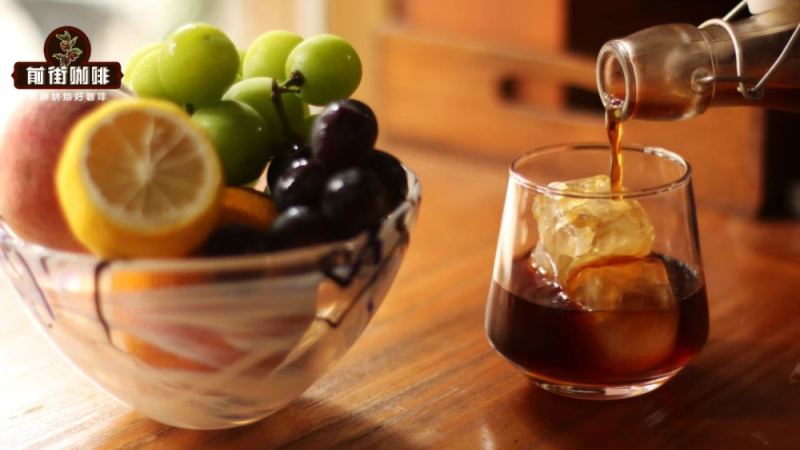
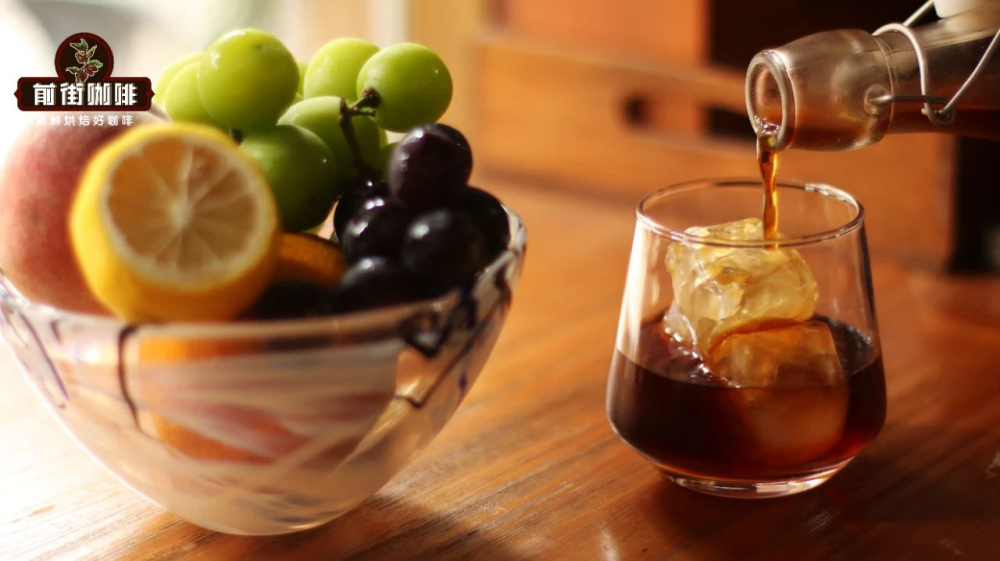
When summer arrives, for coffee lovers, nothing beats a refreshingly cool glass of iced coffee. If you reject high calories, care about mouthfeel and lingering aftertaste, and love exploring new flavors, this summer you can try the goddess-tier drinks of the iced coffee world: "Ice Drip Coffee" and "Cold Brew Coffee." Compared to coffee extracted with hot water, ice drip and cold brew coffee have a uniquely wonderful flavor—crisp and refreshing overall, yet full-bodied in coffee flavor. A glass on a scorching summer day is truly satisfying. In this article, let's join Front Street Coffee and get to know ice drip and cold brew coffee together!
Ice drip coffee, also known as Dutch coffee. It's said that back when the Dutch ruled Indonesia, they planted many robusta varieties with heavy flavors. To be able to drink these quite bitter coffee beans in the tropical region, they invented a device that brews coffee with slowly dripping cold water.
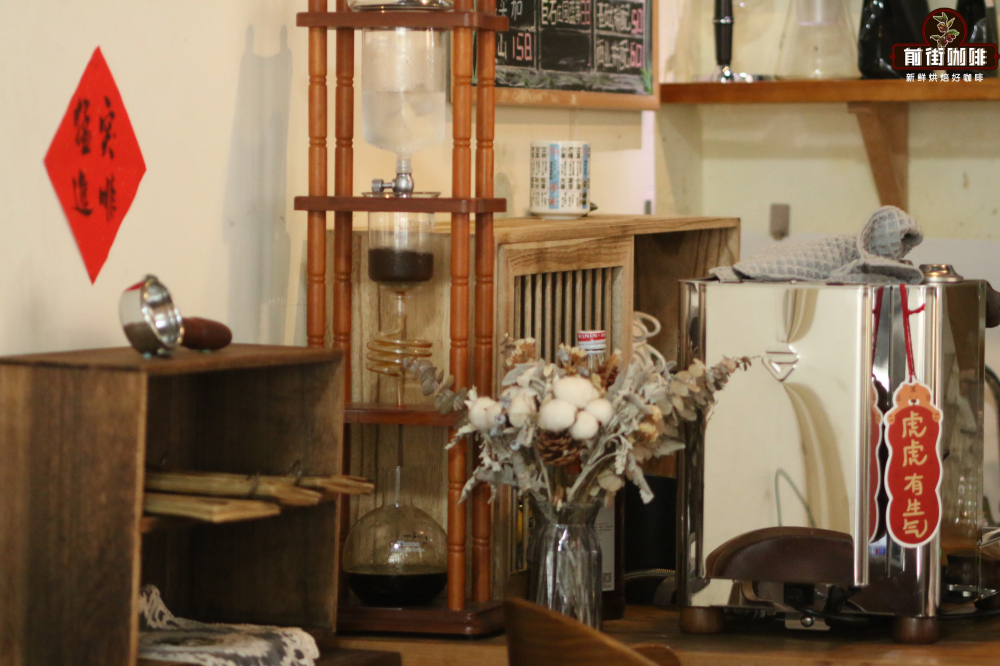
Unlike hot water brewing, rich and heavy substances are hard to release under low-temperature ice water, so coffee extracted with ice water only extracts the acidic and sweet substances of the coffee. At the same time, because it requires a long extraction time, the caffeine content is higher than hot water brewed coffee, which is why ice drip coffee is very popular among the Dutch—it's refreshing and also provides a quick boost of alertness.
Although ice drip coffee was invented by the Dutch, an interesting phenomenon is that you can hardly find this kind of coffee in the Netherlands. Instead, it sparked an ice drip trend in Asia. In Japan, ice drip coffee has a history of several hundred years, so ice drip coffee is also called "Kyoto coffee" or "Japanese-style slow-drip." In South Korea, almost every café sells ice drip coffee, and many famous ice drip equipment brands also come from Japan and Korea, such as Tiamo, Hario, and others.
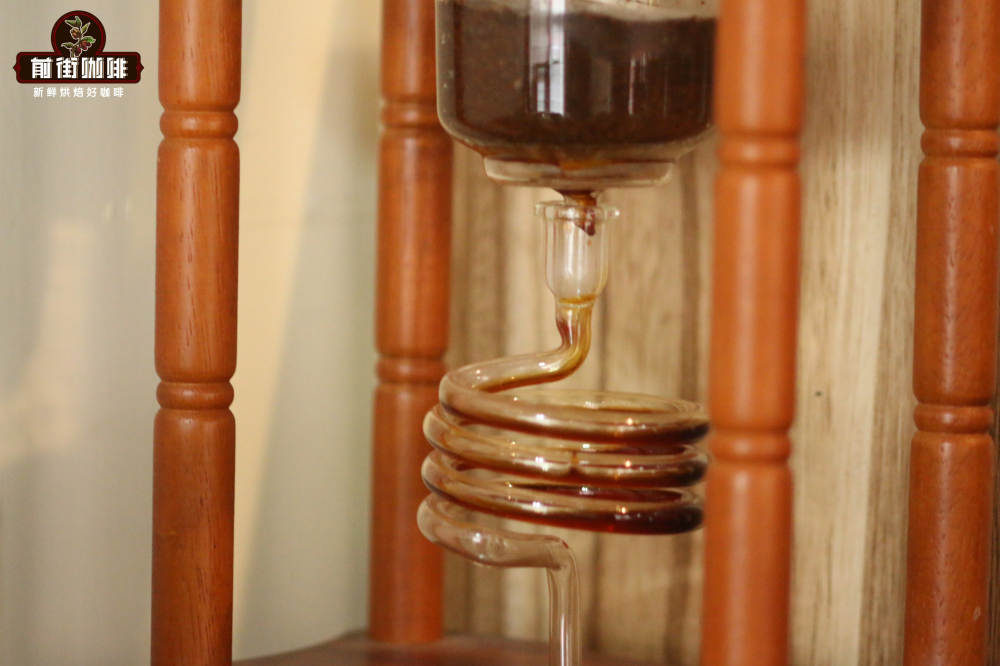
Front Street Coffee uses a Tiamo ice drip pot. To make ice drip coffee, generally use 60g of coffee grounds with the coarseness of fine granulated sugar (75% passing through China's No. 20 standard sieve), extract 600g of coffee liquid (coffee-to-water ratio 1:10), and make with a 1:1 ice-water mixture.
Place a round filter paper at the bottom of the powder cup, wet it with water so it adheres to the cup wall. Then pour the 60g of ground coffee into the powder cup and gently shake to level the coffee surface, making it flat. Next, lay a piece of filter paper on top of the coffee grounds layer. This is because the tension of the filter paper allows water to be evenly distributed across the surface of the coffee grounds layer for extraction. Without the filter paper, prolonged water dripping would create a pit in the coffee bed.
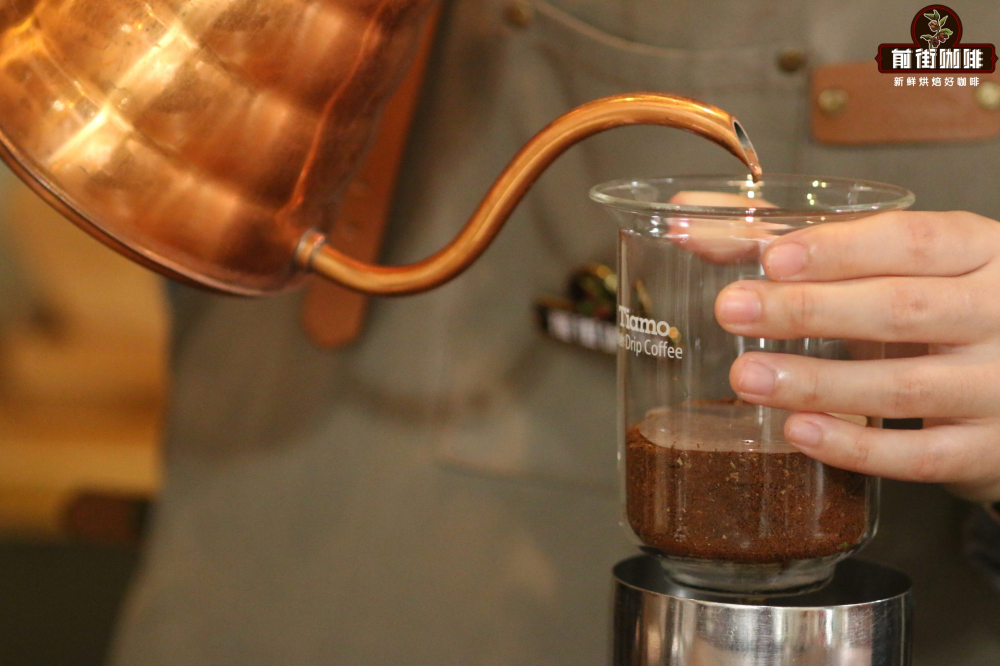
After laying the appropriate filter paper, use ice water to moisten the entire coffee bed. This step is like the blooming stage in pour-over, and it can improve extraction efficiency and consistency of the final product. Add a 1:1 ice-water mixture to the dripping bottle, and adjust the dripping speed. Front Street recommends a dripping speed of 6 drops per 10 seconds. After production is complete, pour it into a sealed, clean, water-free and oil-free bottle and place it in the refrigerator to oxidize, allowing the flavor molecules of the ice drip coffee to be released before tasting.
Although delicious, ice drip coffee is usually quite troublesome to make, because you need to constantly watch whether the ice water is dripping. Although ice cubes look very clean with no obvious impurities, since ice drip coffee drips at a relatively slow speed—averaging 6 drops per 10 seconds—one extraction generally takes 6-8 hours.

So the valve is opened very small, meaning that even a tiny bit of impurity can clog the water outlet. Moreover, a set of ice drip equipment is not cheap, so in order to more conveniently enjoy low-temperature extracted coffee at home, people invented cold brew coffee.

Compared to ice drip coffee, which extracts coffee substances through drip filtration, cold brew coffee is much more convenient. You just need to prepare a clean, oil-free, sealed container, mix the ground coffee with ice water/room-temperature water in a suitable ratio, place it in the refrigerator for 8-12 hours, and then filter out the coffee grounds with a filtering device. Because it's extracted by immersion, the coffee's mouthfeel and flavor are much fuller.
Front Street usually uses a sealed cold brew pot to make iced coffee. To make cold brew coffee, generally use 60g of coffee grounds with the coarseness of fine granulated sugar (75% passing through China's No. 20 standard sieve), add 600g of room-temperature/binf water (coffee-to-water ratio about 1:10), then stir a bit to let the coffee grounds fully contact the water. Next, seal the container well, place it in the refrigerator's cold storage compartment and let it sit for 8-12 hours, then filter out the coffee grounds thoroughly to get a cup of iced coffee with full flavor and mouthfeel. At this point, you can add 1-2 ice cubes according to your taste, and drink after slightly diluting.

Coffee extracted at low temperature has the advantage of not forcing out the impurities and bitter flavors of the coffee beans, which is why they prefer using the Cold Brew method to brew coffee. This way of drinking not only tastes relatively fresh and slightly sweet, but because the sourness and bitterness are relatively reduced, the mouthfeel is also smoother. The disadvantage is that because the water and coffee grounds are in contact for a long time, it has the strongest caffeine content among the iced coffee family. If you're sensitive to caffeine, remember not to drink too much.
As Front Street mentioned above, extracting coffee at low temperature cannot effectively extract rich and heavy substances, so Front Street Coffee recommends using coffee beans with obvious acidic and aromatic flavors to make cold brew/ice drip coffee. For example, medium-light roast coffee beans and coffee beans processed with special processing methods are all suitable for making cold-extracted coffee.

Front Street Coffee's daily offering is ice drip coffee, usually usingFront Street Honduras Sherry coffee beans(fermented wine aroma, vanilla cream, nutty flavors),Front Street Ethiopia Yirgacheffe Gutingding coffee beans(citrus, honey, green tea flavors),Front Street Ethiopia Sidamo Huakui coffee beans(complex berry juice, rose, black tea flavors), Front Street Panama Butterfly Geisha coffee beans (white floral, citrus, honey, green tea flavors),Front Street Costa Rica Strawberry Candy coffee beans(strawberry hard candy, raisin, fermented aroma). These coffee beans are all characterized by rich aroma and/or obvious sweet-sour taste, making them very suitable for making refreshing iced coffee in summer.
After cold brew is made, should it be refrigerated again?
For the cold brew that the store usually offers, Front Street puts it into the refrigerator sealed and refrigerated for 3-4 hours after filtering out the grounds, then sells it. Actually, we also know that freshly made cold brew can be drunk directly, and it doesn't taste bad. So why refrigerate it again?

After ice drip coffee extraction is finished, it needs to be put into a clean container and then refrigerated overnight to taste better. This is a habit that many experienced friends have long developed. Spending a night in the refrigerator, that is, sealed storage in a low-temperature environment, can also be simply understood as "aging." There are two purposes: controlling fermentation and avoiding spoilage.
Although the refrigerator at home looks clean on the surface, there are actually many microorganisms that are hard for us to detect with the naked eye. If not careful, this can easily lead to food spoilage or deterioration. Therefore, to ensure the coffee is not contaminated by the outside, the container we use must have good sealing performance and be cleaned thoroughly. Low-temperature storage is not only to inhibit the reproduction rate of certain bacterial colonies, but also to give the substances in the coffee a slow and controllable fermentation process. This also explains why the longer ice drip is stored, the richer the coffee's fermented wine aroma becomes, but they actually contain no alcohol, so you can drink them with peace of mind.

Compared to ice drip extracted at room temperature, cold brew, which lets water soak the coffee grounds all night, actually already has a relatively complete flavor. At this point, re-chilling the coffee liquid for a few hours is more about letting the water-dissolved substances ferment further, bringing a clearer and sweeter coffee mouthfeel.
Front Street has noticed that many convenience-loving friends will soak a large pot of coffee at once and store it in the refrigerator, pouring it out whenever they want to drink. This also leads to the problem that if no mark is made, it's easy to forget exactly how many days the coffee you made has been in the refrigerator, and whether it might have spoiled.

First, the fermentation process of low-temperature extraction cannot be interrupted. Refrigeration only slows down the fermentation speed of the coffee, and as time goes on, the substances dissolved in the water continuously change, eventually leading to spoilage. In addition, every time we open the lid, the coffee liquid actually comes into contact with air, which not only causes the aroma to dissipate, but may also bring bacteria into the container.
Generally speaking, for the sake of flavor experience and health safety, whether it's ice drip or cold brew, any extraction method carried out in a low-temperature environment, Front Street recommends everyone finish within 5 days (counting from the production date).
For professional coffee knowledge exchange and more coffee bean information, please follow Coffee Workshop (WeChat public account: cafe_style)
For more specialty coffee beans, please add the private WeChat Front Street Coffee, WeChat ID: qjcoffeex
The above content is compiled by CoffeeHunters, a coffee news website.


