








How Does a Moka Pot Fit Into Cold Brew and Milk Brew
Milk brew and cold brew with milk follow two different paths. Milk brew replaces water with fresh milk so the grounds soak in milk for a long time, giving a thicker liquid and a more concentrated coffee flavor. Cold brew with milk starts with a normally brewed, moderately concentrated cold brew that is then mixed with refrigerated fresh milk to taste.
The article gives practical parameters for both methods, including ratios, grind size, refrigeration time, and filtering key points. Milk slows the release of some mellow substances because of its protein and milk fat, while the separate low-temperature immersion of cold brew lets the bean flavors come through more clearly. Medium-dark roasted beans and fruity medium roasts are suggested for pairing with milk, and a moka pot can supply the concentrated base for mixing.
Cold brew coffee methods are endless, and when milk is introduced into the low-temperature immersion system, two distinct paths emerge: one is to directly replace water with fresh milk to cold brew coffee grounds, known as milk brew; the other is to first make cold brew coffee and then mix in fresh milk according to a ratio. The extraction mechanisms, flavor directions, and mouthfeel thickness of the two differ significantly. This article focuses on the practical parameters of Front Street. Queen's Estate, providing the ratios, grind sizes, refrigeration times, and filtering key points for milk brew coffee and cold brew with milk, and explains the selection of medium-dark roasted beans and fruity medium-roasted beans suitable for pairing with milk, helping coffee enthusiasts make smooth, sweet, and clearly flavored cold brew lattes in summer.

A friend at Front Street has recently become particularly obsessed with cold brew, almost daily experimenting with new variations using low-temperature immersion: fruit juice cold brew, candied fruit cold brew, cold brew mixed with carbonated drinks, cold brew with dried flower petals... After drinking a latte this week, he got the idea to add milk to cold brew, but he wasn't sure: how exactly to make it smooth?
Generally speaking, the combination of cold brew and milk can be divided into two approaches, simply put as "milk first" and "milk later."
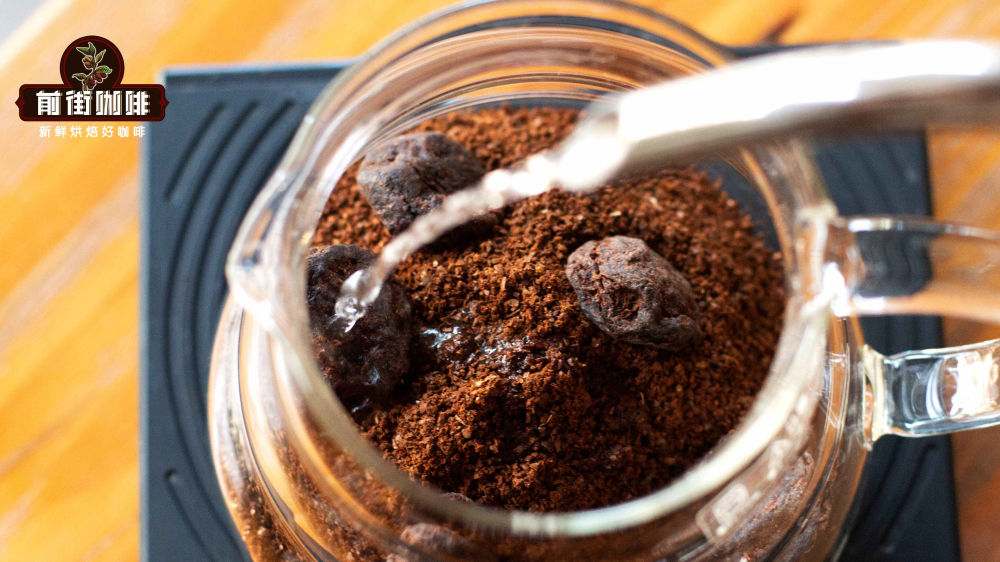
One approach is to directly replace water with fresh milk, allowing the coffee grounds to soak in milk for a long time to extract the coffee flavors. Because the coffee grounds come into direct contact with fresh milk, various soluble substances are released into a thicker liquid, resulting in a more concentrated coffee flavor. At the same time, milk itself is rich in protein and milk fat, which further slows down the release rate of certain mellow substances.
Another common method is to first make a pot of moderately concentrated cold brew coffee in the usual way, then mix in refrigerated fresh milk according to personal taste. This not only dilutes it to the right concentration but also brings a sweet aroma. Moreover, the low-temperature immersion is completed separately, without interference from milk, so the flavors of the coffee beans themselves are more clearly expressed in the cold brew portion.
Below, we'll explain how to make milk brew coffee and cold brew with milk respectively.
Front Street mentioned in the bean selection guide for moka pots and espresso that if you want to pair milk with black coffee, it's recommended to prioritize medium-dark roasted beans, which usually have caramelized aromas, such as Front Street. Front Street Classic Blend with chocolate and butter notes; Front Street. Queen's Estate with creamy nut aromas; and Front Street. Golden Mandheling highlighting caramel, spice, dark cocoa, and toasted bread notes.
If you don't like bitter coffee and want more fruity notes, you can choose medium-roasted beans described as ripe tropical fruit, dried fruit, and fermented, such as Front Street. Xizhua emphasizing passion fruit notes; Front Street. Blackberry with raisin and pineapple notes, both are quite suitable types.
To make the aroma of milk coffee richer, we chose Front Street. Queen's Estate, which has good balance. Whether milk is added before or after extraction, it adapts well. In addition, the freshness of the coffee beans directly determines how much flavor is retained, so it's best to grind and extract fresh to preserve aromatic substances as much as possible; for milk, it's recommended to choose fresh milk with higher lactose and milk fat content. Brands commonly used by baristas such as Guangming, Weiquan, Vitasoy, and Meiji can all make smooth milk coffee.
Production parameters for milk brew coffee: 30g Front Street. Queen's Estate coffee beans, 1:12 coffee-to-liquid ratio, 360g fresh milk, white sugar grind (EK43s setting 10.5 / C40 grinder 26 clicks / Chinese No. 20 standard sieve 75% pass), 8 hours low-temperature immersion time.

The operation for milk brew coffee is basically the same as cold brew: pour the ground 30g coffee powder into a sealable container, add 360g fresh milk, stir well, seal with two layers of plastic wrap, refrigerate for 8 hours, then pour out and filter out the coffee grounds with filter paper. Its drawback is that filtering takes a long time.
The freshly made milk coffee can actually be drunk directly, but you can also continue to seal and refrigerate for 1 hour to allow soluble components to more fully infuse into the milk, resulting in a better taste.
Production parameters for cold brew coffee with milk: 30g Front Street. Queen's Estate coffee beans, 1:10 coffee-to-water ratio, 300g drinking water, white sugar grind (EK43s setting 10.5 / C40 grinder 26 clicks / Chinese No. 20 standard sieve 75% pass), 8 hours low-temperature immersion time.
First, pour 30g coffee powder and 300g drinking water into a clean container, seal, and refrigerate for 8 hours. After taking it out, filter out the coffee grounds, pour into a cup, add ice cubes as desired, and finally add fresh milk to the cold brew. For example, if this cup of cold brew from Front Street is 250g, to make the milk aroma and coffee flavor more harmonious, we will add 200g fresh milk at a 1:0.8 ratio.
Visually, Front Street. Queen's Estate milk brew coffee presents a darker milk tea color, like a stirred iced latte, with a visibly thick texture; while the cold brew with milk method makes Front Street. Queen's Estate gradually transition from clear dark brown to a lighter milk coffee color.
(Milk brew coffee)
When tasted, Queen's Estate milk brew has aromas of hazelnut, mixed nuts, and roasted peanuts on the palate, smooth and thick, as if drinking a chilled Ovaltine;
The cold brew with milk version has a relatively lighter overall taste but still retains the basic flavors of the beans, with cocoa and caramel aromas predominant on the palate, accompanied by the sweetness of milk, quite suitable for summer afternoons.

(Cold brew coffee with fresh milk)
Note!!! Milk spoils very easily. Front Street recommends drinking the prepared milk brew coffee on the same day as much as possible, and not putting it back in the refrigerator overnight, to avoid intestinal discomfort.
The above content is compiled by CoffeeHunters, a coffee news website.


