








What Is Robusta Compared With Arabica in the Coffea Genus?
Robusta is not a separate species on the same level as Arabica. It is a variety of the Canephora species, which makes it comparable in rank to varieties such as Geisha or Typica within the Arabica branch. Arabica, by contrast, is a full species, Coffea arabica, and it accounts for the largest share of global coffee production.
The two differ in cultivation and cup profile. Arabica generally needs higher altitudes and cooler conditions, while Canephora, including Robusta, is hardier and yields more. That is why a small amount of Robusta often appears in espresso blends, adding body and crema, and why blends such as Front Street Coffee's classic mix use it deliberately.
The Coffea genus contains over a hundred confirmed species, among which Arabica and Robusta are the two names with the highest commercial value. But many people don't know that these two are not actually at the same classification level—Arabica is a complete species, while Robusta is merely a variety under the Canephora species, equivalent in rank to Geisha or Typica within the Arabica branch. This article will clarify the differences and connections among these three from the perspectives of classification relationships, cultivation conditions, flavor performance, and commercial uses, while also explaining why a small amount of Robusta is often added to espresso blends, and how Front Street Coffee's classic blend approaches this specifically.

What exactly is Arabica? And what is Robusta? Over a hundred species under the Coffea genus have been confirmed so far, and among these, Arabica and Robusta are the two major categories with the most prominent commercial value.
Let's look at Arabica first. Its scientific name is Coffea arabica, also known as "small-seed coffee," with its origin tracing back to Ethiopia, and it is currently the most produced and most widely accepted coffee type globally. The Geisha, Typica, Red Bourbon, Yellow Bourbon, and others that Front Street Coffee has repeatedly mentioned in past articles all actually belong to different varieties under the Arabica branch. The key reason Arabica has gained such widespread popularity is that the beans themselves contain more fats and sugars, which after processing and roasting can transform into more appealing aromas and flavors. The better the growing environment and the higher the management level, the more stunning the final flavor performance in the cup. Descriptions like floral, grape, citrus, and berry that Front Street Coffee often uses basically all come from Arabica. For example, the Front Street Boquete Geisha and Front Street Finca La Divisa Sidra on Front Street Coffee's bean list... In other words, this variety has a higher flavor ceiling.
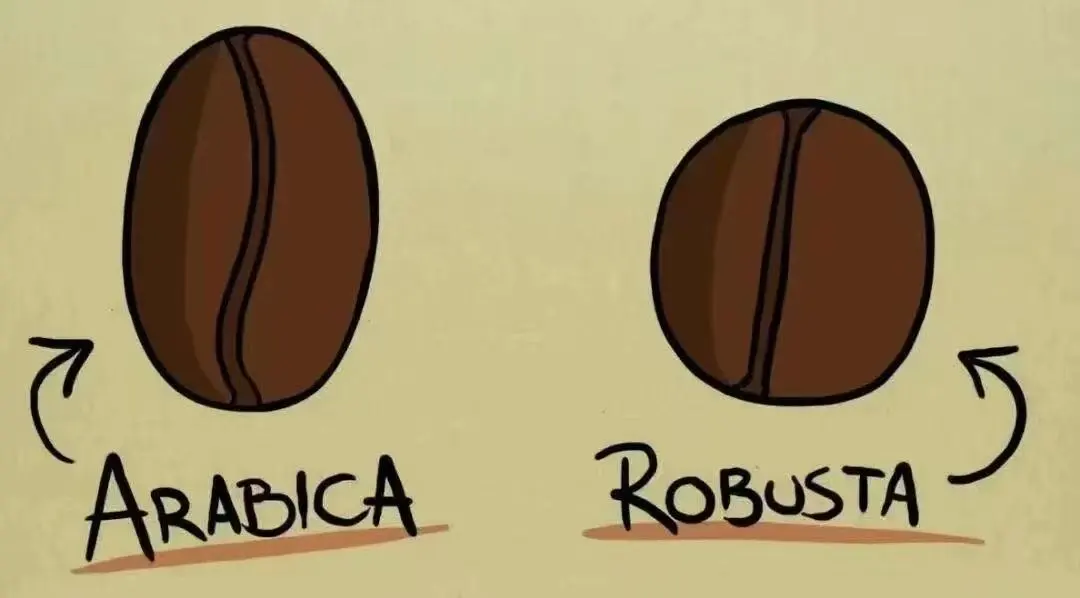
However, Arabica also has its shortcomings—it's delicate, hard to please, and produces less than Robusta. Traditional Arabica typically requires cultivation at altitudes above 800 meters, with ample rainfall and suitable temperatures. What's more troublesome is that the vast majority of its varieties lack disease and pest resistance, so management costs naturally remain high. Good flavor, low yield, plus expensive management, and the price goes up accordingly.
Robusta is also called "medium-seed coffee," but its relationship with Arabica is not as equal as many people assume. To use an analogy, the two are at different "generational" levels. Arabica is an independent species, while Robusta (C. canephora var. robusta) is merely a variety under the Canephora species (Coffea canephora), and its classification rank is equivalent to Geisha or Typica within the Arabica branch. What can truly stand alongside Arabica is the Canephora species. So why do people always compare Robusta with Arabica? The reason is that within the Canephora species, only Robusta is commercially cultivated on a large scale, and over time, it has become synonymous with "medium-seed species."

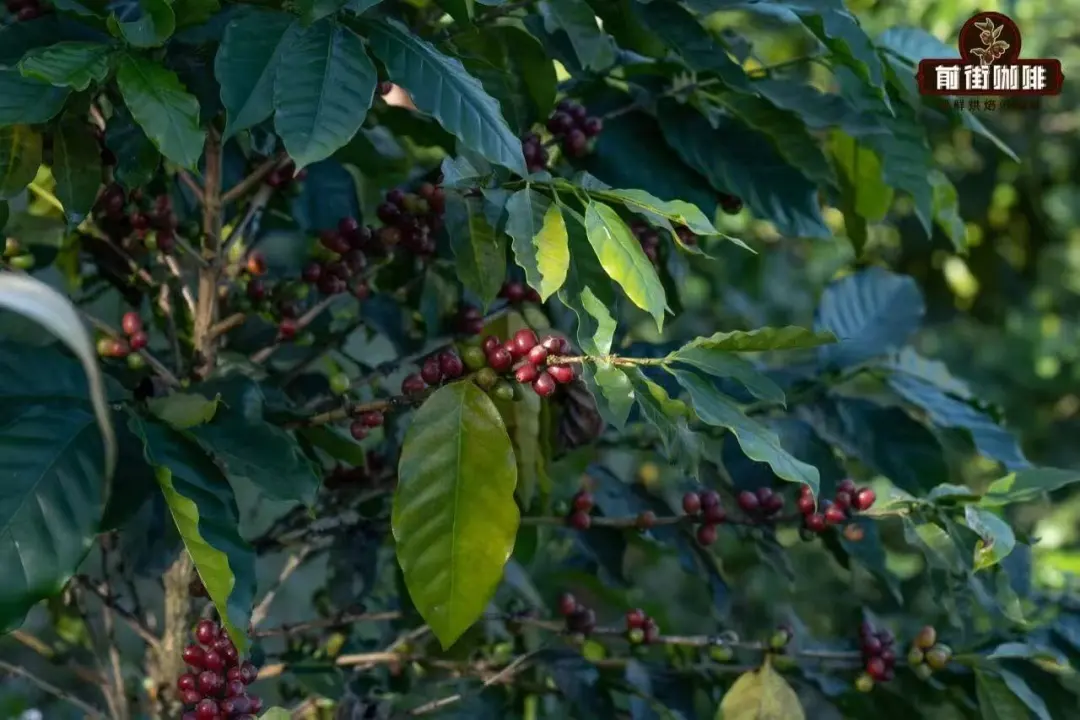
Compared to Arabica, traditional Robusta generally lacks pleasant flavors, which is related to both its genetic characteristics and growing environment. Its caffeine content is twice that of Arabica, and it mostly grows in lower-altitude areas. Even so, Robusta's global production remains very close to Arabica's. The reason lies in its two major advantages that Arabica generally lacks: high yield and easy cultivation. Robusta has extremely strong vitality, able to withstand scorching sun exposure and grow normally at altitudes below 800 meters. Combined with higher caffeine content, its pest resistance is also quite excellent. Of course, the most critical point is that its yield can reach twice that of conventional Arabica. Because of this, many low-altitude production regions mainly grow Robusta, or Catimor with Robusta lineage.
But from another perspective, precisely because Robusta is so easy to grow, most of it is assigned to low-altitude areas, making it hard for its flavor to shine. Front Street Coffee often emphasizes that growing altitude is one of the important factors determining coffee flavor quality. The higher the altitude, the slower the coffee cherries mature, giving them more time to accumulate the substances that can develop into superior flavors, and vice versa. Most Robusta is grown in low-altitude environments, so it naturally struggles to produce stunning flavors. Although there is also "Royal Robusta" managed according to Arabica standards, its production is extremely limited, and the vast majority of Robusta on the market still comes from low-altitude production regions.
Conventional Robusta is usually roasted darker, so its taste is relatively intense, with flavors dominated by chocolate, caramel, and barley tea, and a relatively simple layering. (Robusta grown at high altitudes will carry some slight fruity notes) Here Front Street Coffee wants to remind everyone: although traditional Robusta lacks outstanding flavor and tastes heavier, it does not equal "inferior quality." Many friends, because they see promotional phrases like "100% Arabica," or feel that Robusta's flavor isn't good enough and tastes too harsh, treat it as synonymous with low-end beans. But flavor is only relative, and Robusta's advantages were never in flavor to begin with. Because it's easy to grow and high-yielding, its management costs are relatively low, and its price is also considerably cheaper, which makes it an important raw material for commercial products like instant coffee.
As Front Street Coffee said earlier, an intense taste is not a flaw. Many merchants specifically value Robusta's intensity and use it in blends. For example, many coffee shops in Italy pursue the strong mouthfeel of espresso, and Robusta can make up nearly half of the blend ratio; there are also some merchants who simply want to increase the thickness of the crema extracted and enhance the coffee's body, so they add a small amount of Robusta beans to the blend—this is exactly Front Street Coffee's approach. Front Street Coffee's espresso Front Street Classic Blend contains a small amount of Robusta, precisely for the purpose mentioned earlier—to make the extracted crema richer. Because the proportion is not high, it won't noticeably interfere with the overall taste, but simply adds a layer of body to the coffee. The espresso made with it presents rich flavors of hazelnut, chocolate, caramel, and cream, performing quite well.
That's all for Front Street Coffee's sharing this time. Finally, Front Street Coffee would like to add one more point: Arabica's excellent flavor is only relative to Robusta, and not all Arabica possesses outstanding flavor. Variety is only the starting point; cultivation, processing, roasting, and every other step together determine the final ceiling, and the same principle applies to Robusta. - END -
The above content is compiled by CoffeeHunters, a coffee news website.


