







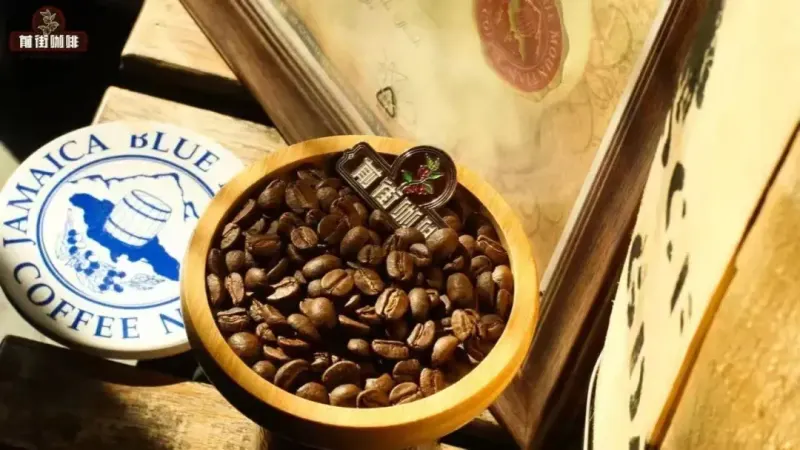
How does Blue Mountain coffee earn its grade?
"" Is not a code for verifying authenticity—it is the highest grade in Jamaica's Blue Mountain coffee classification system. Only Typica beans grown in designated areas of the Blue Mountain range at elevations between 900 and 1,700 meters qualify, and the green beans must reach 17/18 screen size with a defect rate below 3% and no more than 5% small beans. In other words, "Blue Mountain " marks the top-tier batch of an already scarce coffee.
The grade exists because Jamaican coffee output is extremely limited: the officially defined growing zone is small and the Typica variety itself yields little. Since the long-term contract between Jamaica and Japan ended in 2008, Blue Mountain coffee is no longer monopolized by Japan, and any buyer can purchase it directly from Jamaica, so choosing a reputable roaster makes buying a fake unlikely.
Blue Mountain coffee is often crowned with the name "noble coffee," and "Blue Mountain No.1" is even regarded by seasoned enthusiasts as the top-tier designation. But many friends who are just getting into coffee are often confused when they hear this term—what exactly does it mean? Is it some kind of code for verifying authenticity? In fact, "No.1" represents the highest grade in Jamaica's Blue Mountain coffee classification system. Only Typica beans grown in designated areas of the Blue Mountain range, at elevations between 900 and 1,700 meters, with green beans reaching 17/18 screen size, a defect rate below 3%, and no more than 5% small beans, can earn this title. This article will systematically sort out the origin restrictions, historical evolution, and grading standards of Blue Mountain coffee, and use Front Street Coffee's Clifton Mount Estate Blue Mountain No.1 as an example to share its flavor profile and brewing parameters, helping readers fully understand the true tier and drinking method of this legendary bean.
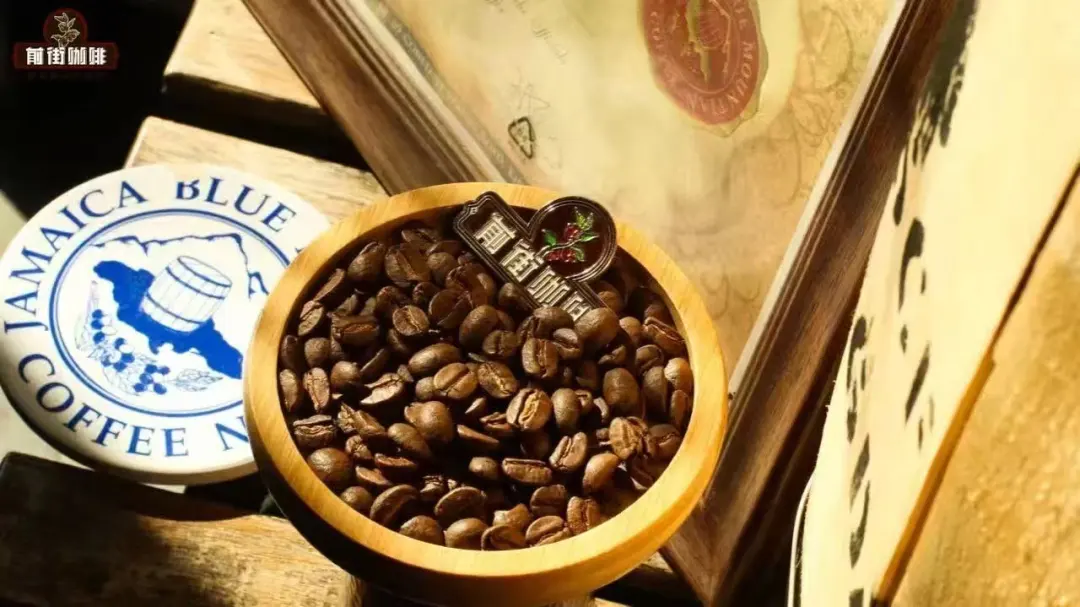
Some coffee enthusiasts who are just starting out often feel confused when they hear the term "Blue Mountain No.1," and may even suspect it is some kind of code circulating on the market for verifying Blue Mountain authenticity. A few days ago, someone came to Front Street with exactly this question.
In an earlier article, "What's So Good About Blue Mountain Coffee," Front Street mentioned that since the long-term contract between Jamaica and Japan ended in 2008, Blue Mountain coffee was no longer monopolized by Japan, and any buyer could purchase authentic Blue Mountain coffee directly from Jamaica. Therefore, as long as consumers choose a reputable roaster, such as Front Street

, the probability of buying fake Blue Mountain coffee is already very low.
The true meaning of the term "No.1" actually refers to the grade of Blue Mountain coffee. That's right—Blue Mountain coffee also has an internal grading system. What the coffee community commonly calls "Blue Mountain No.1" refers to the highest-grade batch of Blue Mountain coffee.
What exactly is Blue Mountain No.1?
As everyone knows, the output of Blue Mountain coffee is extremely limited. The reason for this scarcity, besides the inherently low yield of the variety itself, also lies in the official clarification of the growing range for Blue Mountain coffee.
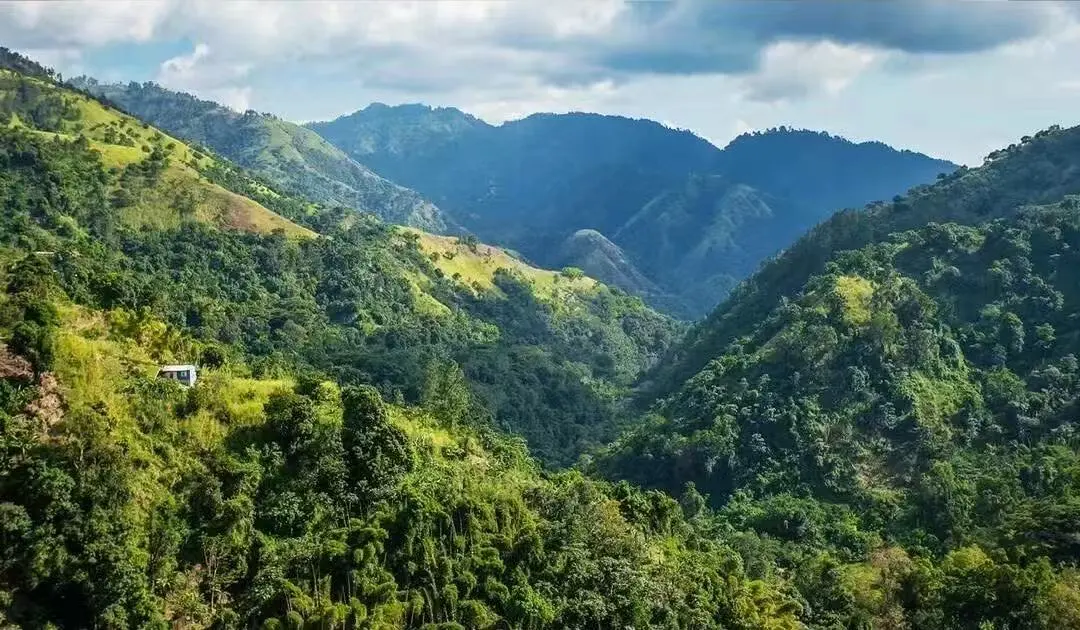
Following the usual conventions of coffee naming, many people subconsciously assume when they first hear "Blue Mountain coffee" that it is coffee produced in Jamaica's Blue Mountain region. This understanding is half right—because only coffee grown within the designated area of Jamaica's Blue Mountain range at elevations between 900 and 1,700 meters is eligible to be called Blue Mountain coffee.

In 1948, in order to revive its domestic coffee industry, the Jamaican government established the Coffee Industry Board specifically to supervise the quality of all green beans exported from Jamaica, hoping to use quality improvement to expand Jamaica coffee's share in the international market.
(In 1950, this institution was upgraded to the Jamaica Coffee Industry Board, abbreviated as CIB.)
In addition to improving cultivation and processing techniques, the Jamaican Coffee Industry Board also discovered through cupping that coffee produced in certain areas of the Blue Mountain range had richer flavors and more outstanding overall performance than coffee from other locations. So the authorities issued the Coffee Industry Regulation Act, designating an exclusive growing zone for Blue Mountain coffee, and only coffee produced within that zone could bear the name "Blue Mountain Coffee."
According to the provisions of this regulation: only Typica coffee grown in the four administrative parishes of St. Andrew, St. Thomas, Portland, and St. Mary, at elevations between 3,000 feet (about 915 meters) and 5,500 feet (about 1,700 meters), is permitted to be sold under the name "Jamaica Blue Mountain Coffee." Coffee grown outside these areas can only be labeled as "Jamaica High Mountain Coffee" or "Jamaica Prime Coffee."
In addition to origin restrictions, Blue Mountain coffee from these areas must also undergo strict grading. The grading criteria include bean size, color, uniformity, and defect ratio, and are ultimately divided into four grades: No.1, No.2, No.3, and PB peaberry.
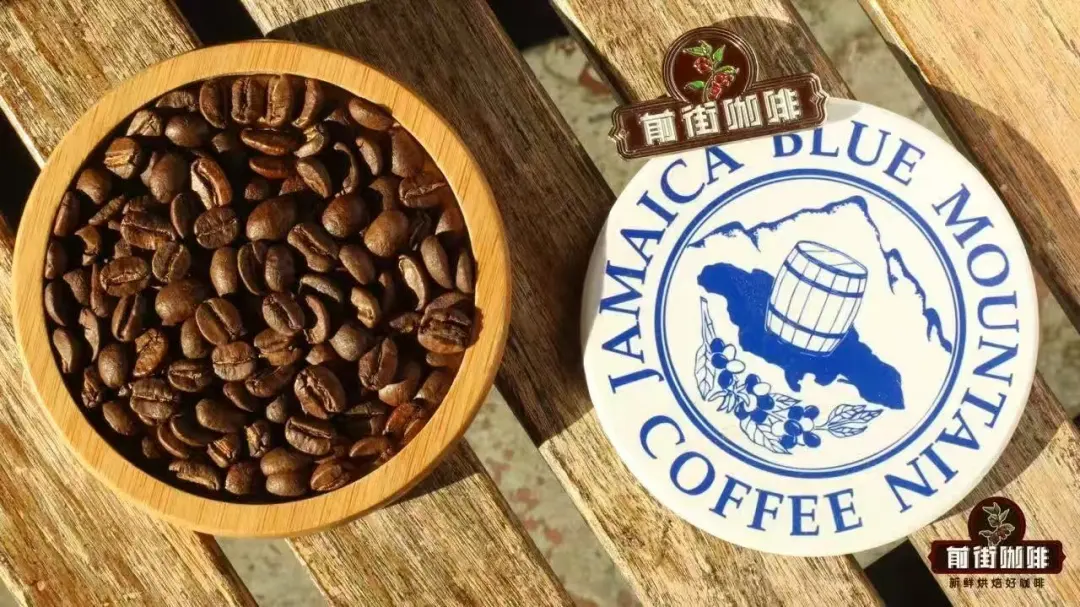
Among them, No.1 is the highest grade, requiring Blue Mountain green beans to reach 17/18 screen size, with a defect rate of no more than 3% and small beans making up no more than 5%. Only when all these conditions are met can it be classified as No.1, which is what coffee enthusiasts call "Blue Mountain No.1."
Overall, when many people buy Blue Mountain coffee, they specifically ask whether it is No.1 in order to confirm that they are buying the highest grade of Blue Mountain.
From the above grading rules, it can be seen that the grading of Blue Mountain coffee is mainly based on bean size, while there is actually no necessary connection between coffee flavor and bean size. Therefore, No.2 or No.3 Blue Mountain coffee is not necessarily inferior in taste to Blue Mountain No.1.
(The PB grade is somewhat special; it represents peaberry batches.)
Of course, because the price gap between grades is not large, many roasters still prioritize No.1 Blue Mountain coffee. The Blue Mountain coffee sold by Front Street both online and offline is No.1, the highest grade of Blue Mountain coffee. In order to let more people experience the classic flavor that made Blue Mountain coffee so popular back then, Front Street uses the same roast level as the mainstream practice of that era to handle this bean. From it, one can feel the three most prominent characteristics of Blue Mountain coffee: extremely high balance in taste, ultimate smoothness in mouthfeel, and a uniquely elegant aroma.
Front Street Coffee: Jamaica · Blue Mountain No.1 Coffee Country: Jamaica Estate: Clifton Mount Estate Altitude: 1,300 meters Variety: Blue Mountain Typica Processing Method: Washed Grade: NO.1
Flavor: Dark chocolate, nuts, cream
Recommended brewing parameters: 15g coffee dose, 1:15 coffee-to-water ratio, 90°C water temperature, grind size with 70%–75% passing through a No.20 sieve, three-stage pouring method, Kono dripper, brewing time 2 minutes.
When the coffee first enters the mouth, what Front Street captures first is that extreme sense of balance in taste. Although this is a medium-dark roasted bean, it does not taste as intense as other dark roasts; instead, it is very gentle, with acidity, sweetness, and bitterness balanced just right.
What is felt immediately after is the coffee's aroma, presenting the roasted caramel notes characteristic of traditional dark-roasted coffee—dark chocolate, nuts, cream, spices—along with an obvious maple syrup sweetness, and a rich, smooth mouthfeel. After swallowing, a very prominent and lasting sweet aftertaste immediately emerges, not only with high sweetness but also with the signature elegant aroma of Blue Mountain coffee in the finish—a quite excellent performance!
- END -
The above content is compiled by CoffeeHunters, a coffee news website.


