







What makes Ombligon stand out among arabica coffee bean varieties?
Ombligon is a rare Colombian variety named after the navel-like dip at the base of its fruit, which is why the Spanish word for navel became its name. It grows mainly in Colombia's Huila region and produces fruit and beans larger than most arabica types, similar in size to Maragogype and Pacamara. Genetic testing by World Coffee Research found roughly 60 percent Ethiopian landrace genes and 40 percent Colombian coffee genes.
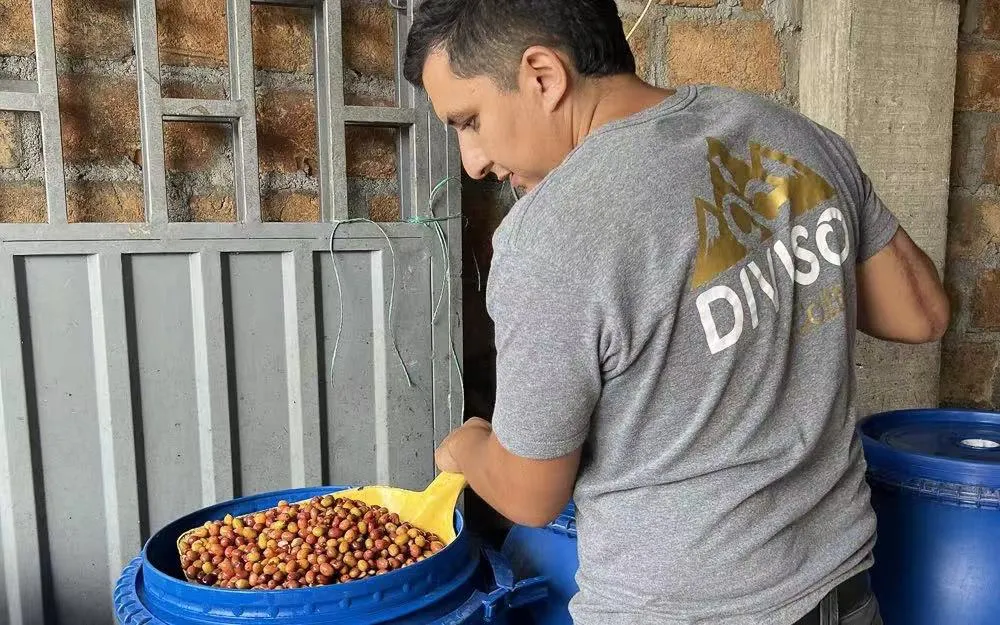
The larger bean size matters at the mill: farmers must widen the spacing on processing machines, because a narrow gap can crush or damage the beans during pulping. Plants also share some visible traits with Caturra, a common Colombian variety, a legacy of its origin as a natural mutation. Lots like Finca El Diviso Ombligon reached the World Barista Championship stage and are usually brewed as pour-over to show their layered fruit and floral notes.
On the bean list blackboard at Front Street Coffee, the name "Ombligon" always sparks curiosity among friends. What kind of variety is it exactly? Why is it called this name? And how should it be brewed to bring out its unique flavors? This article will guide you through the origins, appearance characteristics, growing regions of the Colombian Ombligon, and how it made its way to the World Barista Championship stage. At the same time, we will share the detailed brewing parameters and flavor experience of Front Street's Finca El Diviso Ombligon to help you better savor this complex and unique coffee.
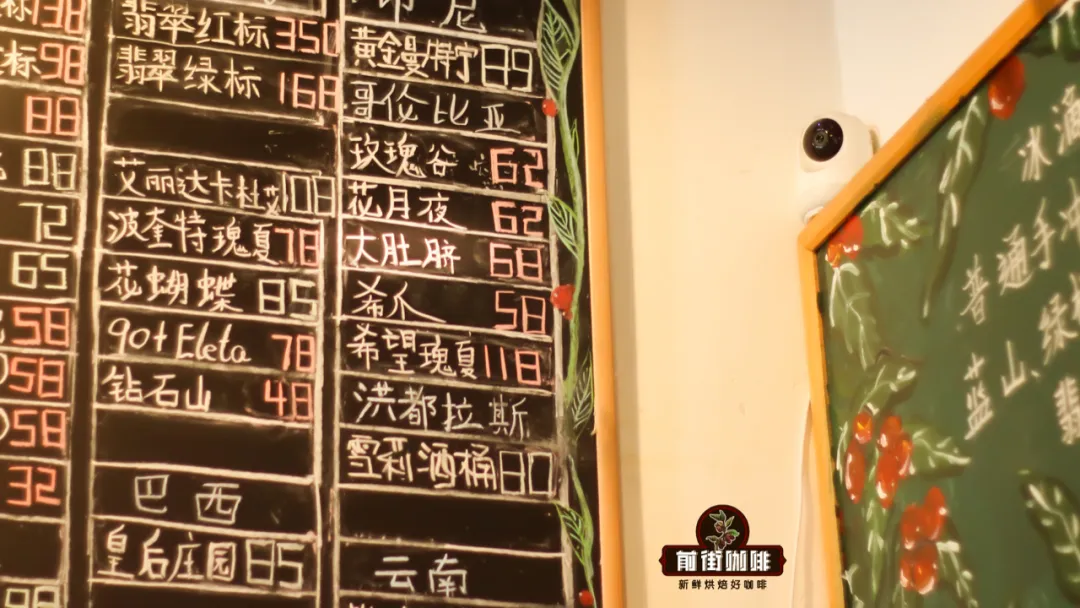
Many friends, when standing in front of the bean list blackboard at Front Street Coffee, can't help but ask: What exactly is Ombligon? Indeed, whether on Front Street's menu or in other settings, the name Ombligon seems quite special and easily catches everyone's attention.
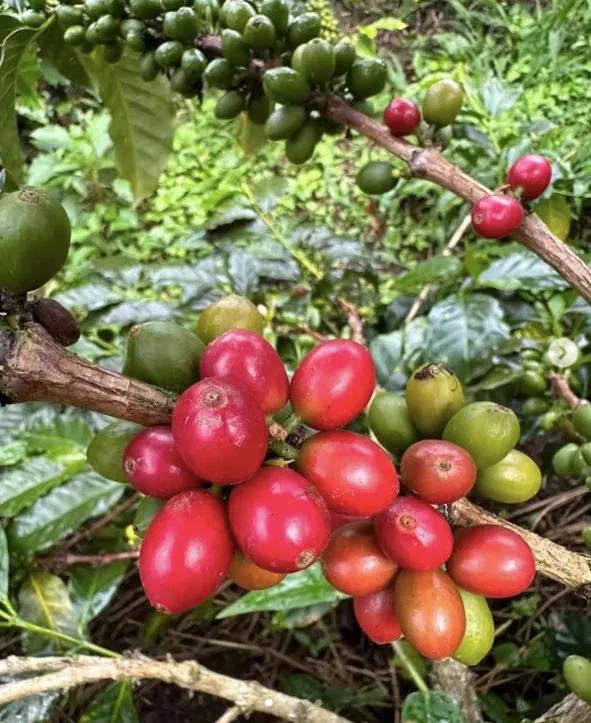
The reason it's called Ombligon—some friends may have already guessed—is that the name comes from its appearance. More precisely, the coffee fruit's exterior resembles a navel.
What is Ombligon?
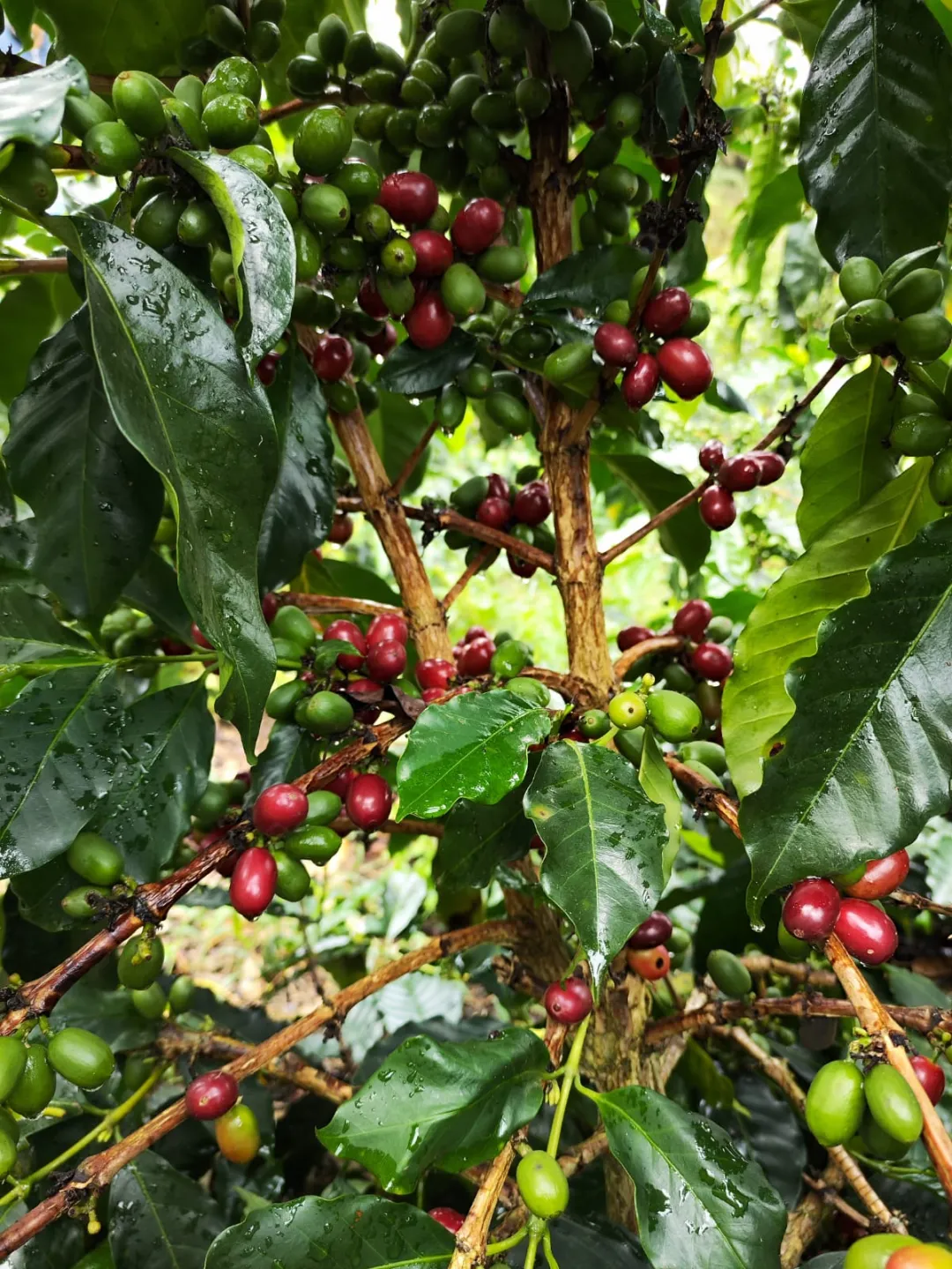
The Ombligon variety has a very distinct characteristic in its fruit: not only does it look like a navel, but it's also large. Compared to common Arabica varieties, both its fruit and beans are larger in size, similar to Maragogype and Pacamara. Because the beans are larger, farmers need to specially adjust the processing machines; otherwise, with too small a spacing and too large beans, the pulping process can easily damage the coffee beans.
The reason it's called "navel" is somewhat similar to navel oranges: the fruit has a naturally formed navel-like structure at its bottom. This morphological feature closely resembles a human navel, so farmers named it "Ombligon." (Ombligon is Spanish, which translates to "navel" or "belly button.")
Currently, Ombligon is mainly grown in Colombia's Huila region. Like most rare varieties discovered in Colombia, local farmers initially didn't know its identity; they only knew it might have come from Ethiopia as a natural mutation. Later, genetic testing by the World Coffee Research confirmed this guess—the variety contains 60% Ethiopian landrace genes and 40% Colombian coffee genes.
Local Colombian farmers also found that, due to being a natural mutation, Ombligon shares some appearance traits with the native Colombian variety Caturra. For example, the plant leaves are similarly broad, the coffee fruits are densely distributed, the branches grow vertically, and it has excellent yield.
However, some Colombian coffee professionals believe that Ombligon might have mutated from Pacamara, Bourbon, or even Castillo. This variety has strong resistance to coffee leaf rust, so farmers don't need to worry much about its health—it's very easy to cultivate.
Due to its high yield and disease resistance, farmers in the Huila region began planting Ombligon one after another. Eventually, tests revealed that Ombligon grown at altitudes of 1600m to 1800m has the best flavor. Speaking of this, Front Street must discuss its flavor, because Ombligon's taste is indeed very unique, so much so that we often see it in various world-class coffee competitions.
Ombligon first shone on the stage at the 2023 WBC (World Barista Championship) finals. An Australian competitor, Jack Simpson, used Ombligon from Finca El Diviso as his competition bean and won third place. In a post-competition interview, Jack said he chose Ombligon because this bean has a very complex and unique flavor, perfectly matching his ideal competition bean. In other competitions around the WBC, many competitors also used Ombligon. Thus, the Ombligon variety gradually became well-known.
Front Street naturally wouldn't miss this unique delicacy, so early last year, they added Front Street's Finca El Diviso · Ombligon to the menu, which also sparked the question mentioned at the beginning of the article.
Front Street Coffee: Colombia · Finca El Diviso Ombligon
Region: Huila
Farm: Finca El Diviso
Altitude: 1700 meters
Processing method: Double anaerobic natural
Variety: Ombligon
Flavor: Grape, orange, blueberry, pineapple juice, spices, fermented wine aroma
Although this bean looks darker in color, somewhat like a dark-roasted coffee bean, this is only because the anaerobic processing caused more sugars to adhere to the bean surface, leading to a stronger caramelization reaction during roasting. In fact, it is still a medium-light roast, so Front Street recommends using the brewing parameters for light-roasted coffee:
Front Street Coffee's pour-over recommendations
Dripper: V60
Water temperature: 90–93°C
Dose: 15g
Coffee-to-water ratio: 1:15
Brewing time: 2 minutes
Grind size: Fine sugar consistency (75% passing through a No. 20 sieve)
No joke, the flavor is truly very unique! At high temperatures, we can taste a very clear blackcurrant flavor, accompanied by the sweet and sour notes of orange and pineapple, like savoring a mixed juice dominated by blackcurrant. In addition, in the aftertaste after swallowing, you can feel chocolate, spices, and a fermented wine aroma—rich and unique layers, very excellent!
- END -
The above content is compiled by CoffeeHunters, a coffee news website.


