







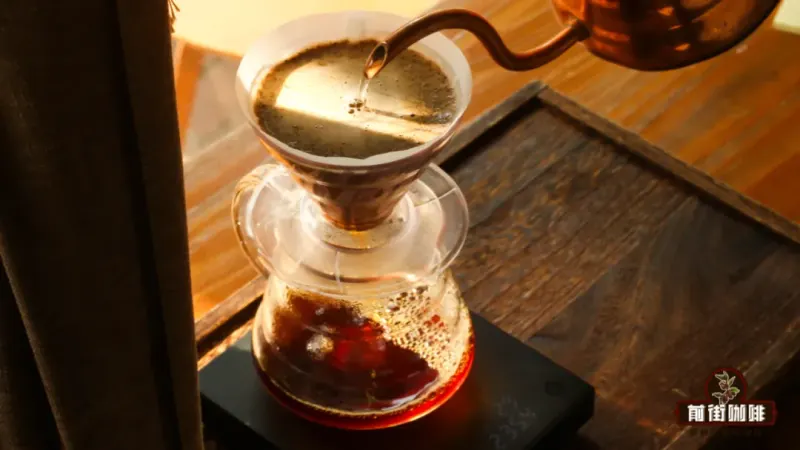
How Do You Bring Out Sweetness in Coffee With Arabica Beans?
The high-fast-fine-large pour-over method uses four extreme parameters at once: high water temperature, fast extraction, fine grinding and large water flow. Brewing finishes quickly, which limits bitterness and brings forward sweet aroma and a balance of sweetness and acidity. It suits medium-light and light-roast Arabica beans, including Front Street Coffee Huakui and Strawberry Candy.
Sweetness in coffee is not simple sugar; it comes largely from sweet aromas and from the interplay of acidity and bitterness. Because of that, the method relies on shortening total contact time rather than adding anything. The article gives specific brewing parameters for Front Street Coffee Huakui and describes how the cup performs in the glass.
Many people prefer sweetness, and this has led to a variety of pour-over brewing methods aimed at sweetness. The "high-fast-fine-large" method shared by Front Street Coffee today is one of them. It completes brewing in a short time through a combination of four extreme parameters—high water temperature, fast extraction, fine grinding, and large water flow—thereby reducing the extraction of bitterness and highlighting the coffee's sweet aroma and sweet-acidity balance. This method is especially suitable for medium-light or light-roasted Arabica beans, such as the cost-effective Front Street Coffee Huakui and Front Street Coffee Strawberry Candy. This article will break down the principles and operation of this approach in detail, and include the specific brewing parameters and flavor performance of Front Street Coffee Huakui, helping you more easily brew pour-over coffee with a prominent sweetness.
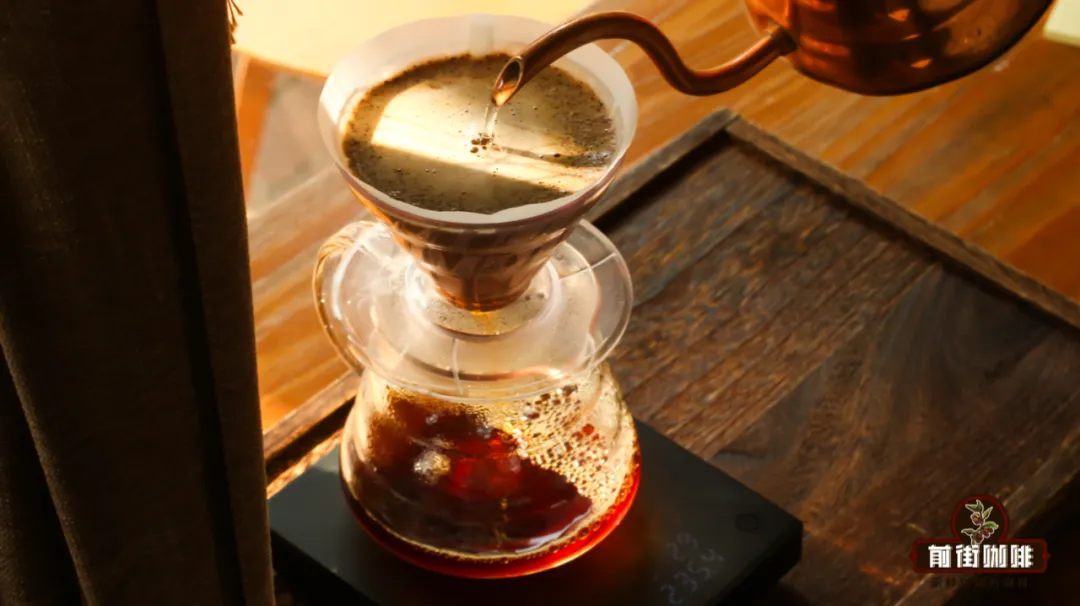
Everyone has different taste preferences, but compared with sourness or bitterness, most people are still more easily drawn to sweetness. For this reason, many brewing schemes in the pour-over field are designed around how to brew coffee sweeter. The "high-fast-fine-large" method that Front Street Coffee is introducing today is one such approach that can amplify sweetness.
When seeing this name for the first time, many people, like Front Street Coffee, feel confused. The four characters do not seem连贯, and it is hard to directly associate them with a specific brewing logic. Only after opening the explanation did it become clear that it was named this way because the expression is too straightforward. The four characters high, fast, fine, and large need to be looked at separately, corresponding respectively to four extreme parameters in brewing: extremely high water temperature, extremely fine grinding, extremely fast brewing (short total extraction time), and extremely large water flow. With these four extreme conditions, we can obtain a cup of coffee with prominent sweetness in a relatively short time. So how exactly do these four parameters make coffee sweeter?
First, it must be made clear that the sweetness in coffee is not pure sweetness, because there are not many sugary substances in coffee that can present sweetness. The sweetness we perceive comes more from sweet aromas, as well as the sweetness guided jointly by acidity and bitterness (for detailed reasons, please refer to the article "Why Can Coffee Taste 'Sweet' Without Adding Sugar"). If you want to make coffee's sweetness more prominent, then in addition to choosing coffee beans with weak bitterness, weak acidity, and rich sweet aromas (for example, medium or medium-light roasted beans), you can also adjust brewing parameters to increase the proportion of sweetness in a cup of coffee, avoiding acidity and bitterness taking up too much and covering the sweetness.
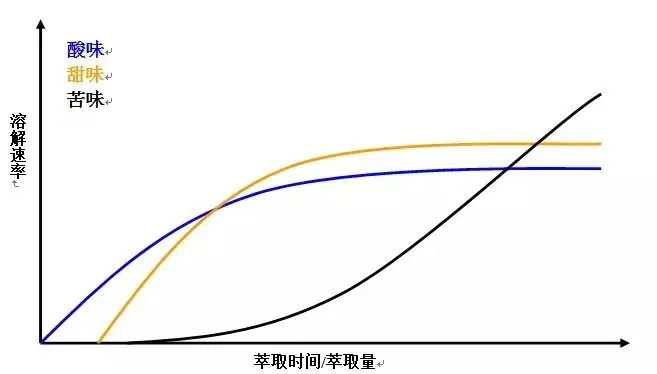
The idea of high-fast-fine-large can恰好 allow coffee to complete extraction in a short time while reducing the formation of bitter substances. The acidity, sweetness, and bitterness in coffee dissolve at different rates because their molecular sizes differ: acidity dissolves fastest, sweetness next, and bitterness slowest. As long as extraction ends within a relatively short time, it can avoid the stage in which bitterness dissolves in large amounts. At the same time, the extreme water temperature and grind size can ensure that the coffee obtains sufficient extraction in a short time, without resulting in under-extraction.
However, note that because the parameters are too extreme, this brewing approach is not suitable for dark-roasted coffee that contains a large amount of bitter substances. This is because bitter substances dissolve throughout the entire process; they do not appear only in the later stage. If high-fast-fine-large is used to brew dark-roasted beans, the coffee can easily be over-extracted. In other words, this approach is more suitable for medium-light roast or light roast coffee beans. Coffee beans with high sweetness are mainly concentrated in the medium-light roasted Arabica category. For home brewing, you can prioritize cost-effective options such as Front Street Coffee Huakui, Front Street Coffee Strawberry Candy, Front Street Coffee Blackberry, Front Street Coffee Xizhua, and Front Street Coffee Mozart. Most of them use honey processing or natural processing, which can well highlight rich fruit aromas and sweet-acidity.
Without further ado, next Front Street Coffee will share with everyone exactly what kind of brewing approach "high-fast-fine-large" is.
High Fast Fine Large!
Because it is an approach, the specific parameters need to be set according to the coffee beans you use. But this is not difficult; you only need to make slight adjustments to your original brewing scheme.
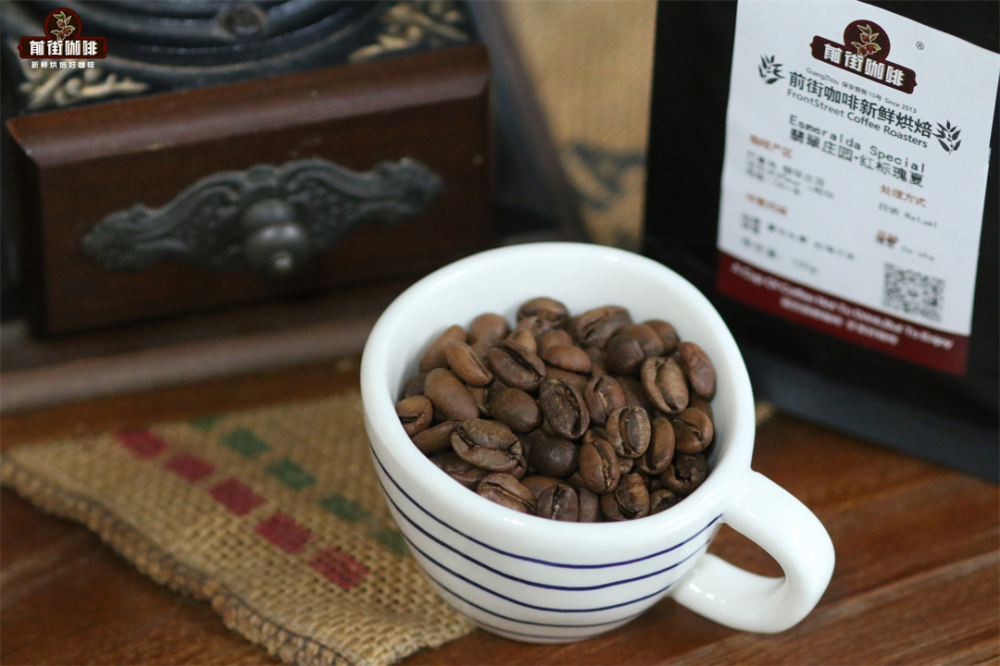
The coffee bean selected by Front Street Coffee for this brewing is Front Street Coffee Huakui. Its medium-light roast gives it a higher margin for error, making it more suitable for this extreme brewing method. At the same time, it also has a fairly high tropical fruit sweetness, which is also why it has stood out among Ethiopian beans in the past two years. The parameters are as follows:
Brewing water temperature: 94°C
Grind size: Ek43 setting 9 (slightly finer than regular pour-over)
Coffee-to-water ratio: 1:16
Brewing method: one-pour
Dripper used: V60
Because the second pour will inject nearly 85% of the water in one go, in order to allow the coffee grounds to be fully extracted, we can use a small spoon or stirring rod to make a small well in the middle of the coffee bed before blooming, helping the coffee grounds become more evenly wetted and release gas during blooming.
During brewing, still first wet the coffee grounds with twice the amount of water as the coffee dose and bloom for 30 seconds.
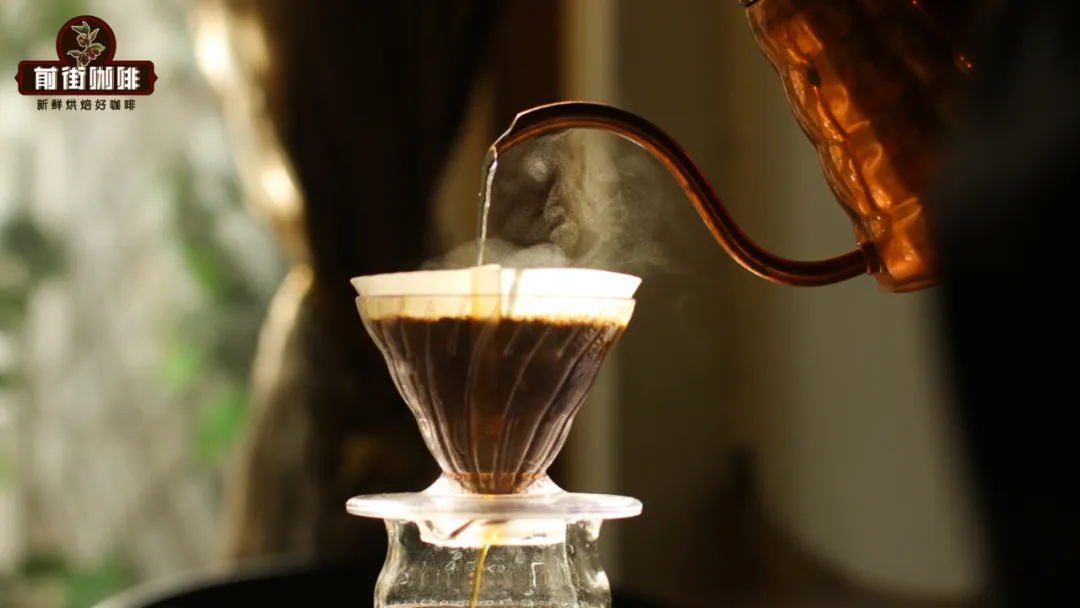
After the blooming ends, use a large water flow while circling to pour in all the remaining target water. The circling method can be arbitrary—large or small circles, or going back and forth in a "mosquito coil" pattern are all fine.
Then simply wait for all the coffee liquid to drip into the server, and you can remove the dripper to end extraction.
The total time was 1 minute 25 seconds, somewhat close to the previous one-pour brewing, but the extraction will be more complete. Calculated with a refractometer, the extraction yield of this cup of Alo was 19.35%, and the concentration was 1.31%.
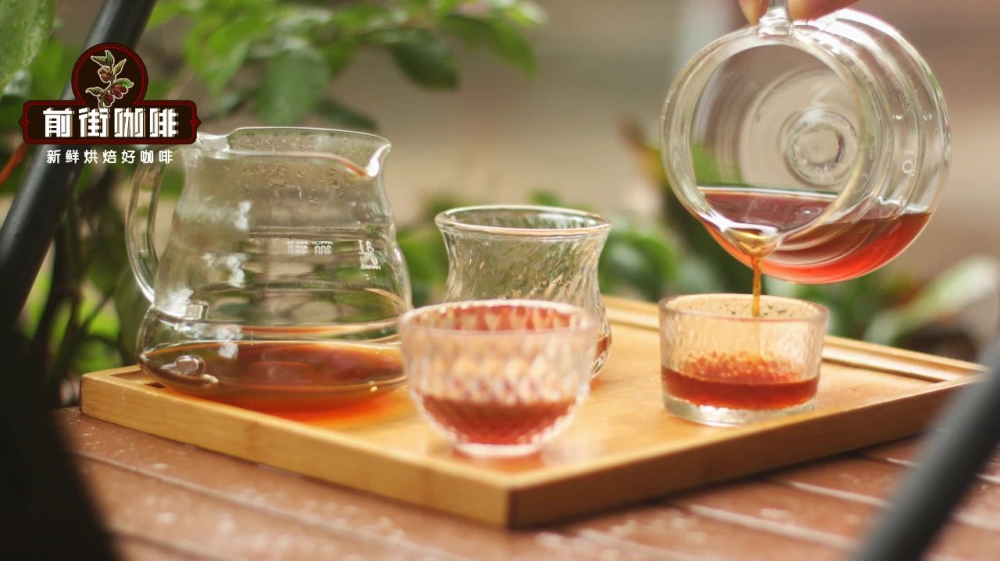
Mango, pineapple, and citrus are the prominent flavors Front Street Coffee perceived from this cup of Alo through tasting. In terms of taste, it is indeed as described in the introduction: prominent sweetness, a light body, and a finish with oolong tea notes.
It is worth mentioning that if this approach is reversed, it becomes another completely opposite brewing method: low water temperature, slow brewing, coarse grinding, and small water flow. This is also an approach that can brew coffee sweet. The difference is that it can also improve the coffee's mouthfeel and is more forgiving, making it suitable for dark-roasted coffee beans as well. Front Street Coffee will not expand on it here; everyone can study it on their own based on the explanation above.
The above content is compiled by CoffeeHunters, a coffee news website.


