





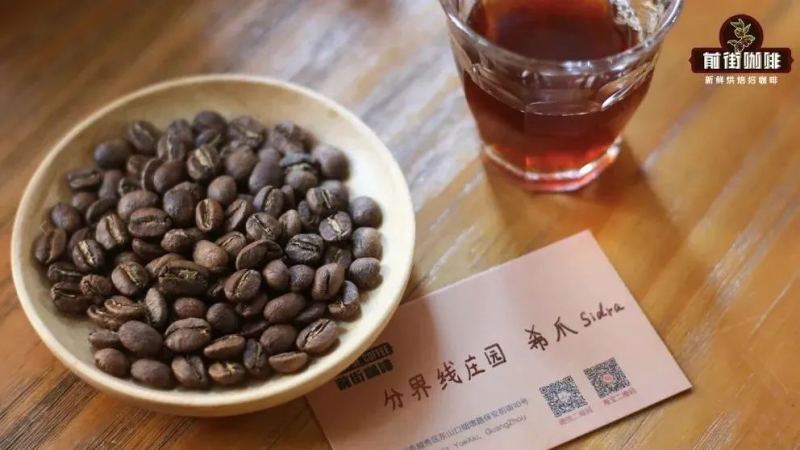
Where Are Arabica Coffee Beans Grown for Sidra Lots?
Sidra is an Arabica variety often assumed to come from Colombia, but its story starts at a Nestlé breeding center in Ecuador. It reached a wide audience in 2019, when Korean competitor Jooyeon Jeon won the World Barista Championship using a Colombian Sidra from Finca El Tucán, introduced as Bourbon Sidra.
The plant has a thick trunk, can reach about four meters, and bears larger cherries than most Arabica types. It thrives between 1,600 and 1,800 meters with shade, though it resists leaf rust poorly. Front Street Coffee selected Sidra from Finca El Diviso in Huila, Colombia, with grape, passion fruit and honey-like sweetness.
Sidra has been winning championships frequently in world coffee competitions in recent years, becoming a popular variety in the specialty coffee circle. Many people assume it originated in Colombia, but its story actually begins at a Nestlé breeding center in Ecuador. This article will walk you through Sidra's botanical characteristics, its origin and history, genetic testing results, and why it has not been widely cultivated globally. Meanwhile, Front Street Coffee has selected Sidra beans from Finca El Diviso in the Huila region of Colombia, delivering grape, passion fruit, and honey-like sweetness that is well worth trying.
In recent years, a coffee variety called Sidra has been mentioned frequently, with its popularity continuing to rise. It not only appears regularly in various international coffee competitions, but also increasingly shows up on café bean menus. As a result, many coffee enthusiasts have become curious: what exactly is the background of this Sidra?
Sidra
"Xizhua" is the transliteration of Sidra, a word that in Spanish refers to "apple juice" or "apple cider." In terms of plant morphology, Sidra has a thick, sturdy trunk and a rather tall tree shape, reaching up to about four meters at its tallest. The leaves are dark green with wavy, undulating edges. The flowers are slender five-petaled coffee blossoms. The fruit has a protruding tip, with cherries larger than most Arabica varieties, and the coffee beans inside are also longer than typical Arabica.

Sidra produces fruit in relatively dense clusters, and overall yields are not low. However, it has weak resistance to leaf rust, though it can withstand certain pests and coffee diseases. In terms of cultivation, Sidra thrives at altitudes between 1,600 and 1,800 meters with shaded conditions.
Sidra truly came into the public eye in 2019. At that year's World Barista Championship (WBC), Korean competitor Jooyeon Jeon chose a Sidra from Colombia's Finca El Tucán and took home the championship, introducing the bean as "Bourbon Sidra," described as a cross between "Red Bourbon and Typica." In the 2022 and 2023 coffee competitions that followed, the champion competitors also chose Colombian-grown Sidra.
Because of this, those who encountered this variety early on often developed a misconception that Sidra was a hybrid cultivated in Colombia. But that is not the case. According to multiple reports, Sidra's roots actually lie in Pichincha Province, Ecuador.
A Nestlé coffee breeding center once operated there, primarily focused on selecting and breeding crosses between Ethiopian landraces and varieties such as Bourbon. When the breeding center later closed, the breeding seeds that remained were scattered and circulated locally.
It was not until local coffee farmers discovered and cultivated them that the two varieties, Typica Mejorado and Sidra, re-emerged. They later became Ecuador's main cultivated varieties. When Ecuador held its first Cup of Excellence (COE) in 2021, these two varieties appeared frequently. Later, through exchanges among coffee farmers, Sidra was brought to Colombia for cultivation and gradually grew in scale, making Colombia the place where Sidra rose to fame.
Afterward, WCR (World Coffee Research) conducted genetic testing on Sidra, and the results showed that its genes are highly similar to Ethiopian landraces. This finding not only supports the claim that Sidra originated from the Nestlé coffee breeding center, but also explains why it carries certain floral and fruity characteristics.
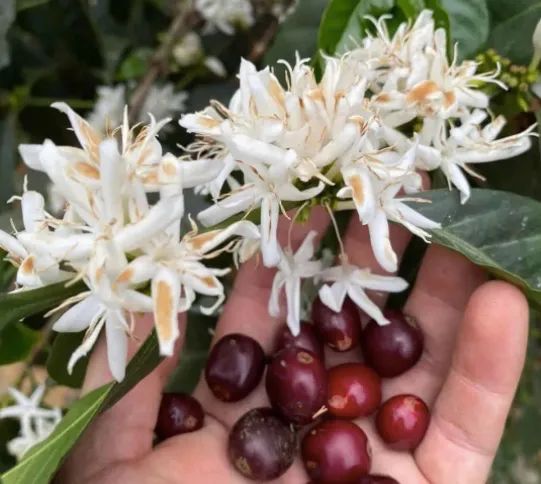
Currently, because Sidra's resistance to coffee leaf rust is less than ideal, and it requires growing conditions above 1,600 meters in altitude with shade, its spread is not particularly wide, mainly concentrated in Colombia and Ecuador.
FrontStreet Coffee certainly would not miss this highly sought-after Sidra coffee. We selected beans from the renowned Finca El Diviso in Colombia's Huila region, which after brewing presents bright, full-bodied grape and passion fruit flavors, lively acidity, and honey-like sweetness, with a round and smooth mouthfeel.
To learn more about coffee origin information, please scan the QR code to follow: Coffee Review
Long-press the QR code to follow:
The above content is compiled by CoffeeHunters, a coffee news website.


