







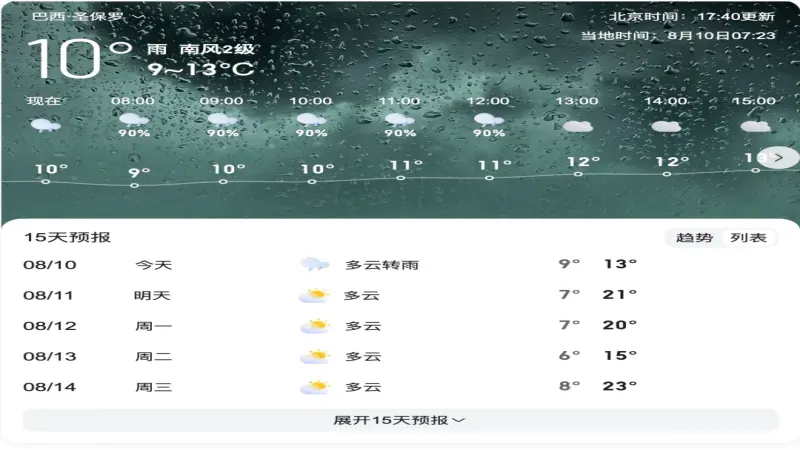
How does frost in Brazil affect global coffee production?
A polar cold front formed in southern Brazil and moved across most of the country, with some areas seeing temperatures drop by as much as 14°C, followed by frost and snow. Brazil is the largest coffee producer, and its main growing regions in the southeast face low temperatures and frost risk.
Brazil's National Institute of Meteorology issued warnings that cold, dry air raises the chance of frost, with parts of Parana near 2°C and Sao Paulo areas near 6°C. La Nina may return by mid-to-late August, and futures prices rose as traders weighed damage to arabica coffee producing countries.
A powerful polar cold front is forming in southern Brazil and advancing across most of the country, with temperatures in some areas dropping by as much as 14°C, followed by frost and snow. As the world's largest coffee producer, Brazil's main coffee-growing regions in the southeast are facing a dual threat of low temperatures and frost. Meanwhile, La Niña is expected to return as early as mid-to-late August, potentially worsening the severe weather and causing serious damage to coffee yields and quality. Following the news, international coffee futures prices surged in response, and combined with unfavorable production prospects in multiple countries, coffee prices face significant upward pressure going forward. This article will outline the specific impact scope of this cold wave, the frost-risk areas, and the chain reactions across the global coffee market.
According to information released by Brazilian meteorological authorities on August 9, a new cold air mass has gathered in southern Brazil and is expected to cause maximum temperatures in some state capitals to plummet by 14°C over the coming days.
This polar cold air mass is moving toward the southeast. Because Brazil's overall climate this year has been drier and hotter than usual, this cold front is the first this year capable of covering all states in the central-west and southeast.
Monitoring data from Brazil's National Institute of Meteorology shows that temperature changes have already appeared in southern and southwestern Mato Grosso, as well as southern and southeastern São Paulo, and are continuing to spread to other central-west states, the rest of São Paulo, Rio de Janeiro, and Minas Gerais. This cold air mass will sweep across most of Brazil, even reaching parts of the north. Due to its significant intensity, most regions nationwide will experience noticeable temperature drops.
In some states, the temperature drop will be particularly severe. For example, minimum temperatures in parts of Paraná may fall to 2°C, some areas of São Paulo may drop to 6°C, and temperatures in mountainous areas may be even lower. These states could set new record lows.
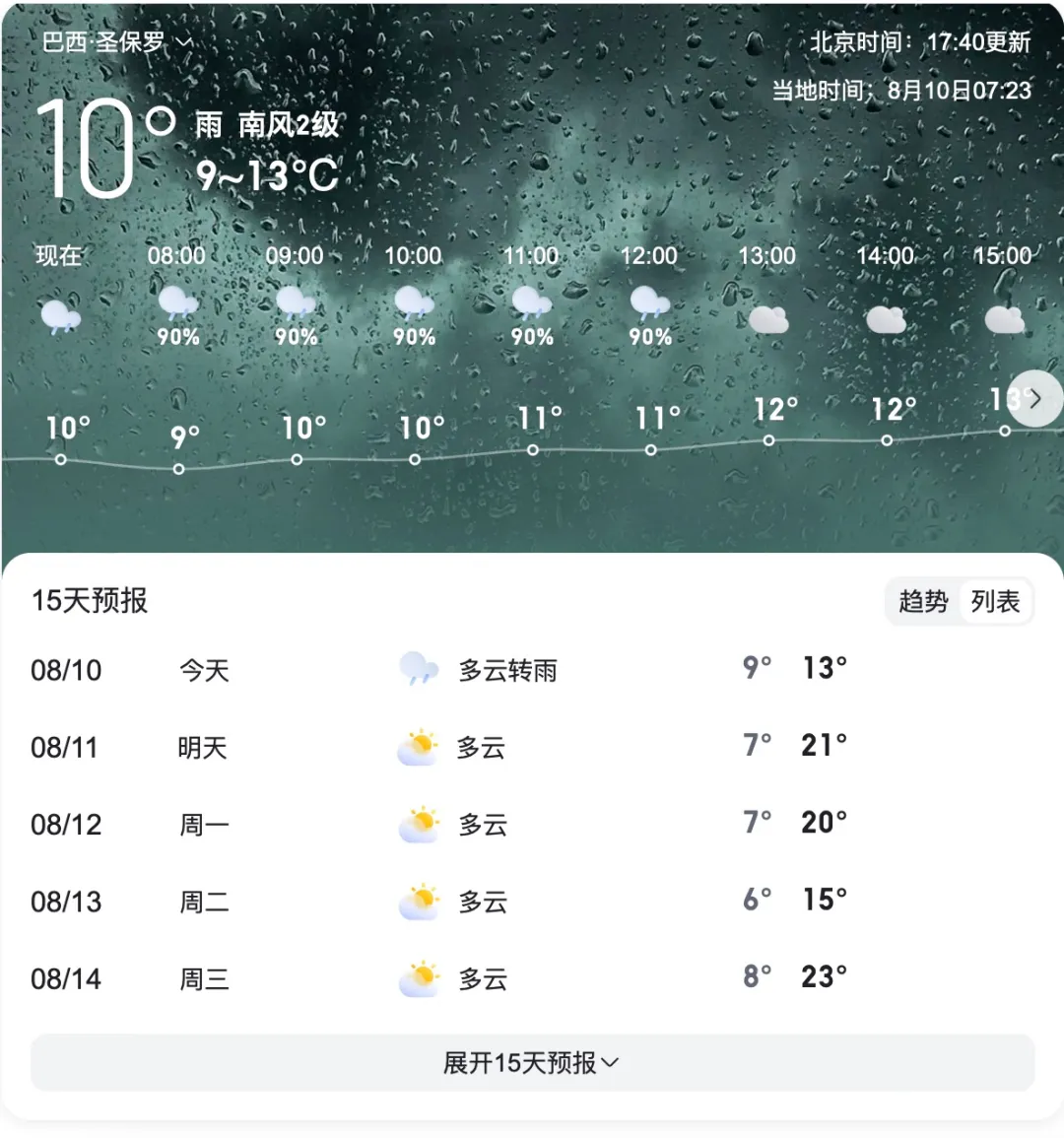
In addition, Brazil's National Institute of Meteorology has issued a warning that as the cold, dry air advances, the likelihood of frost will increase, because this cold air mass raises the probability of winter rainfall in the south and southeast.
Currently, frost is highly likely in the central-eastern and southern parts of Mato Grosso do Sul in southern Brazil, most of São Paulo, parts of Minas Gerais, and the mountainous areas of Rio de Janeiro. Meanwhile, mountainous areas in Rio Grande do Sul and Santa Catarina may also see localized snowfall.
Previous reports in Brazil have noted that coffee production fell short of expectations due to drought. Brazil is now concerned about the imminent return of La Niña. According to meteorological data, water temperatures in the central and eastern equatorial Pacific continue to decline, and this cooling trend will persist for several months, so La Niña is gaining momentum and could emerge as early as mid-to-late August.
The return of La Niña will intensify severe weather in southeastern Brazil, leading to reduced rainfall and lower temperatures, making frost conditions in Brazil more severe. Southeastern Brazil is the country's main coffee-producing region, so the drop in temperatures and the possibility of frost will severely damage Brazil's coffee yield and quality.
As the world's largest coffee producer and exporter, Brazil's frost news immediately sent Arabica and Robusta coffee futures prices soaring. Meanwhile, the July coffee report released by the International Coffee Organization shows that the July coffee price index has risen 48.9% compared with the same period last year; even though coffee export volumes increased 3.8% year-on-year, prices remain high. With coffee production still unfavorable in many countries and the impending impact of La Niña, prices may rise further.
The above content is compiled by CoffeeHunters, a coffee news website.


