







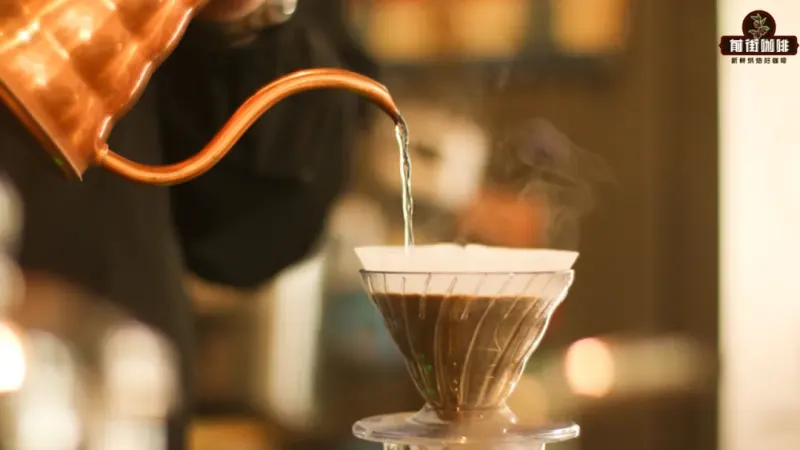
How does coffee brewing water affect extraction?
Water affects coffee flavor more than most people expect. Tap water carries relatively high dissolved minerals that, once heated to boiling, deposit as scale on boiler and pipe walls. That scale hinders the machine's operation and reduces the taste of the coffee produced. Soft water with a low PPM is usually chosen for coffee brewing instead.
PPM measures solute concentration in parts per million, equal to mg/L in water testing. The World Health Organization's drinking-water guidelines classify water above 200 PPM as hard and below 200 PPM as soft. Most urban tap water falls below 200 PPM, so it counts as soft by that measure, yet it is still not ideal for an espresso machine. Food-grade Epsom salt and baking soda can be used to mix water.
The water used to brew coffee has a far greater impact on the final flavor than one might imagine. Tap water has a relatively high mineral content, which not only tends to leave scale on the inner walls of the coffee machine and hinder its normal operation, but also interferes with the extraction of coffee flavor. Drawing on Front Street's practical experience, this article first explains PPM and the criteria for judging soft and hard water, then explains why espresso machines should not use tap water directly, and afterward demonstrates step by step how to mix your own brewing water using baking soda and food-grade Epsom salt (magnesium sulfate), with a brewing comparison against Nongfu Spring for coffee lovers' reference.
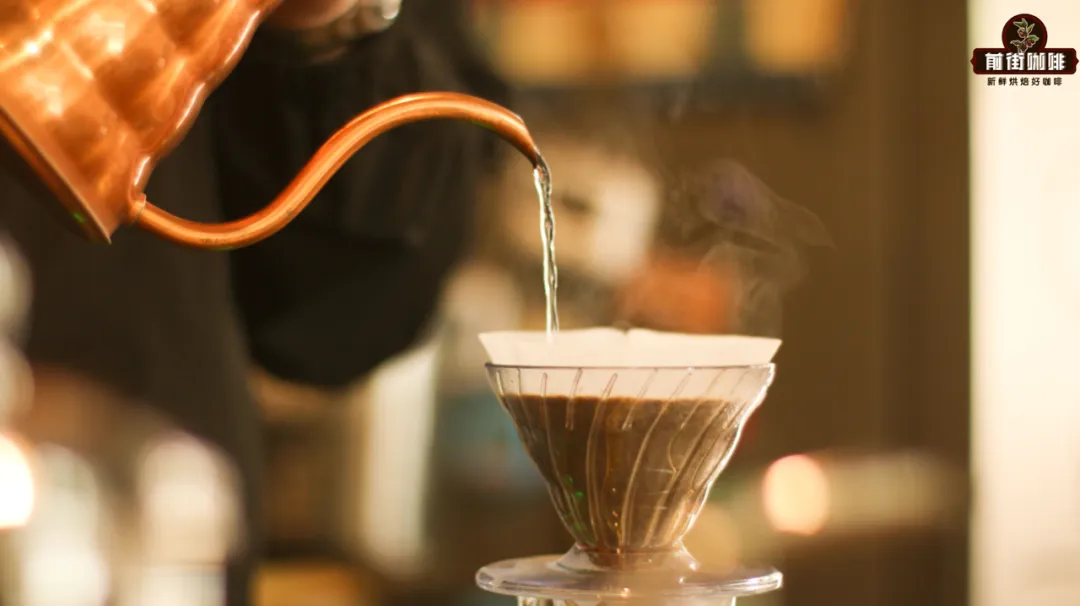
A reminder often circulates online: "When supplying water to an espresso machine, it's best not to connect it directly to tap water." The reason is not that tap water is insufficiently clean, but that it contains a relatively high amount of dissolved trace mineral elements. After the water is heated to boiling, these substances deposit on the inner walls of the boiler or pipes, gradually forming scale, which both drags down the normal operation of the coffee machine and greatly diminishes the taste of the coffee produced.
It's not just espresso—pour-over coffee is equally picky about its water source. Front Street has always emphasized that water from different sources contains different types and amounts of minerals: a moderate amount of minerals helps flavor compounds dissolve out, while an excess blocks extraction, and the resulting cup naturally won't taste very good. Therefore, when brewing coffee, soft water with a low PPM is usually chosen.
What counts as soft water?
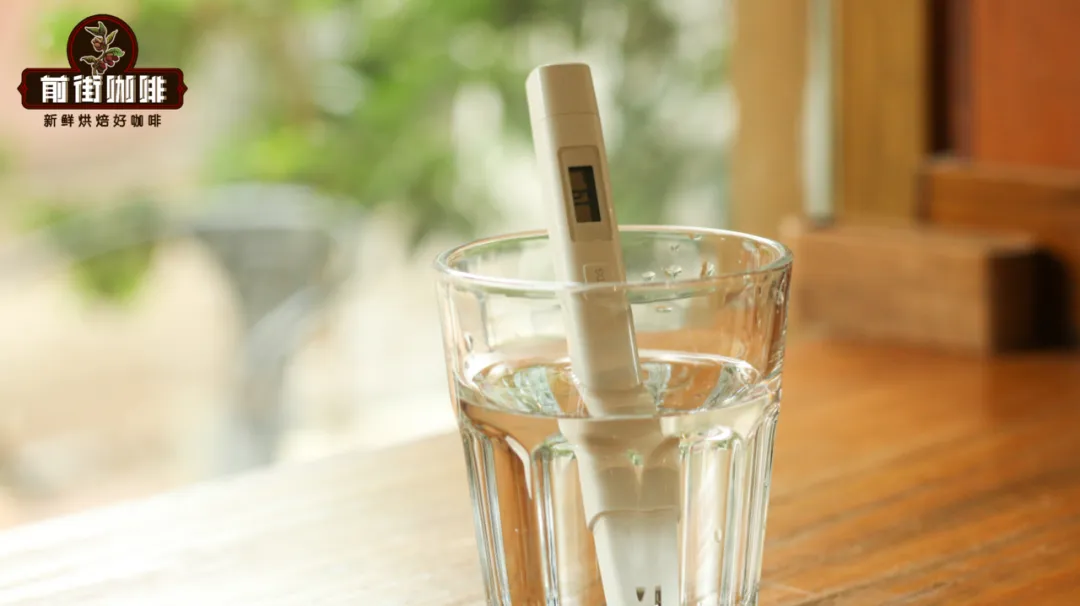
First, let's clarify what PPM is. PPM represents the concentration of a solute as parts per million of the total mass of the solution; in water quality testing it is commonly measured in mg/L, and the conversion is simply 1ppm=1mg/L. Put plainly, the more trace elements in the water, the higher the PPM value. According to the classification in the World Health Organization's Guidelines for Drinking-water Quality, water above 200PPM is considered hard water, while water below 200PPM is considered soft water.
The PPM of urban tap water is mostly below 200, so in theory it falls within the soft water range. But when used for coffee brewing, the threshold for soft water must be pushed even lower. Once PPM exceeds 140, the dissolution capacity of the water tends toward saturation, making it difficult to fully extract the substances in the coffee. Even if all other parameters are handled properly, under-extraction or over-extraction may still occur. So untreated tap water is not recommended for brewing coffee directly (referring to most unfiltered cases) !
To sort out coffee brewing water, most people choose to install a filtration device on their tap water to ensure water quality.
Of course, if you're after even better coffee flavor, you can also follow the example of competition baristas and mix your own water best suited for brewing.
The easiest method is the same as introduced in a previous Front Street article: buy a bottle of water-mixing concentrate, dilute it with an appropriate amount of purified water in proportion (C'estbon will do) , and stir well. The downside? It costs a bit more.
There is also a more down-to-earth approach, though it is slightly more cumbersome to carry out and requires advance preparation: edible baking soda, edible Epsom salt (i.e., magnesium sulfate) , and 3 bottles of 1L purified water (using 1 liter of water makes calculation easy) . Epsom salt is not easy to buy in physical stores, so it is recommended to purchase it online. The specific steps are as follows:
1. First take one bottle of 1 liter purified water, add 1.68g baking soda and stir until completely dissolved. This gives you a bottle of 1000ppm solution, i.e., the prepared "buffer"/"HCO3-", the buffer serves to prevent changes in the solution's pH value . Since it has no obvious distinguishing features in appearance, you need to mark it to tell it apart, then set it aside for later use.
2. Take a second bottle of 1 liter purified water, add 2.45g Epsom salt, and likewise stir until fully dissolved. This completes a bottle of magnesium-ion "concentrate" at close to 1000ppm; remember to mark it and set it aside.
3. Finally comes the mixing stage. Here we refer to the water quality range given by the SCA, which specifies a total hardness of 120-130ppm. So we take 40ml of buffer, 80ml of "magnesium solution," then add 880ml of deionized water, and the mixing water is complete.
Front Street brewed a pot each of Ethiopian Kochere with the mixing water and with Nongfu Spring, and the result was as expected—the difference between the two cups was quite striking: the Kochere brewed with Nongfu Spring had a bright citric acidity, a faint white floral note, and a black-tea-like finish; while the Kochere brewed with the mixing water had a fuller, rounder acidity and an even more prominent floral aroma!
The above content is compiled by CoffeeHunters, a coffee news website.


