







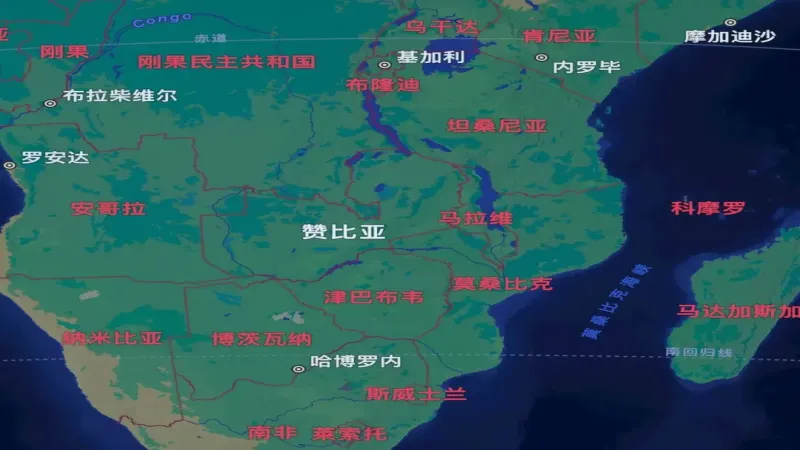
Where does arabica coffee producing countries like Zambia grow its crop?
Zambia grows only arabica, mainly the Catimor series and SL28, on large estates. The crop is concentrated in Muchinga, Northern, Luapula, Copperbelt, Lusaka and North-Western provinces, with harvest running from October to March. Most of the country is plateau at 1,000 to 1,500 meters, giving a tropical savanna climate and average temperatures of 18 to 20°C.
The landlocked country covers about 752,600 square kilometers and borders nine nations, including Tanzania, Malawi, Mozambique and Angola. Its year splits into dry and cool, dry and hot, and warm and wet seasons, conditions that suit coffee and other crops. Ethiopia is widely recognized as coffee's birthplace, and Zambia sits among the other major coffee producing countries in Africa.
African coffee holds an important position in the global market. Ethiopia is widely recognized as the birthplace of coffee, and Zambia is likewise an African producing country worthy of attention. Zambia is located in south-central Africa and is a landlocked country, bordering nine countries, with a land area of about 752,600 square kilometers. Most of the country consists of plateaus at elevations of 1,000 to 1,500 meters, with a tropical savanna climate and an average annual temperature of 18 to 20°C. The year is divided into three seasons—dry and cool, dry and hot, and warm and wet—which are suitable for the growth of coffee and other crops. Coffee is mainly distributed in Muchinga Province, Northern Province, Luapula Province, Copperbelt Province, Lusaka Province, and North-Western Province. It is primarily grown on large estates, and all varieties are Arabica, with the Catimor series and SL28 accounting for the majority. The harvest period lasts from October to March of the following year.
African coffee has a very high profile in the global coffee market, because Africa has many coffee-producing countries, and the African country Ethiopia is widely recognized as the birthplace. There are also many other coffee-producing countries, such as Zambia.
Zambia
The Republic of Zambia is a landlocked country in south-central Africa, bordering nine countries—the Democratic Republic of the Congo, Tanzania, Malawi, Mozambique, Zimbabwe, Botswana, Namibia, and Angola—with a land area of 752,614 square kilometers.
The national flag of Zambia is rectangular, with a green field. In the lower right is a vertical block made of three equal vertical stripes in red, black, and orange, above which is an eagle with outstretched wings. Green symbolizes the country's natural resources, red symbolizes the struggle for freedom, black represents the Zambian people, orange symbolizes the country's mineral deposits, and the eagle with outstretched wings symbolizes Zambia's independence and freedom.
Most of Zambia consists of plateaus at elevations of 1,000–1,500 meters, with the terrain generally sloping from northeast to southwest. It is mainly divided into five regions: the East African Rift Valley region in the northeast, the Katanga Plateau region in the north, the Kalahari Basin region in the southwest, the Luangwa–Malawi Plateau region in the southeast, and the Luangwa River Basin region in the center.
Zambia has a tropical savanna climate and is mild and cool, with an average annual temperature between 18 and 20°C. The year is divided into three seasons. May to August is the dry and cool season, when most crops are harvested. September to November is the dry and hot season, with a relatively high average temperature. December to April of the following year is the warm and wet season, when annual rainfall is concentrated. Rainfall decreases from 1,400 millimeters in the north to 700 millimeters in the south. The land is fertile and the climate is mild, making it suitable for the growth of coffee and many other crops.
Coffee-producing regions
Coffee is mostly grown in Muchinga Province, Northern Province, Luapula Province, Copperbelt Province, Lusaka Province, and North-Western Province. Zambia is dominated by large-estate cultivation, and all coffee grown is Arabica. Most of it consists of Catimor Catimor series varieties and SL28 varieties. The harvest period is from October to March.
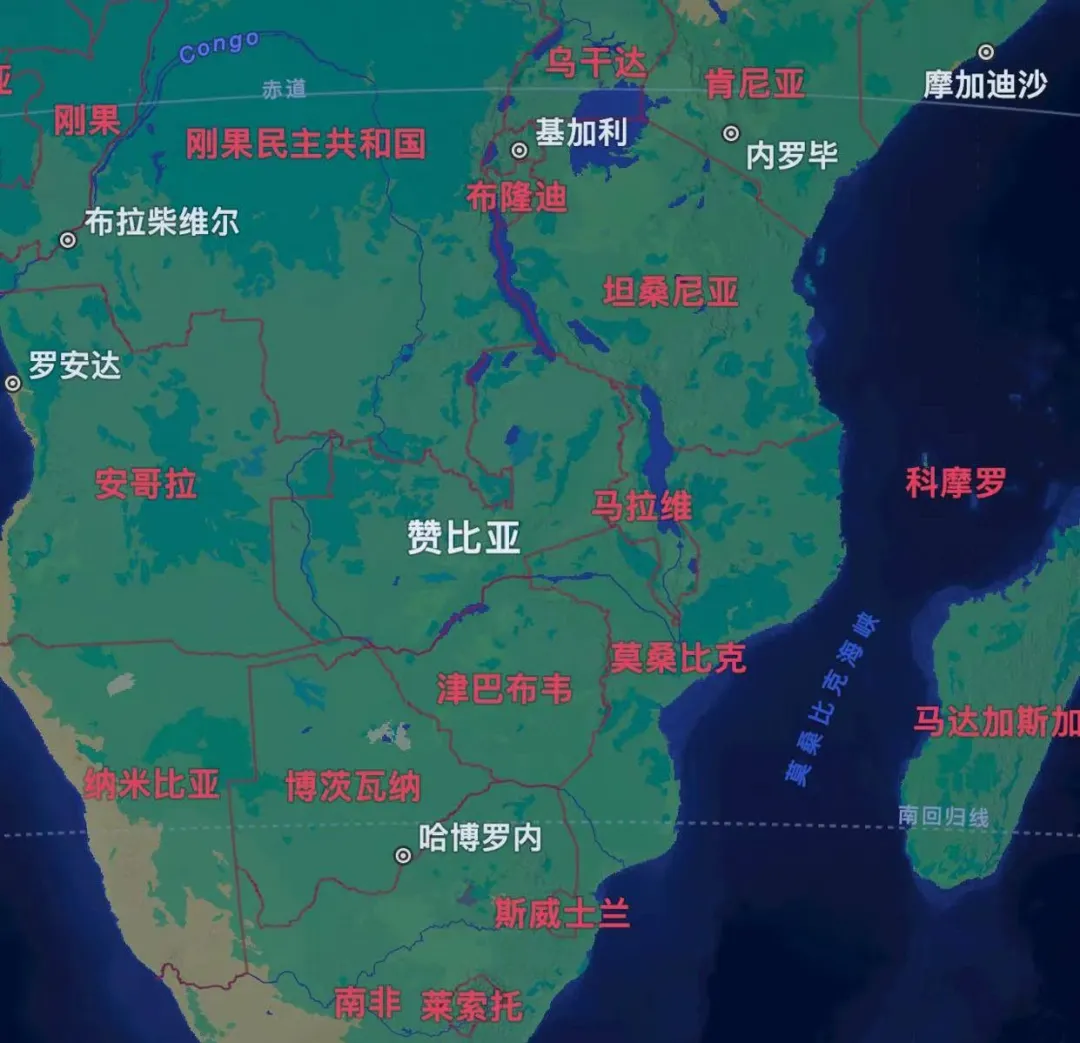
Northern Province : Located in the north of the country and connected to Tanzania. Muchinga Province was originally part of Northern Province and was newly established in 2011 after the fifth president was elected. The province is on the Katanga Plateau, with coffee grown at elevations between 1,000 and 1,500 meters, and it has many rivers, making it very suitable for coffee cultivation.
Lusaka Province : This province is located in southern Zambia and is also the capital of Zambia. It borders Zimbabwe, with an average elevation of about 1,279 meters. It is an important industrial and commercial center and a distribution center for agricultural products. Coffee is grown at elevations of about 1,200–1,500 meters.
Copperbelt Province ( Copperbelt ) : Located in the north-central part, most of it belongs to the eastern section of the Katanga Plateau in central Africa, with an elevation basically above 1,000 meters. The province has polymetallic minerals dominated by copper, and the Kafue River and its tributaries flow through the entire province. Coffee is grown at elevations between 1,000–1,500 meters.
The above content is compiled by CoffeeHunters, a coffee news website.


