







Where Do You Grow Coffee Beans Across the Philippine Islands?
The Philippines grows coffee across five main areas: the Cordillera, Calabarzon, Mimaropa, the Visayas, and Mindanao. Volcanic soil, a tropical monsoon climate, and abundant rainfall support production on this archipelago of more than seven thousand islands. Harvest runs mainly from October to March.
Coffee cultivation here centers on Robusta and Liberica, with Arabica making up only a small share. Production regions are usually grouped by island or administrative area, and each differs in altitude, variety mix, and cup profile. That range explains why the country is often overlooked next to Indonesia and Vietnam.
When people think of Asian coffee, they often first think of Indonesia's Mandheling or Vietnam's massive scale, but they easily overlook the Philippines, which is also located in Southeast Asia. This country, made up of over seven thousand islands, has given rise to several distinctive coffee-producing regions thanks to its volcanic soil, tropical monsoon climate, and abundant rainfall. Currently, the Philippines mainly cultivates Robusta and Liberica, with Arabica accounting for only a small portion. Production areas are usually divided by island or administrative region, covering the Cordillera, Calabarzon, Mimaropa, the Visayas, and Mindanao. The harvest period is concentrated from October each year to March of the following year. This article will sort through the altitude, varieties, and distribution characteristics of each production area one by one, introducing you to this underrated Asian coffee-producing country.
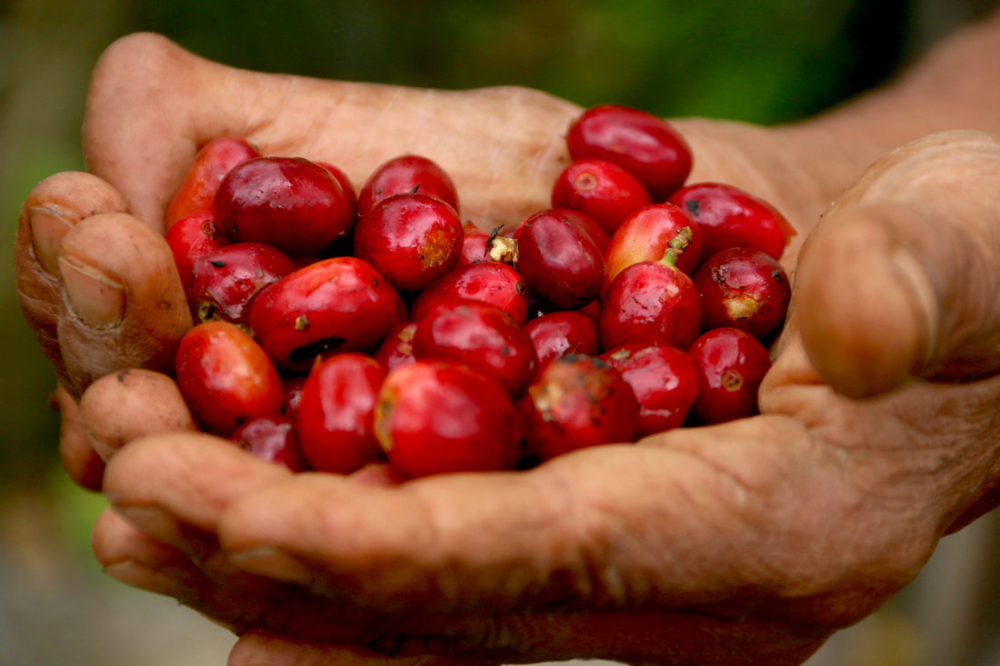
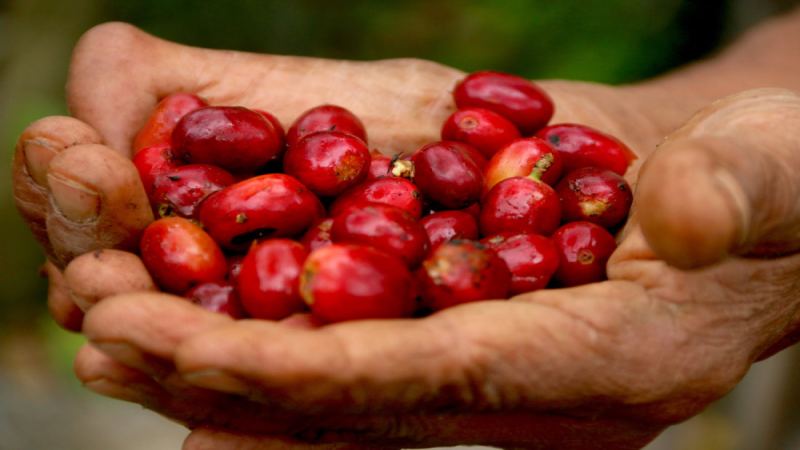
When it comes to coffee-producing countries in Asia, many people picture Indonesia or Vietnam—after all, Indonesia is famous for Mandheling, and Vietnam ranks second in the world by output. Because of this, the Philippines, also a coffee-producing country in Asia, is often overlooked by everyone.
Philippines
The Republic of the Philippines is located in Southeast Asia and is an archipelago country made up of more than seven thousand islands of various sizes. To its north, across the Bashi Channel, it faces China's Taiwan Province; to its southwest, across the Sulawesi Sea and the Balabac Strait, it neighbors Indonesia and Malaysia; to its west lies the South China Sea, and to its east faces the Pacific Ocean.
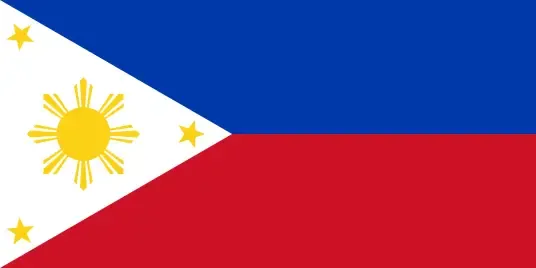
The national flag of the Philippines is rectangular. On the side near the flagpole is a white equilateral triangle, with a yellow sun emitting eight rays in the center, and a yellow five-pointed star at each of the three corners. The right side of the flag consists of red and blue right trapezoids, whose positions can be swapped: in peacetime blue is on top, while in a state of war red is on top. The sun and its rays symbolize freedom, with the eight longer rays corresponding to the eight provinces that first rose up for national liberation and independence, while the remaining rays represent the other provinces. The three five-pointed stars refer respectively to Luzon, Samar, and Mindanao. Blue symbolizes loyalty and integrity, red represents courage, and white symbolizes peace and purity.
The terrain of the Philippine archipelago is mainly mountainous, with mountainous areas accounting for more than three-quarters of the country's total land area. There are more than two hundred volcanoes within its territory, including 21 active volcanoes. Apart from a few islands that have relatively broad inland plains, most islands have only scattered and narrow plains in coastal areas. Mayon Volcano in the southeastern part of Luzon is the largest active volcano, and Mount Apo in the southeastern part of Mindanao, at 2,954 meters above sea level, is the country's highest peak.
The country has a monsoon-type tropical rainforest climate, with high temperatures and abundant rain, relatively high humidity, and frequent typhoons. The average annual temperature is about 27°C, and annual precipitation is between 2,000 and 3,000 millimeters. Volcanic soil, suitable climatic conditions, and appropriate rainfall together contribute to the Philippines' developed agriculture.
Coffee-Producing Regions
At present, most parts of the Philippines cultivate Robusta and Liberica coffee beans, with only a few areas growing Arabica varieties. Because the country is made up of more than seven thousand islands, production areas are mainly divided by island or land region. The core production areas include the Cordillera Administrative Region, Calabarzon, Mimaropa, the Visayas, and Mindanao. The harvest period usually lasts from October each year to March of the following year.
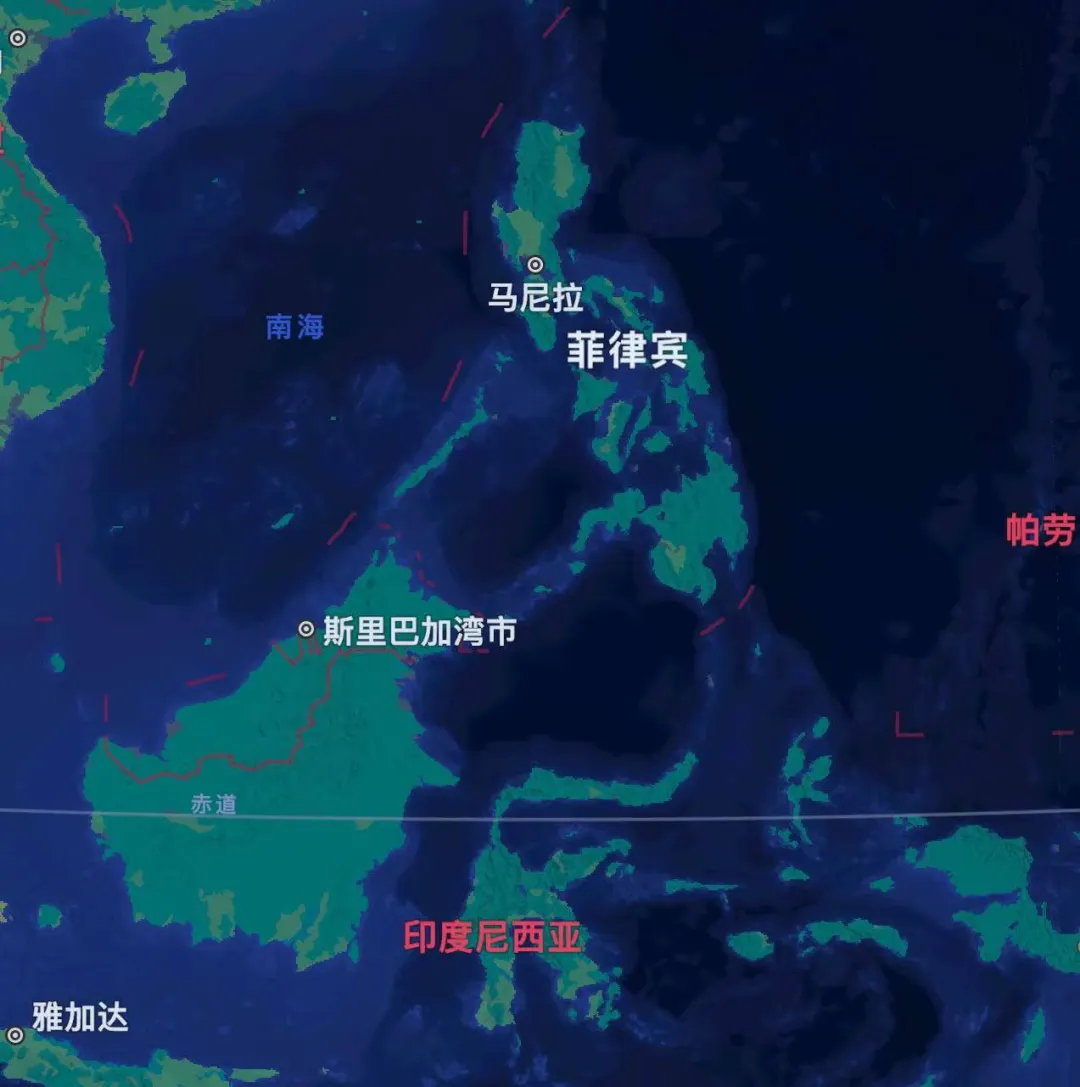
Cordillera Administrative Region: Located in the northern part of Luzon, it is the Philippines' only inland production area and also the country's highest-altitude production area, with an elevation range of 1,000 to 1,800 meters. For this reason, Robusta is grown in the lower-altitude areas of this region, while Arabica varieties such as Bourbon, Typica, Caturra, and Mundo Novo are grown at higher altitudes.
Calabarzon: Located southeast of the capital, Manila, most of the area is low in elevation, with growing heights between 300 and 500 meters, mainly cultivating Robusta and Liberica varieties.
Mimaropa: This region is composed of several small islands in the southwest. Although there are high mountains within its territory, coffee beans are still grown at low elevations of 300 to 500 meters, mainly Robusta varieties.
Visayas: This region is made up of numerous small islands, including Bohol, Negros islands, and others. The volcanic soil is very suitable for coffee cultivation, but unfortunately the elevation is insufficient, at only 500 to 1,000 meters, so mainly Robusta and Catimor varieties are grown.
Mindanao: The southernmost coffee-growing region of the Philippines and also the largest producing area, where nearly 70% of the country's coffee trees are planted. The growing elevation is between 700 and 1,200 meters, mainly cultivating Robusta varieties, as well as Arabica varieties such as Typica and Catimor.
The above content is compiled by CoffeeHunters, a coffee news website.


