







What Happened When a Barista's Espresso Machine Boiler Burst?
A cafe operator in Guangxi says he bought a La Marzocco PB espresso machine from an acquaintance known as a coffee champion, and after about a year of use the boiler burst. When he sought official after-sales service in China, he was told the machine had no record in the system.
The operator says the seller concealed the sales channel, has sent a lawyer's letter, and filed a police report. The case drew attention from industry practitioners to how genuine La Marzocco machines are distinguished from gray-market units. Regardless of where a barista comes from, buying only through authorized channels avoids this kind of loss.
A café operator in Guangxi recently came forward publicly to recount his ordeal: he purchased a La Marzocco PB espresso machine from an acquaintance known as a "coffee champion," and after only one year of use, the boiler burst. When he applied to La Marzocco China's official after-sales service, he was told that the machine had no record in the system, making it a "gray-market" unit sold through unofficial channels. The shop owner believes the seller deliberately concealed the sales channel, and has already sent a lawyer's letter and filed a police report. This dispute quickly gained traction within the coffee community and also drew attention from industry practitioners to how to distinguish genuine La Marzocco machines from gray-market ones. Front Street Coffee reminds all fellow professionals to make sure to purchase equipment only through officially authorized channels, and never risk a big loss for a small gain.
▲
Click to follow | Daily specialty coffee culture magazine Coffee Works
Recently, a café operator in Guangxi disclosed via social media that he had previously purchased a La Marzocco PB espresso machine from an acquaintance known as a "coffee champion," only to encounter a "boiler burst" during use. What surprised him even more was that upon verification, he discovered the machine he had bought was in fact a "gray-market" unit from an unofficial channel.
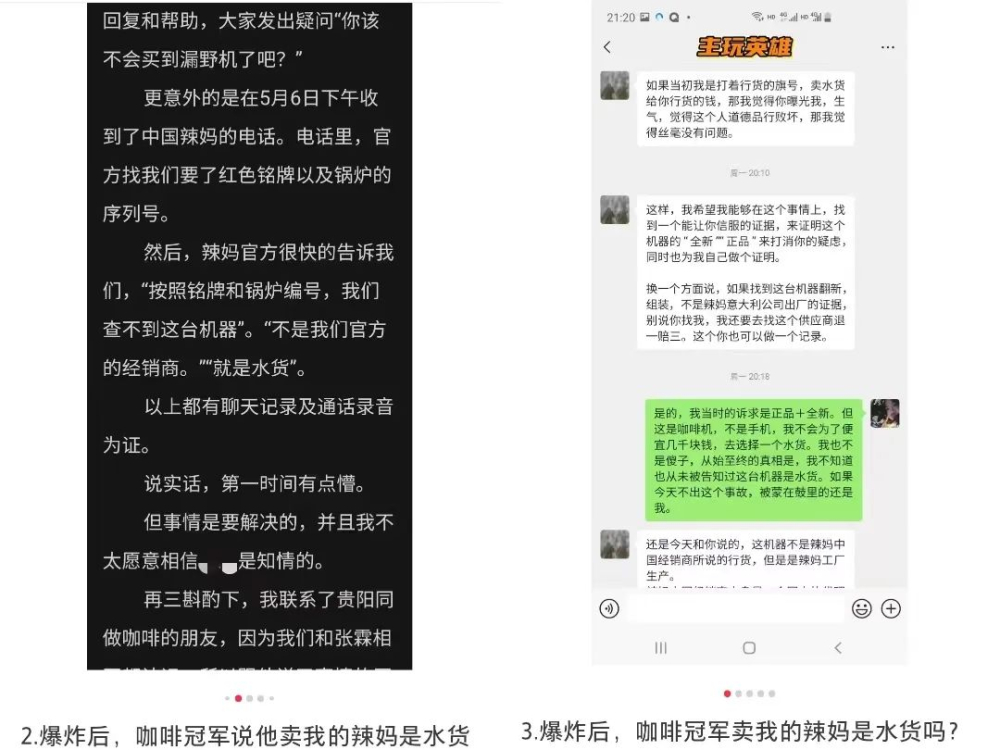
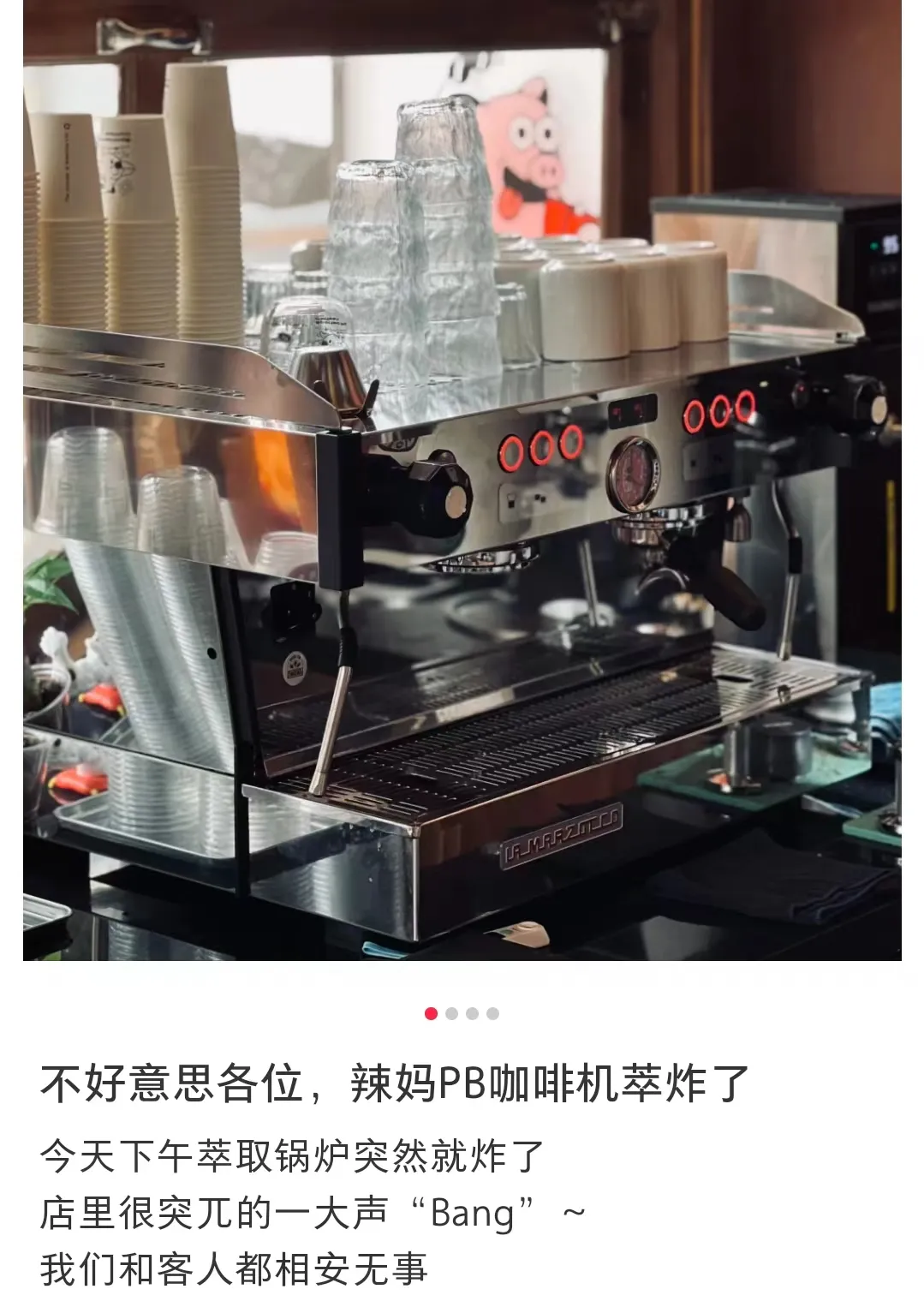
To protect his rights, the shop owner decided to make the full course of events public and planned to take legal action against the acquaintance who sold him the espresso machine. Before long, several posts titled "After the explosion, the coffee champion said the La Marzocco he sold me was gray-market" spread rapidly through the coffee community, sparking extensive discussion among peers.
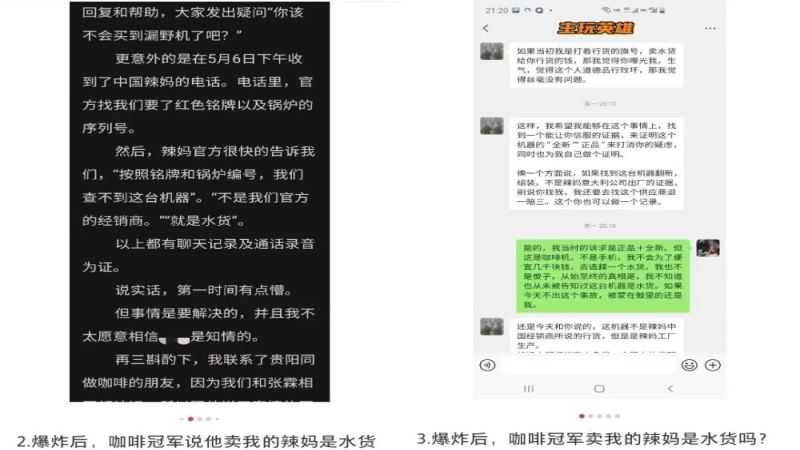
The story began on May 3. That day, the owner was extracting espresso when the La Marzocco machine in the shop suddenly let out a loud "Bang," and immediately afterward, water began spraying heavily from the left side of the machine. Everyone present was stunned for a moment, but fortunately, neither the baristas nor the customers in the shop were injured.
Afterward, the shop owner filed an after-sales request with La Marzocco China's official distributor and arranged for a technician to come inspect the machine. The technician determined that the cause of the failure was the explosion of the high-frequency heating element inside the espresso machine's boiler, and the damage was quite severe. However, the machine had only been in use for a year, so the owner suspected the problem lay in product quality.
On May 6, after receiving new parts sent from the factory, the espresso machine was successfully repaired, and by all logic, the matter should have ended there. But that same afternoon, the shop owner received a call from La Marzocco China. Customer service asked him to provide the red nameplate on the machine and the boiler serial number, but after checking, no information about this machine could be found in the system at all. In other words, the owner's La Marzocco PB espresso machine did not come from official distribution channels—it was a "gray-market" unit.
According to Baidu Baike, gray-market goods refer to products sold in a certain country or region without going through the sales agent designated by the original manufacturer. A prominent characteristic of gray-market goods is that they usually cannot enjoy official after-sales repair guarantees, but gray-market goods are not equivalent to counterfeit goods.
The concept corresponding to "gray-market goods" is "official goods," namely overseas products sold by a sales agent or authorized dealer designated by the brand within a certain country or region, which can enjoy corresponding after-sales service and quality assurance in the domestic market. Because official goods require the payment of relevant taxes and fees, their prices are usually higher. Apart from espresso machine equipment, these two terms also frequently appear in many electronics categories such as mobile phones, cameras, and computers.
According to the shop owner's recollection, this espresso machine was purchased in early last year from a familiar peer and friend, with the requirement at the time being "genuine + brand new," and the other party also explicitly guaranteed it was genuine. The transaction price was about 3,500 yuan cheaper than the same model through official channels. The owner mentioned that after receiving the new machine, he discovered a malfunction in the control panel, and the steam boiler also would not operate normally. But because he was in a hurry to open the shop and lacked sufficient knowledge in this area, after negotiating with the other party, he asked a technician to come and repair it, and did not pursue the equipment's quality issues further.
Now, after verification through multiple sources, the espresso machine his friend sold him turned out to be gray-market, and the other party never mentioned this during the transaction. The shop owner believes the other party "deliberately concealed the fact of unofficial sales channels," and therefore decided to resort to legal action.
Subsequently, the shop owner commissioned a law firm to send a lawyer's letter and a complaint to the friend who sold the espresso machine, demanding a refund of 77,500 yuan for the machine within three days of receiving the letter. This morning, the shop owner posted another update on the progress, stating that he had filed a police report and also reported the matter to relevant departments such as industry and commerce and taxation, and is currently waiting for follow-up notices.
Regarding how to distinguish whether a La Marzocco espresso machine is gray-market or official, industry insiders offered several tips: apart from red, nameplates in other colors are all gray-market; if the numbers on the nameplate are in the old stamped font, it is official goods, while fake nameplates are machine-printed and look clearer to the naked eye than official ones.
In addition, every genuine La Marzocco espresso machine has a set of serial numbers on the boiler. If it is gray-market, then that serial number cannot be found in La Marzocco's mainland China system, but it can be found in the original Italian factory system, unless the nameplate has been replaced and the serial number tampered with.
Following the equipment dealer's explanation and tips, the shop owner also took photos of the espresso machine's nameplate and posted them in the thread, as shown in the image below.
Image source: Xiaohongshu
Disclaimer: Some images in this article are from the internet. For some content on the website, such as images, we will respect the original author's copyright and indicate the source. However, due to the large volume, a few images and texts may not have been credited in time; please forgive us. If the original author has any dispute, they may contact the website for handling, and once verified, we will correct it immediately. Compiled and edited by "Coffee Works"; please indicate the source when reposting. If there is infringement, please inform us for deletion. Thank you~!
Read 6
The above content is compiled by CoffeeHunters, a coffee news website.


