







How Do Dominican Coffee Growing Regions Differ?
The Dominican Republic occupies the eastern side of Hispaniola and produces coffee across four main regions: Barahona, Cibao, the Central Cordillera, Neyba, and Valdesia. Fertile soil, abundant rainfall, and high mountains define the country's coffee cultivation, and each region gives its beans a distinct altitude, variety mix, and cup character.
The island setting shapes the profile. Caribbean soil and climate suit coffee trees, as they do in Jamaica, Cuba, and Haiti nearby. The regions vary in elevation and variety composition, which produces the island flavor characteristics the country is known for. For the coffee enthusiast, that range is what makes Dominican coffee worth exploring.
The Dominican Republic is located in the eastern part of the Caribbean island of Hispaniola, sharing the island with Haiti. With fertile soil, abundant rainfall, and numerous high mountains, it is an important coffee-producing country in the Caribbean. This article will begin with its geographical location, national flag and emblem, and climate and landforms, then systematically outline the altitude, variety composition, and flavor characteristics of the Dominican Republic's four major coffee-producing regions, including Barahona, Cibao, the Central Cordillera, Neyba, and Valdesia, and introduce Front Street Coffee's recommendations for Dominican coffee. Whether you are a coffee enthusiast or a professional in the industry, you can learn about the unique charm of this island coffee-producing country.
Many islands are scattered across the Caribbean, and their soil and climate conditions are quite favorable for the growth of coffee trees. Therefore, this sea area has given rise to several coffee-producing countries, among which Jamaica, Cuba, Haiti, and the Dominican Republic are all included.
Dominican
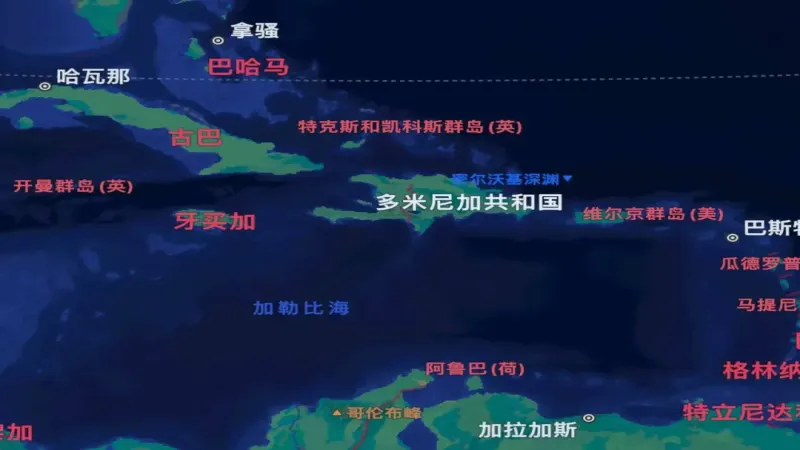
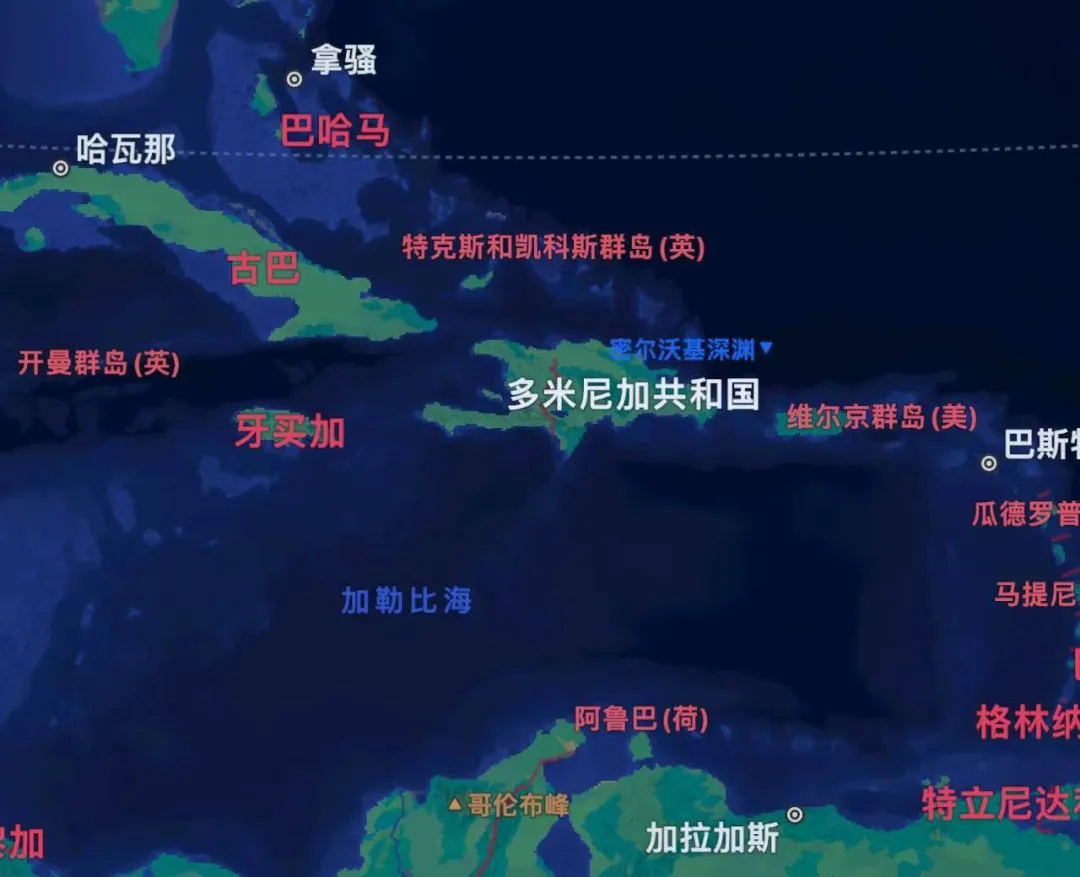
The Dominican Republic is located on the eastern side of the Caribbean island of Hispaniola, bordering Haiti to the west. The two countries share the same island. To the south lies the Caribbean Sea, to the north the Atlantic Ocean, and to the east, across the Mona Passage, is Puerto Rico. The country's total territory is 48,734 square kilometers.
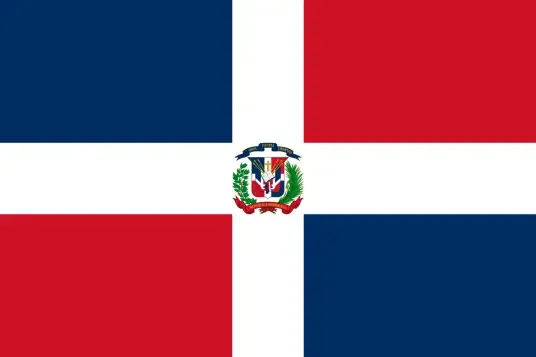
The national flag of the Dominican Republic is rectangular. A broad white cross divides the flag into four equal horizontal rectangles. The upper left and lower right areas are blue, while the upper right and lower left areas are red. At the intersection of the white cross is the national emblem. Red symbolizes the arduous struggle and the blood of those who sacrificed for the nation's founders in their pursuit of freedom and independence, blue represents freedom, and the white cross symbolizes religious faith, while also embodying the spirit of the people's struggle and sacrifice.
The shield emblem at the center of the national flag is composed of the flag's colors and patterns. In the center of the shield is a Bible, with a yellow cross above it, indicating that most citizens believe in Catholicism. On each side of the Bible hangs a national flag, symbolizing the people's determination to defend national sovereignty. The shield emblem is decorated on both sides with laurel and palm branches. The upper blue ribbon bears the Spanish inscription "God, Fatherland, Liberty," while the lower red ribbon reads "Dominican Republic."
Four major mountain ranges are distributed across the Dominican Republic: the Northern Cordillera, which starts from Monte Cristi near the Haitian border in the west and extends northeast to the Samaná Peninsula; the Central Cordillera, which runs across from the west to the center of the island, where the island's four highest peaks are located; and in the south, the Neiba Range and the Bahoruco Range. The northern and eastern parts of the country have a tropical rainforest climate, while the southwest has a tropical savanna climate. The average annual temperature is 25 to 30°C, and the average annual rainfall is 1,350 millimeters. Fertile soil, abundant rainfall, and mountainous terrain provide ideal conditions for coffee cultivation.
Coffee-producing regions and cultivated varieties
Coffee cultivation in the Dominican Republic is mainly distributed in the Central Cordillera region, along the Caribbean coast, and in the southwestern region. Front Street Coffee also continues to pay attention to the coffee performance of this producing country.
Barahona Province: Located in southwestern Dominican Republic, coffee farms are mostly concentrated around the Bahoruco Range. Although the altitude is not particularly high, the lower latitude and ample sunlight still make the coffee quality excellent, with the aroma of island coffee and a smooth taste. The altitude is about 600 to 1,300 meters, and the main cultivated varieties are Typica (80%) and Caturra (20%).
Cibao: Located in northern Dominican Republic, in the river valley between the Northern Cordillera and the Central Cordillera. The altitude is 400 to 1,500 meters, and the main cultivated varieties are Typica (90%) and Caturra (10%).
Central Cordillera: As the highest mountain range in the Dominican Republic, with an altitude between 600 and 1,500 meters, coffee beans from this producing region are plump, with bright acidity, a fuller body, and a fruity sweet aftertaste in the finish. The main varieties grown are Typica (30%), Caturra (65%), and Catuai (5%).
Neyba: Located in southwestern Dominican Republic, most coffee is grown in the Neyba mountains at an altitude of 700 to 1,400 meters. This may be the country's earliest coffee-growing area, and the main varieties are Typica (50%) and Caturra (50%).
Valdesia: This producing region is the most well-known within the Dominican Republic and has legal appellation status (Santo Domingo, the country's former name). It enjoys a good reputation and can therefore sell at higher prices. The altitude ranges from 500 to 1,100 meters, and the main cultivated varieties are Typica (40%) and Caturra (60%).
The above content is compiled by CoffeeHunters, a coffee news website.


