








How does coffee extraction change when you adjust strength?
Pour-over strength is usually adjusted through the coffee-to-water ratio: use less water for a stronger cup, more water for a weaker one. Within a normal range, such as shifting a 1:15 ratio to 1:14 or 1:16, the change is small and predictable. Push the ratio further, though, and coffee extraction yield shifts too, which can pull the flavor toward under-extraction or over-extraction.
The practical fix is to pair any ratio change with adjustments to water temperature or grind size, so the extraction stays balanced. A 1:15 starting ratio, moderate water temperature and a consistent grind give a stable baseline. When a cup still tastes off, diluting with a little water after brewing, known as bypass, is a simple way to lower strength without reworking the recipe.
In the world of pour-over coffee, adjusting strength seems simple—want it stronger, use less water; want it weaker, use more water. However, when the change in coffee-to-water ratio goes beyond a reasonable range, the extraction yield will also change, thereby affecting the overall flavor of the coffee. This article uses the 1:15 coffee-to-water ratio scheme commonly used by Front Street Coffee as an example to explain in detail how to adjust strength while coordinating parameters such as water temperature and grind size to avoid under-extraction or over-extraction. In addition, it also introduces a simple method of diluting strength by adding water (By pass), and reminds readers of the precautions during operation. Whether you are pursuing a rich taste or a light flavor, these practical tips can help you control every cup of coffee more precisely.
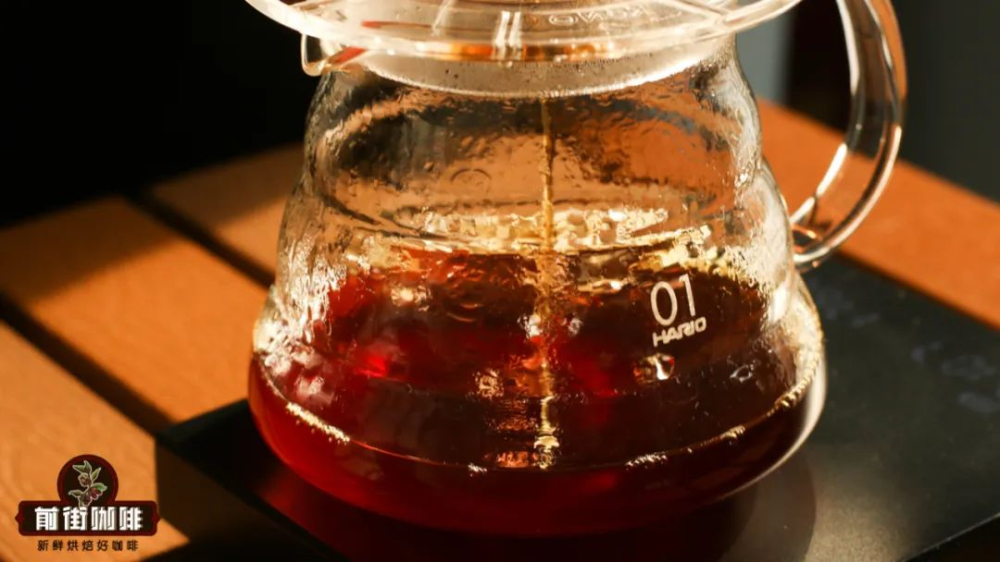
If you want it stronger, then pour a little more water; if you want it weaker, then pour a little less water. There is no problem with that. But the problem is that when you feel the water you added or reduced still does not extract the strength you want, and you want to increase the intensity, then the problem arises!
Take the extraction scheme most commonly used by Front Street Coffee as an example. In Front Street's scheme, the coffee-to-water ratio is 1:15. If you want it stronger, Front Street will adjust it to 1:14 to amplify the strength. If you want it weaker, it will reduce the coffee-to-water ratio to 1:16 to dilute the taste. These are all within a relatively reasonable range for this scheme. However, if on this basis you want to further increase or decrease the coffee-to-water ratio, then Front Street does not recommend adjusting only the coffee-to-water ratio!
The coffee-to-water ratio is an important member of the current brewing scheme. Every parameter in the scheme is crucial; they are closely linked and none can be missing. Therefore, small changes will not have much impact. But if the adjustment range is too large, then the extraction yield will also be changed. For some beans that are difficult to extract or not resistant to extraction, a change in extraction yield can easily bring negative experiences such as under-extraction or over-extraction. Therefore, while changing the coffee-to-water ratio, it is best to also make some adjustments to the water temperature or grind size.
Still taking Front Street's extraction scheme as an example, if we want to adjust the coffee-to-water ratio in the original extraction scheme from 1:15 to 1:13 to make the coffee taste very rich, then we must increase the extraction yield through water temperature or grinding.
Because reducing 2 parts of hot water will also reduce the extraction efficiency brought by those 2 parts of hot water. If the grind or water temperature is not adjusted, the coffee can easily show under-extraction phenomena such as a strong front and weak finish, with no aftertaste. So the correct approach is to increase the water temperature by 1–2°C, or make the grind one step finer. In this way, while increasing the strength, the coffee's extraction yield can also be ensured!
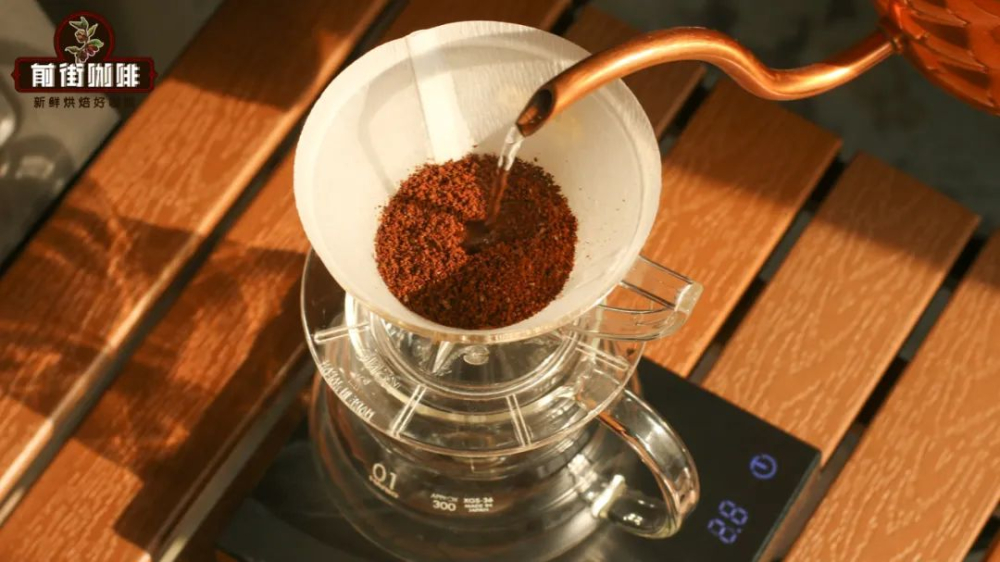
And if you want the coffee to be weaker, it is very simple. It can be adjusted from two aspects in total. The first is that you can achieve the effect of diluting the strength by reducing the coffee-to-water ratio. But greatly reducing the coffee-to-water ratio can easily make the coffee extraction efficiency too high and extract off-flavors. Therefore, on the basis of reducing the coffee-to-water ratio, we can appropriately lower the water temperature by 1–2°C, or make the grind one step coarser, to correct the excess extraction yield~
The second is after regular brewing, diluting by adding water (By pass)~ Front Street just shared this a few days ago. Interested friends can scroll back a bit~
Finally, Front Street wants to remind friends who add water: 10–20 ml of water is already enough to dilute quite a lot of coffee strength. So when doing By pass, use as little hot water as possible to blend, and after tasting decide whether it still needs dilution. In this way, you will not end up with a weak, watery coffee because too much water was added~
- END -
The above content is compiled by CoffeeHunters, a coffee news website.


