







Why does coffee ole separate into oil and water?
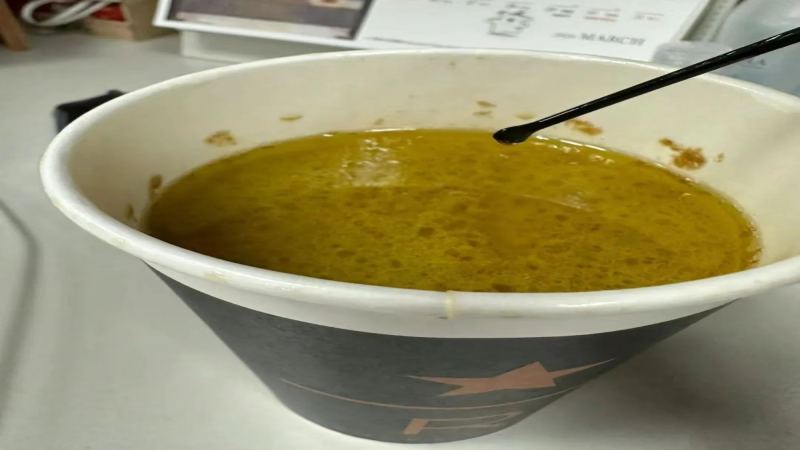
Starbucks' olive oil coffee, often shortened to coffee ole, separates into a visible oil layer and darker liquid when left to sit. Customers report a thick film of oil rising to the surface within about an hour, and stirring does not fully disperse it. The drink itself is an olive oil latte made with oat milk, so the oil naturally floats as the mixture cools and stands.
Reviews since launch have been mixed: some drinkers praise the aroma and smooth mouthfeel, while others notice nothing unusual and report no separation at all. That split may come down to how much oat milk and olive oil each serving contains, plus how long the cup sits before drinking. Separation alone is not proof of a preparation error.
It has been over a week since Starbucks' olive oil coffee hit the market, and consumer reviews are sharply divided. Some people love the aroma and smooth mouthfeel of the olive oil, while others find it nothing special. Recently, however, some customers have noticed that this drink develops a noticeable layer separation when left sitting for a while—a thick layer of oil floats to the surface, and even stirring won't disperse it, making it look reminiscent of various soups. Is this a mistake in the preparation process, or is it simply the oil naturally rising after sitting? Netizens are divided in their opinions, and the discussion is heated.
▲
Click to follow | Daily specialty coffee culture magazine Coffee Workshop
It has been more than a week since Starbucks' former chief Howard personally threw his weight behind the promotion of olive oil coffee in the Chinese market. Many customers, out of curiosity—some wanting to experience firsthand what makes this so-called "revolutionary" new product unique, and others drawn by the "intestinal speedway" experience circulating online—have been placing orders to try it.
Consumer feedback on this drink has been mixed, to say the least. Some people really appreciate the fragrance the olive oil brings and that rich, silky mouthfeel; others feel it's not as impressive as overseas netizens described, that they had no reaction at all after drinking it, and could even go for another cup.
However, recently a customer who bought an olive oil latte noticed that if the drink is left sitting too long, it develops a very obvious layer separation. According to this customer, when she first received the freshly made olive oil latte, she was worried about burning her mouth because the drink was very hot, so she removed the lid and set it aside to cool. When she was about to drink it after nearly an hour, what she saw made her afraid to take a sip—a thick, oddly colored layer of oil had floated to the surface of the coffee, and even stirring couldn't dissolve it. She didn't know what to do.
Seeing that glistening layer of floating oil through the screen, most netizens were shocked. Some bluntly said, "Seeing this, I thought I was drinking olive oil."
But other consumers reported that the olive oil latte they drank did not show similar separation. This may be because the product itself uses oat milk that contains a certain amount of fat, and when mixed with olive oil, a hot drink typically only shows a faint sheen of oil on the surface. Even after sitting for a long time, there is only a thin layer of oil on the surface, far from being as "intimidating" as in the picture.
Therefore, some speculated that the reason this drink turned out this way was likely a problem with a certain step in the barista's preparation. "It looks like a step was done wrong…" "It shouldn't be like this, have them remake a cup." "This is the barista's fault—a normal hot olive oil oat latte looks no different from a regular latte."
Others tend to believe the problem was that the customer left the drink sitting too long. When the temperature of the entire cup drops, the oil and water separate, and layering occurs. A similar situation appears with the iced version of Oleato Iced Shaken Espresso—because the overall temperature is low, many consumers report varying thicknesses of oil layers after purchase.
In response, netizens have been complaining that after the oil-water separation, this cup really doesn't look like a latte—it somewhat resembles soups like "sour fish soup base," "curry-flavored oden broth," "beef offal soup," "pickled vegetable soup," or "old chicken soup." If you imagine it as a bowl of Cantonese tonic soup, maybe it wouldn't be so hard to swallow. Some also suggested trying to skim off that glistening layer of floating oil with the oil-absorbing paper used when making soup—an olive oil latte with the oil removed might taste much better~
Image source: Xiaohongshu
Disclaimer: Some images in this article are from the internet. For some content on the website, such as images, we will respect the original author's copyright and indicate the source. However, due to the large volume, some images and text may not have been credited in time. Please forgive us. If the original author has any disputes, they can contact the website to handle it. Once verified, we will correct it immediately. Compiled and edited by "Coffee Workshop." Please indicate the source when reposting. If there is any infringement, please inform us for removal. Thank you~!
The above content is compiled by CoffeeHunters, a coffee news website.


