








Why does a coffee enthusiast swirl the sharing pitcher?
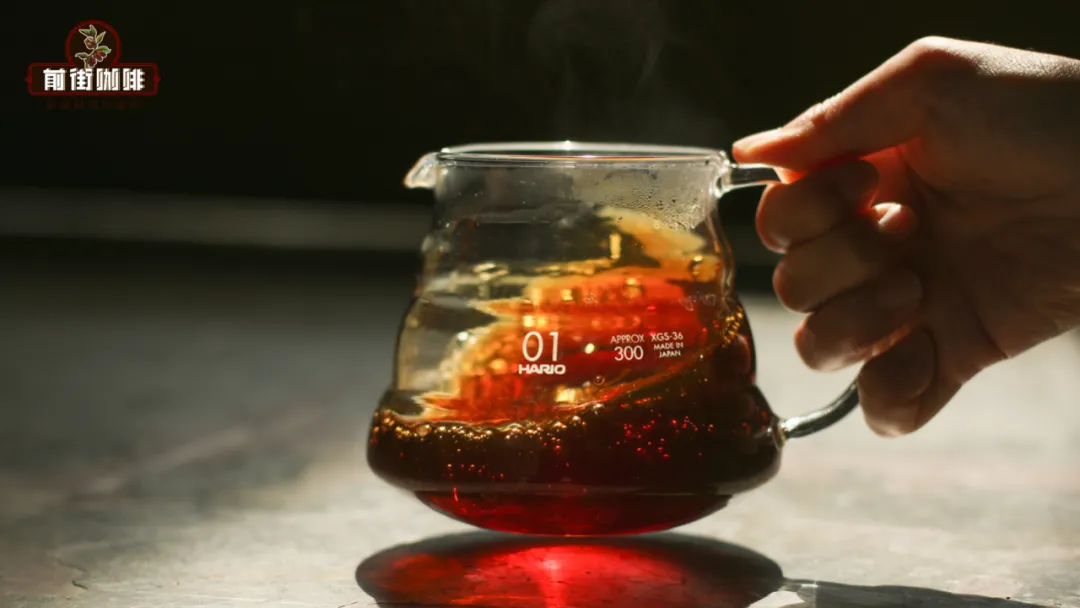
Swirling the sharing pitcher after a pour-over mixes the liquid back together. During brewing, the coffee comes out in stages, so early and late portions differ in concentration. Left alone, those layers stay somewhat separate in the carafe. A few shakes recombine them so each cup poured tastes the same. It is not done to release aroma the way decanting wine is.
A test with 15 grams of coffee, an EK43 at setting 10, a 1:15 ratio, 92°C water and a three-pour V60 method made the point. The unshaken liquid measured 1.09% concentration; after swirling the carafe, the same coffee read 1.21%. Espresso and lattes are stirred instead, because shaking would wreck the crema and the milk texture built during steaming.
Many coffee enthusiasts have noticed that after finishing a pour-over, the barista picks up the sharing carafe and shakes it a few times before pouring for the customer. What exactly is the reasoning behind this action? Is it the same as decanting wine? This article uses measured data to reveal the true purpose of shaking pour-over coffee—to allow the different concentrations of coffee liquid extracted in stages to recombine evenly, rather than to release aroma like decanting. It will also explain why espresso and lattes cannot be mixed by shaking, but must be stirred. Front Street Coffee provides a complete brewing experiment and parameters in the article to help readers understand this operation from the perspective of concentration changes.

In everyday cafe settings, everyone has probably seen this scene: after finishing a pour-over, the barista picks up the sharing carafe and shakes it up and down a few times, then pours the coffee into a cup and hands it to the customer. Has anyone ever wondered what this shaking action is really for?
Why does it need a shake after brewing is finished?
Front Street has actually mentioned in previous content that shaken pour-over coffee does taste better than unshaken. However, its principle is not the same as wine—wine is shaken to let the liquid contact the air and release aroma; whereas shaking coffee aims to remix the liquid in the carafe evenly. This sentence may be a bit hard to understand, so let's use a brewing experiment to explain it concretely.
The comparison in this experiment is the difference in coffee concentration with and without shaking after pour-over is finished. The method is: after brewing is complete, do not shake first, take a sample directly to measure concentration; after measuring, shake the coffee in the carafe evenly, measure again, and see how much the two results differ.
The brewing conditions are as follows: 15 grams of coffee beans, EK43 grinder setting 10, coffee-to-water ratio 1:15, water temperature 92°C, three-pour method, V60 dripper. The specific brewing process will not be repeated here.
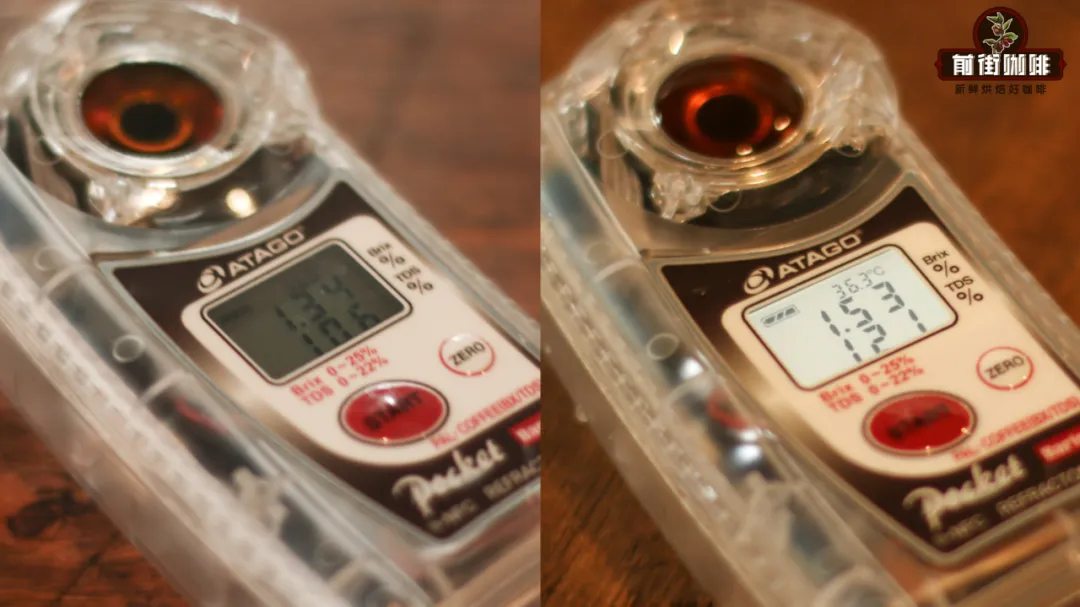
After removing the dripper, pour the coffee liquid directly into the concentration meter to measure, and the reading is 1.09%.
Then shake the sharing carafe, take another sample and measure, and the concentration becomes 1.21%. The two results are clearly different.
The fundamental reason for this difference is that during extraction, the rate at which coffee substances are released is not uniform. The early stage is the peak of substance dissolution, and the later it goes, the fewer substances are extracted. Front Street's second experiment in this article can further illustrate this point.
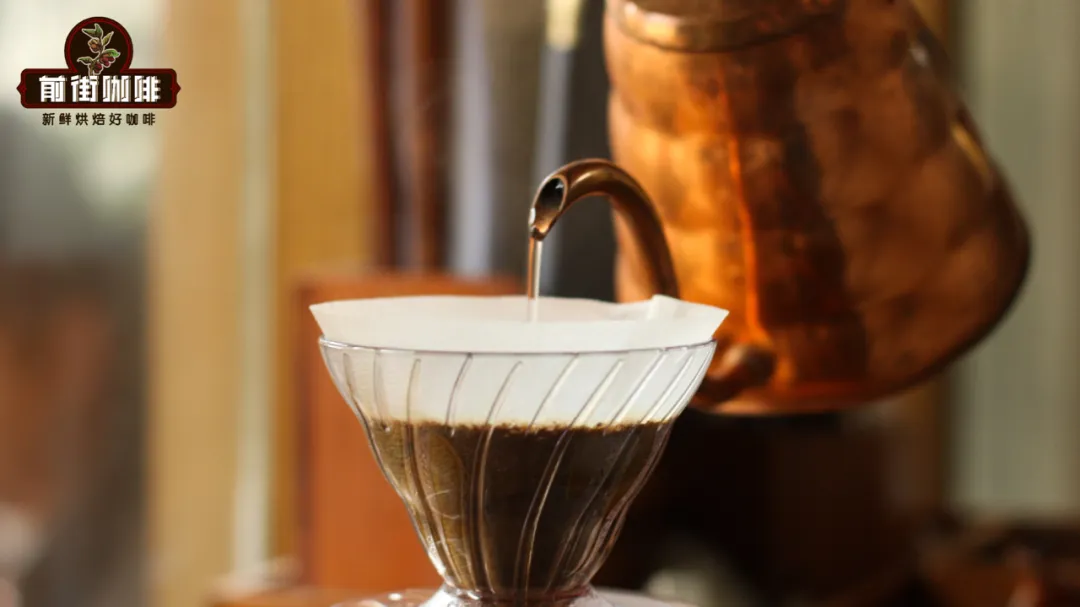
According to the coffee-to-liquid ratio, Front Street used three cups to separately catch the dripping coffee liquid, 70 milliliters each (that is, once the first cup reaches the target liquid weight, immediately switch to a new cup and continue catching). In terms of liquid color, the difference among the three cups is very obvious: the first cup is the darkest, the second is in the middle, and the third is the lightest. The flavor performance follows the same pattern: the first cup is the strongest, the second is slightly weaker, and the third is the most bland.
From this, it can be concluded that at the very beginning of brewing, the extracted coffee concentration is the highest, which is related to the higher extraction efficiency in the early stage. As the soluble substances in the coffee grounds gradually decrease, extraction efficiency declines, and concentration decreases accordingly. Because the liquids received at different stages contain different concentrations of substances, they will not automatically mix evenly after brewing is finished, so we need to shake them afterward to let them merge again into a cup of coffee with moderate concentration.
One point worth noting
However, Front Street does not recommend shaking all types of coffee. For example, espresso is not suitable. Most espresso drinks cannot achieve even mixing by shaking, because density differences exist, and a stronger method (such as stirring) is required to mix them evenly. Whether it is the coffee liquid and crema in espresso, or the milk and espresso in a latte, both must be stirred to obtain a consistent blended result.
Front Street Coffee
No. 10, Bao'an Qian Street, Yandun Road, Dongshankou, Yuexiu District, Guangzhou, Guangdong Province
The above content is compiled by CoffeeHunters, a coffee news website.


