







How did robusta coffee beans drive Brazil's March exports?
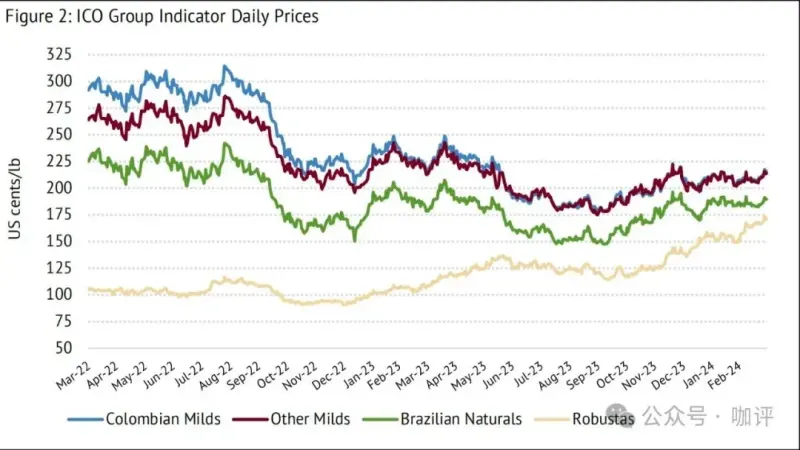
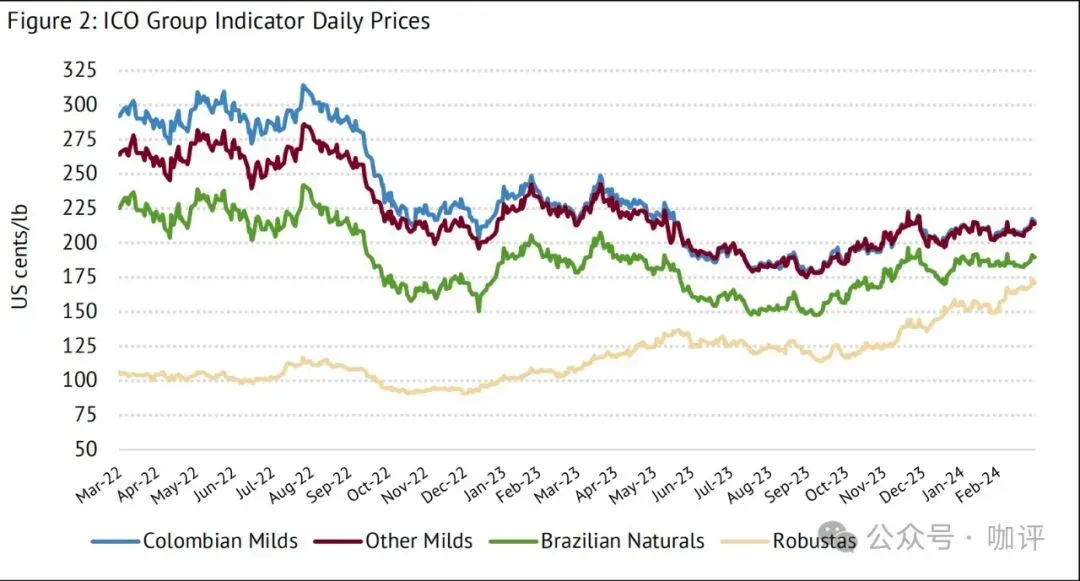
Brazil exported 4.293 million bags of coffee in March 2024, up 37.8% year on year, according to Cecafe data. Robusta coffee beans led the gain, surging nearly sixfold as lower production in Asian origins and a sharp rise in Mexican imports tightened supply. Futures prices for robusta reached their highest level since October 1994, and Vietnamese and Brazilian spot quotes climbed in tandem.
The rally pushed growers to sell down inventories and pre-sell new-crop beans. Arabica coffee exports from January to March totaled 9.19 million bags, up 27.8% from a year earlier, while Brazil's domestic robusta spot price broke 1,000 reais per 60-kg bag for the first time. Delays at the Port of Santos and labor shortages from a dengue outbreak still cloud future shipments.
Recently, international coffee futures prices have continued to climb, with Robusta hitting its highest level since October 1994, while spot prices in Vietnam and Brazil have soared in tandem. Spurred by these prices, Brazilian growers have actively sold off their inventories and pre-sold beans from the new crop season. Exports in March reached 4.293 million bags, up 37.8% year-on-year. Among these, Robusta exports surged nearly sixfold, becoming the biggest highlight, driven mainly by reduced production in Asian origins and a sharp rise in Mexican imports. However, the Port of Santos still faces delays of up to 80%, and labor shortages caused by the dengue fever outbreak continue to create uncertainty for future exports.
Recently, the international coffee futures market has been on the rise, a trend that has also pushed up domestic spot prices in several countries. The price of Robusta coffee beans has climbed to its peak since October 1994, with local quotes in Vietnam rising to 101 million to 104 million Vietnamese dong per ton (equivalent to 29,200 to 30,000 RMB). Meanwhile, prices in the Brazilian market have also seen significant increases.
In Minas Gerais, Brazil's largest coffee-growing region, the spot price for Good Cup Arabica, according to the country's grading standards, is 1,125 reais per 60-kg bag (about 1,606 RMB, 222 USD). Compared with last year's 1,065 reais, this represents an increase of 5.6%, a level close to that seen in 2022 after frost and drought reduced production.
The price rise has prompted many coffee growers to accelerate their sales; they have not only emptied existing inventories but also pre-sold beans from the new crop season. The pre-sale price for Arabica delivered in September is set at 1,105 to 1,115 reais per 60-kg bag (about 1,580 RMB, 219 USD). In addition, domestic Robusta spot prices in Brazil have also set a historical record, breaking the 1,000 mark for the first time and reaching 1,025 reais per 60-kg bag (about 1,463 RMB, 202 USD).
In terms of exports, Brazil has recently performed impressively. According to export data for March released by Cecafe, Brazil's total coffee exports in March 2024 were 4.293 million bags (60 kg each), an increase of 37.8% compared with the same period last year. From January to March this year, Arabica coffee exports were 9.19 million bags, up 27.8% compared with the first quarter of last year; Robusta exports were 1.872 million bags, with a year-on-year increase of 591.9%.
The main reason Robusta exports have grown so rapidly is the decline in Robusta production in Asian origins. According to local reports in Indonesia, the El Niño phenomenon has had a major impact on the country's coffee production, while rising domestic coffee consumption in Indonesia has also reduced the volume available for export. On the other hand, Mexico's imports have increased sharply, jumping to ninth place among Brazil's top ten importing countries, with 317,360 bags of coffee imported from Brazil, an increase of 721.5% compared with the first quarter of 2023. Most of this was Robusta coffee beans, mainly used for instant coffee production.
However, Brazilian coffee exports are still facing port bottlenecks. The delay rate at the Port of Santos, the largest coffee export port, remains as high as 80%. At the same time, labor shortages are becoming increasingly prominent, mainly due to the spread of the dengue fever outbreak. According to data from Brazil's Ministry of Health, deaths from dengue fever in 2024 have risen to 1,116 cases, with another 1,807 under investigation, a figure that has already exceeded the total annual deaths of previous years. Infection cases exceed 2 million, 19% higher than the full-year record for 2023. As a result, labor shortages have appeared in many places. Due to limited foreign vaccine production capacity and tight supply, currently only one vaccine from Japan has been approved for entry into Brazil, while the vaccine from Brazil's own research institute still requires waiting.
The above content is compiled by CoffeeHunters, a coffee news website.


