







What makes Yirgacheffe and Kochere coffee distinctive?
Yirgacheffe is a highland Ethiopian region known for floral and citrus notes, and it became separate from Sidamo before gaining its own name. This guide traces the country's geography, cool climate and garden-style farming, then focuses on the Kochere sub-region, where high altitude and washed processing yield a clean, sweet cup. Front Street Coffee's Kochere washed beans serve as the tasting example.
Ethiopia sits in northeastern Africa, its highlands averaging about 2,450 meters with roughly 16°C annual temperatures and 1,237 mm of rain. Coffee is mostly grown by smallholders in garden plots beside other crops. The name coffee traces to the kaffa forest in the southwest, and the country holds many native varieties that shape Yirgacheffe's character.
Ethiopia is widely recognized as the birthplace of coffee, and its Yirgacheffe region is famous for its distinctive floral and citrus notes. This article begins with the country's geography, climate, and garden cultivation model, then traces how Yirgacheffe became independent from Sidamo, and takes a deeper look at its sub-region Kochere, explaining how high altitude and washed processing give the coffee its clean, sweet character. It also introduces Front Street Coffee's Kochere washed beans, including the region, processing station, altitude, variety, flavor, and brewing suggestions, offering coffee lovers a complete reference on origin and tasting.
Ethiopian coffee enjoys a very strong reputation in the international market, and the coffee tree itself first emerged on this land, so it is widely regarded as the birthplace of coffee. A large number of native coffee varieties are found here, and the name "coffee" also comes from the Kaffa forest in southwestern Ethiopia. The reason coffee could take root locally is inseparable from suitable geographical conditions and climate.
Ethiopia
The country is located in northeastern Africa, bordering Djibouti, Somalia, Sudan, South Sudan, Kenya, and Eritrea. Its terrain is dominated by mountains and plateaus, with most of the area belonging to the Ethiopian Highlands; the central and western parts form the core of the plateau, accounting for about two-thirds of the country's area. The East African Rift Valley runs through the entire territory from north to south, and the mountains have an average altitude of nearly 3,000 meters.
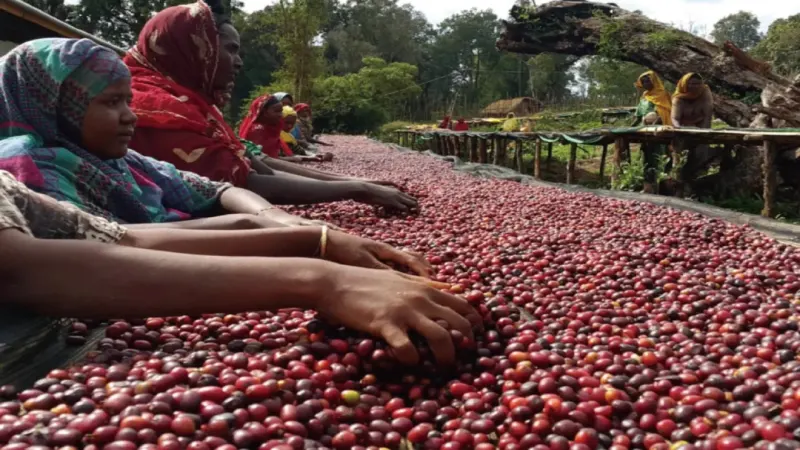
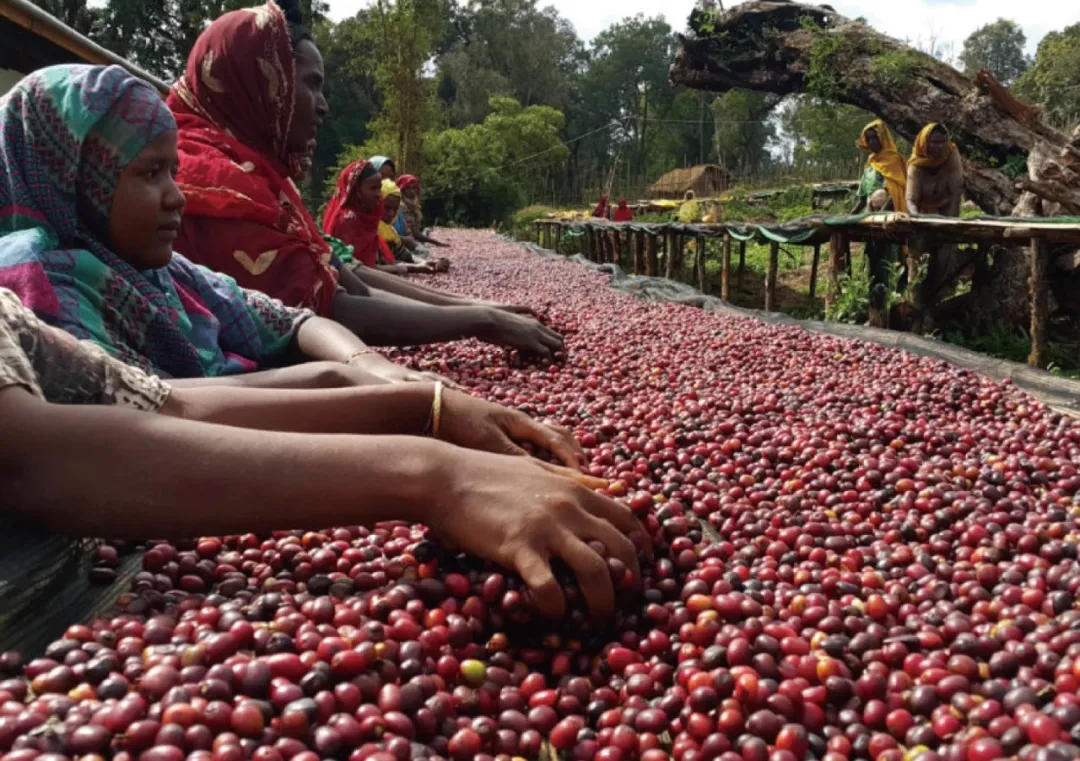
Ethiopia has an average altitude of about 2,450 meters. Influenced by the high altitude, the annual average temperature is about 16°C, and the climate stays cool year-round. The year is roughly divided into a dry season and a rainy season, with annual rainfall reaching 1,237 mm. The country is rich in freshwater resources and is known as the "Water Tower of East Africa." Together with more than 50 volcanoes, abundant water sources, and high-altitude mountainous areas, this creates very ideal conditions for coffee cultivation. However, because its industrial base is weak and its economy is mainly agricultural, coffee is mostly grown by smallholder farmers in a garden-style (homestead-style) model. Coffee is often planted alongside other crops near farmers' homes, cared for daily by the farmers, picked by them during harvest season, and then sold to middlemen or sent directly to nearby processing stations. Coffee produced under this model accounts for more than half of Ethiopia's total coffee output.
Yirgacheffe Region
Ethiopia has many famous coffee regions, such as Sidamo, Jima, Harrar, Guji, and Yirgacheffe. Among them, Guji and Yirgacheffe were originally both part of the Sidamo region, and later became independent regions because of their unique flavors.
Yirgacheffe is located on the eastern edge of the East African Rift Valley. It is a small town in the northwest of Sidamo Province and one of the highest-altitude coffee regions in Ethiopia, ranging between 1,750 and 2,200 meters. The local climate is humid and mild, with abundant rainfall, fertile soil, and ample sunshine, providing a good foundation for coffee cultivation. Yirgacheffe originally belonged to the Sidamo region, but in 1972 the government introduced washed processing to improve coffee quality. After washing, Yirgacheffe showed striking flavors such as white florals, citric acidity, and a fresh green tea character. Although it shares similarities with Sidamo coffee, there are clear differences, so Yirgacheffe was designated as an independent region. Front Street Coffee (FrontStreet Coffee) has a washed Ethiopian Yirgacheffe coffee bean. As a representative entry-level selection, it has jasmine aromas, lemon-like acidity, and fruit flavors such as orange and berries, with a refreshing and silky mouthfeel.
Kochere Sub-region
The Yirgacheffe region does not only include the town of Yirgacheffe, but also covers sub-regions such as Wenago, Kochere, Gedeb, and Gelena Abaya.
Kochere is located about 25 kilometers southeast of Yirgacheffe. It is a small sub-region with an altitude between 1,650 and 1,800 meters. It is relatively wealthy because of the coffee industry, and thanks to the fame of the Yirgacheffe region, local processing equipment is also more advanced. With improved equipment conditions, the washed coffee produced in this area shows a high standard, with sweetness and citrus-like complexity, clean and sweet.
Front Street Coffee (FrontStreet Coffee) Ethiopia Yirgacheffe Kochere Coffee Beans Region: Yirgacheffe Region Estate/Processing Station: Alim Processing Station Altitude: 1,650-1,800 meters Variety: Heirloom Processing Method: Washed Flavor: Jasmine, Lemon, Citrus, Tropical Fruit
Front Street Coffee (FrontStreet Coffee)'s Yirgacheffe Kochere coffee beans are washed and lightly roasted. Front Street uses a V60 with a 1:15 ratio and 92°C water temperature for brewing. You can smell the aroma of jasmine, and on the palate there is tropical fruit-like sweet acidity, along with lemon and citrus flavors, and the overall mouthfeel is relatively smooth.
The above content is compiled by CoffeeHunters, a coffee news website.


