







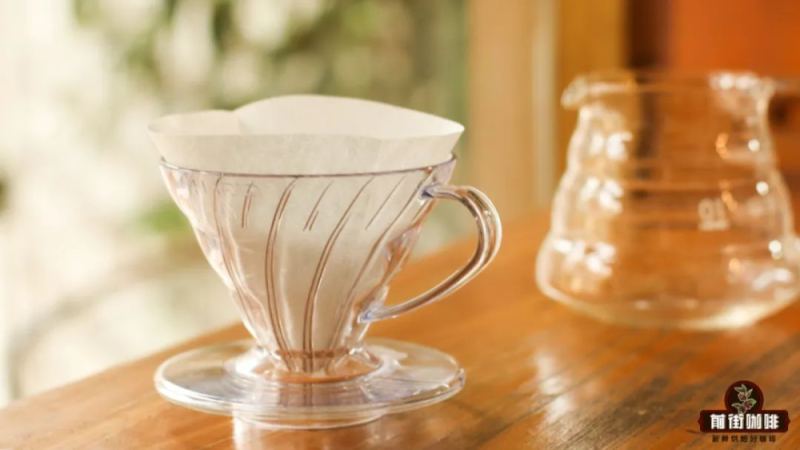
How does a wire spring portable dripper change pour-over brewing?
A wire spring portable dripper holds the paper filter but barely steers water flow, so it needs its own pour-over settings. In a Front Street test with Colombia Frontera Geisha at 15g dose, 1:15 ratio, 92C water, Ek43 setting 10 and a three-pour method, total brew time reached 2 minutes 50 seconds and the cup tasted bitter, muddled, and thin.
Adjust grind coarser and pour more gently to speed drainage, and consider a shorter ratio or fewer pours. Practice methods like those used with a drip coffee maker to steady flow. The wire body also sits unevenly on a sharing carafe because the base and cone share one wire, so keep it level or brew into a stable vessel.
There is a dripper whose entire body is formed from a single wire, with an extremely minimal function—it only holds the filter paper in place and barely interferes with the flow of water. It can be stretched and compressed, and once folded down it is light and portable, with a friendly price, but when placed on a sharing carafe it tilts to one side. What difference would there be in the flavor of coffee brewed with it compared with regular drippers such as the V60? Front Street did a comparative brew using Colombia·Frontera Geisha: 15g dose, 1:15 brew ratio, 92°C water temperature, Ek43 setting 10, three-pour method. The total time was 2 minutes 50 seconds, the flow rate was noticeably slow, and the taste was bitter with some muddled notes and a thin mouthfeel. The problem is not the dripper itself, but that the parameters and technique need to be matched anew.
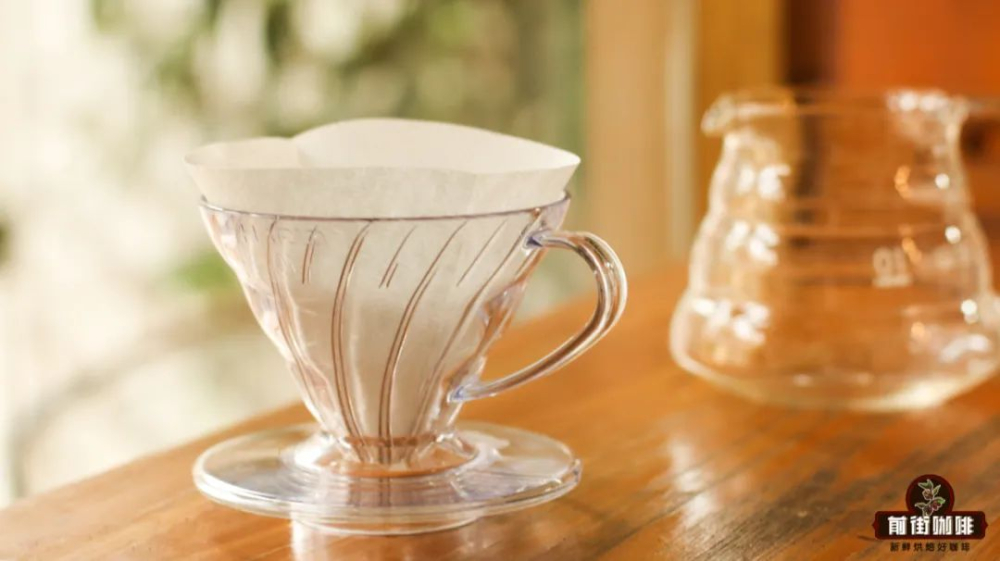
Suppose there were a dripper whose only job is to support the filter paper, with no extra structure to steer the water flow or intervene in extraction. Then what differences would the coffee brewed with it show compared with common drippers? As it happens, Front Street has just such an “old item” on hand that fits the description: its contact area with the filter paper is not especially large, and its interference with brewing is very limited. Its core function is simply to support the filter paper—it is the “portable dripper” bent from a single wire!
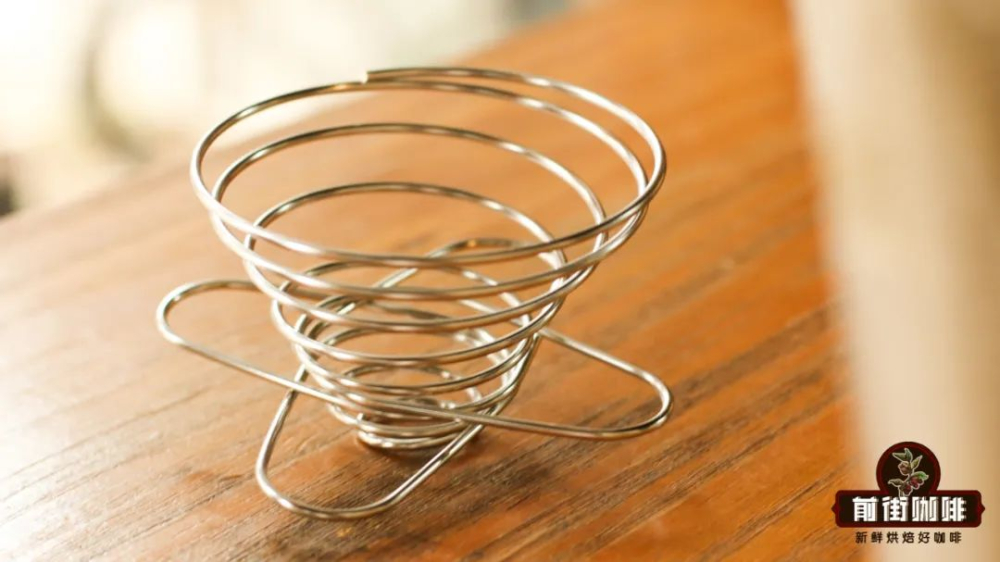
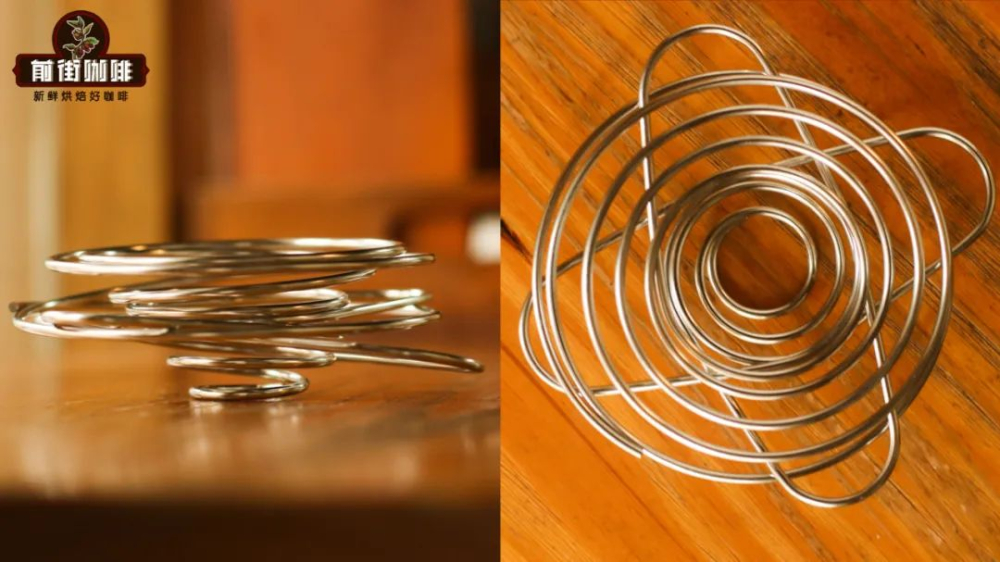
A dripper made from a single wire That’s right, as the photo shows, the entire dripper is formed by one piece of wire, and the broken ends at both ends are clearly visible. It has a conical structure, so the filter paper it uses is also a cone-shaped type.
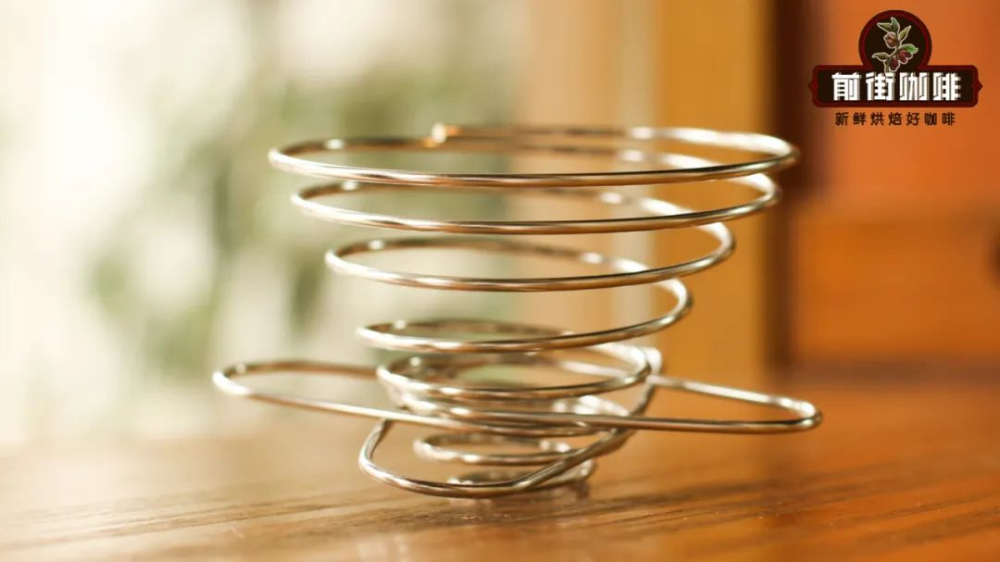
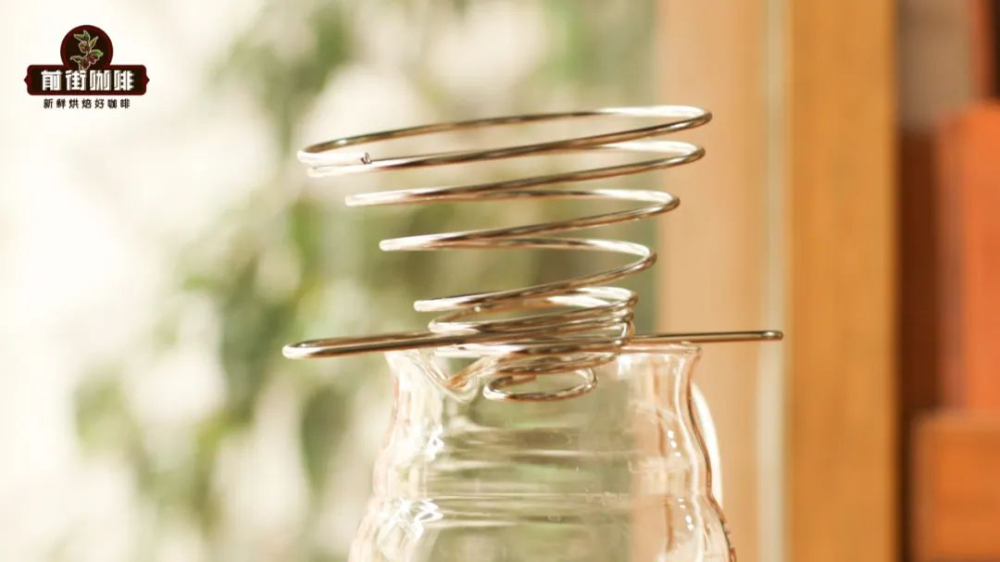
In addition, it uses a spring-like structure and can be freely stretched and deformed. Once the external force is removed, the dripper returns to its original shape by its own elasticity. Interestingly, the spring design is precisely for portability: when not in use, press it downward and push the wire at the top down onto the supporting base, and a light little dripper is thus “transformed” and ready.
Lightweight, easy to carry, and affordable—these are the standout advantages of this dripper. But beyond the advantages there are also shortcomings: because the body and the base are made from the same wire, they are not on the same horizontal plane. When you set it on a sharing carafe, the problem shows itself—the whole dripper tilts to one side.
Having covered the apparent pros and cons, let’s actually use it and see what characteristics the coffee it brews has. Brewing experiment The bean Front Street chose this time is Colombia·Frontera Geisha. When brewed with a V60, it performed as: honeysuckle, citrus, red pomelo. If following the V60 approach, the parameters are as follows: Dose: 15g Grind: Ek43 setting 10, 75% passing through a No. 20 sieve Brew ratio: 1:15 Water temperature: 92°C Method: three-pour Before brewing, first wet the filter paper with a small amount of hot water and warm the cup at the same time. As can be seen in the picture below, after absorbing water the filter paper almost completely clings to the wire! Then begin the actual brew.
First step, pour 30ml, twice the dose of water, and bloom for 30 seconds. After the bloom is complete, pour the second stage of hot water, 120ml, in a steady circular motion around a large circle. When the water level is almost at the bottom, pour the final stage of hot water, 75ml, in a steady circular motion around a small circle. After the coffee finishes dripping, remove the dripper, and the brew is complete.
Total time: 2 minutes 50 seconds. Because there are no flow-guiding ribs, the flow rate is much slower than with a V60, and the time is naturally prolonged. As for the taste, Front Street guesses many friends would think this cup of coffee must be full of over-extracted bitterness, right? In fact, it is not only bitter, but bitter with some muddled notes, and the mouthfeel is quite thin.
The reason is that this cup of coffee was extracted extremely unevenly. With no wall contact and no raised ribs to guide the water flow, the hot water can only permeate straight downward under gravity, very slowly, causing part of the coffee grounds to be over-extracted. At the same time, pouring in too much hot water at once caused a large amount of hot water not to pass through the coffee bed, but instead to flow away along the filter paper around the sides, forming “bypass water.” This is what made the taste messy, bitter, and thin.
However, this is not a defect of the dripper itself; it is only that a brewing plan unsuitable for it was applied, which caused uneven extraction. Grind coarser, lower the water temperature, and change the previous fast pour with a large stream to a slow, fine stream, and a qualified pour-over coffee will naturally follow. Apart from being relatively demanding in technique, this dripper is almost impeccable in value for money and portability. So Front Street believes there is no need to compare its performance with other drippers—different positioning means there is simply no need for comparison. - END - Front Street Coffee (FrontStreet Coffee)
No. 10, Bao’an Qian Street, Yandun Road, Dongshankou, Yuexiu District, Guangzhou, Guangdong Province
The above content is compiled by CoffeeHunters, a coffee news website.


