








What defines arabica coffee from Honduras?
Honduras divides its coffee country into six producing regions set by the Honduran Coffee Institute in 1970: Copan, Opalaca, Montecillos, Comayagua, Agalta, and El Paraiso. Each has its own altitude and terrain, with an average growing height around 1,100 meters. The country's arabica coffee production ranked second globally, and total output ranked sixth in 2020.
Most of the country's 280,000 hectares of coffee land belongs to small coffee farms under 3.5 hectares, which shapes how lots are grown and separated. Altitude ranges run roughly from 1,000 to 1,500 meters depending on the region. A sherry barrel-aged bean from Masaguara Moka Estate shows how fermentation can add whisky and wine notes to Honduran arabica coffee.
Honduras is located in northern Central America, with 80% of its terrain being mountainous. Its mild climate and abundant rainfall create an ideal environment for coffee cultivation. In 2020, the country's total coffee production ranked sixth globally, and its Arabica production ranked second in the world. Since the establishment of the Honduran Coffee Institute in 1970, the country has been divided into six major producing regions: Copan, Opalaca, Montecillos, Comayagua, Agalta, and El Paraiso, each with its own terroir personality. This article will introduce the altitude, location, and characteristics of these producing regions one by one, and focus on a Sherry coffee bean from Masaguara Moka Estate that Front Street Coffee has sourced, analyzing its whisky sherry wine barrel fermentation process and the unique cup flavor.

Honduras is located in northern Central America, bordered by the Pacific Ocean to the south, the Caribbean Sea to the north, Nicaragua and El Salvador to the southeast, and Guatemala to the west. Eighty percent of the country's land is mountainous, with the interior dominated by mountainous terrain.
Honduras has complex and varied terrain, rich climate types, mild and pleasant temperatures, and abundant rainfall. These conditions provide an ideal environment for coffee cultivation. The coffee industry plays a vital role in Honduras's economy. In 2020, its total coffee production ranked sixth globally, while its Arabica coffee production ranked second in the world.
Honduras has 280,000 hectares of coffee cultivation area, mainly small coffee farms, most of which are less than 3.5 hectares. In 1970, the Honduran Coffee Institute (IHCAFE) was formally established with the aim of improving coffee quality. The institution divided the country into six producing regions and set up coffee laboratories to provide technical support to producers.
These six producing regions are Copan, Opalaca, Montecillos, Comayagua, Agalta Tropical, and El Paraiso, with an average altitude of about 1,100 meters.
Copan
The Copan producing region is at an altitude of between 1,000 and 1,500 meters. It is located in Copan city in western Honduras, bordering Guatemala.
Opalaca
This producing region has the Opalaca mountain range running across its entire territory, at an altitude of 1,100 to 1,500 meters. It covers the southern coffee-producing area of Santa Barbara Department as well as the Intibuca and Lempira areas.
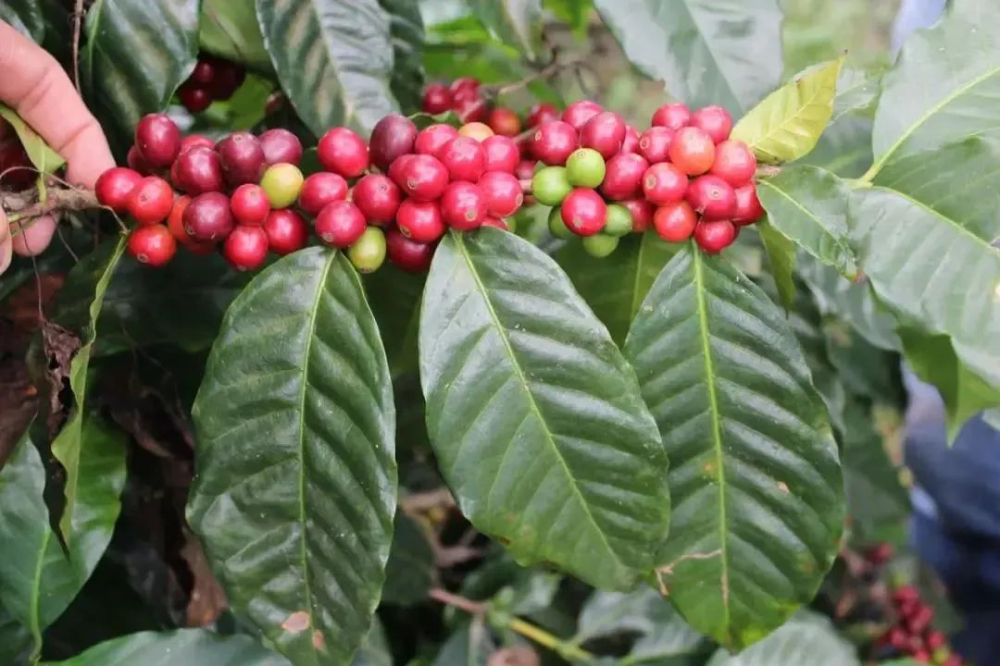
Comayagua
This producing region is located in west-central Honduras, with dense tropical rainforest vegetation, at an altitude of between 1,100 and 1,500 meters.
Agalta Tropical
This area is at an altitude of 1,000 to 1,400 meters, located in northern Honduras, and most of it is forest reserve.
El Paraiso
This area is at an altitude of 1,000 to 1,400 meters, and it is also Honduras's oldest and largest coffee-producing region.
Montecillos
This producing region is at a relatively high altitude, between 1,200 and 1,600 meters, and has many excellent sub-regions, among which Masaguara is particularly prominent.
Front Street Coffee has sourced a Sherry coffee bean from Masaguara Moka Estate, using a refined washed whisky sherry wine barrel fermentation process. The varieties are Caturra, Catuai, and Pacas. The wine barrel fermentation method for Honduran coffee beans was inspired by winemaking techniques. During the coffee fermentation process, the wine barrel allows a very small amount of air to pass through the barrel wall and seep into the barrel, causing the coffee beans to undergo moderate oxidation; the entry of an appropriate amount of oxygen also speeds up the fermentation process, softens tannic acid, and allows fresh fruit aromas to gradually develop into rich and varied mature wine aromas.
After brewing, it smells of vanilla and cream. On the palate, it presents flavors of whisky, berries, almonds, and dark chocolate, with a maple syrup-like sweet finish.
Disclaimer: Some images in this article are from the internet. For some content on the website, such as images, we will respect the original author's copyright and indicate the source. However, due to the large quantity, some images and texts may not have been credited in time. Please forgive us. If the original author has any dispute, they may contact the website for handling. Once verified, we will correct it immediately. Compiled and edited by "Coffee Review vdailycom". Please indicate the source when reposting. This article is intended to spread coffee culture. If there is any infringement, please inform us for deletion. Thank you~!
The above content is compiled by CoffeeHunters, a coffee news website.


