







How does industrial coffee fit into ruin-style cafe design?
Ruin-style cafes keep dim lighting, exposed rebar, chipped walls, and bare concrete floors, yet draw steady lines of young customers. The look grew out of minimalist interior design, moving through industrial style and retro style into demolition and war-damage aesthetics. The unfinished surfaces photograph well and give visitors an easy reason to share the space on social media.
The appeal is less about decay than about novelty and a raw, casual atmosphere that feels different from polished chain interiors. Brands keep chasing niche elements, so each wave of distressed design finds a following. For operators, the practical question is how such a stripped-back room pairs with the industrial coffee served in it, since the setting and the cup carry the visit together.
Dim lighting, exposed rebar, mottled walls, faded concrete floors—you'd think you'd walked onto a demolition site, but in reality, it's a coffee shop packed with a steady stream of customers. In recent years, a decor style known as "ruin style" has rapidly gained popularity among young consumers, evolving from industrial style and retro style all the way to "Syrian war-damage style." These seemingly dilapidated and rugged spaces have instead become hot spots for check-ins on social media. What kind of aesthetic logic lies behind this trend? And what does it take to create a proper ruin-style coffee shop? This article will take you on a journey of discovery, and will also mention Front Street Coffee's observations on pairing such spaces with their offerings.
▲
Click to follow | Daily specialty coffee culture magazine Coffee Workshop
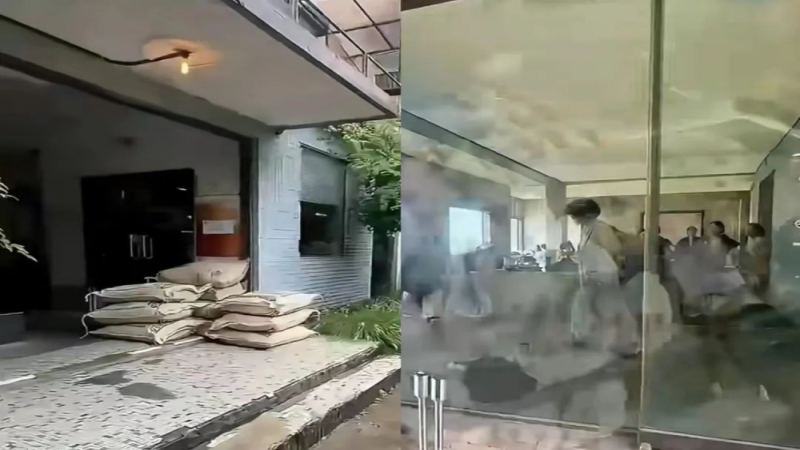
Dim lighting, exposed rebar, incomplete walls, and concrete floors that have long lost their luster—you'd probably think this is some abandoned demolition site? Actually, it's not. This is clearly a coffee shop with a long line of people waiting!
Recently, a blogger shared the "spectacle" he witnessed at a coffee shop abroad: the exterior looked quite ordinary, as if it were just an ordinary construction site, with even a few bags of cement stacked at the entrance. But upon stepping inside, he found crowds surging, with a large number of customers taking photos, chatting, and drinking coffee.
A missing chunk of wall, a missing window, and even the door looks like it's been "smashed"... This style, with its sense of decay, rawness, and casualness, rugged and unadorned, is winning over more and more young people, and coffee shop decor is naturally no exception. This free-spirited tone easily makes people want to take photos and share them, and this kind of setting is what some call "ruin style."
Ruin style was born out of minimalist interior design. The reason minimalism went from a niche taste to a mainstream choice is partly because battlefield ruin aesthetics and fair-faced concrete design gradually entered the public eye, and partly because internet-famous brands continuously chase novelty and niche elements. In recent years, from "industrial style" and "retro style" to "demolition style," and then to "Syrian war-damage style," check-in posts about these old, dilapidated coffee shops have only increased on Xiaohongshu.
It's not hard to see that the trend these "trend-chasing" young people are embracing is: the more broken, the more character; the older, the more classy; the more "ruined," the more "interesting."
However, don't think you can just find a patch of wasteland or an old building and start doing business. Since the decor doesn't need to be luxurious or costly, the hardware and software that go with it must be solid enough.
The so-called "hardware" refers to the environment and transportation conditions around the coffee shop. After all, consumers just want to take photos and check in at a space that looks like a ruin, not truly be willing to bump along a bad road for a long distance and end up at an abandoned unfinished building in the middle of nowhere. Is there scenery nearby? Can good photos be taken? These are what consumers care about most before raising their phones. "Software" refers to the interior decor, offerings, and service of the coffee shop. Is the cake's design attractive enough? Does the decor have a retro feel? These are all real bonus points.
In addition, there is another key point in creating a dilapidated ruin-style coffee shop: it must simultaneously achieve "authentically shabby" and "falsely shabby." What you want is for it to look dusty, not actually be covered in dust; what you want is for it to look run-down, not truly be on the verge of collapse. The same principle applies to the tables, chairs, and equipment inside the shop. For example, a ruin-style coffee shop should logically be equipped with simple yet textured tables and chairs. There's no reason to place a few red plastic stools in a "ruin," let alone have guests sit directly on the floor—though that would be the most authentic ruin look.
Ultimately, what people seek is an extreme sense of contrast: the dilapidated environment serves as a backdrop, setting off the simple tables and chairs, lush green plants, and exquisite coffee and afternoon tea. Anything that breaks this contrast will turn a fake ruin into a real one, and then the meaning of taking photos and checking in is lost.
That said, in the eyes of most people, aren't these deliberately created broken walls and ruins just "bare-shell rooms" that haven't been renovated yet? Is this the legendary "ruin aesthetics"? (scratching head
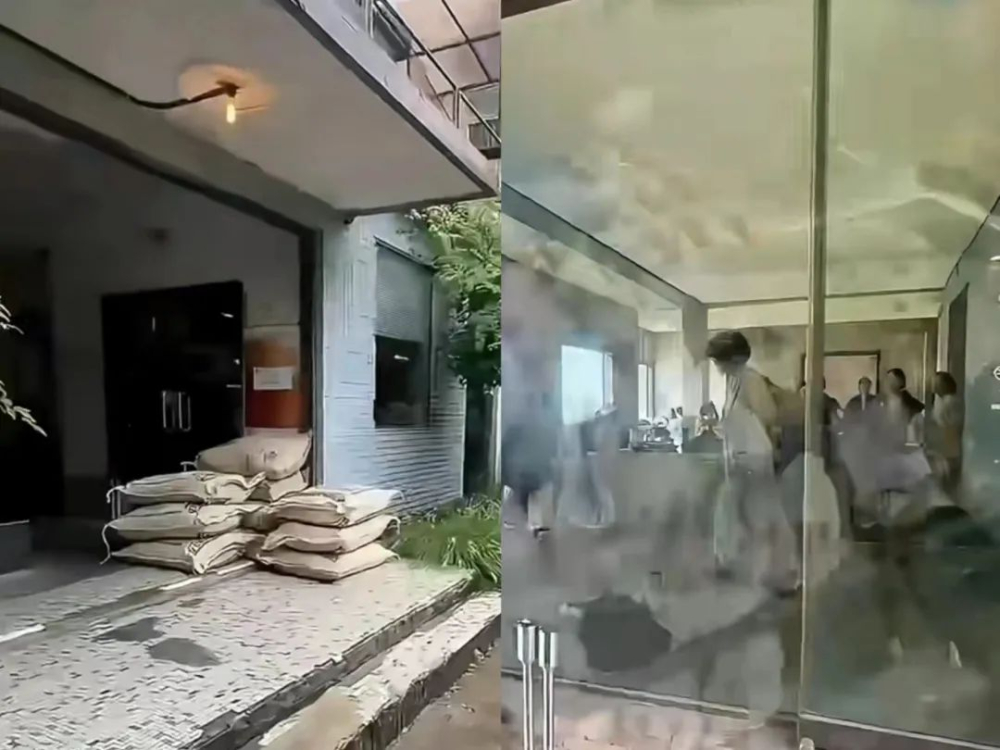
Image source: Internet
Disclaimer: Some images in this article are from the internet. For some content on the website, such as images, we will respect the original copyright and indicate the source. However, due to the large quantity, some images and texts may not have been credited in time. Please forgive us. If the original author has any disputes, they can contact the website for handling. Once verified, we will correct it immediately. Compiled and edited by "Coffee Workshop." Please indicate the source when reposting. If there is infringement, please inform us for deletion. Thank you~!
The above content is compiled by CoffeeHunters, a coffee news website.


