








How do dripper ribs and holes change extraction?
Dripper behavior comes down to two structural features: flow-guiding ribs and drainage holes. Ribs, whether raised ridges or recessed grooves, lift the filter paper off the wall and create channels that let hot water pass. Without them the paper clings flat, water only seeps through the bottom hole, fines clog the gaps, and the brew over-extracts.
The number and size of holes set drainage speed, so the design decides how long water contacts the grounds. Conical, fan-shaped, single-hole, and multi-hole drippers each trade flow guidance against drainage. Learning how to brew coffee with a coffee maker or a dripper starts with reading these two parts before adjusting grind and pour.
Pour-over drippers on the market come in all shapes and sizes, from conical to fan-shaped, from single-hole to multi-hole, and behind each design lies a different extraction logic. The key to a cup of coffee's flavor direction is often hidden in the distribution of the dripper's flow guides and the drainage holes. How do flow channels change the path of water? Why do spiral ribs make extraction more even? How do the number and size of holes affect drainage speed? This article, from Front Street's perspective, breaks down the core structure of drippers one by one, helping you see the essence amid a dazzling array of products and choose the one that truly suits you.
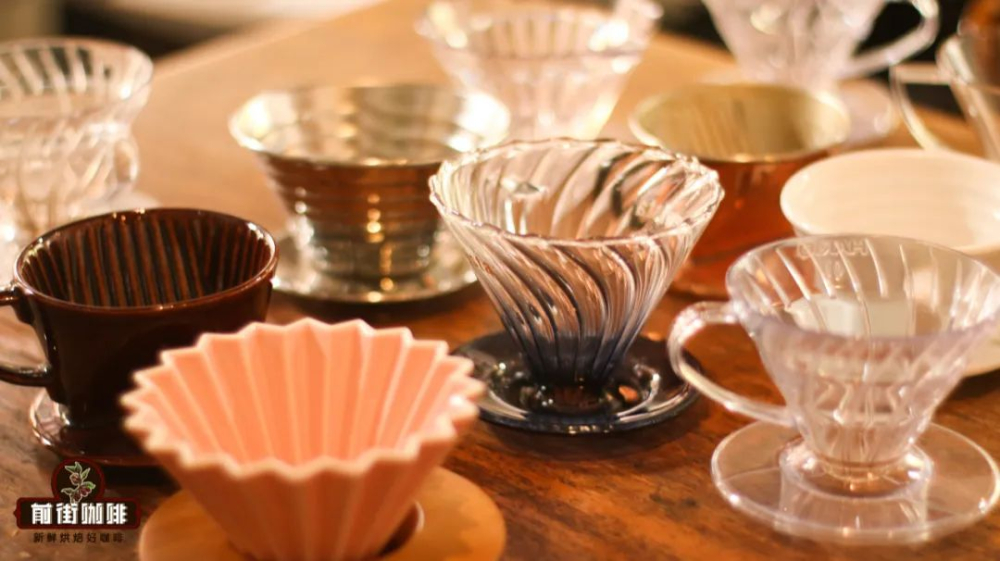
The reason drippers can deliver such vastly different extraction performances lies in the various changes in their construction. Every structural adjustment brings a completely different result. Today, Front Street will take you through an in-depth look at how each part of the dripper's construction affects extraction.
The Core Functions of a Dripper
No matter what shape a dripper takes, its most critical performance comes down to two things: flow-guiding capability and drainage speed. These depend respectively on the arrangement of the ribs and the size of the drainage holes.
Flow Guides (Ribs)
Flow guides can be raised ridges on the wall or bottom of the dripper, or inward-recessed grooves like those on the Ice Eye and Cross Star. Whether raised or recessed, their purpose is to lift the filter paper and leave a gap between the paper and the dripper wall — this gap is the "flow channel." The core mission of the flow channel is to provide a seepage path for hot water, guide the direction of water flow, and expand the area through which water can pass.
Without flow channels, a dripper would simply be a funnel holding filter paper (which was exactly the case with Melitta's earliest fan-shaped dripper), and water could only seep down naturally by gravity.
Imagine a Kono with its ribs removed, or a Chemex coffee maker — when the filter paper clings completely to the wall, the only space water can pass through is the tiny area of the bottom hole. This area is already narrow, coffee grounds occupy most of it, and fines may clog some of the holes, resulting in extremely slow seepage and directly causing over-extraction. This is precisely why flow channels are needed to change the water's path and expand the seepage area.
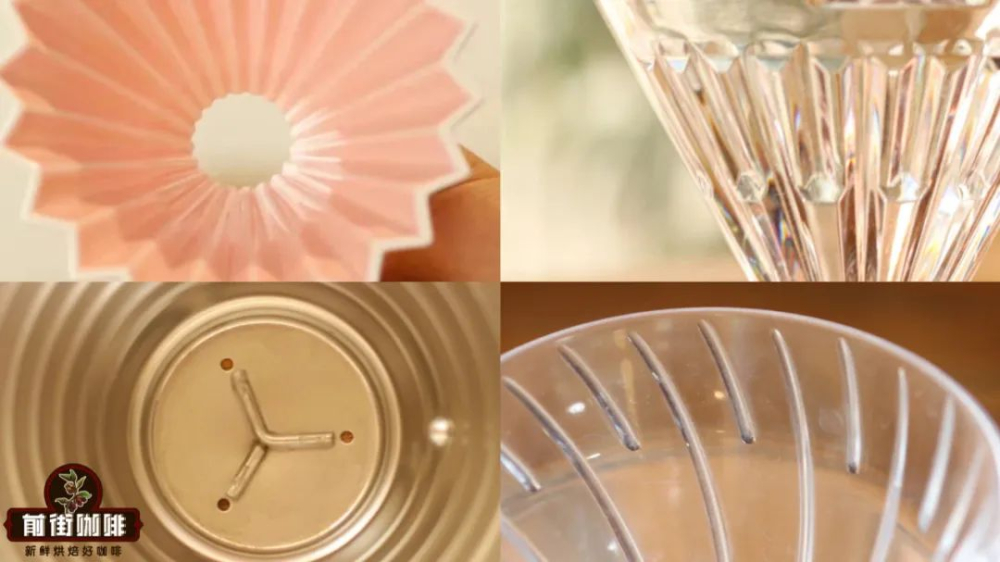
Flow channel designs vary widely; the more traditional type is the vertical arrangement. Drippers like the Kono and Origami use this approach, propping up the filter paper with vertical ribs of varying lengths to make room for water flow. The longer the ribs, the larger the area through which water can drain quickly; where the ribs don't reach, the flow rate is relatively slower, and that portion of the coffee bed is in a state of immersion extraction.
The V60's flow channels use spiral ribs of alternating lengths. This spiral structure redirects what would be vertically downward water flow into a path that rotates along the ribs, allowing hot water to flow through quickly while giving the coffee grounds a more even extraction.

There is another category of drippers whose flow channels are formed by recesses pressed inward from the wall, such as the Ice Eye dripper mentioned earlier and the Cross Star Infinite dripper. The purpose of the recesses is likewise to create gaps and give water more room to move.
Holes
Having covered flow channels, let's look at the holes. The size and number of holes directly determine water flow speed, and they must work in concert with the flow channels — neither can do without the other.
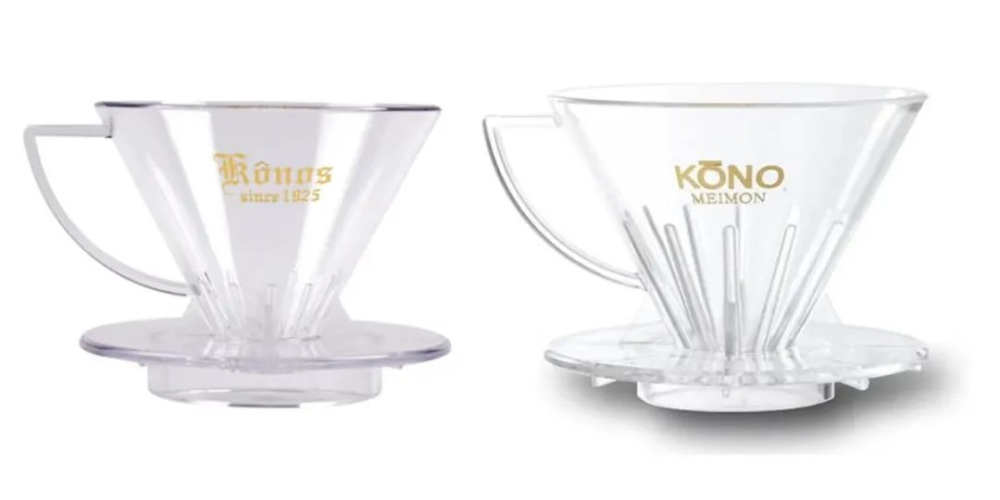
The world's first dripper came from the Melitta company — a trapezoidal dripper with multiple ribs. Despite the many ribs, because there was only one very small hole, drainage was extremely slow, and over-extraction occurred time and again.
For this reason, the Kelita company seized the opportunity and launched a three-hole trapezoidal dripper, greatly improving seepage speed. It's clear that the larger or more numerous a dripper's holes are, the more space there is for water to drain.
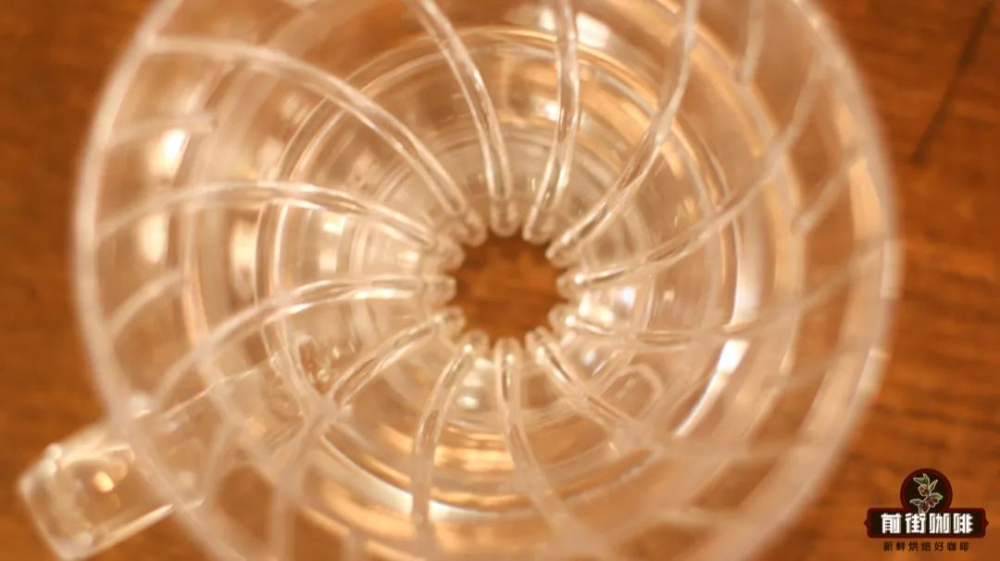
So not all drippers with flow channels drain as quickly as the V60. The purpose of flow channels is to keep seepage speed within a reasonable range, thereby avoiding over-extraction.
Material
Common dripper materials include resin, ceramic, metal, and glass. Their effect on extraction is actually minimal, mainly showing up in differences in thermal conductivity. Unless you preheat with a large amount of hot water before brewing, the difference made by material is not obvious — at most, it adds a bit of heat retention.
Once we understand the core design philosophy of drippers, we can roughly judge from appearance how one differs from others. That way, when shopping, we won't be dazzled and confused by all the various designs.
Oh right! Many manufacturers now offer drippers with valves, adding an adjustable, controllable drainage switch on top of the original dripper design. This feature greatly lowers the entry barrier for beginners and also gives experienced brewers more to play with. Once you've mastered regular drippers, trying a "Clever Cup"-style dripper is also a nice pastime.
Front Street Coffee (FrontStreet Coffee)
No. 10, Bao'an Qian Street, Yandun Road, Dongshankou, Yuexiu District, Guangzhou, Guangdong Province

The above content is compiled by CoffeeHunters, a coffee news website.


