







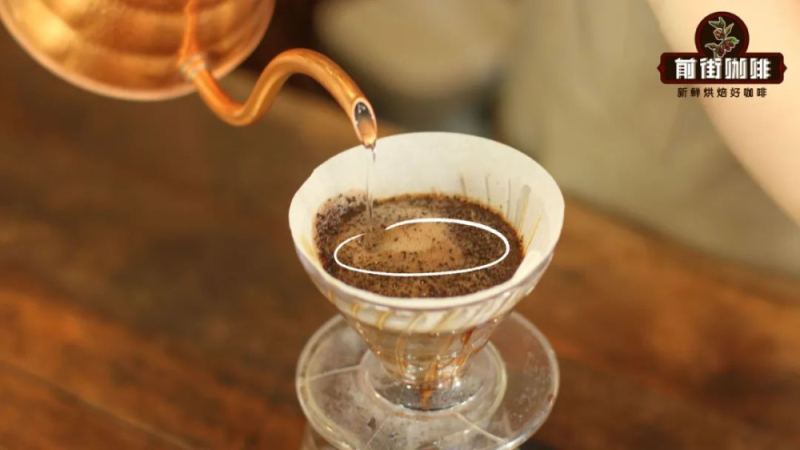
Why does coffee brewing need a circular pour?
Circular pouring during pour-over coffee brewing exists to even out extraction and limit over-extraction. A stationary pour wets only one spot on the coffee bed, so that area extracts far more than the rest, while dry patches stay under-extracted. Moving the stream in circles spreads water across the whole bed, giving a more uniform result without the turbulence that stirring or aggressive agitation creates.
Testing with a kono dripper showed what a fixed pour does: heavy foam builds only where the stream lands, while untouched areas barely foam at all. Circular pouring raises the extraction rate while keeping the flow gentle, which lowers the risk of bitterness. It is the practical, forgiving technique that most brewers settle on, and the reason the motion is repeated through the pour.
When brewing pour-over coffee, the vast majority of brewers choose to pour in a circular motion rather than a stationary pour or agitation. Behind this actually lie key considerations about extraction uniformity and the risk of over-extraction. Starting from Front Street Coffee's own testing, this article uses the analogy of instant granules to explain why the coffee bed needs to be disturbed, analyzes why a stationary pour leads to uneven extraction, and further explains how circular pouring, compared with other agitation methods, reduces turbulence and avoids bitterness, thereby becoming the most forgiving and practical pouring technique.
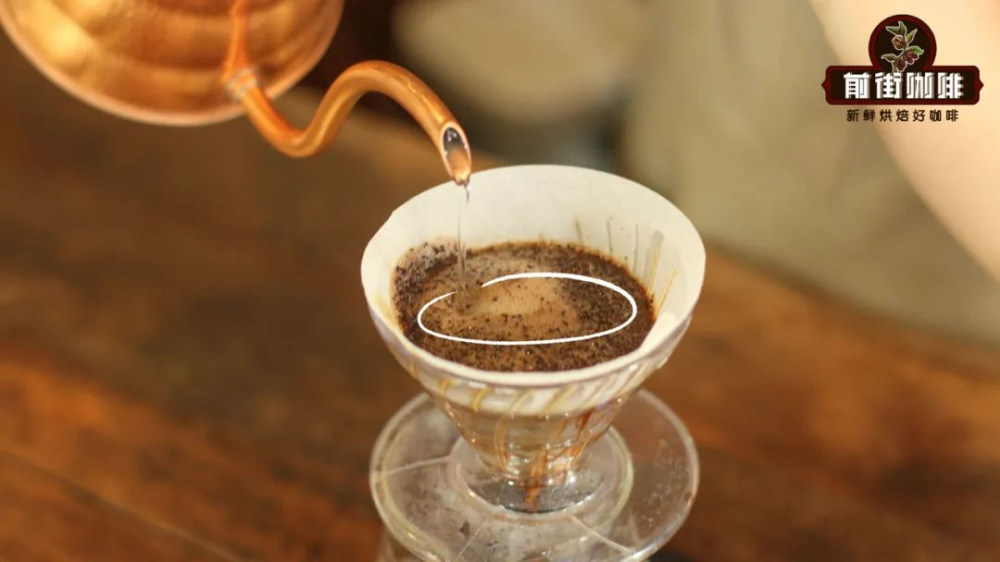
When many people are asked this question, an answer immediately pops into their heads. So let's ask it from another angle: why must it be circular? Why not pour up and down and left and right like the agitation method? Go ahead and take a bold guess first—because today what we're going to talk about is exactly: why pouring water needs to be circular! Why does pour-over coffee brewing require a circular pour? The first benefit that circular pouring brings is "increased extraction rate"! This is probably also the first point most people think of! So why must it be circular, and why can't we pour at a fixed point like Japanese-style brewing?
For example, it's like mixing a packet of Banlangen granules when you have internal heat, or the instant granules you take when you have a cold. If you just soak them in hot water, two situations will arise: First, when you drink it, the layering is quite "peculiar"—the upper liquid is so weak it's almost tasteless, while the lower liquid is so strong it's bitter, the concentration is completely uneven, and neither layer is easy to swallow; Second, after you finish drinking, a layer of undissolved granules will accumulate at the bottom of the cup. So usually we take a spoon or chopsticks and stir it a bit, so the granules that sank to the bottom fully dissolve and disperse evenly into every sip of liquid.
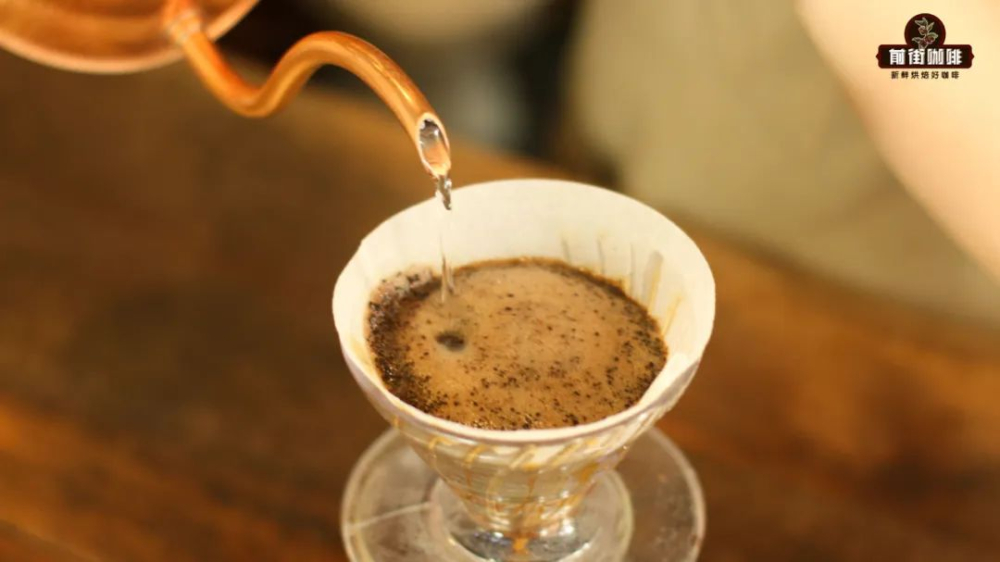
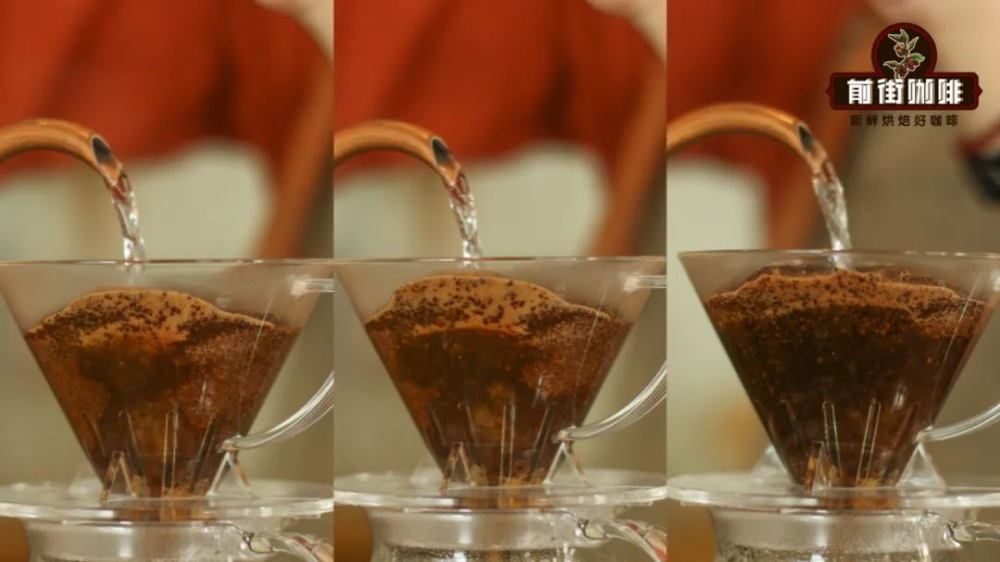
Pour-over coffee works the same way. Front Street used a kono dripper to create an effect that can be directly observed, to see how the coffee bed changes after three stationary pours!
You can see that apart from the position of the stationary pour producing a large amount of foam, the other areas not hit by the water stream produced only a small amount of foam, and their positions barely changed at all toward the end of brewing! This shows that those areas, because they weren't rinsed, could produce very few variables (very little substance was released).
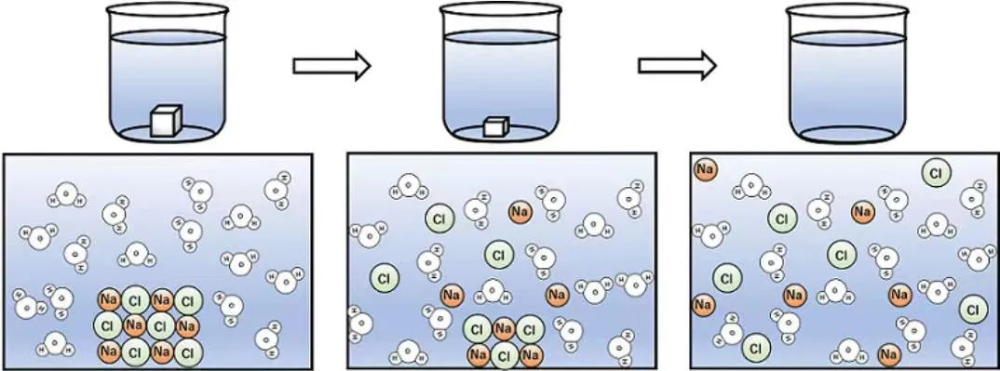
For this reason, when we brew coffee we generally don't use only a stationary pour throughout. The goal is to make the coffee grounds in every direction be disturbed, so they better release their internal substances. However, this is still only the difference between "disturbing" and "not disturbing." For example, some people use a Z-shaped pour with a trapezoidal dripper, while those using a siphon use a stirring rod to stir in a cross or ∞ pattern. If it's all agitation anyway, why not use those other pouring methods? Why is circular pouring used instead of other methods? 1. It easily produces turbulence If other brewing methods are used, irregular agitation will make turbulence appear more frequently! This in turn affects the final extraction, so circular pouring is usually used to reduce error!
Moreover, we don't want all the particles in the coffee to be released. Just like instant granules, if you want all the substances to dissolve quickly, then you have to increase the intensity of agitation! But besides positive flavors like acidity and sweetness, coffee also contains negative over-extracted flavors like bitterness. If you use a violent extraction like the agitation method throughout, what you'll get is a cup of bitter coffee comparable to Chinese herbal medicine! So the agitation method is more suited to brewing methods that require rapid extraction, like the siphon!
And our circular pouring is precisely to let all the coffee grounds be extracted while avoiding over-extraction. Therefore, for conventional brewing, circular pouring is the simplest, most practical, and most forgiving pouring method! - END - Front Street Coffee (FrontStreet Coffee)
No. 10, Baoqian Street, Yandun Road, Dongshankou, Yuexiu District, Guangzhou, Guangdong Province
The above content is compiled by CoffeeHunters, a coffee news website.


