







How does coffee as a stimulant change shopping behavior?
A study published in the Journal of Marketing found that drinking caffeine before shopping raises spending and the number of items bought, particularly non-essential goods. Shoppers who consumed caffeine spent about 50 percent more and purchased nearly 30 percent more items than those who had decaf or water. Caffeine prompts the brain to release dopamine, raising energy and impulsivity while weakening self-control.
Researchers at the University of South Florida ran three experiments, including a retail chain and a furniture store in France and a department store in Spain, where espresso machines were placed at the entrances. More than 300 shoppers received an empty cup; about half chose coffee with roughly 100 milligrams of caffeine. Receipts collected on exit showed the difference, so the practical advice is to shop for essentials before the coffee, not after.
Coffee is one of the most popular beverages in the world. It not only refreshes the mind but may also quietly change your shopping habits. A study published in the Journal of Marketing found that consuming caffeine before shopping significantly increases spending and the number of items purchased, especially non-essential goods. Researchers at the University of South Florida, through offline retail store and online laboratory experiments, revealed how caffeine affects impulse control by releasing dopamine. This article will provide a detailed interpretation of the study's design, results, and implications for daily consumption, while reminding coffee lovers to be mindful of the potential financial impact while enjoying their coffee.
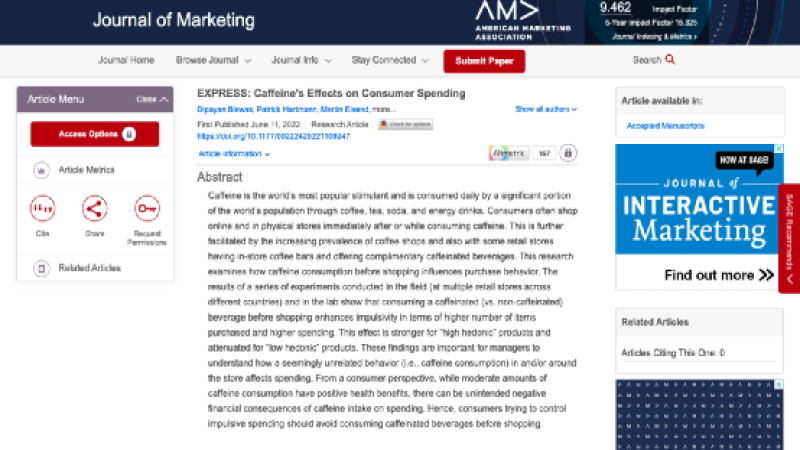
Coffee, along with tea and cocoa, is known as one of the world's three major beverages. Its refreshing effect makes it indispensable to countless office workers, and everyone has long been accustomed to the taste of coffee. Recently, an overseas study pointed out that caffeine can arouse people's desire to shop, leading to increased spending. The findings were published in the Journal of Marketing, which has an impact factor of 9.462.
A research team at the University of South Florida found that if you drink a cup of coffee before shopping, compared with counterparts who did not consume caffeine, you will spend 50% more money and purchase 30% more items.
Professor Dipayan Biswas, a researcher at the University of South Florida, explained that caffeine is a powerful stimulant that prompts the brain to release dopamine, putting body and mind into a higher-energy state, thereby enhancing impulsivity and weakening self-control.
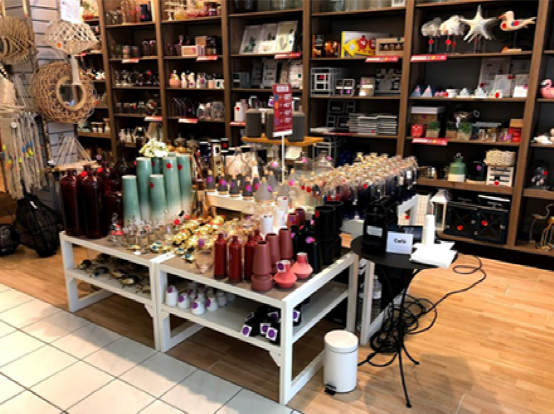
Professor Biswas and his colleagues conducted three experiments in multiple retail stores, including a retail chain and furniture store in France, as well as a department store in Spain, where they placed espresso machines at the store entrances.
After shoppers entered the stores, more than 300 people received an empty cup. About half of them chose coffee containing approximately 100 milligrams of caffeine, while the other half drank decaffeinated coffee or water. When these shoppers left, they provided their shopping receipts to the researchers.
After analysis, the researchers found that shoppers who consumed caffeine before browsing the store spent about 50% more and purchased nearly 30% more items. Those who consumed caffeine were more inclined to buy non-essential items such as scented candles and perfume; however, in the purchase of practical items such as kitchen utensils, the difference between the two groups was not significant.
In addition, the research team conducted a fourth experiment in the laboratory, focusing on online shopping scenarios. Two hundred participants were divided into two groups: one group drank caffeinated beverages, and the other drank decaffeinated beverages, and they were then asked to choose what they wanted to buy from 66 pre-selected product options.
Interestingly, the results of the fourth experiment were highly consistent with the first three offline experiments. Participants who consumed caffeine were more likely to choose items typically regarded as impulse purchases, such as massagers; the other group tended to choose more practical items, such as notebooks.
A large body of scientific research has already confirmed that moderate caffeine intake has positive effects on health, such as improving work efficiency. But this new study shows that consuming caffeine while shopping may bring unexpected negative financial consequences.
Some netizens commented that not drinking coffee indirectly keeps money in their wallets.

Other netizens expressed that they strongly resonate with this.
Seeing this, the author suddenly realized: no wonder every time I go to another cafe and finish drinking, I always have an urge to buy coffee beans and peripheral products.
Image source: Internet
For more coffee bean information, please follow Coffee Workshop (WeChat public account: cafe_style) For professional coffee knowledge exchange, please add WeChat ID: kaixinguoguo0925
(Front Street Coffee reminds you: while enjoying coffee, also pay attention to your spending behavior.)
The above content is compiled by CoffeeHunters, a coffee news website.


