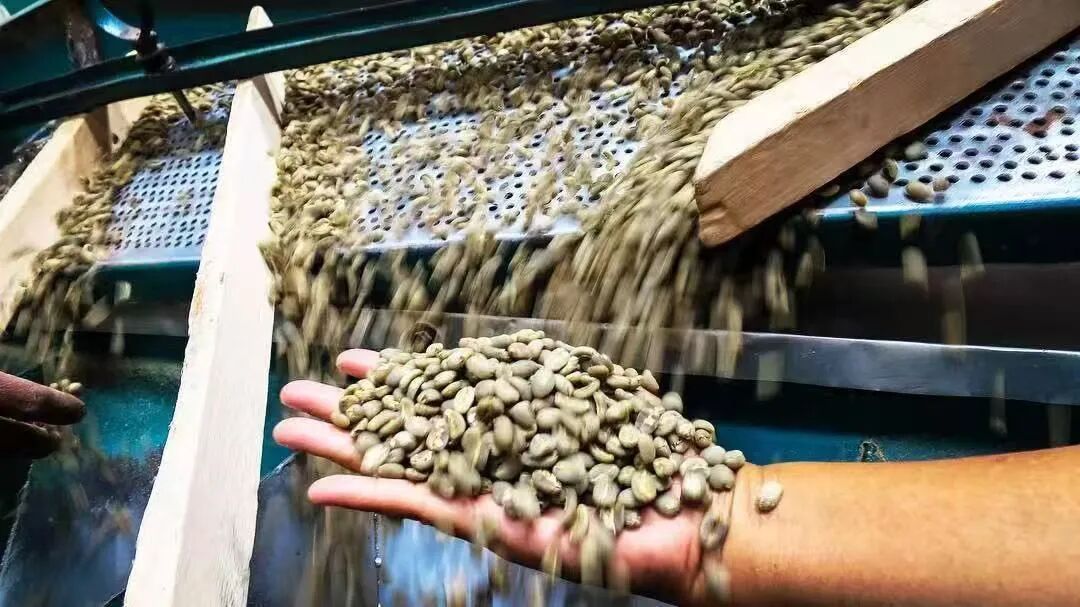
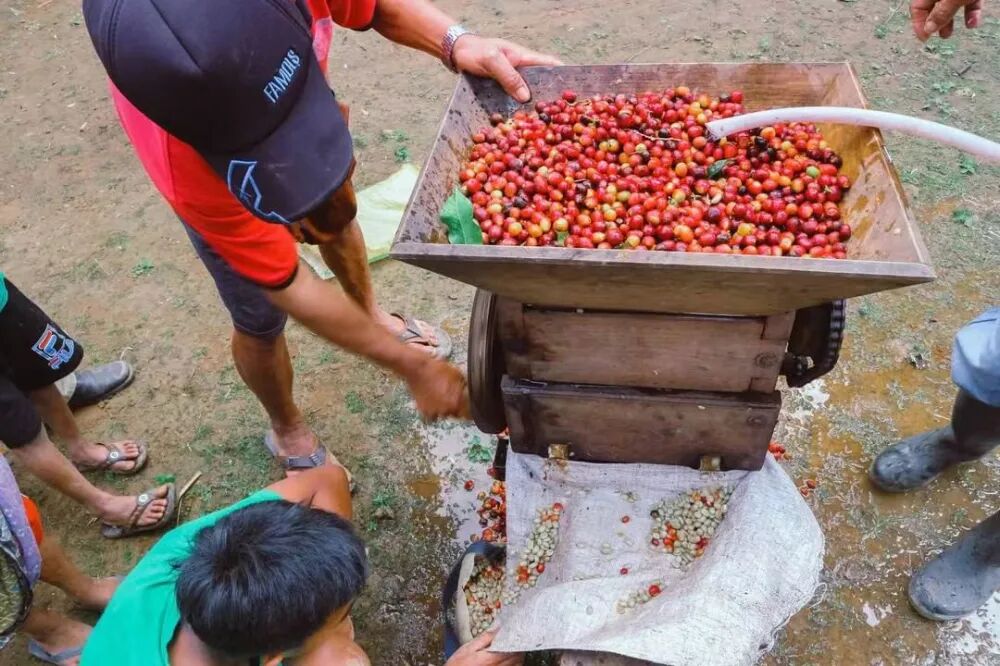
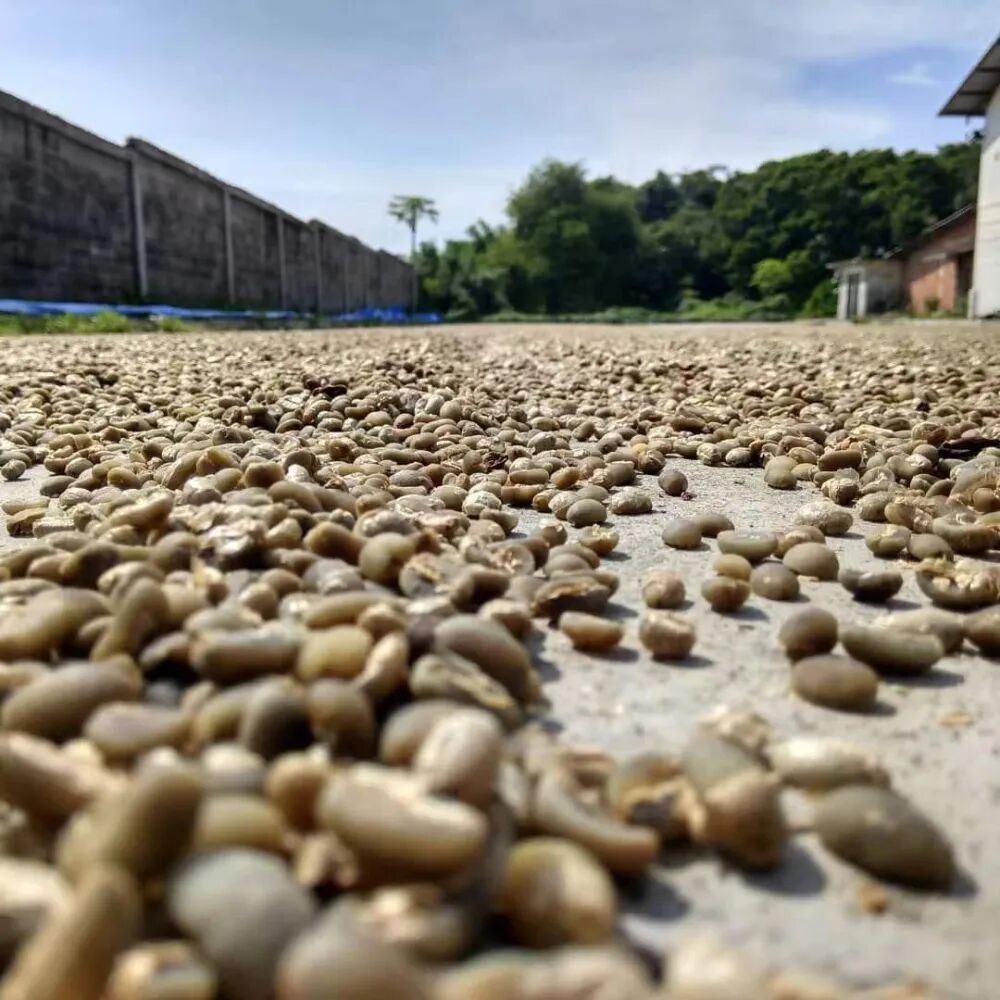
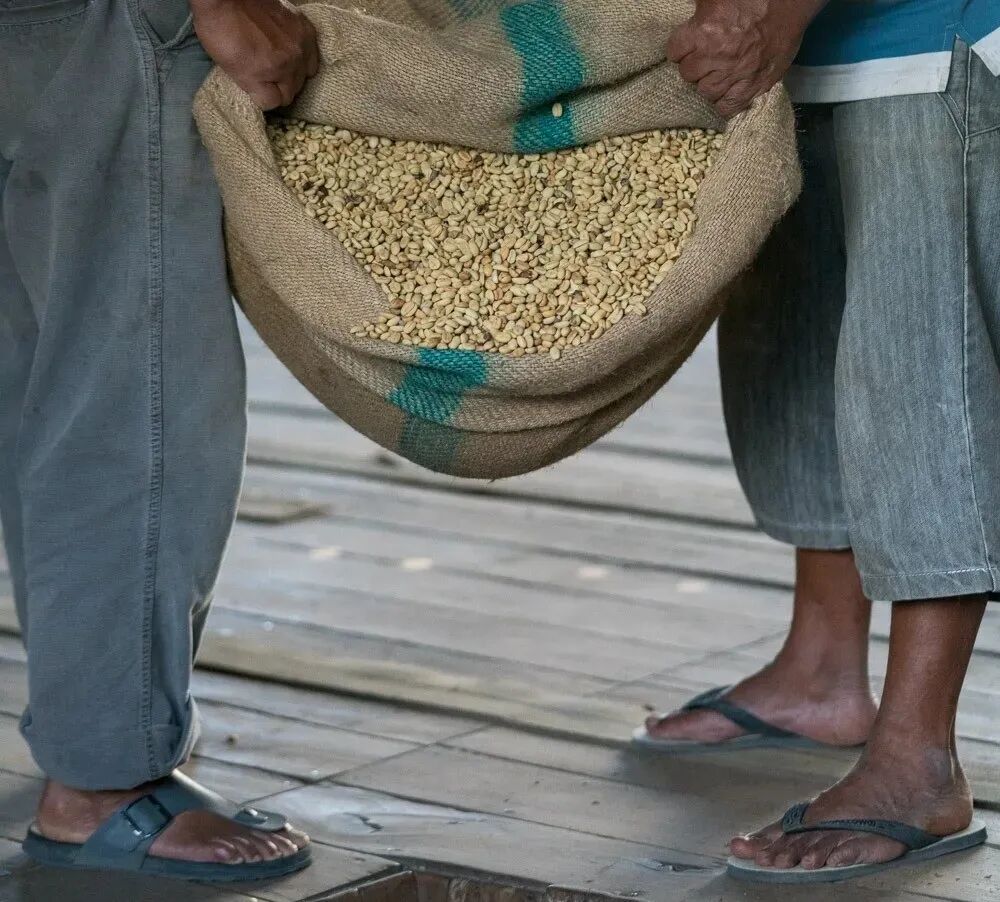
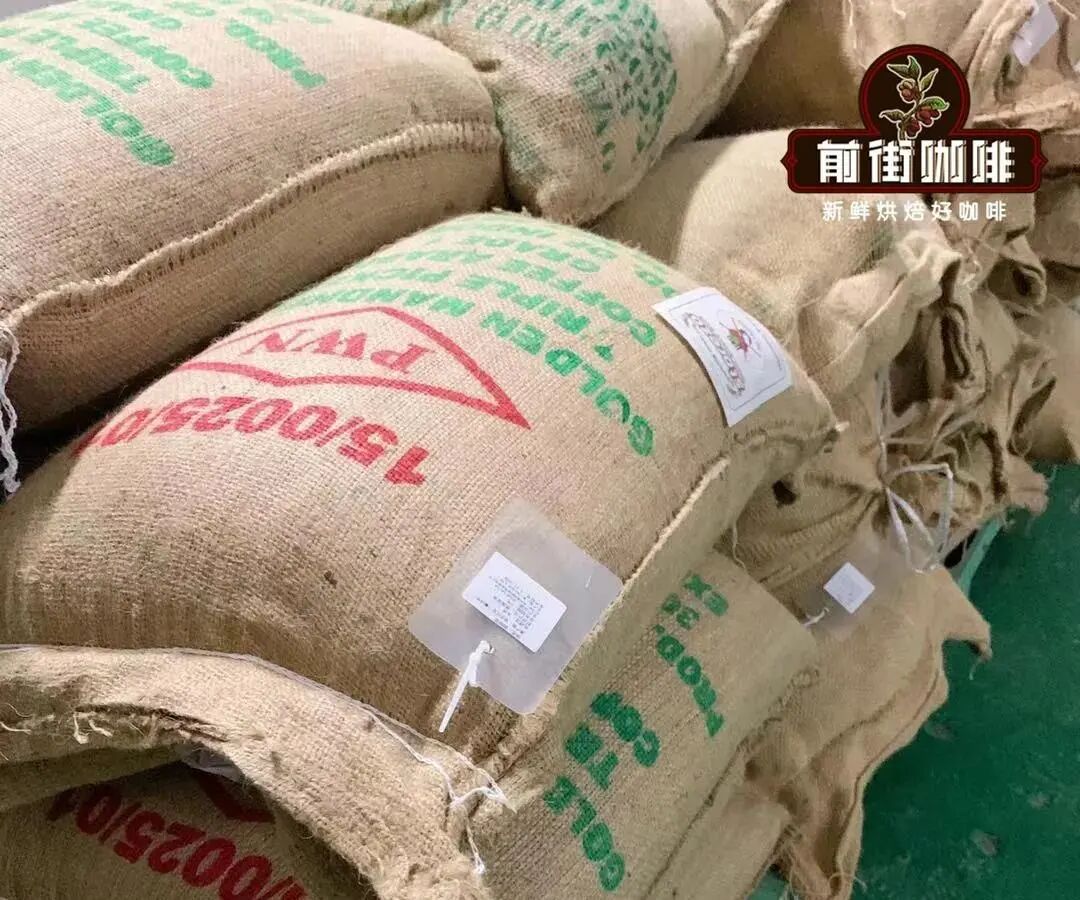
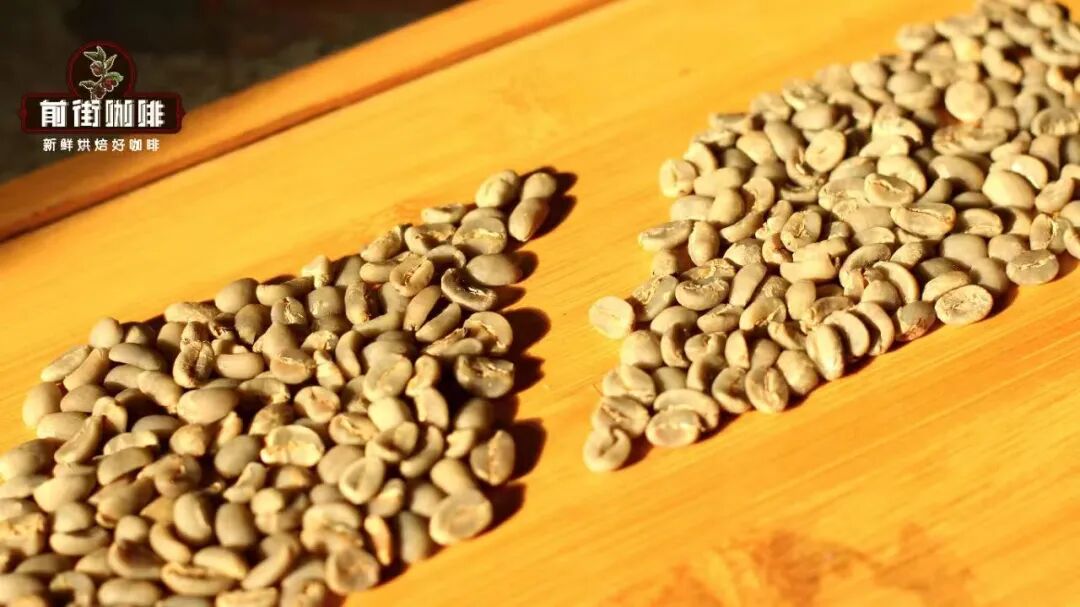
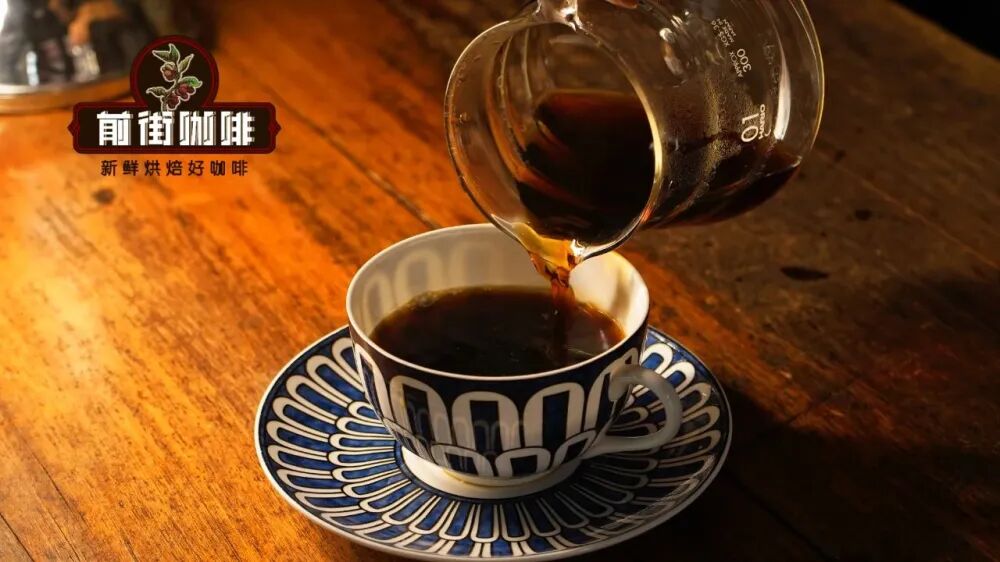
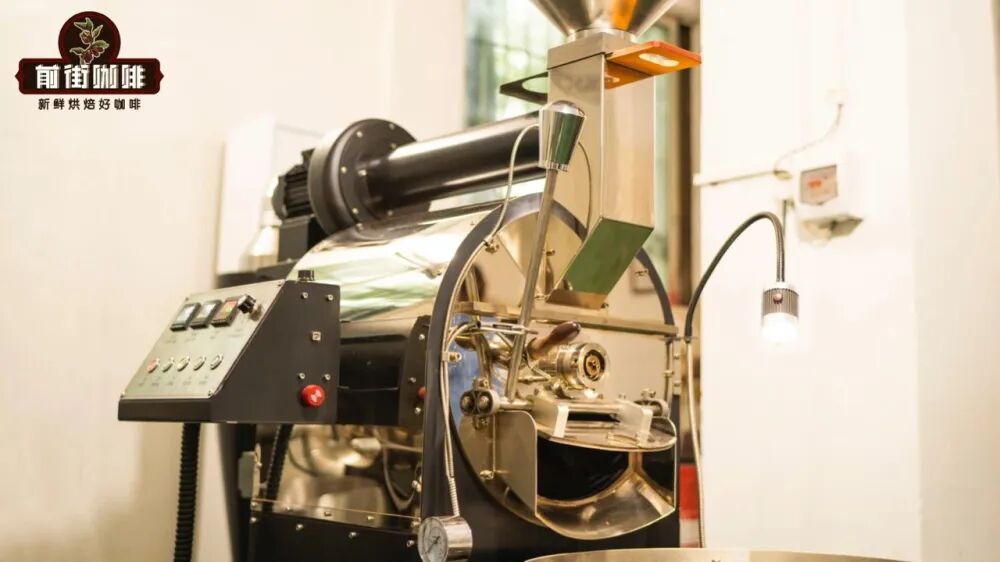
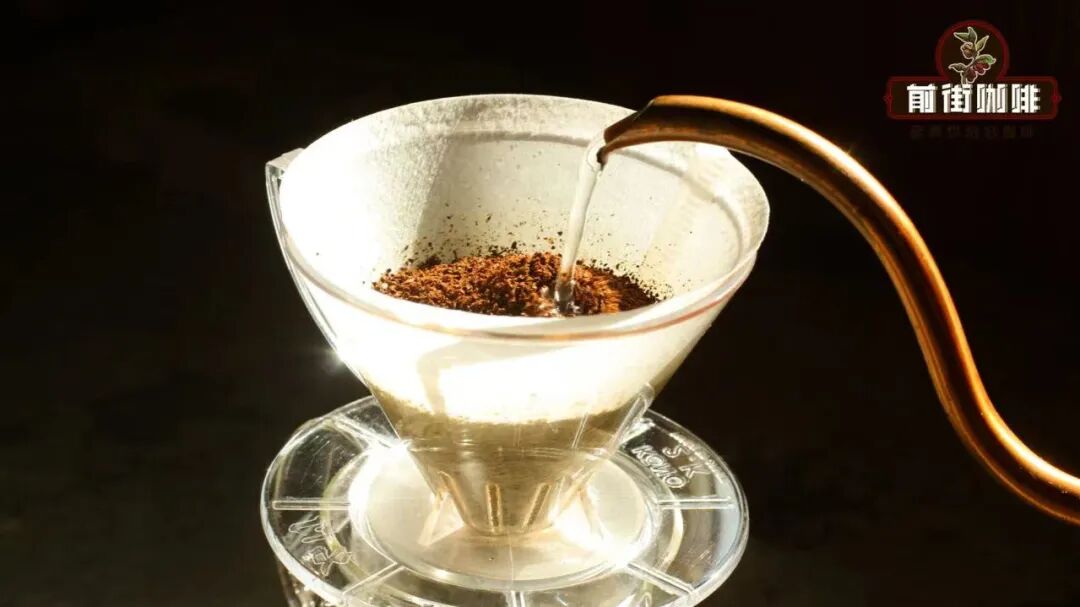
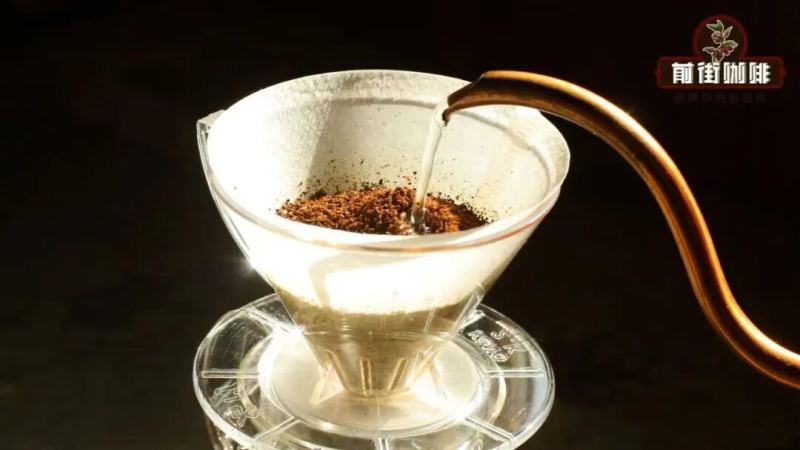
After guests come to Front Street and order a cup of Golden Mandheling coffee, they will ask out of curiosity. Why are most Indonesian coffee beans processed using the wet hulling method, rather than washed or natural processing? In this article, Front Street will explain what wet hulling is.Wet hulling, also known as wet shelling(Wet Hulling), in the local language it is also called Giling Basah. It is a processing method unique to Indonesian origins and is also known as semi-washed processing.In washed processing, the mucilage is retained for fermentation, then the remaining mucilage is rinsed off with clean water and the beans are directly sun-dried. The coffee beans are stored together with the parchment layer. ButUnlike washed processing,wet hulling uses a washed-processing method for fermentation, then after partial drying the parchment layer is removed by machine before final drying, so the coffee beans enter the storage stage "bare."Why does Indonesia choose to use wet hulling to process green coffee beans?The choice of green bean processing method is generally based on factors such as the region's natural climate and resources. For example, natural processing is generally common in dry, high-temperature areas with scarce water resources, while washed processing is generally common in areas where water resources are easily accessible. Indonesia's humid and rainy climate makes natural processing, which requires long periods of sun-drying, difficult to carry out. Front Street believes that wet hulling gives Indonesian coffee beans a fuller flavor and makes the herbal spice notes of Indonesian coffee beans more obvious.Detailed explanation of the wet hulling processAs with washed processing, after picking, the coffee cherries need to be processed as soon as possible. In Indonesia, coffee cherries are generally depulped by smallholders at home. This step removes the skin of the coffee cherries and part of the pulp.The depulped coffee beans are soaked in water for 1 to 2 hours, and the beans are rubbed against each other to remove part of the mucilage.After soaking, the coffee beans undergo their first drying at the farmers' homes. At this point, the moisture content of the coffee beans drops to between 20% and 35%.After the first drying, the coffee beans are sent to the market for sale. At this time, the mucilage layer of the coffee beans has not yet solidified and is in a sticky state. These coffee beans are then purchased, collected, and sent to a processing plant for the next stage of processing.The coffee beans that have been collected and sent to the processing plant first undergo a second drying. This step brings the moisture content of the coffee beans down to about 18%.After the second drying, the coffee beans are put into a coffee hulling machine for wet hulling. This process removes the coffee's mucilage and parchment layer. What makes it different from other processing methods is that wet hulling removes the parchment layer before the coffee beans' final drying, while washed processing and others retain the parchment layer during drying until the parchment layer is removed just before export shipping.Finally, the coffee beans are sent once again to the drying yard for final drying. This step brings the moisture content of the coffee beans down to 11%. The dried coffee beans are bagged and stored in warehouses awaiting export shipment.Appearance characteristics of green beans processed by wet hullingAfter receiving several lots of wet-hulled Mandheling green coffee beans, Front Street noticed that they share a common bean appearance characteristic: "goat hoof shape."This is because when the semi-hard, semi-soft moist green beans are machine-hulled to remove the mucilage and parchment layer, they are easily crushed and damaged, splitting open like goat hooves, commonly known as goat hoof beans.The "goat hoof shape" is a very prominent characteristic of Mandheling and is not considered a defective bean.(Left is Lintong Mandheling green beans, right is Golden Mandheling green beans)Flavor characteristics of coffee beans processed by wet hullingMr. Han Huaizong once described the flavor characteristics of wet-hulled coffee beans in a book: "This is also a rare processing method in the world, and by accident it created Mandheling's distinctive low acidity, thick body, and mellow aroma."Through years of cupping different Indonesian coffee beans processed by wet hulling, Front Street has found that their characteristics are indeed relatively consistent: the coffee's acidity is relatively low, the mouthfeel is thick, and it has unique flavors such as herbal spices.Having said all that, how are wet-hulled coffee beans roasted and brewed? Next, Front Street will use PWN Golden Mandheling coffee beans for a roasting and brewing demonstration.Front Street Coffee: PWN Golden Mandheling coffee beansRegion: Gayo Mountain, Aceh, SumatraAltitude: 1100-1600 metersGrade: G1, 3 times hand-sortedProcessing method: wet hullingHow does Front Street roast wet-hulled Golden Mandheling coffee beans?Golden Mandheling is a green bean with relatively high moisture content, and compared with natural beans it has a relatively large deviation in moisture, so special attention must be paid during dehydration. For green beans with high moisture content, you can try closing the air damper immediately after loading the green beans, steaming for 30 seconds, then opening it to 3, until the color of the green beans turns light green or white, then opening the air damper to 4, and after first crack opening it to 5 (maximum).Front Street Coffee recommends keeping good data records before roasting, such as the coffee beans' moisture content, density, origin, processing method, and the roasting environment temperature and humidity in the roasting room, etc., and planning your roasting curve. During roasting, record the relevant chemical and physical changes. This will all help you better understand the final roasting result and help improve the roasting curve. When the drum temperature reaches 200°C, load the beans, set the air damper to 3, and after 1 minute adjust the heat to 160°C with the air damper unchanged. Roast until 5 minutes 40 seconds, when the drum temperature is 148°C, the bean surface turns yellow, the grassy smell completely disappears, and dehydration is complete. Adjust the heat to 140°C and change the air damper to 4; at 9 minutes 40 seconds, ugly wrinkles and dark streaks appear on the bean surface, and the toast aroma clearly turns into coffee aroma, which can be defined as the prelude to first crack. At this time, listen carefully for the sound of the first crack. First crack begins at 9 minutes 54 seconds. Reduce the heat to 60°C and fully open the air damper (adjusting the heat must be done very carefully, and it must not be so low that there is no cracking sound). Drop the beans at 204.5°C.How does Front Street brew medium-dark roasted Golden Mandheling coffee beans?When brewing medium-dark roasted coffee beans, Front Street generally uses the KONO Meimon dripper, because the only exhaust part of this dripper is the one-quarter of the ribs. When the water level passes over the rib area, the water level in the dripper continues to rise, increasing pressure through the weight of the water. Because the outlet is relatively small, it can extend the contact time between the coffee particles and water a little longer. As the water flow drives it, this can more effectively bring out soluble substances and generally achieve the high-body effect expected by guests.Water-to-coffee ratio: 1:15Grind size: 75% passing through a 0.85 mm aperture sieveFront Street Coffee first uses twice the amount of water as the coffee dose for blooming, that is, 30g of water for blooming, with a blooming time of 30 seconds. Pour in a slow circular stream until 125 grams, then pause in stages. When the water level is about to expose the coffee bed, continue pouring until 225 grams and stop pouring. When the water level is about to expose the coffee bed, remove the dripper. (Start timing from the beginning of blooming.) The extraction time is 2'00".
The above content is compiled by CoffeeHunters, a coffee news website.