







How Did Starbucks Tea Succeed in Japan After Teavana Failed?
Starbucks bought Teavana in 2012 and opened four US tea-only Teavana Tea Bar stores in October 2013, selling no coffee at all. US consumers lacked a daily tea habit, found the drinks pricey, and the shops were gradually converted back into regular Starbucks coffee stores. The company later found a working model in Japan with Starbucks Tea & Cafe.
The US results did not end the tea push. Starbucks kept tea drinks on its regular menus and adapted its approach market by market, balancing tea with the coffee identity customers already knew. In Japan, that blend of tea offerings with the familiar American coffee style store experience drew steady traffic and gave the brand a template for tea-focused outlets.
After Starbucks acquired Teavana, the tea company, in 2012, it has continuously explored the possibilities of the tea beverage business in North American and Asian markets. From the brief attempt with Teavana Tea Bar in the United States, to the hot sales of tea drinks in the Chinese market, and then to the successful launch of Starbucks Tea & Cafe in Japan, Starbucks has been constantly seeking a balance between tea and coffee. This article will review the rise and fall of Starbucks tea specialty stores, analyze the business logic behind its strategic adjustments in different markets, and at the same time present how Starbucks cleverly integrates tea drinks with its brand DNA, ultimately finding a breakthrough in the Japanese market.
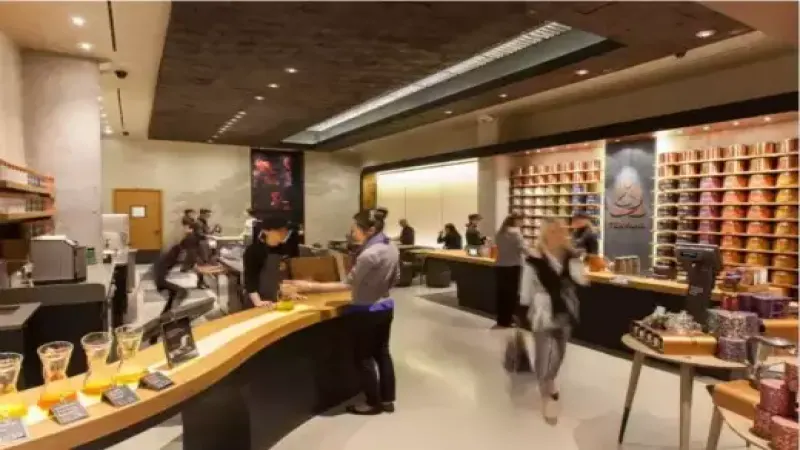
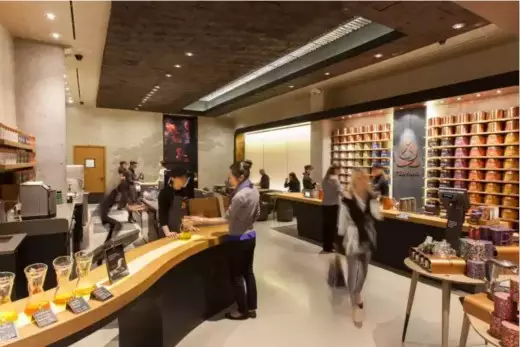
Starbucks' involvement in the tea beverage sector no longer seems like anything new today. After acquiring Teavana, the tea company, in 2012, Starbucks has always maintained a strong interest in the prospects of the North American tea beverage market. In addition to introducing the Teavana tea beverage line into Starbucks stores in various locations, in October 2013, Starbucks also opened four tea specialty stores in the United States called "Teavana Tea Bar." As the name suggests, these stores only do tea beverage business and do not sell coffee at all.
Inside "Teavana Tea Bar," consumers could taste traditional Chinese and Western teas, specialty tea lattes, and other creative tea drinks that were not available in regular Starbucks stores, along with light meals, but no coffee products could be found at all. At the same time, the interior decor and atmosphere were also more relaxed and gentle, different from the bustling liveliness of regular Starbucks stores. Of course, the prices here were also slightly higher than those of Starbucks coffee.
However, reality was harsh: American consumers did not have a traditional habit of drinking tea. For them, drinking tea was like Asians drinking coffee—fine with it or without it. Perhaps because the tea drinks at "Teavana Tea Bar" were priced relatively high, people were more willing to continue choosing Starbucks coffee; or perhaps consumers felt that something was off about Starbucks not selling coffee, and would rather go to a regular Starbucks store to buy tea drinks. In short, these four "Teavana Tea Bar" locations were gradually converted back into Starbucks coffee stores or simply closed around 2016.
But Starbucks did not give up its tea dream because of this. If it could not do tea specialty stores in North America, Asia should work, right? Starbucks noticed that after Teavana's shaken iced tea, brewed tea bags, and tea-based Frappuccino line were launched in stores in China, Chinese consumers actually bought more tea drinks at Starbucks than coffee.
So in 2016, Starbucks once planned to introduce "Teavana Tea Bar" into the Chinese market. But it was obvious that by then China had already seen the emergence of a large number of new-style tea beverage brands, and this Starbucks tea specialty store was "eliminated" before it even formally entered.
If China did not work, there was still Japan. Japanese people have always had a very high demand for tea drinks, and at that time young people in Japan had also begun to embrace new-style tea drinks. However, perhaps worried about repeating the mistake of selling only tea and not coffee and causing consumer dissatisfaction, Starbucks did not dare to do only tea drinks this time, so in 2020 it opened three Starbucks Tea & Cafe stores specializing in specialty tea drinks, while also offering a small number of coffee drinks in the stores, and the prices of tea drinks were also much more affordable.
In terms of the flavors of the specialty tea drinks, Starbucks accurately captured the preferences of young Japanese people and launched products such as Yuzu Citrus Lavender Sage Tea Frappuccino, Yuzu Citrus Lavender Sage Tea, Strawberry Passion Fruit Tea, Strawberry Passion Fruit Frappuccino, Wasanbon Matcha Latte, and Japanese Chai Tea Latte. Considering that young people like to take photos and check in, every cup of dine-in tea drink was served in a transparent cup, giving the beverages a richer sense of layering overall.
This time, Starbucks clearly found the right market. Starbucks Tea & Cafe was widely popular, but because the first three stores were all concentrated in the Kanto region, consumers in Kansai could only envy them. So Starbucks decided to open a fourth Starbucks Tea & Cafe in Osaka on February 25, 2022.
Although the initial operating condition of the tea specialty stores did not look ideal, Starbucks' preference for tea has never diminished. In the early days, Howard had explicitly forbidden coffee products from entering Teavana tea bars, but in the end he still bowed to reality. It is not hard to see from this that although the market demand for new-style tea drinks is growing day by day and Starbucks' "ambition" in the tea beverage field is indeed not small, the Starbucks brand ultimately cannot fully exist independently of coffee—after all, when people mention Starbucks, the first thing that comes to mind is still coffee, and selling only tea would somewhat feel like "betraying" the brand's DNA.
Image source: Internet
For professional coffee knowledge exchange and more coffee bean information, please follow Coffee Workshop (WeChat public account: cafe_style)
For more specialty coffee beans, please add the private WeChat of Front Street Coffee (FrontStreet Coffee), WeChat ID: kaixinguoguo0925
The above content is compiled by CoffeeHunters, a coffee news website.


