







Can French Press Coffee Be Reused for More Than One Brew?
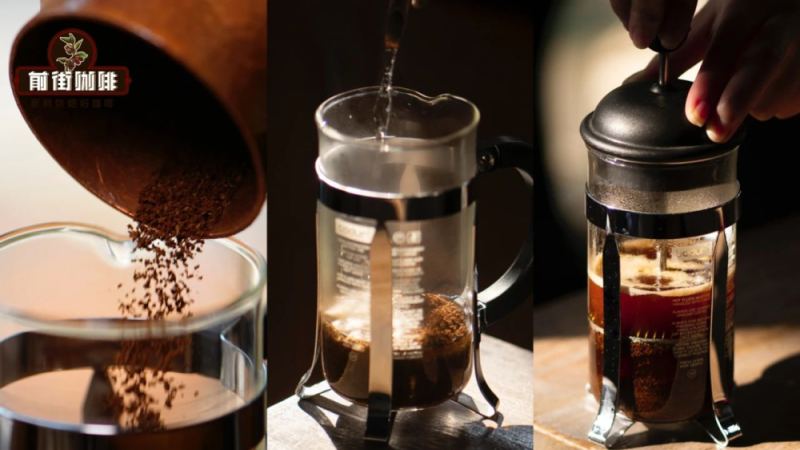
Reusing the same French press grounds for a second brew produces a weak, hollow cup. The first steep already extracts most of the soluble oils and flavor compounds, so a second pour mostly yields watery bitterness with little sweetness or body. Fresh grounds, a consistent ratio, and clean equipment give the stable result the press is known for.
Learning how to brew coffee with a coffee maker like the French press starts with its simple setup: a heat-resistant glass body and a metal mesh plunger, born in France around 1850. The method suits medium-dark roasts and rewards fresh beans, since it releases oils fully and just as readily exposes stale or low-quality coffee.
The French press, with its minimalist operation and extraction effect close to cupping, has become the top choice for many coffee enthusiasts as a starter. It fully releases coffee oils and aromas while also placing higher demands on bean quality and freshness. This article will start with the origin and structure of the French press, explain why it is more suitable for medium-dark roasted coffee, and gradually break down the complete French press brewing process—from coffee-to-water ratio, water temperature, grind size to pouring, stirring, steeping, and pressing, while also answering the question about the oil content in French press coffee. The article also specifically recommends beans suitable for the French press, such as Front Street Strawberry Candy, Front Street Bird of Paradise, and Front Street PWN Golden Mandheling, helping readers easily replicate a stable and delicious cup of French press coffee.
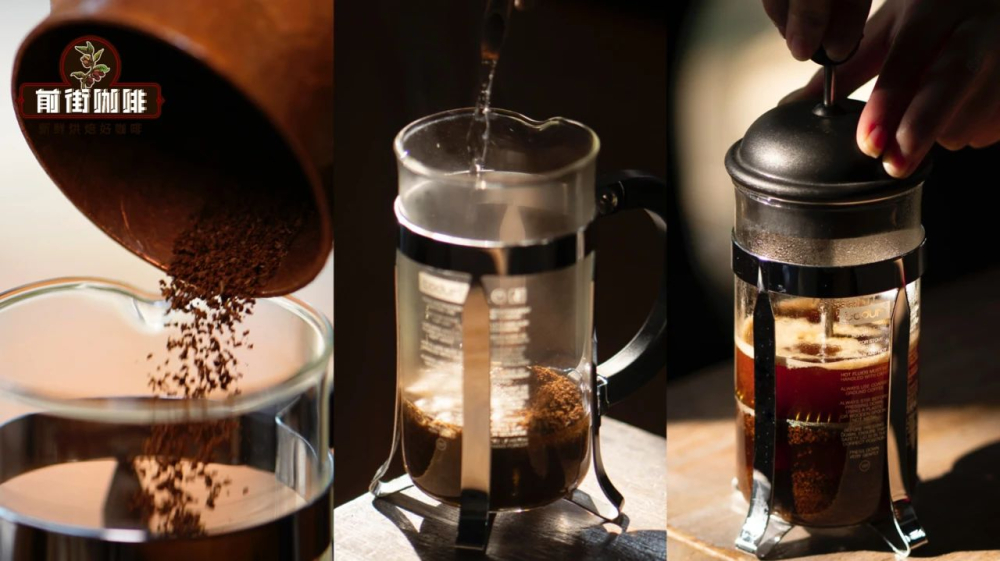
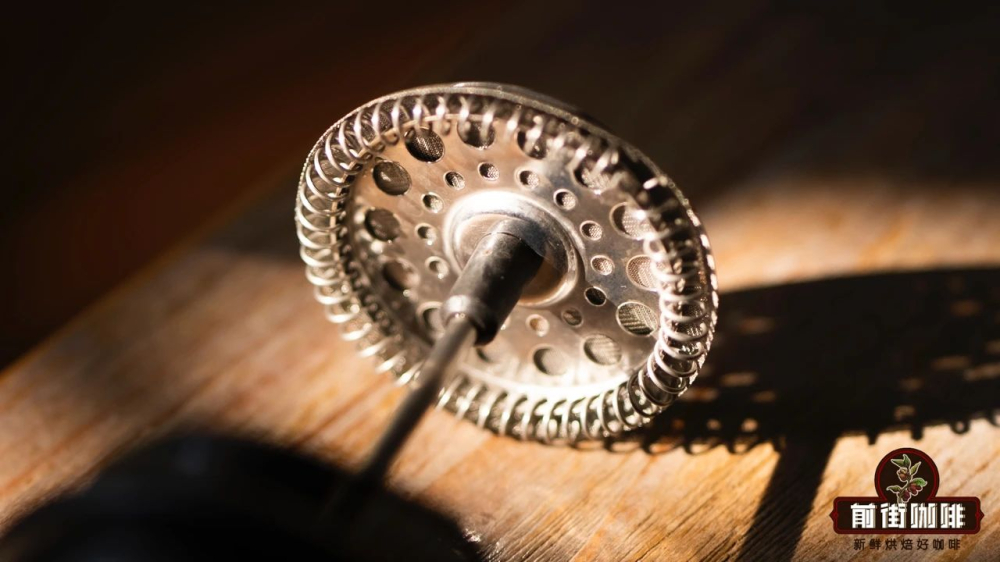
The French Press, often called a French filter press, French press pot, or tea maker, is also jokingly referred to as the lazy person's pot. This device was born in France around 1850, with a very simple construction: a heat-resistant glass body (or transparent plastic material) paired with a metal filter mesh with a plunger. It was originally mostly used for brewing black tea, so the alias "tea maker" has also been passed down to this day.
Among all coffee brewing tools, the French press has the lowest operational threshold, yet its extraction rate is closest to cupping output. It can fully release the oils, aromas, and various flavor compounds in coffee, resulting in a smooth, sweet, and full-bodied taste. It is a very worthwhile coffee device to own, hence its many fans.
The French press is indeed one of the most convenient home coffee pots, and also the brewing method that best preserves coffee flavors completely—it easily showcases the strengths of coffee and also mercilessly exposes its flaws, thus placing high demands on bean quality and freshness. In addition, the French press is the easiest method we know of to replicate the same cup of coffee: with the same pot, same beans, same water temperature, water amount, and steeping time, different people can make a cup with almost identical taste, which is difficult to achieve with pour-over and siphon, so beginners are especially recommended to start with it.
Next, let's take a look at how to make this simplest French press coffee:
Since the French press is an immersion extraction method, the coffee grounds have a longer contact time with hot water. If light-roasted beans are used, higher acidity will be extracted, while masking the original floral and fruity aromas and light layers. Therefore, compared to light roast, the French press is more suitable for medium or medium-dark roasted single-origin beans, which better present sweetness and caramel-like flavors.
For medium roast coffee, Front Street Strawberry Candy, Front Street Bird of Paradise, and Front Street Blackberry are top recommendations. These beans retain some fruit acidity, with prominent caramel aroma and balanced taste; if you don't like acidic coffee, you can choose medium-dark roasted Front Street PWN Golden Mandheling, Front Street Queen's Estate, and Front Street Blue Mountain No. 1.
We use a two-person French press to make two servings of coffee, usually with a coffee-to-water ratio between 1:14 and 1:18. Some French presses have water level markings, some don't; just use a gram scale to measure. For pots with markings, you need to pour water first and then add coffee grounds, so the coffee-to-water ratio is accurate.
☆The coffee grounds for a French press should be about the size of brown sugar (coarse grind), and the grind should be even. This is related to the extraction and filtration method of the French press: the metal filter mesh has low density, fine particles easily pass through, and hot water directly contacts the coffee grounds, so over-fine grinding can easily lead to over-extraction.
Required equipment: French press, gooseneck kettle, grinder, thermometer, gram scale, timer, fresh coffee beans, coffee cup.
Front Street French press coffee steps:
1. Weigh 20g of fresh coffee beans.
2. The water temperature for a French press is generally controlled between 85 and 95°C, adjusted according to the roast level of the beans: for light-roasted beans, use higher water temperature to highlight the aroma; for dark-roasted beans, use lower water temperature to suppress bitterness. This requires experience and personal preference to master.
3. Pour the ground coffee into the French press.
4. Pour water, you can pour in a circular motion evenly like with pour-over.
5. Pour about 300g of hot water, coffee-to-water ratio about 1:15. As mentioned earlier, the French press coffee-to-water ratio is roughly between 1:14 and 1:18, adjustable to personal taste. This French press has no scale markings, so we use a gram scale to measure the water: after adding the coffee grounds, tare the scale to zero, then weigh the hot water. Although there is some error between the weight and volume of hot water compared to cold water, under home conditions this error can be ignored.
6. Stir.
7. Put on the lid, do not press down the filter, and let it steep for 4 minutes. Shorter time results in a lighter taste, longer time results in a stronger taste, so the time is also set according to personal preference.
8. Press: hold the plunger and slowly press down to the bottom of the pot. This action should be slow to prevent fine particles from passing through the metal filter mesh. Stop when close to the bottom, don't wait until it can't be pressed further.
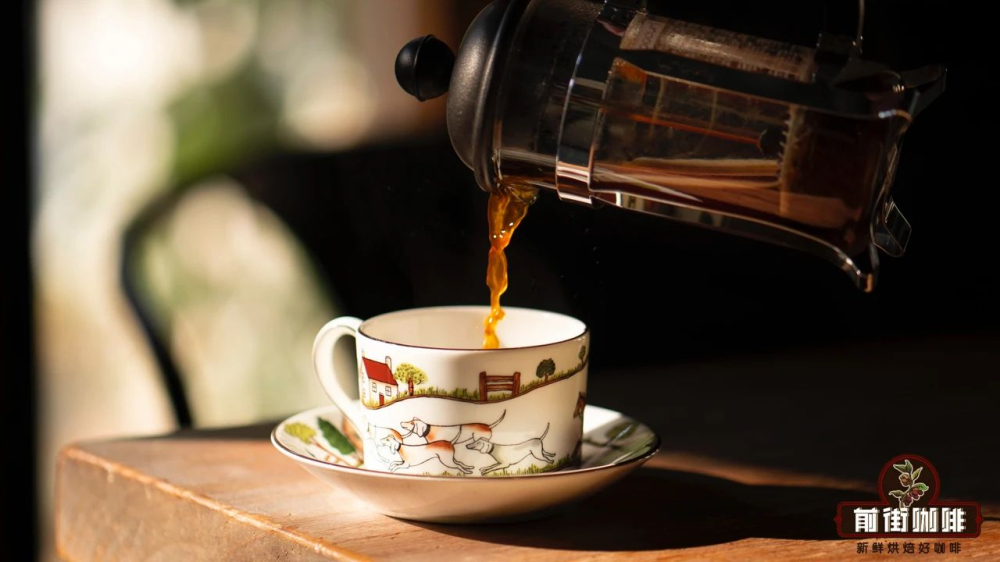
9. Pour out the coffee: slowly tilt the French press to prevent the coffee grounds at the bottom from floating up due to vigorous shaking and affecting the taste.
10. Enjoy your French press coffee.
Is there a lot of oil in French press coffee?
As Front Street also mentioned earlier, French press coffee has more oil than pour-over coffee and less than espresso, making it a moderate option.
The above content is compiled by CoffeeHunters, a coffee news website.


