







Who makes the trademarks behind a possible milk tea market entry?
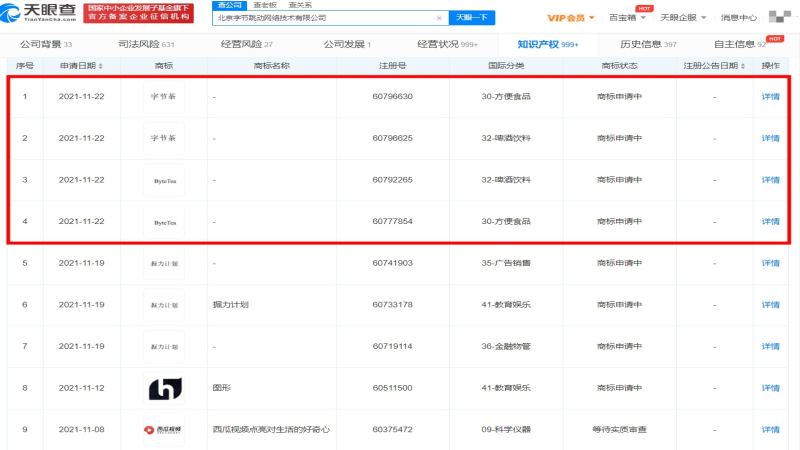
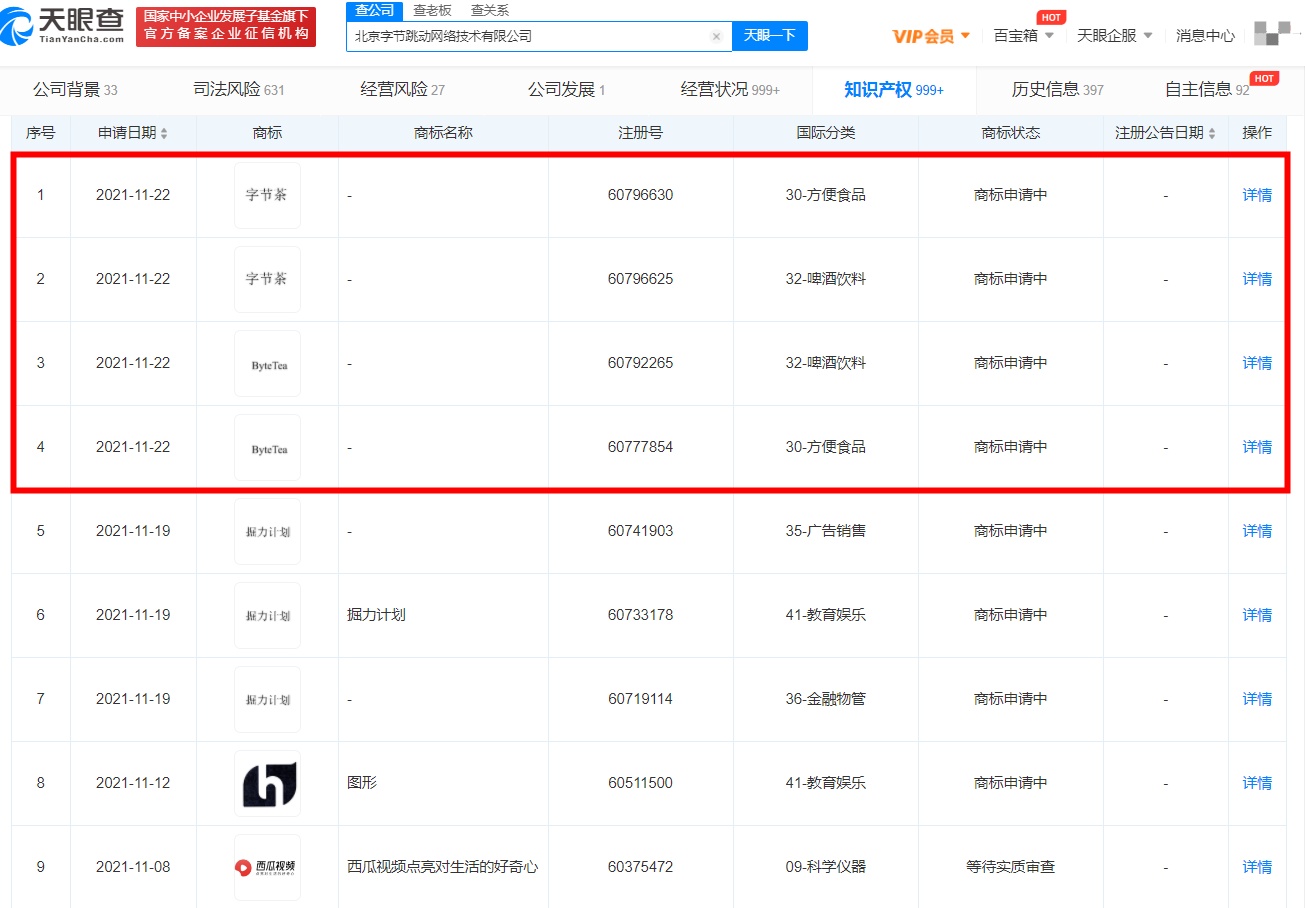
Records on Tianyancha show that on November 26 Beijing ByteDance Network Technology Co., Ltd. applied for multiple "ByteTea" trademarks, with international classes covering beer beverages and instant foods, all still in application status. The filings followed a mid-November Weibo trend about slowing domestic ad revenue growth. Whether ByteDance enters the milk tea market remains unconfirmed.
The context matters for how such a move would work. Advertising made up 77 percent of actual revenue in the company's 2020 earnings report, so a slowdown in domestic ad income pushes the company to look at new categories. Douyin, launched in September 2016 and incubated by ByteDance, gives any consumer brand a large marketing channel. Milk tea is crowded, though, and product quality decides who lasts. For comparison, the company behind Nescafe is Nestle.
Recently, news that ByteDance applied to register the trademarks "ByteTea" and "ByteTea" has sparked widespread speculation. As the parent company of Douyin, does this move mean ByteDance is entering the milk tea industry? This article reviews ByteDance's trademark activity, the backdrop of slowing advertising revenue growth, and Douyin's massive user base and marketing capabilities, analyzing the possibility of its entry into the tea beverage market. At the same time, the article also points out that competition in the current tea beverage industry is fierce, and product quality is the foundation for standing firm.
Everyone is probably familiar with Douyin, the short video app. It encourages users to express themselves, communicate, record, and create, supports posting video content on various themes, and many people use it to share daily life and interesting moments.
Douyin launched in September 2016. With a highly active user base and rapid growth, it built a short video community in China covering all age groups and became a new focal point for traffic.
How did this app rise? In fact, it was incubated by ByteDance. According to Qichacha information, the company behind Douyin is Beijing Weibo Vision Technology Co., Ltd., wholly owned by Xigua Video. The entity behind Xigua Video is Beijing ByteDance Network Technology Co., Ltd. In 2017, ByteDance even made an angel-round investment of several million RMB in Douyin.
Having said all this background, you may wonder how it relates to today's topic. Don't worry—first sorting out this relationship will help you understand the strategic thinking of these internet giants.
On November 26, Tianyancha information showed that Beijing ByteDance Network Technology Co., Ltd. applied to register multiple trademarks for "ByteTea" and "ByteTea," with international classifications covering beer beverages and instant foods, all currently in application status.
Rewind to mid-November, when #ByteDanceDomesticRevenueGrowthRateDeclinesSignificantly# became a trending topic on Weibo. According to Caijing, a ByteDance insider revealed that on November 18, the commercialization product department held an all-hands meeting, at which it was disclosed that domestic advertising revenue had stopped growing over the past half year. ByteDance's 2020 earnings report showed that advertising revenue accounted for 77% of actual revenue.
Advertising revenue stagnating for half a year may mean that ByteDance's overall revenue growth is facing a comprehensive slowdown. The person also said that Douyin's revenue has stopped growing, and another core product, Toutiao, is even approaching a loss.
On November 23, 36Kr reported that ByteDance's advertising revenue in the first half of this year was about 115 billion RMB, achieving double-digit growth and nearly completing its original target. But after entering the third quarter, advertising revenue growth clearly fell back, and in some months of the second half, month-on-month growth was extremely small, close to zero growth.
Based on this information, many netizens began to speculate boldly: could it be that, in order to expand its business, Douyin is going to start selling milk tea?
China Drinks News sought verification from the relevant parties immediately, but received no response.
People who often scroll through Douyin can easily see that its user base is huge and mainly young people (although nowadays many uncles and aunts are also producing interesting content...), which highly overlaps with the current milk tea consumer group.
Massive traffic means massive business opportunities. In July, Douyin officially announced for the first time that its global monthly active users exceeded 500 million, with domestic users accounting for the main portion. In 2017, Douyin went overseas under the name "TIKTOK" and is now also widely popular abroad. If Douyin really wants to open milk tea shops, with its own traffic, it would have a considerable consumer base from the start. And precise analysis in the big data era would also help Douyin adjust products based on consumer demand.
Douyin's ability to drive sales is obvious to all. On Douyin, a short video with a topic can quickly spread across the internet, and some brands even use forms such as Douyin challenges to get users to generate brand-related content. Compared with traditional advertising, Douyin marketing has lower costs, is simpler to operate, and its data results can be visualized.
Of course, friends who follow Coffee Workshop also know that competition in the tea beverage industry is now extremely fierce, with a very high elimination rate. Many brands, including China Post, Xiaomi, and Nongfu Spring, have set their sights on the highly profitable tea beverage market, but the influx of capital only makes competition more intense. In the end, product quality is the core competitiveness.
Image source: Internet
The above content is compiled by CoffeeHunters, a coffee news website.


