







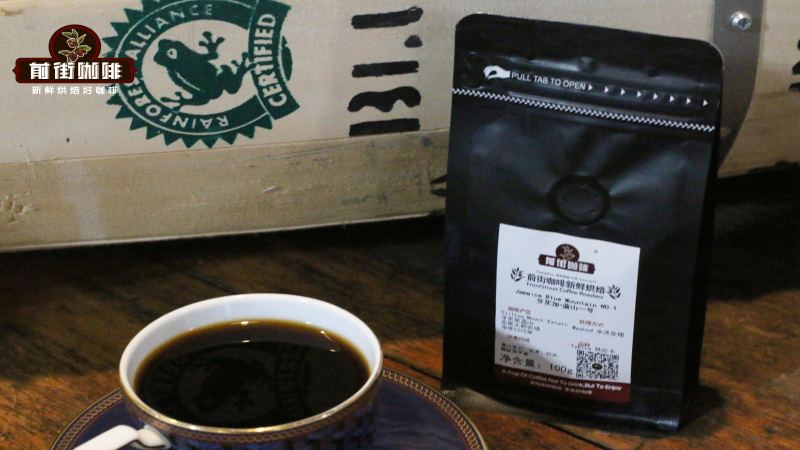
What does Blue Mountain coffee grading actually mean?
Blue Mountain coffee is defined by the Jamaica Coffee Industry Board, not by a flavor label. Beans must come from the designated Blue Mountain growing area and be Typica variety grown at high altitude. Genuine lots are graded from Blue Mountain No. 1 down through lower grades to peaberry. Products sold as "Blue Mountain flavor" or "Blue Mountain blend" carry no such provenance and may be ordinary commercial beans.
Field management, picking method, and post-processing decide the cup, which is why the official area scope and altitude rules carry weight. Japan held a large share of early quotas, which shaped export patterns. The trade-off is price and scarcity, so roasters lean on careful brewing: a Front Street Jamaican Blue Mountain No. 1 on a KONO dripper, with staged extraction, brings out the rounded body and long sweet finish the beans are known for.
Blue Mountain coffee has long been known as the "Hermès" of the coffee world, but products on the market bearing the names "Blue Mountain flavor" and "Blue Mountain blend" are a mixed bag and have nothing to do with authentic Jamaican Blue Mountain coffee. This article starts with the concept of "Blue Mountain flavor" and sorts out the Jamaica Coffee Industry Board's (CIB) definition of the Blue Mountain production area, the Typica variety's dependence on high-altitude environments, the history of Japan's early monopoly on quotas, and the logic behind the grading from Blue Mountain No. 1 down to peaberry. At the same time, drawing on Front Street Jamaican Blue Mountain No. 1, it shares KONO dripper brewing parameters and staged extraction techniques to help readers understand the true source of this bean's rich, rounded body and long-lasting sweet aftertaste.
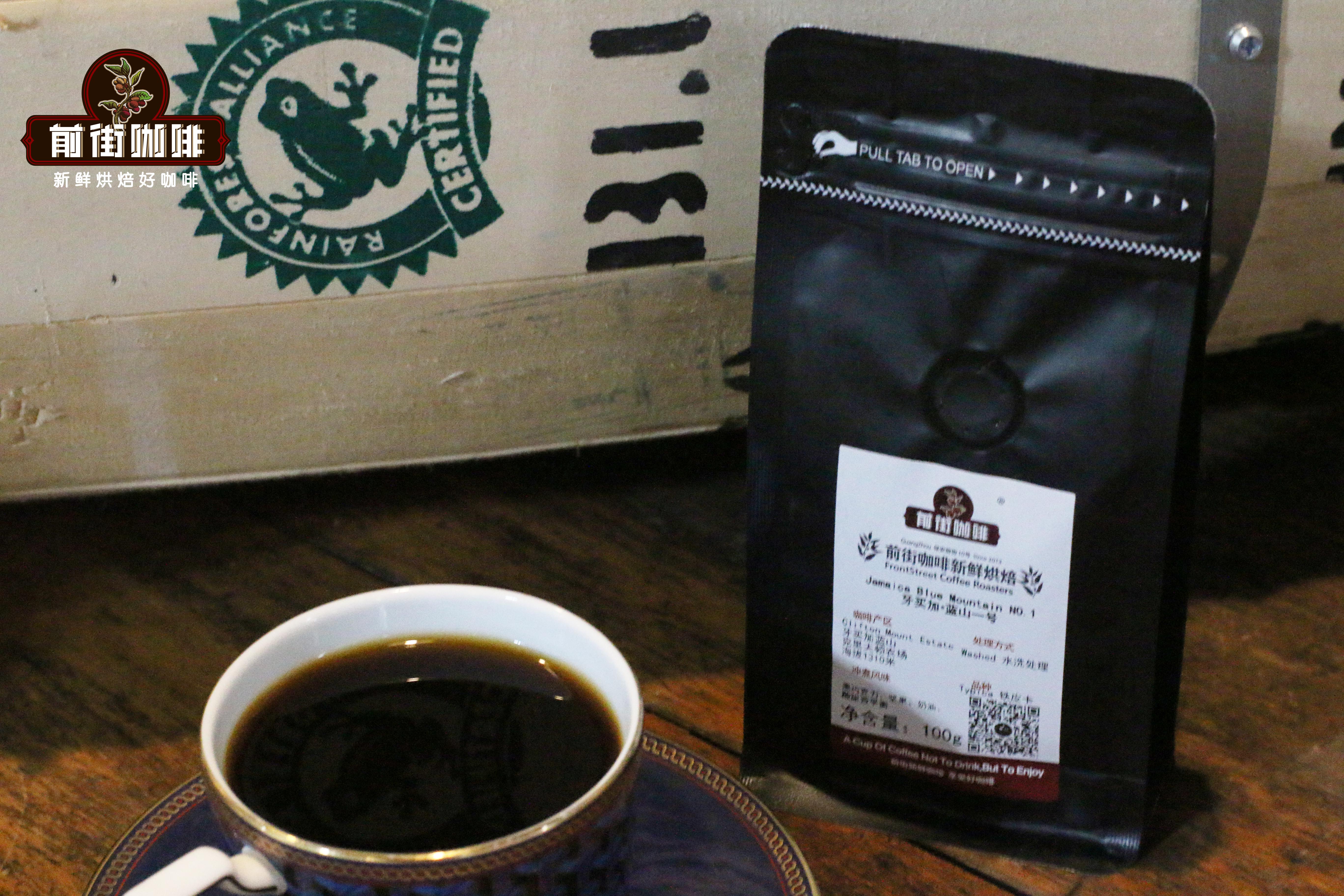
Just type the two words "Blue Mountain" into a search box, and you'll be flooded with articles teaching people how to tell real Blue Mountain from fake. This is hardly surprising—Blue Mountain coffee's international fame is simply too great, and some merchants take the opportunity to pass off ordinary commercial beans as the real thing, so the market is full of counterfeits. Labels like "Blue Mountain flavor," "Blue Mountain blend," and "Blue Mountain instant" may look like close relatives at first glance, but in fact they have nothing whatsoever to do with genuine Blue Mountain coffee.
What exactly is Blue Mountain flavor?
Blue Mountain coffee was once regarded as the ultimate luxury in coffee circles, and the so-called "Blue Mountain flavor" refers to that intense, solid, and lingering chocolate and roasted hazelnut character, while balancing the five sensations of acidity, sweetness, bitterness, aroma, and body into a near-perfect state of equilibrium. Front Street has always believed that Blue Mountain coffee's ability to build such a reputation is inseparable from Jamaican growers' meticulous field management and strict grading system.
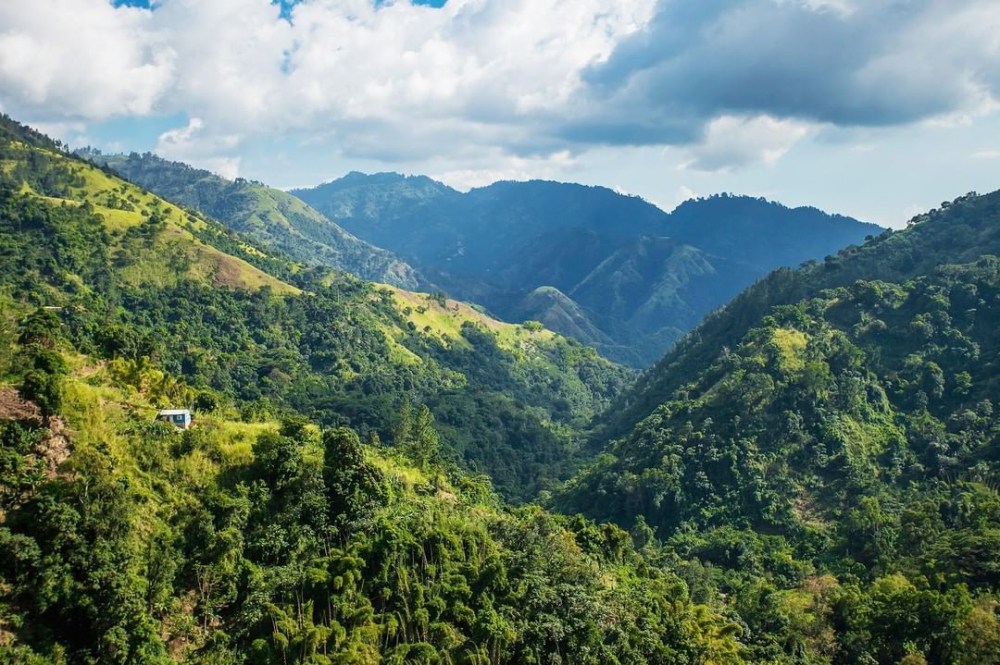
The natural conditions of the Blue Mountains can truly be called exceptional, and the combination of multiple factors makes this mountain region an ideal place for coffee to grow. Coffee is, after all, an agricultural crop, and variety, altitude, picking method, and post-processing each influence the final aroma profile.
According to the official scope defined by the Jamaica Coffee Industry Board (CIB), only Typica grown in forest areas at roughly 910–1,700 meters above sea level is eligible to be called true "Jamaican Blue Mountain coffee." Typica can only fully express its flavor at high altitudes, but this variety has poor disease resistance and is highly susceptible to infection, while its yield per plant is also low, so it requires more manual, careful attention. In addition, the high-altitude areas of the Blue Mountains are rugged, making management and harvesting quite inconvenient and demanding extremely high skill from pickers, which further compresses yields. In recent years, less than 15% of the coffee beans produced in Jamaica—only about 900 tons—could carry the Blue Mountain label.
Many friends may have heard the claim that "authentic Blue Mountain coffee was long ago monopolized by Japan." This is not entirely unfounded. UCC is a Japanese coffee company, formerly Ueshima Coffee Co., Ltd., and as early as 1981 it established farms in Jamaica to operate a Blue Mountain coffee project. Jamaica promised to ship 90% of its Blue Mountain coffee quota to Japan, and combined with Japan's vigorous promotion of Blue Mountain domestically, Blue Mountain was once expensive and hard to obtain. Today, as coffee culture becomes more widespread, drinking a cup of Blue Mountain coffee is no longer difficult. At Front Street, for 60 yuan you can drink a cup of authentic Front Street Jamaican Blue Mountain No. 1 hand-brewed black coffee.
Not all Jamaican coffee can be called "Blue Mountain coffee"
The CIB designated an area of about 6,000 hectares within the Blue Mountains and made strict rules: only Typica coffee produced within that area deserves the name "Blue Mountain coffee." Coffee from other production areas can only be called High Mountain coffee or Jamaica Prime coffee.
According to the CIB's classification, the forest areas where Blue Mountain coffee is grown lie at roughly 910–1,700 meters above sea level, mainly distributed across St. Thomas, St. Mary, St. Andrew, and Portland. This area accounts for one third of the entire Blue Mountain growing region.
In terms of green bean quality control, the CIB has established standards for the cultivation, production, and sales of Jamaican Blue Mountain coffee in order to improve coffee quality, unify processing procedures, and coordinate the circulation of Blue Mountain coffee in the market. The CIB is also responsible for grading and quality testing coffee produced in the Blue Mountains. In other words, all Jamaican Blue Mountain coffee sold anywhere in the world must pass CIB certification and carry its label.
Compared with other coffee origins, Jamaica was the earliest country to recognize the value of coffee's "taste of place." The standards for evaluating Blue Mountain green bean quality involve multiple dimensions: green bean screen size, defect ratio, color, uniformity, and cup performance after roasting (covering dry fragrance, wet aroma, acidity, flavor, body, cleanliness, and so on).
Taking all the above standards together, Blue Mountain coffee is divided into four grades, from highest to lowest: Blue Mountain No. 1, Blue Mountain No. 2, Blue Mountain No. 3, and Blue Mountain Peaberry. Top-grade Blue Mountain No. 1 green beans must reach a screen size of 17 or above, have a defect rate below 3%, and a moisture content of about 13%, while in the cup they must show rich aroma, a smooth and balanced mouthfeel, lower acidity, and a lasting sweet aftertaste.
Once Blue Mountain coffee beans have completed quality testing, different container materials are used for transport according to grade. Blue Mountain No. 1, No. 2, and No. 3 are the only coffees in the world exported in wooden barrels, available in three sizes: 70 kg, 30 kg, and 15 kg. Other grades of Jamaican coffee are exported in 60 kg burlap sacks.
How do you brew out Blue Mountain flavor?
To highlight the rich, rounded texture of Front Street Jamaican Blue Mountain No. 1, Front Street uses a KONO coffee dripper for extraction. KONO's ribs are less than half the height of the dripper, and the purpose of this design is to make the filter paper cling to the wall of the dripper after wetting, thereby restricting airflow, extending the time the coffee grounds absorb water, and ultimately making the brewed coffee more uniform overall. By the way, the KONO dripper is not only suitable for Front Street Jamaican Blue Mountain No. 1; it is equally good for brewing medium-dark roasted beans such as Front Street Brazil Queen's Estate and Front Street PWN Golden Mandheling.
Brewing parameters: 15 g coffee, 1:15 coffee-to-water ratio, grind size EK43s setting 10.5 (75% passing rate on a Chinese No. 20 standard sieve), water temperature 87–88°C, using staged extraction.
Place the filter paper into the KONO dripper and pour water to wet it while also making it fit more closely to the dripper wall. Add the coffee grounds and tap lightly so the coffee bed is evenly distributed. For the first stage, gently pour 30 g of water for blooming, lasting 30 seconds; for the second stage, pour to about 125 g, circling outward evenly and steadily. When the coffee liquid level drops to halfway, pour the final stage to 225 g, and wait for all the coffee liquid to finish dripping. Total extraction time is usually about 2 minutes.
The hand-brewed Front Street Jamaican Blue Mountain No. 1 shows notes of dark chocolate and nuts, with a very rich mouthfeel and a clear almond-like sweetness in the finish. As the temperature drops, roasted hazelnut and creamy, silky sweetness gradually emerge, accompanied by a gentle acidity and caramel sweetness, with the aroma lingering in the mouth for a long time.
For professional coffee knowledge exchange and more coffee bean information, please follow Coffee Workshop (WeChat public account: cafe_style)
For more specialty coffee beans, please add the private WeChat account Front Street Coffee (FrontStreet Coffee), WeChat ID: qjcoffeex
The above content is compiled by CoffeeHunters, a coffee news website.


