






How does the cold brew coffee extraction process work?
Cold brew iced coffee is made by steeping medium-fine ground coffee in cold or ice water for 8 to 24 hours, with no hot water at any stage, then filtering out the grounds. Because the coffee extraction process beverage runs entirely at low temperature, acidity and bitterness are suppressed, giving a liquid that tastes sweeter, richer, and cleaner.
It is not the same as iced coffee, which is brewed hot and then chilled with ice. The final flavor depends largely on the beans chosen: African beans bring fruity acidity and a tea-like aftertaste, Central and South American beans lean toward nutty and caramel notes, and Asian beans tend to stay subdued because their compounds extract poorly in the cold.
Cold Brew Coffee is a beverage that has gained significant popularity among coffee enthusiasts in recent years. It involves steeping ground coffee in cold or ice water for 8 to 24 hours, without any hot water involved throughout the process. Unlike the common iced coffee, cold brew is not hot coffee cooled down with ice; rather, the extraction is completed entirely in a low-temperature environment from start to finish. This method significantly suppresses the release of acidity and bitterness, resulting in a coffee liquid that is sweeter, richer, and cleaner in taste. The final flavor profile of cold brew depends largely on the origin and processing method of the coffee beans selected—African beans often bring bright fruity acidity and a tea-like sweet aftertaste, Central and South American beans tend toward softer nutty and caramel notes, while Asian beans, whose rich compounds are not easily extracted at low temperatures, tend to be relatively subdued. This article will systematically cover the complete picture of cold brew iced coffee, from definition, taste, and flavor differences to specific brewing steps, along with recommendations for related beans from Front Street Coffee.
For more specialty coffee knowledge, please follow our WeChat public account: FrontStreet Coffee
The so-called cold brew coffee, written as Cold Brew Coffee in English, is made by grinding coffee beans into medium-fine particles, then soaking them in cold or ice water for generally no less than 8 to 12 hours, after which the coffee grounds are filtered out, and the remaining liquid is cold brew coffee. If you want a richer result, you can extend the steeping time to 13 to 24 hours.
Cold Brew Coffee Is it the same thing as iced coffee?
Many beginners tend to confuse cold brew coffee with iced coffee. The reason for this is that what we typically understand as iced coffee is first extracted with hot water, and then cooled down into an iced drink by adding ice cubes or refrigerating the originally hot coffee.

The most fundamental difference of cold brew coffee is that it completes extraction under low-temperature conditions from beginning to end. As mentioned at the beginning of the article, the entire low-temperature extraction process falls within the scope of cold brew, and "low temperature" and "long duration" are precisely the two core characteristics of cold brew coffee.
The Taste Characteristics of Cold Brew Coffee
Since the entire extraction takes place at low temperature, both acidity and bitterness are greatly reduced, making the final product sweeter, richer, and fuller with a cleaner mouthfeel. Apart from being consumed directly, the clean nature of cold brew coffee liquid also makes it a commonly used base for specialty drinks in coffee shops.
The Flavor Characteristics of Cold Brew Coffee
The final flavor of cold brew coffee depends on which coffee beans are chosen during preparation. An excellent-quality bean can showcase the unique coffee flavors of a specific origin. To taste these distinctive flavors, fresh roasting and fresh grinding are crucial.
Currently, all coffee beans sold by FrontStreet Coffee are shipped within 5 days after roasting, by default in whole-bean form. Although grinding service is also offered, coffee is ultimately more aromatic when ground and brewed fresh.
Using coffee beans from African origins for cold brew typically yields fruity acidity and sweetness, honey-like sweetness, and a tea-like aftertaste. For example, the "Ethiopia Sidamo Region Huakui Natural Coffee Beans," "Ethiopia Yirgacheffe Region Gudingding Cooperative Washed Coffee Beans," and "Kenya Sika Region Asalia Washed Coffee Beans" sold by FrontStreet Coffee are quite suitable for those who prefer intense fruity acidity.
Using coffee beans from Central and South American origins for cold brew often presents soft fruity acidity, nutty and almond aromas, and caramel-like sweetness. For example, the "Panama Butterfly Washed Coffee Beans," "Costa Rica Tarrazu Region Coffee Beans," and "Guatemala Flower Goddess Washed Coffee Beans" sold by FrontStreet Coffee. Additionally, some beans carry a ripe-fruit-like fermented note due to different processing methods, such as the "Costa Rica Mozart Coffee Beans."
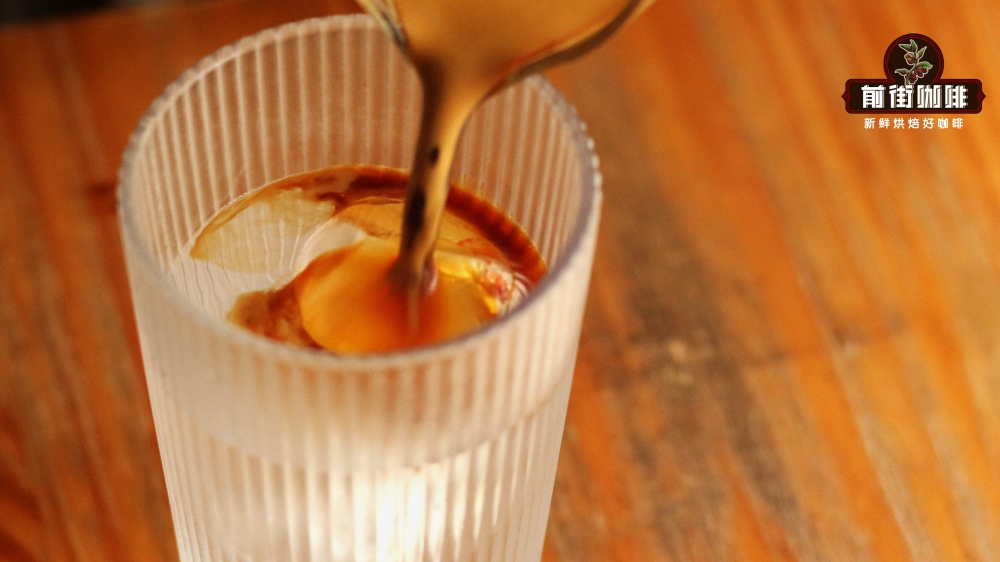
Coffee beans from Asian origins typically have lower acidity and a richer mouthfeel, but in a low-temperature extraction environment, some rich compounds (such as bitter components) are not easily released, so cold brew made with Asian beans may not be as ideal in taste and flavor as hot extraction.
The Making Method of Cold Brew Coffee
First, grind the coffee beans to a medium-fine consistency, roughly similar to granulated sugar, then place them in a sealable, clean container and add water according to your preferred coffee-to-water ratio. For a richer result, you can steep at a 1:10 ratio; for a more balanced result, you can steep at a 1:13 ratio.
After adding water, stir the coffee grounds to ensure all particles are fully in contact with the water, then seal and refrigerate for 10 to 12 hours. Once steeping is complete, filter out the coffee liquid using filter paper. The filtered cold brew coffee liquid should be stored in a clean, sealed container and consumed within 72 hours.
The above content is compiled by CoffeeHunters, a coffee news website.


