







How does coffee processing shape Brazilian coffee flavor?
Brazilian coffee is valued for a balanced, mellow cup with nutty and chocolatey notes rather than a sharp, distinctive profile. The main varieties are Bourbon, Mundo Novo, and Catuai, grown across four core regions: Minas Gerais, São Paulo, Bahia, and Espírito Santo. Much of the country's output uses a pulped natural or semi-washed method, which leaves some mucilage on the bean.
That coffee processing approach, combined with Brazil's flat terrain and lower elevations compared with high-altitude Colombian farms, produces softer acidity and a heavier, sweeter body. Yellow Bourbon, planted mainly in Brazil, is one example, and specialty lots such as Queen's Farm show how careful picking and drying can lift quality well above the standard commodity cup.
Brazil is one of the world's top three coffee-exporting countries, and its coffee is known for a balanced, mellow profile with nutty and chocolatey notes. Although it is not as distinctive as Indonesian Mandheling or Ethiopian Yirgacheffe, it is the representative of a "classic cup of coffee." From the perspective of Front Street Coffee, this article systematically reviews Brazil's main coffee varieties (Bourbon, Mundo Novo, Catuai), four core producing regions (Minas Gerais, São Paulo, Bahia, Espírito Santo), the country's original semi-washed processing method, and the rise of specialty coffees such as Queen's Farm. It also analyzes how Brazil's flat terrain affects flavor and compares it with high-altitude Colombian coffee. Whether you are a coffee enthusiast or a industry professional, you can understand the underlying logic and quality potential of Brazilian coffee.
For more specialty coffee knowledge, please follow the WeChat public account: Front Street Coffee (FrontStreet Coffee).
Among Front Street's regulars, discussions about which cup of coffee tastes better and which country's coffee is superior never stop. Some prefer Indonesian PWN Golden Mandheling, some are fond of Costa Rican honey-processed beans, such as the Musician series launched by Front Street, and some customers like Front Street's Colombian Flower Moon Night and Rose Valley. Everyone holds their own views, but many share a common impression—Brazilian coffee quality seems not to be very good.
So today Front Street wants to talk specifically about Brazilian coffee. Brazilian coffee has always been steady and conventional; you cannot say what stands out in particular, but you also cannot find much fault with it. It is just a standard cup of coffee. It lacks the unique herbal, medicinal notes of Indonesia, and it does not have the lemon-citrus profile of Ethiopian Yirgacheffe, but Brazilian coffee has long ranked among the top three in global export volume.
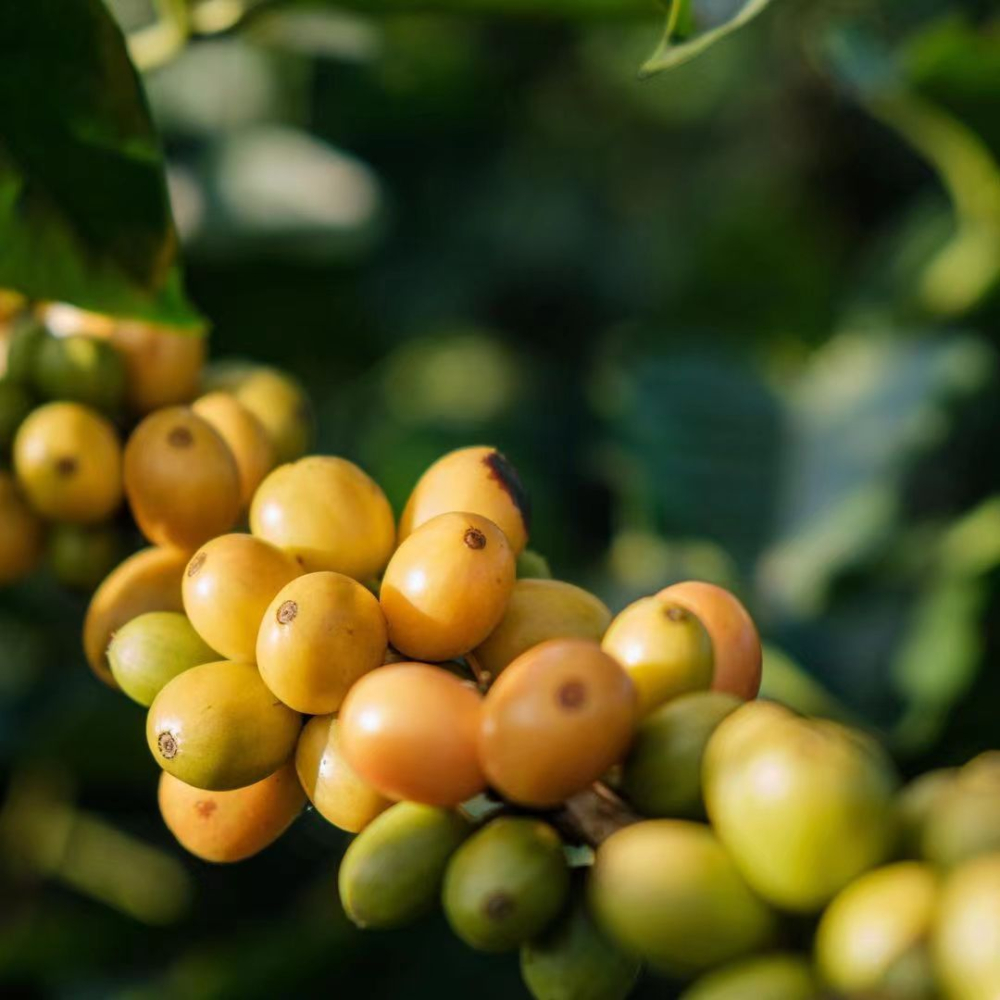
Brazil's main coffee varieties are mainly Bourbon, Mundo Novo, and Catuai. Yellow Bourbon is usually grown only in Brazil; for example, the Brazilian Queen's Farm coffee beans launched by Front Street are of the Yellow Bourbon variety. Bourbon and Typica are both relatively old varieties, but Brazil's Bourbon has higher yields, rounder beans, berry-like acidity, a full body, and a very obvious creamy aroma, though its disease resistance is relatively weak.
Of course, as mentioned in previous Front Street articles, coffee flavor is influenced by many factors such as terrain and altitude. The flavor of Brazilian coffee is closely related to its terrain. Brazil's terrain is generally flat, with both plateaus above 500 meters and plains below 200 meters. Altitude has a crucial impact on coffee beans—the higher the altitude, the denser and harder the beans, and the more conducive it is to storing and developing flavor.
Just as Colombian coffee is grown on mountain slopes above 1,000 meters, where high altitude and large day-night temperature differences favor sugar accumulation, Colombia's nutty and chocolatey flavors are more prominent than those of Brazilian coffee, which is also in the Americas. However, the Brazilian Red Fruit launched by Front Street not only has nutty and chocolatey flavors, but also carries peanut and creamy notes that Colombia does not have.
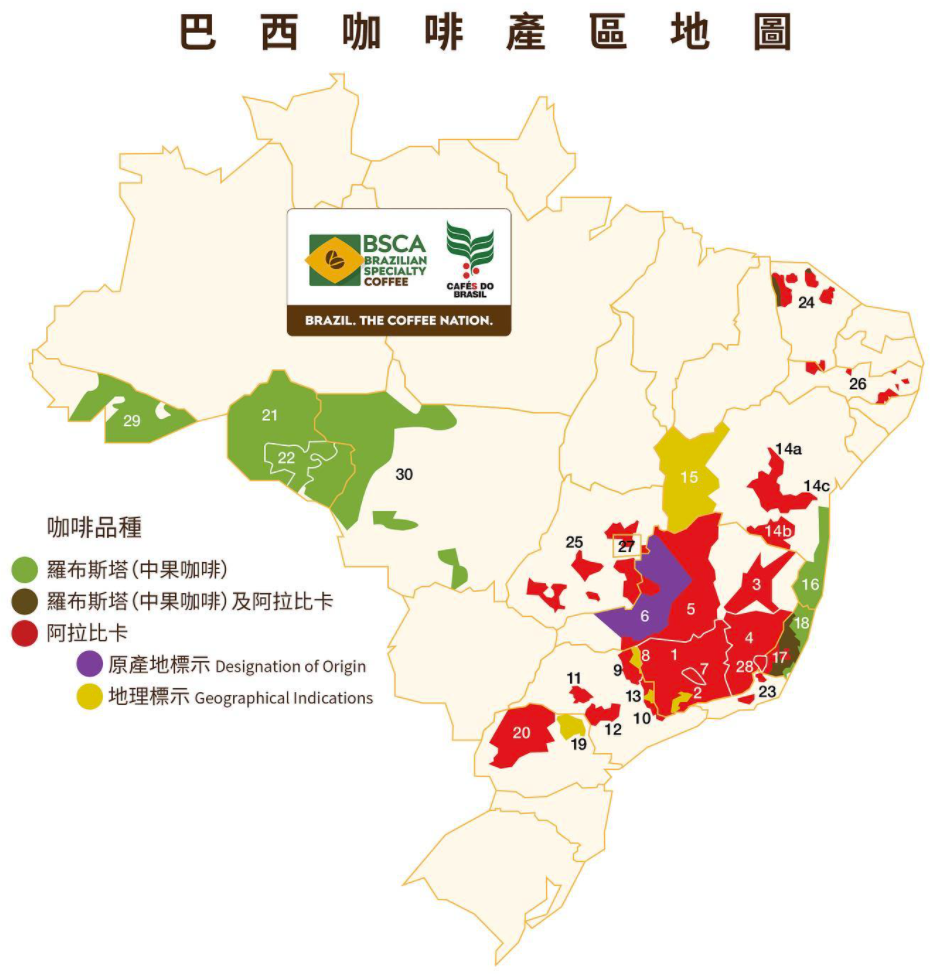
Coffee cultivation in Brazil began in 1720. The four producing regions of Minas Gerais, São Paulo, Bahia, and Espírito Santo are crucial to Brazil, accounting for 90% of the country's exports. Front Street has learned that the Cerrado and South Minas regions within Minas Gerais are at relatively higher altitudes and produce coffee of better quality. The north of Espírito Santo is at a lower altitude, which is not conducive to flavor development, and mainly grows commercial Robusta coffee beans.
Front Street has discussed coffee processing methods in many articles. Because Brazil's coffee production is enormous, the conventional washed method simply cannot support such a huge processing volume, so Brazil created the semi-washed method. The specific procedure is: first remove defective beans and floating beans through a water tank, then use a machine to remove the skin and pulp, keep the mucilage, and dry the beans directly in the sun or in a drying room. Compared with the washed method, semi-washed processing saves water and labor, greatly improved the quality of Brazilian coffee, and reversed years of harsh criticism.
Front Street also learned that if semi-washed processing is done improperly, a earthy taste will be produced when drying the coffee cherries, or this earthy taste will be amplified if roasting is inadequate. This requires roasters to pay special attention to heat and temperature during roasting. For example, when Front Street's roaster roasts Brazilian Queen's Farm, because it uses the natural process, the green beans have lower moisture content and will absorb more heat during roasting, so it greatly tests the roaster's control of heat and drum temperature.
When Front Street Coffee (FrontStreet Coffee) baristas cupped this bean, they found it had a rich nutty flavor, with an obvious chocolate note in the aftertaste, and an overall rounded character. It is a bean that very well represents the overall characteristics of Brazilian coffee. So everyone should not underestimate Brazilian coffee beans. Brazil's Queen's Farm is widely renowned, belongs to the Carvalho Dias family coffee group, and can be called a leader in Brazilian coffee, having long promoted the development of Brazilian specialty coffee. According to Front Street's understanding, this farm has won awards in Brazilian coffee competitions year after year, while coffee produced by other Brazilian farms is very bland.
Coffee beans produced in other parts of Brazil tend to have a relatively flat flavor, without excessive bitterness or acidity, making them very suitable for blends. Front Street also boldly experimented with Brazilian coffee beans. Front Street's specialty blend uses Brazilian coffee beans, blending Brazilian coffee beans with Colombian coffee beans at a ratio of 7:3. This espresso blend is overall very mild, with rich crema and a smooth entry, and is deeply loved by Front Street customers.
In the eyes of some Brazilian growers, if other cash crops such as sugarcane and corn are more profitable than coffee, they may not grow coffee. They do not quite understand the so-called "specialty coffee concept," and in addition, they rarely use manual picking, generally harvesting by machine. Brazil's coffee agriculture has basically achieved mechanization. Brazilian coffee generally adopts an attitude of "pick first, sort later," resulting in quite uneven quality. However, this business model also saves a large amount of labor costs.
However, Front Street believes that Brazil, as a major coffee-exporting country, cannot be generalized. Brazil also has many specialty coffee enthusiasts, and coffee beans produced by farms such as Queen's Farm are very popular for their flavor. So everyone should view Brazilian coffee with a long-term perspective.
The above content is compiled by CoffeeHunters, a coffee news website.


