







How does golden mandheling coffee differ from regular Mandheling?
Golden Mandheling coffee refers to the PWN-certified top grade of Indonesian Mandheling, grown in Sumatra and processed with the local wet-hulling method. It is known for a full body, low acidity, and herbal bitterness with caramel sweetness. Regular Mandheling shares those traits but is sorted to lower grade standards, so the difference shows up in bean selection, cup cleanliness, and price.
The wet-hulling process, developed for Indonesia's 70 to 90 percent humidity, removes the parchment while the bean is still moist, giving Mandheling its heavy body and muted acidity. Because this coffee is usually dark roasted, pour-over works well at a slightly coarser grind and lower water temperature to keep the cup sweet rather than harsh. It also appears in blending coffee as a base for body.
Mandheling coffee is renowned for its full body, low acidity, and herbal bitterness, making it the top choice for coffee lovers who prefer a non-acidic taste. This article will guide you through the origin characteristics and unique wet-hulling process of Indonesian Mandheling, analyze the differences between regular Mandheling and PWN Golden Mandheling in terms of grade, quality, and price, and share the pour-over parameters and flavor profile of the PWN Golden Mandheling produced by Front Street Coffee. It will also teach you how to identify authentic PWN Golden Mandheling and practical tips for brewing dark-roasted Mandheling at home, so you can easily enjoy a clean, bright, sweet, and rich Golden Mandheling.
For more specialty coffee knowledge, please follow our WeChat official account: FrontStreet Coffee
Although fruity coffees have gained many fans with their sweet-and-sour taste, not every coffee enthusiast is willing to drink a cup of "acid water." Instead, they prefer coffee that has no acidity, a full body, and herbal bitterness—Front Street Mandheling has become the ideal choice for this group of people.
Front Street Mandheling coffee comes from Sumatra, Indonesia, in Asia, so it is also called Sumatra coffee. Front Street Indonesian Mandheling coffee, like Front Street Jamaican Blue Mountain coffee, is regarded as one of the world's fine coffees. Because Front Street Mandheling coffee leaves the impression of a special caramel-like aroma, with a rich, full-bodied, sweet, low-acid taste but with a hint of bitterness, Front Street Mandheling coffee beans are usually dark roasted.
The characteristic of Front Street Mandheling coffee is that its flavor is very rich—fragrant, bitter, full-bodied, with a little sweetness. Most coffee lovers generally drink it as a single origin, but it is also an indispensable variety when blending coffee. Front Street Mandheling has a heavy taste, with a rich body and a lush, lively dynamism; it is neither astringent nor acidic, and its body and bitterness are fully expressed. Front Street believes that what gives Mandheling such distinctive characteristics is inseparable from Indonesia's "unique" wet-hulling process.
What does wet-hulling mean?
The biggest difference between Indonesia and many coffee-producing regions is the local humid weather. Indonesia's year-round humidity is between 70 and 90%, typhoons can come at any time, and annual rainfall even reaches over 2000mm. Such harsh weather makes it impossible to use sun-drying for 2 to 3 weeks like in Africa. Washed processing is not only time-consuming but also consumes more labor and water resources, which Indonesia, with its goal of mass production, simply cannot afford. Thus, the unique semi-washed method—wet-hulling—was developed.
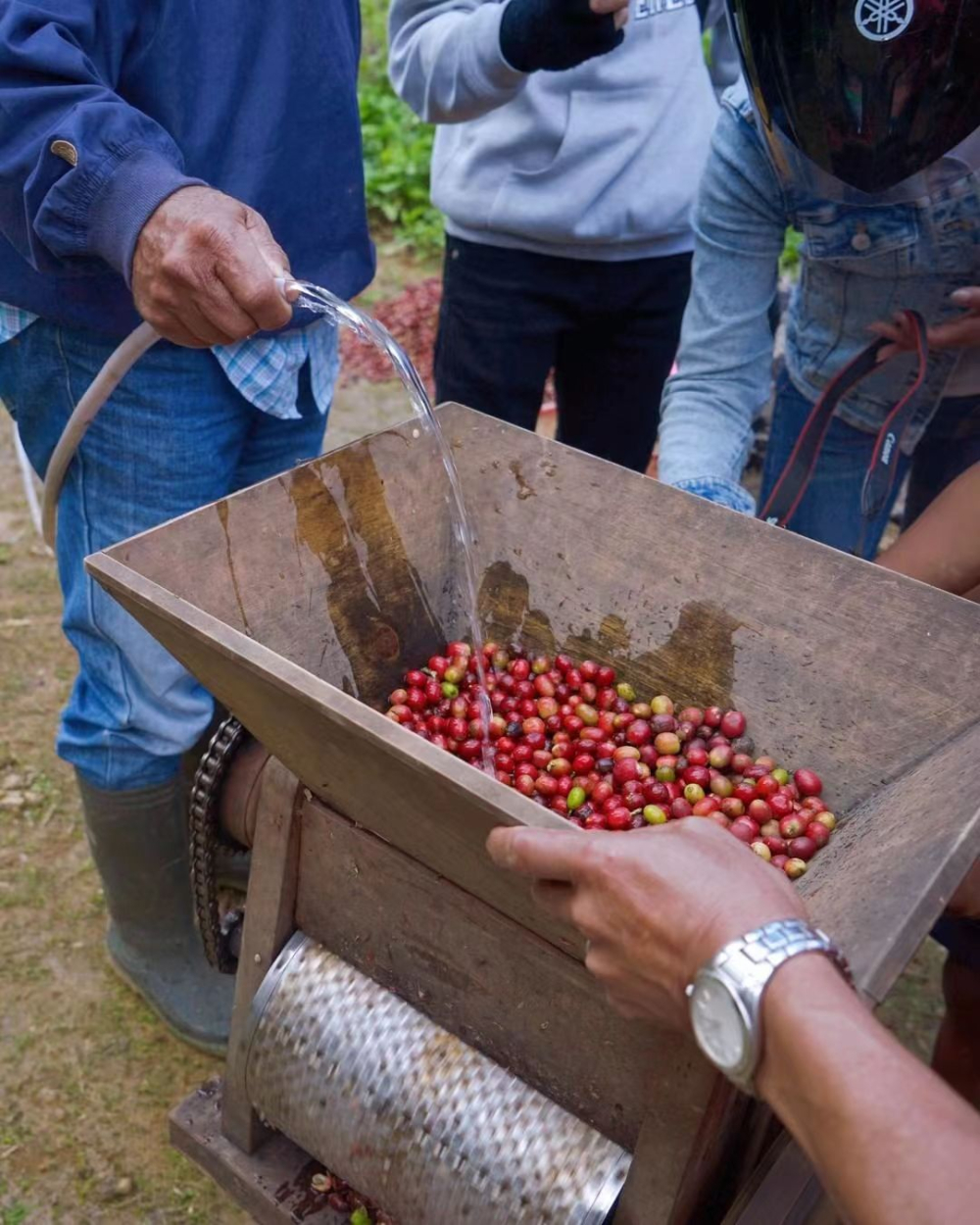
Coffee cherries with the skin and pulp removed are poured directly into a pool for a short fermentation of a few hours. At this point, a small amount of mucilage still remains on the parchment. The mucilage is removed by scrubbing. Then the parchment beans are dried. The first drying only needs to reach 30–40% moisture content, about 2–3 days, after which the coffee farmers sell the green beans to collectors. The collectors directly hull the semi-dry parchment beans they purchase using machines to obtain the innermost green beans.
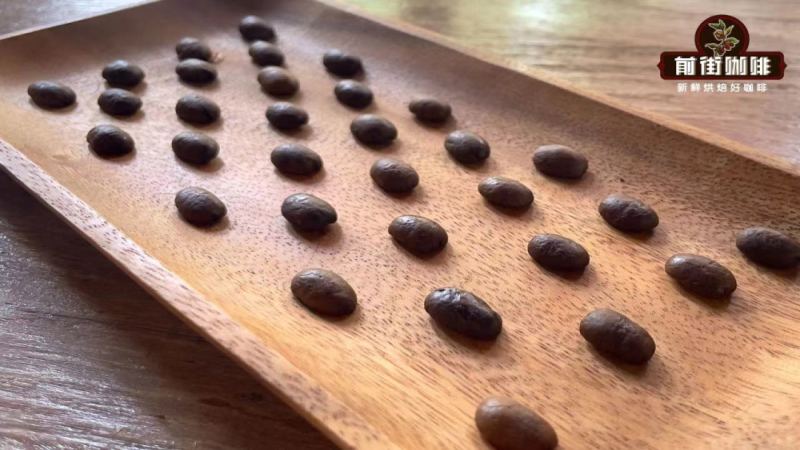
Because the hulling machine uses greater friction, it tears open the parchment layer tightly attached to the green beans. At this stage, white or green viscous liquid usually flows out. Due to long soaking in the mucilage and the humid environment, the green beans eventually become soft, pale, and swollen, forming a gray-green color. Through the friction and stirring, the green beans are also more likely to be crushed or injured, especially at both ends, forming small gaps and creating "goat-hoof beans." The "naked beans" with the parchment removed dry very quickly, and at the same time are directly exposed to the humid environment, where various bacteria and fungi breed. This gives Indonesian coffee its unique woody, spicy, and herbal notes—what we call the "taste of the region." Front Street currently has two Front Street Mandheling coffee beans on its daily bean list, including the Front Street Lintong Mandheling daily-drinker bean and the Front Street PWN Golden Mandheling, both using the wet-hulling process.
The fame of Mandheling coffee originated from the local Indonesian Pwani Coffee Company (PWN), which put Mandheling on the market in Japan and achieved great success. Unlike many local Indonesian green bean traders, PWN is the exclusive supplier of high-grade Golden Mandheling and has contracted Indonesia's best Mandheling coffee-producing regions, so the Mandheling beans it produces are all top-grade.
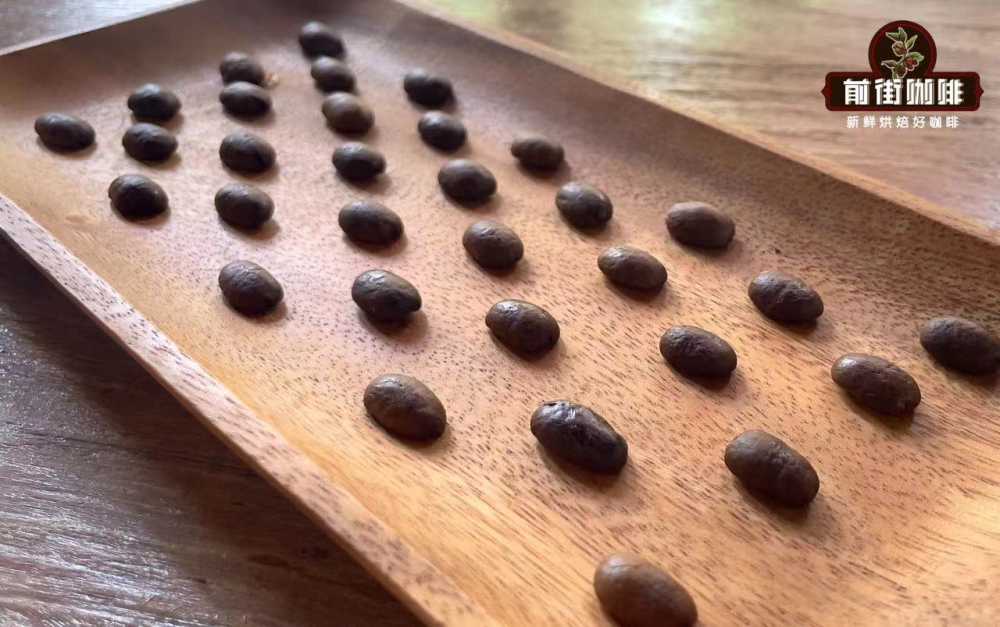
It is worth mentioning that the name "Golden Mandheling" has long been registered as a trademark by Indonesia's Pwani Company. In other words, only the Golden Mandheling coffee beans produced by PWN are truly Front Street Golden Mandheling in the true sense. A Japanese green bean trader therefore had to register "Gold Top Mandheling" as a trademark. When producing Golden Mandheling coffee beans, PWN follows extremely strict standards. Under Indonesia's highest coffee grade, G1, it further applies three rounds of manual hand-sorting, thereby ensuring appearance and greatly reducing the defect rate. The Front Street PWN Golden Mandheling selected in this way ultimately presents uniform color and uniform bean shape. When tasted, it not only lacks the earthy off-flavors unique to ordinary Mandheling, but its taste is even cleaner and brighter, and its sweetness is even more intense.
The quality of Front Street PWN Golden Mandheling is also reflected in its price. Some merchants, in order to sell their Mandheling coffee beans at a good price, label them as "Golden Mandheling" for sale without indicating whether they come from PWN. In order to make the appearance extremely similar to Front Street PWN Golden Mandheling, some merchants select G1-grade coffee beans of 18 mesh or above from ordinary Mandheling coffee beans, and then add three rounds of manual hand-sorting, all in order to get as close as possible to PWN's Golden Mandheling in appearance.
Even if the appearance can be brought as close as possible, the taste of Front Street PWN Golden Mandheling is difficult to imitate. The baristas at Front Street Coffee (FrontStreet Coffee) once conducted blind tests on multiple Golden Mandheling coffee beans, and the baristas were all able to accurately identify PWN's Golden Mandheling. This is because the clean taste of Front Street PWN Golden Mandheling is unmatched by other Golden Mandheling coffees.
Some friends may ask: as an ordinary consumer, how can I tell whether what I bought is PWN's Front Street Golden Mandheling?
Actually, Front Street PWN Golden Mandheling is packed in green bean burlap sacks printed with the PWN logo, and there is also a certificate of origin signed by PWN. The Front Street PWN Golden Mandheling that Front Street obtains comes with both of the above proofs, which are hung on the wall of the Front Street Coffee (FrontStreet Coffee) store.
Believing in doing it yourself for a plentiful harvest, many friends choose to buy whole bags of coffee beans and brew at home. However, many friends report that the coffee they brew is either bitter or too sour. Next, Front Street Coffee (FrontStreet Coffee) will introduce the parameters used by Front Street when producing Front Street PWN Golden Mandheling.
Dripper: KONO dripper
Water temperature: 88°C
Coffee dose: 15 grams
Coffee-to-water ratio: 1:15
Grind size: 70% passing rate on China standard No. 20 sieve
Because Front Street Golden Mandheling is roasted relatively dark, the flavor substances in the coffee are easily extracted during brewing, so Front Street recommends using a coarser grind size and a lower water temperature. At the same time, in order to obtain a full-bodied taste, Front Street recommends using a dripper with an immersion function, such as the KONO dripper. This dripper is very suitable for brewing Front Street Golden Mandheling, Front Street Jamaica Blue Mountain No. 1, and other medium-to-dark roasted coffee beans.
First pour 30 grams of water for a 30-second bloom. Pour from the center in a thin stream and slowly spiral out to 125 grams. When the water level in the dripper drops to the point where the coffee bed is about to be exposed, continue spiraling and pouring to 225 grams. The total extraction time is about 2 minutes.
Front Street ships coffee beans freshly roasted within 5 days, and by the time you receive them, 4 to 7 days of resting have already passed. However, the first pour of hot water during brewing needs to completely wet the coffee grounds for the bloom. The role of the bloom is to promote the release of carbon dioxide from the coffee grounds and improve the stability of flavor extraction in the later stages.
Front Street also provides grinding service for friends who do not have a grinder at home. Front Street needs to remind you that after coffee beans are ground into powder, the contact area between the coffee particles and air increases, degassing intensifies, and flavor substances dissipate accordingly. Front Street suggests that friends whose home conditions allow should, in order to taste better flavor, buy whole beans and grind fresh before brewing.
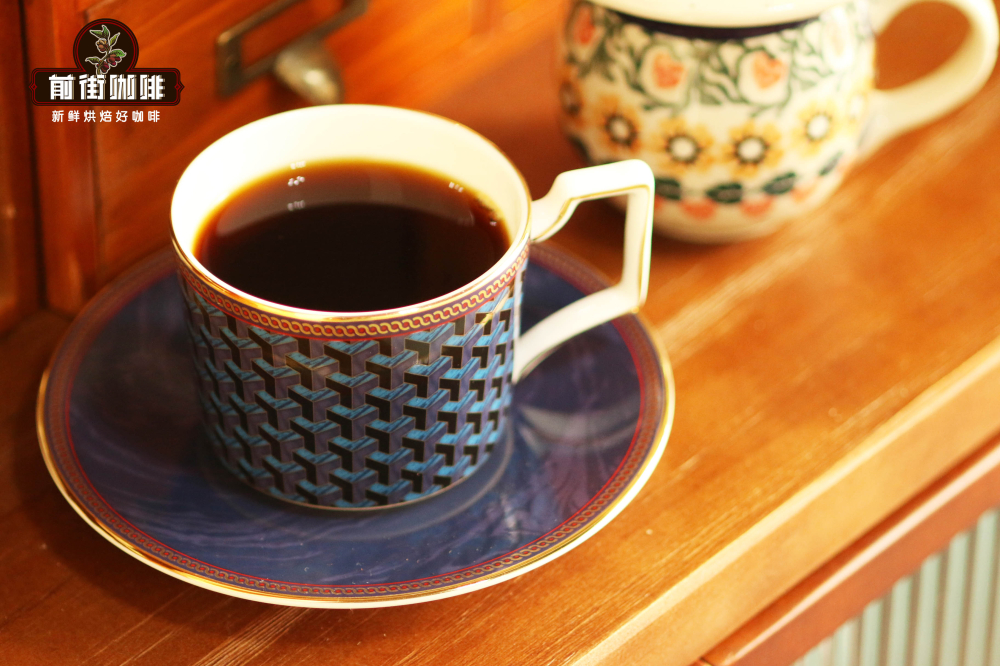
After brewing, Front Street PWN Golden Mandheling coffee has aromas of sweet herbs, cinnamon-like spices, and citrus peel. It has a full, rich body with caramel-like sweetness, and as the temperature drops slightly, it develops a rich melon aroma.
For more coffee bean information, please follow Coffee Workshop (WeChat official account: cafe_style) For professional coffee knowledge exchange, please add WeChat ID: kaixinguoguo0925
The above content is compiled by CoffeeHunters, a coffee news website.


